
Earth in Flames: How an Asteroid Killed the Dinosaurs and How We Can Avoid a Similar Fate From Nuclear Winter
Sixty-six million years ago an asteroid as large as Mt. Everest hit what is now the Yucatan Peninsula at a speed ten times faster than the fastest rifle bullet. Debris from the impact blew into space, re-entered the atmosphere as a swarm of shooting stars that burned the global forests and grasslands, leaving behind a thin global layer containing rock from the asteroid and from Mexico, and smoke from the fires. This layer marks one of the greatest extinctions in Earth history including not just dinosaurs, but also fish, plankton, ammonites, and plants making up about 75% of the known species.
A nuclear war with just a few hundred of the world's 12,000 nuclear weapons targeted on densely populated cities could plunge Earth into the same types of conditions that the dinosaurs experienced. Even a war between India and Pakistan could kill 1 to 3 billion people from starvation due to agricultural failure, while 6 billion people might starve following a war involving Russia, NATO, and the U.S.
The book describes how the dinosaurs died, and how their deaths parallel what might happen to people after a nuclear war. The book reflects on the odds of future asteroid impacts, how to stop them, and ends with what the listeners personally and together can do to prevent a nuclear war, so that humans don't end up like the dinosaurs.
1146555671
A nuclear war with just a few hundred of the world's 12,000 nuclear weapons targeted on densely populated cities could plunge Earth into the same types of conditions that the dinosaurs experienced. Even a war between India and Pakistan could kill 1 to 3 billion people from starvation due to agricultural failure, while 6 billion people might starve following a war involving Russia, NATO, and the U.S.
The book describes how the dinosaurs died, and how their deaths parallel what might happen to people after a nuclear war. The book reflects on the odds of future asteroid impacts, how to stop them, and ends with what the listeners personally and together can do to prevent a nuclear war, so that humans don't end up like the dinosaurs.
Earth in Flames: How an Asteroid Killed the Dinosaurs and How We Can Avoid a Similar Fate From Nuclear Winter
Sixty-six million years ago an asteroid as large as Mt. Everest hit what is now the Yucatan Peninsula at a speed ten times faster than the fastest rifle bullet. Debris from the impact blew into space, re-entered the atmosphere as a swarm of shooting stars that burned the global forests and grasslands, leaving behind a thin global layer containing rock from the asteroid and from Mexico, and smoke from the fires. This layer marks one of the greatest extinctions in Earth history including not just dinosaurs, but also fish, plankton, ammonites, and plants making up about 75% of the known species.
A nuclear war with just a few hundred of the world's 12,000 nuclear weapons targeted on densely populated cities could plunge Earth into the same types of conditions that the dinosaurs experienced. Even a war between India and Pakistan could kill 1 to 3 billion people from starvation due to agricultural failure, while 6 billion people might starve following a war involving Russia, NATO, and the U.S.
The book describes how the dinosaurs died, and how their deaths parallel what might happen to people after a nuclear war. The book reflects on the odds of future asteroid impacts, how to stop them, and ends with what the listeners personally and together can do to prevent a nuclear war, so that humans don't end up like the dinosaurs.
A nuclear war with just a few hundred of the world's 12,000 nuclear weapons targeted on densely populated cities could plunge Earth into the same types of conditions that the dinosaurs experienced. Even a war between India and Pakistan could kill 1 to 3 billion people from starvation due to agricultural failure, while 6 billion people might starve following a war involving Russia, NATO, and the U.S.
The book describes how the dinosaurs died, and how their deaths parallel what might happen to people after a nuclear war. The book reflects on the odds of future asteroid impacts, how to stop them, and ends with what the listeners personally and together can do to prevent a nuclear war, so that humans don't end up like the dinosaurs.
19.99
In Stock
5
1


Earth in Flames: How an Asteroid Killed the Dinosaurs and How We Can Avoid a Similar Fate From Nuclear Winter
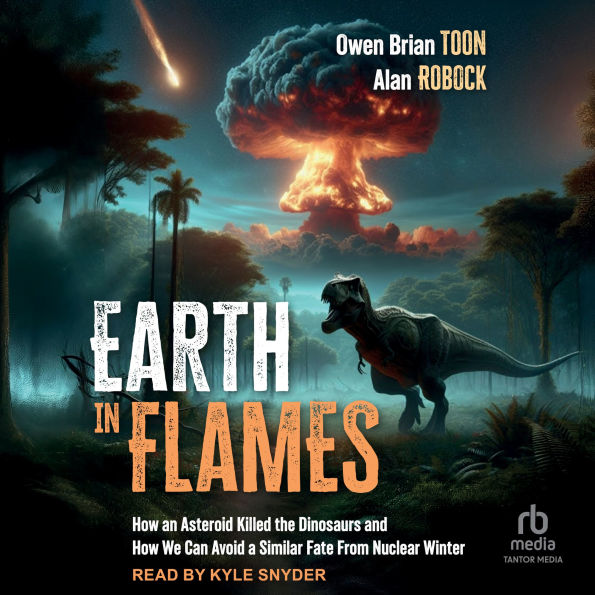
Earth in Flames: How an Asteroid Killed the Dinosaurs and How We Can Avoid a Similar Fate From Nuclear Winter
FREE
with a B&N Audiobooks Subscription
Or Pay
$19.99
19.99
In Stock

Product Details
| BN ID: | 2940195748036 |
|---|---|
| Publisher: | Tantor Audio |
| Publication date: | 09/23/2025 |
| Edition description: | Unabridged |
Videos

From the B&N Reads Blog