This audiobook is narrated by a digital voice.
The Russo-Japanese War of 1904-1905 emerged from the collision of two expanding empires in East Asia, where the ancient kingdom of Korea and the crumbling Qing Dynasty of China provided the contested territories that would determine whether European or Asian power would dominate the most populous region of the world. Russia's relentless expansion eastward across Siberia had brought the Tsarist Empire to the Pacific shores by the mid-seventeenth century, but it was not until the construction of the Trans-Siberian Railway in the 1890s that Russia possessed the logistical capability to project substantial military power into East Asia and challenge the existing balance of power that had prevailed for centuries. Meanwhile, Japan's rapid modernization following the Meiji Restoration of 1868 had transformed a feudal island nation into an industrial power with imperial ambitions that inevitably brought it into conflict with European colonialism in Asia.
The strategic significance of Korea in the emerging conflict cannot be overstated, as the peninsula represented both a gateway to China and a potential threat to Japan's security depending on which great power controlled it. For Japan, Korean independence or, failing that, Japanese influence over Korea was essential to prevent a hostile power from establishing bases within striking distance of the Japanese home islands. The geographic proximity of Korea to Japan meant that any major European power controlling the peninsula could threaten Japan's maritime communications and potentially launch an invasion, making Korean independence a matter of existential importance for Japanese security planners. Russia's growing influence in Korea following the Sino-Japanese War of 1894-1895 therefore represented an intolerable threat that Japanese leaders believed could only be resolved through diplomatic agreement or military action.
This audiobook is narrated by a digital voice.
The Russo-Japanese War of 1904-1905 emerged from the collision of two expanding empires in East Asia, where the ancient kingdom of Korea and the crumbling Qing Dynasty of China provided the contested territories that would determine whether European or Asian power would dominate the most populous region of the world. Russia's relentless expansion eastward across Siberia had brought the Tsarist Empire to the Pacific shores by the mid-seventeenth century, but it was not until the construction of the Trans-Siberian Railway in the 1890s that Russia possessed the logistical capability to project substantial military power into East Asia and challenge the existing balance of power that had prevailed for centuries. Meanwhile, Japan's rapid modernization following the Meiji Restoration of 1868 had transformed a feudal island nation into an industrial power with imperial ambitions that inevitably brought it into conflict with European colonialism in Asia.
The strategic significance of Korea in the emerging conflict cannot be overstated, as the peninsula represented both a gateway to China and a potential threat to Japan's security depending on which great power controlled it. For Japan, Korean independence or, failing that, Japanese influence over Korea was essential to prevent a hostile power from establishing bases within striking distance of the Japanese home islands. The geographic proximity of Korea to Japan meant that any major European power controlling the peninsula could threaten Japan's maritime communications and potentially launch an invasion, making Korean independence a matter of existential importance for Japanese security planners. Russia's growing influence in Korea following the Sino-Japanese War of 1894-1895 therefore represented an intolerable threat that Japanese leaders believed could only be resolved through diplomatic agreement or military action.


Russo-Japanese War: The Early 20th-Century War That Shocked the World and Led to Japanese Imperialism
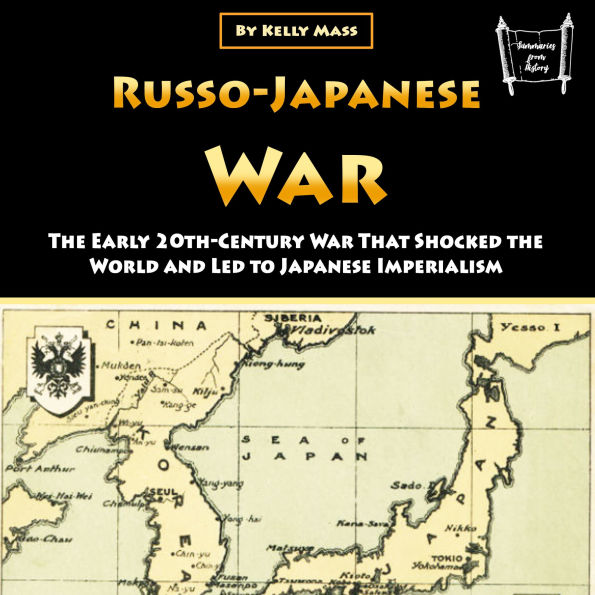
Russo-Japanese War: The Early 20th-Century War That Shocked the World and Led to Japanese Imperialism
FREE
with a B&N Audiobooks Subscription

Product Details
| BN ID: | 2940195787929 |
|---|---|
| Publisher: | Efalon Acies |
| Publication date: | 07/10/2025 |
| Edition description: | Unabridged |
Videos