
English to Old Norse
A modern guide rooted in ancient fire.
Old Norse was never a language of convenience. It was a tongue born from storm seas, blood-oaths, hearth-smoke, and the raw imagination of the North. Spoken by farmers and warriors, witches and poets, it shaped the sagas that still haunt us a thousand years later. But as the world changed, the language did not grow with it. Concepts like electricity, gender-neutrality, machines, and global holidays never existed in its vocabulary. The runes were carved for a different world entirely. English to Old Norse bridges that gap without breaking the past to fit the present.
Drawing from linguistic scholarship, saga literature, runic tradition, and culturally faithful reconstruction, this book offers a comprehensive gateway into Old Norse vocabulary and worldview. Rather than forcing new ideas into old sounds, it builds careful, poetic parallels grounded in the logic, myth, and metaphor of the Norse mind.
Each entry includes the Old Norse term, meaning, and a note exploring how the concept functioned—or would have functioned—in a Viking Age context. Many notes unpack deeper cultural truths: why "abandonment" was a moral failing, why "accident" was treated as an omen, why "sacred" did not simply mean holy but bound in fate. Reconstructed days, months, and rituals of the Norse year
From Mánuðr Þorri to Haustmánuðr, from Þorrablót to Midsummer's fires, the book restores the rhythm of the Norse ritual calendar. Each entry carries both history and spirit, offering insight into how ancient people read the world around them. Seasons retold through mythic worldview
The winter slaughter month, the sacred hay harvest, the long bright nights of Harpa—these descriptions reconnect modern readers to a worldview where survival, celebration, and the divine were intertwined.
The Elder Futhark in full depth; more than letters, runes were symbols of power. Each rune is presented with meaning, lore, upright and reversed interpretations, and suggested ritual use, inviting practitioners and writers to understand these symbols as the Norse did: as tools, omens, and glimpses into fate.
A practical pronunciation guide
The book breaks down the "strange" letters—þ, ð, æ, œ, ø, ǫ—and clarifies how Old Norse sounded when spoken aloud. With this guide, readers can bring authenticity to chants, names, invocations, and dialogue.
Words built with cultural integrity; where no historical word existed, English to Old Norse offers thoughtful reconstructions grounded in linguistic patterns and Nordic poetic logic; not inventions, but echoes.
A tool for writers, pagans, reenactors, linguists, and lovers of the sagas.
Whether you are crafting fiction set in the Viking Age, deepening your spiritual practice, performing ritual, building world-lore for games, or simply fascinated by ancient language, this book provides a resource that is both practical and soulful. It honors the historical shape of Old Norse while acknowledging modern needs.
The goal is simple: to let English thought walk the old roads, and to let the old tongue breathe again.
English to Old Norse is more than a dictionary; it is a conversation across centuries, a meeting place of fire and ink, and a guide into a world that refuses to be forgotten.
1148844990
Old Norse was never a language of convenience. It was a tongue born from storm seas, blood-oaths, hearth-smoke, and the raw imagination of the North. Spoken by farmers and warriors, witches and poets, it shaped the sagas that still haunt us a thousand years later. But as the world changed, the language did not grow with it. Concepts like electricity, gender-neutrality, machines, and global holidays never existed in its vocabulary. The runes were carved for a different world entirely. English to Old Norse bridges that gap without breaking the past to fit the present.
Drawing from linguistic scholarship, saga literature, runic tradition, and culturally faithful reconstruction, this book offers a comprehensive gateway into Old Norse vocabulary and worldview. Rather than forcing new ideas into old sounds, it builds careful, poetic parallels grounded in the logic, myth, and metaphor of the Norse mind.
Each entry includes the Old Norse term, meaning, and a note exploring how the concept functioned—or would have functioned—in a Viking Age context. Many notes unpack deeper cultural truths: why "abandonment" was a moral failing, why "accident" was treated as an omen, why "sacred" did not simply mean holy but bound in fate. Reconstructed days, months, and rituals of the Norse year
From Mánuðr Þorri to Haustmánuðr, from Þorrablót to Midsummer's fires, the book restores the rhythm of the Norse ritual calendar. Each entry carries both history and spirit, offering insight into how ancient people read the world around them. Seasons retold through mythic worldview
The winter slaughter month, the sacred hay harvest, the long bright nights of Harpa—these descriptions reconnect modern readers to a worldview where survival, celebration, and the divine were intertwined.
The Elder Futhark in full depth; more than letters, runes were symbols of power. Each rune is presented with meaning, lore, upright and reversed interpretations, and suggested ritual use, inviting practitioners and writers to understand these symbols as the Norse did: as tools, omens, and glimpses into fate.
A practical pronunciation guide
The book breaks down the "strange" letters—þ, ð, æ, œ, ø, ǫ—and clarifies how Old Norse sounded when spoken aloud. With this guide, readers can bring authenticity to chants, names, invocations, and dialogue.
Words built with cultural integrity; where no historical word existed, English to Old Norse offers thoughtful reconstructions grounded in linguistic patterns and Nordic poetic logic; not inventions, but echoes.
A tool for writers, pagans, reenactors, linguists, and lovers of the sagas.
Whether you are crafting fiction set in the Viking Age, deepening your spiritual practice, performing ritual, building world-lore for games, or simply fascinated by ancient language, this book provides a resource that is both practical and soulful. It honors the historical shape of Old Norse while acknowledging modern needs.
The goal is simple: to let English thought walk the old roads, and to let the old tongue breathe again.
English to Old Norse is more than a dictionary; it is a conversation across centuries, a meeting place of fire and ink, and a guide into a world that refuses to be forgotten.
English to Old Norse
A modern guide rooted in ancient fire.
Old Norse was never a language of convenience. It was a tongue born from storm seas, blood-oaths, hearth-smoke, and the raw imagination of the North. Spoken by farmers and warriors, witches and poets, it shaped the sagas that still haunt us a thousand years later. But as the world changed, the language did not grow with it. Concepts like electricity, gender-neutrality, machines, and global holidays never existed in its vocabulary. The runes were carved for a different world entirely. English to Old Norse bridges that gap without breaking the past to fit the present.
Drawing from linguistic scholarship, saga literature, runic tradition, and culturally faithful reconstruction, this book offers a comprehensive gateway into Old Norse vocabulary and worldview. Rather than forcing new ideas into old sounds, it builds careful, poetic parallels grounded in the logic, myth, and metaphor of the Norse mind.
Each entry includes the Old Norse term, meaning, and a note exploring how the concept functioned—or would have functioned—in a Viking Age context. Many notes unpack deeper cultural truths: why "abandonment" was a moral failing, why "accident" was treated as an omen, why "sacred" did not simply mean holy but bound in fate. Reconstructed days, months, and rituals of the Norse year
From Mánuðr Þorri to Haustmánuðr, from Þorrablót to Midsummer's fires, the book restores the rhythm of the Norse ritual calendar. Each entry carries both history and spirit, offering insight into how ancient people read the world around them. Seasons retold through mythic worldview
The winter slaughter month, the sacred hay harvest, the long bright nights of Harpa—these descriptions reconnect modern readers to a worldview where survival, celebration, and the divine were intertwined.
The Elder Futhark in full depth; more than letters, runes were symbols of power. Each rune is presented with meaning, lore, upright and reversed interpretations, and suggested ritual use, inviting practitioners and writers to understand these symbols as the Norse did: as tools, omens, and glimpses into fate.
A practical pronunciation guide
The book breaks down the "strange" letters—þ, ð, æ, œ, ø, ǫ—and clarifies how Old Norse sounded when spoken aloud. With this guide, readers can bring authenticity to chants, names, invocations, and dialogue.
Words built with cultural integrity; where no historical word existed, English to Old Norse offers thoughtful reconstructions grounded in linguistic patterns and Nordic poetic logic; not inventions, but echoes.
A tool for writers, pagans, reenactors, linguists, and lovers of the sagas.
Whether you are crafting fiction set in the Viking Age, deepening your spiritual practice, performing ritual, building world-lore for games, or simply fascinated by ancient language, this book provides a resource that is both practical and soulful. It honors the historical shape of Old Norse while acknowledging modern needs.
The goal is simple: to let English thought walk the old roads, and to let the old tongue breathe again.
English to Old Norse is more than a dictionary; it is a conversation across centuries, a meeting place of fire and ink, and a guide into a world that refuses to be forgotten.
Old Norse was never a language of convenience. It was a tongue born from storm seas, blood-oaths, hearth-smoke, and the raw imagination of the North. Spoken by farmers and warriors, witches and poets, it shaped the sagas that still haunt us a thousand years later. But as the world changed, the language did not grow with it. Concepts like electricity, gender-neutrality, machines, and global holidays never existed in its vocabulary. The runes were carved for a different world entirely. English to Old Norse bridges that gap without breaking the past to fit the present.
Drawing from linguistic scholarship, saga literature, runic tradition, and culturally faithful reconstruction, this book offers a comprehensive gateway into Old Norse vocabulary and worldview. Rather than forcing new ideas into old sounds, it builds careful, poetic parallels grounded in the logic, myth, and metaphor of the Norse mind.
Each entry includes the Old Norse term, meaning, and a note exploring how the concept functioned—or would have functioned—in a Viking Age context. Many notes unpack deeper cultural truths: why "abandonment" was a moral failing, why "accident" was treated as an omen, why "sacred" did not simply mean holy but bound in fate. Reconstructed days, months, and rituals of the Norse year
From Mánuðr Þorri to Haustmánuðr, from Þorrablót to Midsummer's fires, the book restores the rhythm of the Norse ritual calendar. Each entry carries both history and spirit, offering insight into how ancient people read the world around them. Seasons retold through mythic worldview
The winter slaughter month, the sacred hay harvest, the long bright nights of Harpa—these descriptions reconnect modern readers to a worldview where survival, celebration, and the divine were intertwined.
The Elder Futhark in full depth; more than letters, runes were symbols of power. Each rune is presented with meaning, lore, upright and reversed interpretations, and suggested ritual use, inviting practitioners and writers to understand these symbols as the Norse did: as tools, omens, and glimpses into fate.
A practical pronunciation guide
The book breaks down the "strange" letters—þ, ð, æ, œ, ø, ǫ—and clarifies how Old Norse sounded when spoken aloud. With this guide, readers can bring authenticity to chants, names, invocations, and dialogue.
Words built with cultural integrity; where no historical word existed, English to Old Norse offers thoughtful reconstructions grounded in linguistic patterns and Nordic poetic logic; not inventions, but echoes.
A tool for writers, pagans, reenactors, linguists, and lovers of the sagas.
Whether you are crafting fiction set in the Viking Age, deepening your spiritual practice, performing ritual, building world-lore for games, or simply fascinated by ancient language, this book provides a resource that is both practical and soulful. It honors the historical shape of Old Norse while acknowledging modern needs.
The goal is simple: to let English thought walk the old roads, and to let the old tongue breathe again.
English to Old Norse is more than a dictionary; it is a conversation across centuries, a meeting place of fire and ink, and a guide into a world that refuses to be forgotten.
25.0
In Stock
5
1


English to Old Norse
184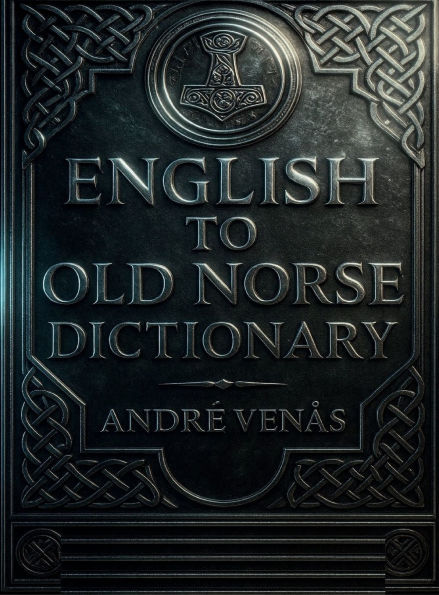
English to Old Norse
184
25.0
In Stock

Product Details
| ISBN-13: | 9798260380536 |
|---|---|
| Publisher: | Barnes & Noble Press |
| Publication date: | 12/22/2024 |
| Pages: | 184 |
| Product dimensions: | 8.50(w) x 11.00(h) x 0.50(d) |
About the Author
From the B&N Reads Blog