
Translating recent neuroscience and infant research to clinical practice.
By decoding the scientific data, this book explains how recent findings from brain and infant research can expand a clinician’s understanding of the therapist-client relationship and, in turn, improve how therapy is done. Offering clinical insights into key developmental mechanisms, Judith Rustin highlights the possibilities for new and creative treatment protocols. She summarizes and synthesizes basic concepts and ideas derived from infant research and neuroscience for clinicians not familiar with the literature. Using examples from her own practice to show how a clinician might integrate these concepts into psychodynamic practice, she invites other clinicians to experiment with finding their own pathways to integration of this valuable material in the clinical endeavor. Rustin explains how self- and mutual regulation (or bidirectional interaction)—concepts of which are both firmly grounded in the dyadic systems model of interaction—develop in infancy, how they contribute to a growing sense of self, and how they ultimately serve as templates for future interactions with others. She explains and shows how an understanding of them enriches a two-person perspective in clinical work. She then focuses on the brain science behind four additional concepts, each of which has particular application to clinical work: memory, the mind–body connection, the fear system, and mirror neurons and the concept of shared circuitry. Clinical material is interwoven with explications of each concept.
Translating recent neuroscience and infant research to clinical practice.
By decoding the scientific data, this book explains how recent findings from brain and infant research can expand a clinician’s understanding of the therapist-client relationship and, in turn, improve how therapy is done. Offering clinical insights into key developmental mechanisms, Judith Rustin highlights the possibilities for new and creative treatment protocols. She summarizes and synthesizes basic concepts and ideas derived from infant research and neuroscience for clinicians not familiar with the literature. Using examples from her own practice to show how a clinician might integrate these concepts into psychodynamic practice, she invites other clinicians to experiment with finding their own pathways to integration of this valuable material in the clinical endeavor. Rustin explains how self- and mutual regulation (or bidirectional interaction)—concepts of which are both firmly grounded in the dyadic systems model of interaction—develop in infancy, how they contribute to a growing sense of self, and how they ultimately serve as templates for future interactions with others. She explains and shows how an understanding of them enriches a two-person perspective in clinical work. She then focuses on the brain science behind four additional concepts, each of which has particular application to clinical work: memory, the mind–body connection, the fear system, and mirror neurons and the concept of shared circuitry. Clinical material is interwoven with explications of each concept.


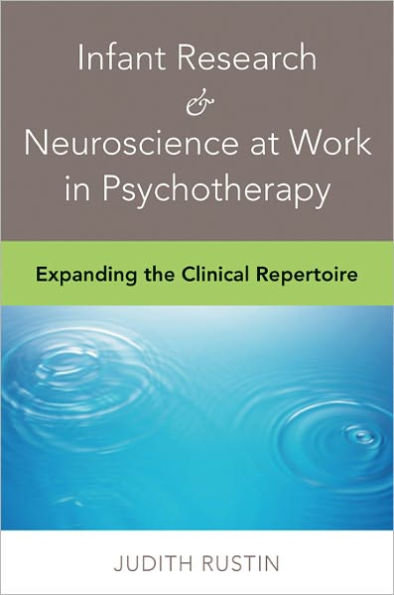
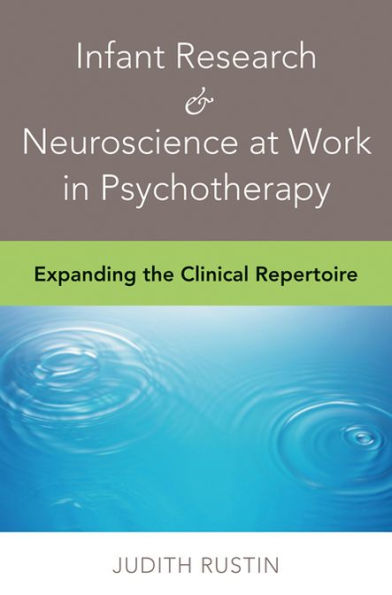
Infant Research & Neuroscience at Work in Psychotherapy: Expanding the Clinical Repertoire
224
Infant Research & Neuroscience at Work in Psychotherapy: Expanding the Clinical Repertoire
224
Product Details
| ISBN-13: | 9780393708028 |
|---|---|
| Publisher: | Norton, W. W. & Company, Inc. |
| Publication date: | 12/31/2012 |
| Sold by: | Barnes & Noble |
| Format: | eBook |
| Pages: | 224 |
| File size: | 680 KB |