
The Spirit of the Place
Samuel Shem's novel about medical internship, THE HOUSE OF GOD, is a classic, noted in The Lancet as one of the two most significant American novels of the 20th century, praised by John Updike. It has sold millions of copies and is required reading in medical schools throughout the world. It, MOUNT MISERY, and FINE are celebrated for their authentic description of medical training and practice, for their dazzling, Rabelaisian comedy, and for their humanism and vision. THE SPIRIT OF THE PLACE is Shem's most ambitious work yet. It goes beyond a focus on young doctors-in-training to that of a world-traveled doctor called home to become the doctor to the small town he ran from, to face his own history and that of the place. It is a novel of love and death, mothers and sons, ghosts and bullies, doctors and patients, illness and healing.
After a divorce and a year of wandering the world with "Doctors Without Borders," Orville Rose has settled into a new love with an Italian Buddhist teacher, Celestina Polo. A telegram informs him that his mother has died. He returns to Columbia, "a Hudson River town plagued by breakage", and is startled by his mother's will: she has left him an enormous sum of money and her historic home. There is a catch: he must live in her house on the Courthouse Square continuously for a year and thirteen days. But Orville desperately wants to return to Europe and Celestina.
As he struggles with his decision, he re-connects with the man who had been his surrogate father, Bill Starbuck-the kind of small town doctor now extinct. Bill's dusty office features a prominent 'YES SMOKING' sign and a cache of his home remedy '"Starbusol." Bill treats theworking poor, people that the medical and insurance industry have shut out. Now in his seventies, Bill needs a break, and talks Orville into helping out. He takes over Bill's practice and plunges into the grim realities of American life-as perhaps only doctors are subjected to with such grinding regularity: "Alcohol and violence. Murder as grisly as Angola. Malnutrition as bad as the Third World. A cornucopia of drugs. Epidemic smoking and obesity."
"History" is one of the central themes of the novel, elaborated in a romance between Orville and a remarkable young mother, Miranda Braak, who aspires to be the Columbian historian. Her deep knowledge of the past challenges Orville to get perspective on his present crisis; her love and integrity challenge him to grow. In a story told with the ineffable "Shem-humor", pointed insight and drama, Orville faces his patients, his past friends and demons, and the floating presence of his dead mother, learning to be a 'healer' and a part of 'the spirit of the place.'
THE SPIRIT OF THE PLACE is Shem at his finest-compassionate, capacious, funny, full of big ideas and memorable personalities. It offers an authentic, unvarnished portrait of the medical profession and underscores the crucial link between the health of individuals and the health of communities at a crucial period of American history. This is truly a great novel.
1101338953
After a divorce and a year of wandering the world with "Doctors Without Borders," Orville Rose has settled into a new love with an Italian Buddhist teacher, Celestina Polo. A telegram informs him that his mother has died. He returns to Columbia, "a Hudson River town plagued by breakage", and is startled by his mother's will: she has left him an enormous sum of money and her historic home. There is a catch: he must live in her house on the Courthouse Square continuously for a year and thirteen days. But Orville desperately wants to return to Europe and Celestina.
As he struggles with his decision, he re-connects with the man who had been his surrogate father, Bill Starbuck-the kind of small town doctor now extinct. Bill's dusty office features a prominent 'YES SMOKING' sign and a cache of his home remedy '"Starbusol." Bill treats theworking poor, people that the medical and insurance industry have shut out. Now in his seventies, Bill needs a break, and talks Orville into helping out. He takes over Bill's practice and plunges into the grim realities of American life-as perhaps only doctors are subjected to with such grinding regularity: "Alcohol and violence. Murder as grisly as Angola. Malnutrition as bad as the Third World. A cornucopia of drugs. Epidemic smoking and obesity."
"History" is one of the central themes of the novel, elaborated in a romance between Orville and a remarkable young mother, Miranda Braak, who aspires to be the Columbian historian. Her deep knowledge of the past challenges Orville to get perspective on his present crisis; her love and integrity challenge him to grow. In a story told with the ineffable "Shem-humor", pointed insight and drama, Orville faces his patients, his past friends and demons, and the floating presence of his dead mother, learning to be a 'healer' and a part of 'the spirit of the place.'
THE SPIRIT OF THE PLACE is Shem at his finest-compassionate, capacious, funny, full of big ideas and memorable personalities. It offers an authentic, unvarnished portrait of the medical profession and underscores the crucial link between the health of individuals and the health of communities at a crucial period of American history. This is truly a great novel.
The Spirit of the Place
Samuel Shem's novel about medical internship, THE HOUSE OF GOD, is a classic, noted in The Lancet as one of the two most significant American novels of the 20th century, praised by John Updike. It has sold millions of copies and is required reading in medical schools throughout the world. It, MOUNT MISERY, and FINE are celebrated for their authentic description of medical training and practice, for their dazzling, Rabelaisian comedy, and for their humanism and vision. THE SPIRIT OF THE PLACE is Shem's most ambitious work yet. It goes beyond a focus on young doctors-in-training to that of a world-traveled doctor called home to become the doctor to the small town he ran from, to face his own history and that of the place. It is a novel of love and death, mothers and sons, ghosts and bullies, doctors and patients, illness and healing.
After a divorce and a year of wandering the world with "Doctors Without Borders," Orville Rose has settled into a new love with an Italian Buddhist teacher, Celestina Polo. A telegram informs him that his mother has died. He returns to Columbia, "a Hudson River town plagued by breakage", and is startled by his mother's will: she has left him an enormous sum of money and her historic home. There is a catch: he must live in her house on the Courthouse Square continuously for a year and thirteen days. But Orville desperately wants to return to Europe and Celestina.
As he struggles with his decision, he re-connects with the man who had been his surrogate father, Bill Starbuck-the kind of small town doctor now extinct. Bill's dusty office features a prominent 'YES SMOKING' sign and a cache of his home remedy '"Starbusol." Bill treats theworking poor, people that the medical and insurance industry have shut out. Now in his seventies, Bill needs a break, and talks Orville into helping out. He takes over Bill's practice and plunges into the grim realities of American life-as perhaps only doctors are subjected to with such grinding regularity: "Alcohol and violence. Murder as grisly as Angola. Malnutrition as bad as the Third World. A cornucopia of drugs. Epidemic smoking and obesity."
"History" is one of the central themes of the novel, elaborated in a romance between Orville and a remarkable young mother, Miranda Braak, who aspires to be the Columbian historian. Her deep knowledge of the past challenges Orville to get perspective on his present crisis; her love and integrity challenge him to grow. In a story told with the ineffable "Shem-humor", pointed insight and drama, Orville faces his patients, his past friends and demons, and the floating presence of his dead mother, learning to be a 'healer' and a part of 'the spirit of the place.'
THE SPIRIT OF THE PLACE is Shem at his finest-compassionate, capacious, funny, full of big ideas and memorable personalities. It offers an authentic, unvarnished portrait of the medical profession and underscores the crucial link between the health of individuals and the health of communities at a crucial period of American history. This is truly a great novel.
After a divorce and a year of wandering the world with "Doctors Without Borders," Orville Rose has settled into a new love with an Italian Buddhist teacher, Celestina Polo. A telegram informs him that his mother has died. He returns to Columbia, "a Hudson River town plagued by breakage", and is startled by his mother's will: she has left him an enormous sum of money and her historic home. There is a catch: he must live in her house on the Courthouse Square continuously for a year and thirteen days. But Orville desperately wants to return to Europe and Celestina.
As he struggles with his decision, he re-connects with the man who had been his surrogate father, Bill Starbuck-the kind of small town doctor now extinct. Bill's dusty office features a prominent 'YES SMOKING' sign and a cache of his home remedy '"Starbusol." Bill treats theworking poor, people that the medical and insurance industry have shut out. Now in his seventies, Bill needs a break, and talks Orville into helping out. He takes over Bill's practice and plunges into the grim realities of American life-as perhaps only doctors are subjected to with such grinding regularity: "Alcohol and violence. Murder as grisly as Angola. Malnutrition as bad as the Third World. A cornucopia of drugs. Epidemic smoking and obesity."
"History" is one of the central themes of the novel, elaborated in a romance between Orville and a remarkable young mother, Miranda Braak, who aspires to be the Columbian historian. Her deep knowledge of the past challenges Orville to get perspective on his present crisis; her love and integrity challenge him to grow. In a story told with the ineffable "Shem-humor", pointed insight and drama, Orville faces his patients, his past friends and demons, and the floating presence of his dead mother, learning to be a 'healer' and a part of 'the spirit of the place.'
THE SPIRIT OF THE PLACE is Shem at his finest-compassionate, capacious, funny, full of big ideas and memorable personalities. It offers an authentic, unvarnished portrait of the medical profession and underscores the crucial link between the health of individuals and the health of communities at a crucial period of American history. This is truly a great novel.
28.95
In Stock
5
1


The Spirit of the Place
320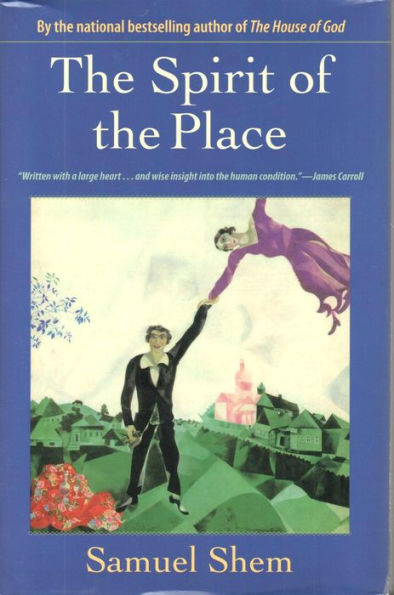
The Spirit of the Place
320Hardcover(New Edition)
$28.95
28.95
In Stock

Product Details
| ISBN-13: | 9780873389426 |
|---|---|
| Publisher: | The Kent State University Press |
| Publication date: | 05/01/2008 |
| Series: | Literature and Medicine Series , #14 |
| Edition description: | New Edition |
| Pages: | 320 |
| Product dimensions: | 5.90(w) x 9.50(h) x 1.20(d) |
About the Author
What People are Saying About This
From the B&N Reads Blog