
Wagoner, the first city incorporated in Indian Territory, was established in 1896 on the dividing line of the Cherokee and Creek Nations and at the intersection of the Missouri-Kansas-Texas Railway and the Kansas & Arkansas Railway. For the first half of the 20th century, Wagoner's economy was driven by agriculture, and it became known as the "Queen City of the Prairies." In the 1950s, when the Grand Neosho River was turned into Fort Gibson Lake, the door opened for the establishment of a number of resort enterprises. Wagoner has thrived as a visitors' destination ever since. Today, the only remaining evidence of the earliest civilization is the Norman Site--a small island slightly north of Highway 51 and east of Wagoner at Taylor Ferry--which is home to some of Oklahoma's most prominent Indian mounds.
1121656656
Wagoner
Wagoner, the first city incorporated in Indian Territory, was established in 1896 on the dividing line of the Cherokee and Creek Nations and at the intersection of the Missouri-Kansas-Texas Railway and the Kansas & Arkansas Railway. For the first half of the 20th century, Wagoner's economy was driven by agriculture, and it became known as the "Queen City of the Prairies." In the 1950s, when the Grand Neosho River was turned into Fort Gibson Lake, the door opened for the establishment of a number of resort enterprises. Wagoner has thrived as a visitors' destination ever since. Today, the only remaining evidence of the earliest civilization is the Norman Site--a small island slightly north of Highway 51 and east of Wagoner at Taylor Ferry--which is home to some of Oklahoma's most prominent Indian mounds.
12.99
In Stock
5
1


Wagoner
128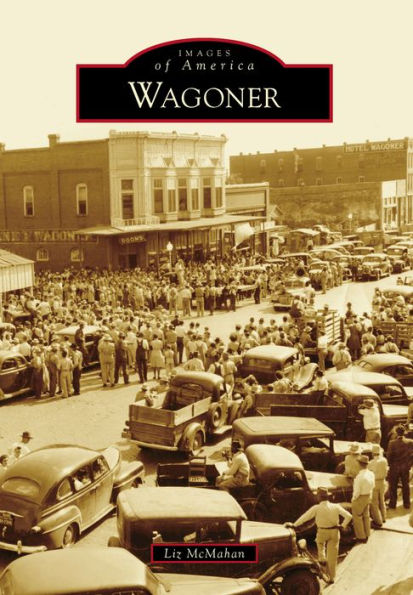
Wagoner
128Related collections and offers
12.99
In Stock

Product Details
| ISBN-13: | 9781439652909 |
|---|---|
| Publisher: | Arcadia Publishing SC |
| Publication date: | 08/24/2015 |
| Series: | Images of America Series |
| Sold by: | Bookwire |
| Format: | eBook |
| Pages: | 128 |
| File size: | 25 MB |
| Note: | This product may take a few minutes to download. |
About the Author
From the B&N Reads Blog