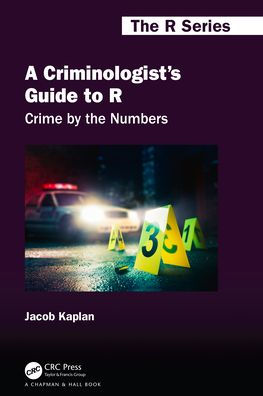
A Criminologist's Guide to R: Crime by the Numbers

A Criminologist's Guide to R: Crime by the Numbers introduces the programming language R and covers the necessary skills to conduct quantitative research in criminology. By the end of this book, a person without any prior programming experience can take raw crime data, be able to clean it, visualize the data, present it using R Markdown, and change it to a format ready for analysis. A Criminologist's Guide to R focuses on skills specifically for criminology such as spatial joins, mapping, and scraping data from PDFs, however any social scientist looking for an introduction to R for data analysis will find this useful.

Key Features:

  • Introduction to RStudio including how to change user preference settings.
  • Basic data exploration and cleaning – subsetting, loading data, regular expressions, aggregating data.
  • Graphing with ggplot2.
  • How to make maps (hotspot maps, choropleth maps, interactive maps).
  • Webscraping and PDF scraping.
  • Project management – how to prepare for a project, how to decide which projects to do, best ways to collaborate with people, how to store your code (using git), and how to test your code.
1141048969
A Criminologist's Guide to R: Crime by the Numbers

A Criminologist's Guide to R: Crime by the Numbers introduces the programming language R and covers the necessary skills to conduct quantitative research in criminology. By the end of this book, a person without any prior programming experience can take raw crime data, be able to clean it, visualize the data, present it using R Markdown, and change it to a format ready for analysis. A Criminologist's Guide to R focuses on skills specifically for criminology such as spatial joins, mapping, and scraping data from PDFs, however any social scientist looking for an introduction to R for data analysis will find this useful.

Key Features:

  • Introduction to RStudio including how to change user preference settings.
  • Basic data exploration and cleaning – subsetting, loading data, regular expressions, aggregating data.
  • Graphing with ggplot2.
  • How to make maps (hotspot maps, choropleth maps, interactive maps).
  • Webscraping and PDF scraping.
  • Project management – how to prepare for a project, how to decide which projects to do, best ways to collaborate with people, how to store your code (using git), and how to test your code.
110.0 In Stock
A Criminologist's Guide to R: Crime by the Numbers

A Criminologist's Guide to R: Crime by the Numbers

by Jacob Kaplan
A Criminologist's Guide to R: Crime by the Numbers

A Criminologist's Guide to R: Crime by the Numbers

by Jacob Kaplan

Hardcover

$110.00 
  • SHIP THIS ITEM
    In stock. Ships in 3-7 days. Typically arrives in 3 weeks.
  • PICK UP IN STORE

    Your local store may have stock of this item.

Related collections and offers


Overview

A Criminologist's Guide to R: Crime by the Numbers introduces the programming language R and covers the necessary skills to conduct quantitative research in criminology. By the end of this book, a person without any prior programming experience can take raw crime data, be able to clean it, visualize the data, present it using R Markdown, and change it to a format ready for analysis. A Criminologist's Guide to R focuses on skills specifically for criminology such as spatial joins, mapping, and scraping data from PDFs, however any social scientist looking for an introduction to R for data analysis will find this useful.

Key Features:

  • Introduction to RStudio including how to change user preference settings.
  • Basic data exploration and cleaning – subsetting, loading data, regular expressions, aggregating data.
  • Graphing with ggplot2.
  • How to make maps (hotspot maps, choropleth maps, interactive maps).
  • Webscraping and PDF scraping.
  • Project management – how to prepare for a project, how to decide which projects to do, best ways to collaborate with people, how to store your code (using git), and how to test your code.

Product Details

ISBN-13: 9781032244075
Publisher: CRC Press
Publication date: 12/15/2022
Series: Chapman & Hall/CRC The R Series
Pages: 432
Product dimensions: 6.12(w) x 9.19(h) x (d)

About the Author

Jacob Kaplan is the Chief Data Scientist of the Research on Policing Reform and Accountability (RoPRA), a multi-disciplinary, multi-institutional team of social scientists studying the feasibility and efficacy of policing reform, with a focus on statistically rigorous research and practical applications. His current appointment is at the Princeton School of Public and International Affairs. He holds a PhD and a master’s degree in criminology from the University of Pennsylvania and a bachelor’s degree in criminal justice from California State University, Sacramento. He is the author of several R packages that make it easier to work with data, including fastDummies and asciiSetupReader. He is also the author of books on the two primary criminal justice data sets: the FBI’s Uniform Crime Reporting (UCR) Program Data, and the FBI’s National Incident Based Reporting System (NIBRS) data.

Table of Contents

 1 A soup to nuts project example 2 Introduction to R and Rstudio  3 Data types and structures  4 Reading and writing Data  5 Mise en place  6 Collaboration  7 R Markdown  8 Testing your code  9 Git  10 Subsetting: Making big things small  11 Exploratory data analysis  12 Regular Expressions  13 Reshaping data  14 Graphing with ggplot2  15 More graphing with ggplot2  16 Hotspot maps  17 Choropleth maps  18 Interactive maps  19 Webscraping with rvest  20 Functions  21 For Loops  22 Scraping tables from PDFs  23 More scraping tables from PDFs  24 Geocoding

From the B&N Reads Blog

Customer Reviews