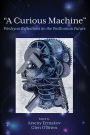
"A Curious Machine"
In his sermon "What Is Man?," John Wesley spoke of the human being as a "curious machine," reflecting the eighteenth-century view of the person as a set of complex mechanisms animated by the soul. The rapid rate of technological development in recent decades is opening toward a future in which the centrality and uniqueness of human beings is undergoing a shift. Developments in robotics, artificial intelligence, surveillance, autonomous weapons, human enhancement, and genetic modification raise an array of questions for the Christian tradition. The awareness of the negative impact of human activity on the natural environment is challenging the traditional view of humanity as having a uniquely privileged role at the heart of creation. This collection of essays addresses Wesleyan and broadly Christian voices that explore the theological, philosophical, biblical, ethical, and practical implications of emerging technologies, their impact upon different aspects of human life, and the possibilities that are opening up toward a posthuman future.
1144160895
"A Curious Machine"
In his sermon "What Is Man?," John Wesley spoke of the human being as a "curious machine," reflecting the eighteenth-century view of the person as a set of complex mechanisms animated by the soul. The rapid rate of technological development in recent decades is opening toward a future in which the centrality and uniqueness of human beings is undergoing a shift. Developments in robotics, artificial intelligence, surveillance, autonomous weapons, human enhancement, and genetic modification raise an array of questions for the Christian tradition. The awareness of the negative impact of human activity on the natural environment is challenging the traditional view of humanity as having a uniquely privileged role at the heart of creation. This collection of essays addresses Wesleyan and broadly Christian voices that explore the theological, philosophical, biblical, ethical, and practical implications of emerging technologies, their impact upon different aspects of human life, and the possibilities that are opening up toward a posthuman future.
28.0 In Stock
A Curious Machine

"A Curious Machine"

A Curious Machine

"A Curious Machine"

Paperback

$28.00 
  • SHIP THIS ITEM
    In stock. Ships in 1-2 days.
  • PICK UP IN STORE

    Your local store may have stock of this item.

Related collections and offers


Overview

In his sermon "What Is Man?," John Wesley spoke of the human being as a "curious machine," reflecting the eighteenth-century view of the person as a set of complex mechanisms animated by the soul. The rapid rate of technological development in recent decades is opening toward a future in which the centrality and uniqueness of human beings is undergoing a shift. Developments in robotics, artificial intelligence, surveillance, autonomous weapons, human enhancement, and genetic modification raise an array of questions for the Christian tradition. The awareness of the negative impact of human activity on the natural environment is challenging the traditional view of humanity as having a uniquely privileged role at the heart of creation. This collection of essays addresses Wesleyan and broadly Christian voices that explore the theological, philosophical, biblical, ethical, and practical implications of emerging technologies, their impact upon different aspects of human life, and the possibilities that are opening up toward a posthuman future.

Product Details

ISBN-13: 9781666762594
Publisher: Wipf & Stock Publishers
Publication date: 09/28/2023
Pages: 204
Product dimensions: 6.00(w) x 9.00(h) x 0.43(d)

About the Author

Arseny Ermakov is senior lecturer in biblical studies at Eva Burrows College within the University of Divinity, Melbourne, Australia. He is the coauthor, with Robert S. Snow, of The Gospel of Matthew: A Commentary in the Wesleyan Tradition (2019) and coeditor, with Andrew Brower Latz, of Purity: Essays in Bible and Theology (2014).


Glen O’Brien is research coordinator at Eva Burrows College, within the University of Divinity, Melbourne, Australia. He is the chair of examiners in the University of Divinity, and the author of John Wesley’s Political World (2022), Wesleyan-Holiness Churches in Australia (2018), as well as coeditor with Hilary Carey of Methodism in Australia: A History (2015).

What People are Saying About This

From the Publisher

“This volume is a boon to Wesleyan scholarship, showing how the lens of key Wesleyan convictions applied to contemporary concerns and anxieties surrounding technology and the future of human being can offer fruitful dialogue.”

—Victoria Lorrimar, senior research fellow, University of Notre Dame Australia


“This volume embodies two central dimensions of John Wesley’s theological orientation. First, it seeks to bring God’s revelation in the book of Scripture and God’s revelation in the ‘book of creation’ into dialogue, allowing each to better inform our interpretation of the other. Second, it highlights and extends Wesley’s critique of the negative impact of the anthropocentrism of modern Western culture upon the larger creation—calling for a discipleship that imitates the God whose ‘mercy is over ALL God’s works.’ It is a welcome contribution to the continuing vitality of the Wesleyan tradition.”

—Randy L. Maddox, professor emeritus of Wesleyan and Methodist studies, Duke Divinity School


“This excellent volume of essays delves into the intricacies of human existence in an era of growing dependence on technology in our daily lives. The authors acknowledge that these technologies bear both the promise of advancement and the peril of potentially impacting human identity, individuality, and overall well-being. This volume promises to invigorate your theological imagination while offering valuable insights and resources from the Wesleyan theological tradition to navigate the challenges and possibilities of a (post)human future.”

—Dion A. Forster, professor of public theology, Stellenbosch University

From the B&N Reads Blog

Customer Reviews