
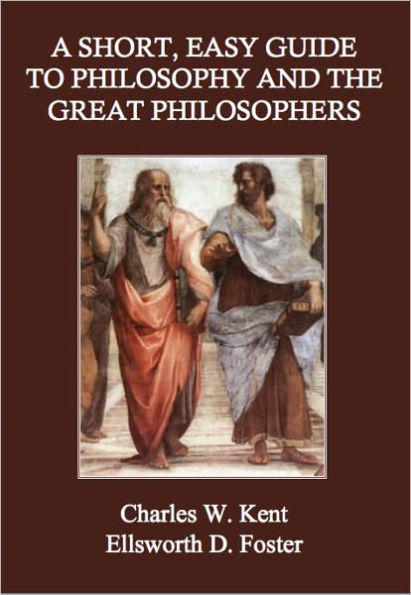
A Short, Easy Guide to Philosophy and the Great Philosophers
This easy-to-read guide presents the lives and work of 42 of the world’s greatest philosophers and clearly explains 14 different schools of philosophy. The articles that make up this book were written by Professor Charles William Kent, along with the editors of the reference work “World Book: Organized Knowledge in Story and Picture” (where many of these articles first appeared), including Ellsworth D. Foster, B. M. White, R. D. Meyer, M. A. Hoover, and C. H. Hoskins.
CONTENTS
PART I: A BRIEF OVERVIEW OF THE HISTORY OF PHILOSOPHY
Greek Philosophy
Roman Philosophy
Medieval Philosophy
Beginnings of the New Philosophy
Modern Philosophy
Twentieth Century Philosophy
PART II: THE GREAT PHILOSOPHERS
Aristotle
Bacon
Déscartes
Hegel
Hobbes
Hume
Kant
Leibnitz
Locke
Nietzsche
Plato
Rousseau
Socrates
Spinoza
Voltaire
(and 27 others)
PART III: SCHOOLS OF PHILOSOPHY
Asceticism
Cynicism
Esthetics
Existentialism
Metaphysics
Scholasticism
Sophism
Stoicism
Transcendentalism
(and 5 others)
Sample passages:
GEORG WILHELM FRIEDRICH HEGEL
Georg Wilhelm Friedrich Hegel (1770–1831) was a German student of mental phenomena, the last of four great writers (the others being Kant, Fichte, and Schelling) who during their age developed the idealistic philosophy of Germany. At one time so great was Hegel’s influence that he was said to have been the philosophical dictator of Germany. He was a native of Stuttgart, and was educated at the University of Tübingen. For many years he taught at the universities of Jena and Heidelberg, and later accepted the professorship of philosophy at the University of Berlin.
Hegel maintained that the world of objects is not only related to an intelligence, but that it can be nothing but the revelation or manifestation of intelligence. He connected his idealistic or spiritual view of things with the modern idea of evolution or development. His philosophy divides itself into three departments—“logic,” or the science of thought in its pure unity with itself; the “philosophy of nature,” in which the ideal principle, supposed to exist in all things, is shown to underlie even the external things of the material world; and the “philosophy of spirit,” which concerns the life of man as a self-conscious being in his relation to a material world. His most important books are “Logic,” “The History of Philosophy,” “The Philosophy of Religion,” and “The Philosophy of Art.” The ideas of Hegel still retain their power and form one of the most important elements in modern culture.
STOICISM
Stoicism is a belief in the doctrines of Zeno of Citium, who was called “the Stoic philosopher,” because he gave his lectures in a public porch, called “stoa” in Greek. Zeno founded his school of philosophy in the latter part of the fourth century B.C. Its teachings were lofty and severe. At a time when the followers of Epicurus were telling the people of Athens that pleasure is the chief end of existence, the Stoics taught virtue, for its own sake, as the highest good. They believed in the freedom of the will, in a single divinity, in self-control, courage, temperance, and justice, and in repressing all emotion arising from pain or misfortune. One of their doctrines that is embodied in many a modern political creed was that every human being is part of the same “world soul”—a “universal brotherhood” that should dwarf all difference of rank and nationality.
The Stoic philosophy made a strong appeal to the Romans, and Epictetus became the founder of the New Stoic school, to which belonged also such great thinkers as Seneca, Cicero, and Marcus Aurelius, “the flower of Stoicism.” It has had a marked influence on the thought of the world; it helped to prepare the world for the acceptance of Christianity.
1107870613
CONTENTS
PART I: A BRIEF OVERVIEW OF THE HISTORY OF PHILOSOPHY
Greek Philosophy
Roman Philosophy
Medieval Philosophy
Beginnings of the New Philosophy
Modern Philosophy
Twentieth Century Philosophy
PART II: THE GREAT PHILOSOPHERS
Aristotle
Bacon
Déscartes
Hegel
Hobbes
Hume
Kant
Leibnitz
Locke
Nietzsche
Plato
Rousseau
Socrates
Spinoza
Voltaire
(and 27 others)
PART III: SCHOOLS OF PHILOSOPHY
Asceticism
Cynicism
Esthetics
Existentialism
Metaphysics
Scholasticism
Sophism
Stoicism
Transcendentalism
(and 5 others)
Sample passages:
GEORG WILHELM FRIEDRICH HEGEL
Georg Wilhelm Friedrich Hegel (1770–1831) was a German student of mental phenomena, the last of four great writers (the others being Kant, Fichte, and Schelling) who during their age developed the idealistic philosophy of Germany. At one time so great was Hegel’s influence that he was said to have been the philosophical dictator of Germany. He was a native of Stuttgart, and was educated at the University of Tübingen. For many years he taught at the universities of Jena and Heidelberg, and later accepted the professorship of philosophy at the University of Berlin.
Hegel maintained that the world of objects is not only related to an intelligence, but that it can be nothing but the revelation or manifestation of intelligence. He connected his idealistic or spiritual view of things with the modern idea of evolution or development. His philosophy divides itself into three departments—“logic,” or the science of thought in its pure unity with itself; the “philosophy of nature,” in which the ideal principle, supposed to exist in all things, is shown to underlie even the external things of the material world; and the “philosophy of spirit,” which concerns the life of man as a self-conscious being in his relation to a material world. His most important books are “Logic,” “The History of Philosophy,” “The Philosophy of Religion,” and “The Philosophy of Art.” The ideas of Hegel still retain their power and form one of the most important elements in modern culture.
STOICISM
Stoicism is a belief in the doctrines of Zeno of Citium, who was called “the Stoic philosopher,” because he gave his lectures in a public porch, called “stoa” in Greek. Zeno founded his school of philosophy in the latter part of the fourth century B.C. Its teachings were lofty and severe. At a time when the followers of Epicurus were telling the people of Athens that pleasure is the chief end of existence, the Stoics taught virtue, for its own sake, as the highest good. They believed in the freedom of the will, in a single divinity, in self-control, courage, temperance, and justice, and in repressing all emotion arising from pain or misfortune. One of their doctrines that is embodied in many a modern political creed was that every human being is part of the same “world soul”—a “universal brotherhood” that should dwarf all difference of rank and nationality.
The Stoic philosophy made a strong appeal to the Romans, and Epictetus became the founder of the New Stoic school, to which belonged also such great thinkers as Seneca, Cicero, and Marcus Aurelius, “the flower of Stoicism.” It has had a marked influence on the thought of the world; it helped to prepare the world for the acceptance of Christianity.
A Short, Easy Guide to Philosophy and the Great Philosophers
This easy-to-read guide presents the lives and work of 42 of the world’s greatest philosophers and clearly explains 14 different schools of philosophy. The articles that make up this book were written by Professor Charles William Kent, along with the editors of the reference work “World Book: Organized Knowledge in Story and Picture” (where many of these articles first appeared), including Ellsworth D. Foster, B. M. White, R. D. Meyer, M. A. Hoover, and C. H. Hoskins.
CONTENTS
PART I: A BRIEF OVERVIEW OF THE HISTORY OF PHILOSOPHY
Greek Philosophy
Roman Philosophy
Medieval Philosophy
Beginnings of the New Philosophy
Modern Philosophy
Twentieth Century Philosophy
PART II: THE GREAT PHILOSOPHERS
Aristotle
Bacon
Déscartes
Hegel
Hobbes
Hume
Kant
Leibnitz
Locke
Nietzsche
Plato
Rousseau
Socrates
Spinoza
Voltaire
(and 27 others)
PART III: SCHOOLS OF PHILOSOPHY
Asceticism
Cynicism
Esthetics
Existentialism
Metaphysics
Scholasticism
Sophism
Stoicism
Transcendentalism
(and 5 others)
Sample passages:
GEORG WILHELM FRIEDRICH HEGEL
Georg Wilhelm Friedrich Hegel (1770–1831) was a German student of mental phenomena, the last of four great writers (the others being Kant, Fichte, and Schelling) who during their age developed the idealistic philosophy of Germany. At one time so great was Hegel’s influence that he was said to have been the philosophical dictator of Germany. He was a native of Stuttgart, and was educated at the University of Tübingen. For many years he taught at the universities of Jena and Heidelberg, and later accepted the professorship of philosophy at the University of Berlin.
Hegel maintained that the world of objects is not only related to an intelligence, but that it can be nothing but the revelation or manifestation of intelligence. He connected his idealistic or spiritual view of things with the modern idea of evolution or development. His philosophy divides itself into three departments—“logic,” or the science of thought in its pure unity with itself; the “philosophy of nature,” in which the ideal principle, supposed to exist in all things, is shown to underlie even the external things of the material world; and the “philosophy of spirit,” which concerns the life of man as a self-conscious being in his relation to a material world. His most important books are “Logic,” “The History of Philosophy,” “The Philosophy of Religion,” and “The Philosophy of Art.” The ideas of Hegel still retain their power and form one of the most important elements in modern culture.
STOICISM
Stoicism is a belief in the doctrines of Zeno of Citium, who was called “the Stoic philosopher,” because he gave his lectures in a public porch, called “stoa” in Greek. Zeno founded his school of philosophy in the latter part of the fourth century B.C. Its teachings were lofty and severe. At a time when the followers of Epicurus were telling the people of Athens that pleasure is the chief end of existence, the Stoics taught virtue, for its own sake, as the highest good. They believed in the freedom of the will, in a single divinity, in self-control, courage, temperance, and justice, and in repressing all emotion arising from pain or misfortune. One of their doctrines that is embodied in many a modern political creed was that every human being is part of the same “world soul”—a “universal brotherhood” that should dwarf all difference of rank and nationality.
The Stoic philosophy made a strong appeal to the Romans, and Epictetus became the founder of the New Stoic school, to which belonged also such great thinkers as Seneca, Cicero, and Marcus Aurelius, “the flower of Stoicism.” It has had a marked influence on the thought of the world; it helped to prepare the world for the acceptance of Christianity.
CONTENTS
PART I: A BRIEF OVERVIEW OF THE HISTORY OF PHILOSOPHY
Greek Philosophy
Roman Philosophy
Medieval Philosophy
Beginnings of the New Philosophy
Modern Philosophy
Twentieth Century Philosophy
PART II: THE GREAT PHILOSOPHERS
Aristotle
Bacon
Déscartes
Hegel
Hobbes
Hume
Kant
Leibnitz
Locke
Nietzsche
Plato
Rousseau
Socrates
Spinoza
Voltaire
(and 27 others)
PART III: SCHOOLS OF PHILOSOPHY
Asceticism
Cynicism
Esthetics
Existentialism
Metaphysics
Scholasticism
Sophism
Stoicism
Transcendentalism
(and 5 others)
Sample passages:
GEORG WILHELM FRIEDRICH HEGEL
Georg Wilhelm Friedrich Hegel (1770–1831) was a German student of mental phenomena, the last of four great writers (the others being Kant, Fichte, and Schelling) who during their age developed the idealistic philosophy of Germany. At one time so great was Hegel’s influence that he was said to have been the philosophical dictator of Germany. He was a native of Stuttgart, and was educated at the University of Tübingen. For many years he taught at the universities of Jena and Heidelberg, and later accepted the professorship of philosophy at the University of Berlin.
Hegel maintained that the world of objects is not only related to an intelligence, but that it can be nothing but the revelation or manifestation of intelligence. He connected his idealistic or spiritual view of things with the modern idea of evolution or development. His philosophy divides itself into three departments—“logic,” or the science of thought in its pure unity with itself; the “philosophy of nature,” in which the ideal principle, supposed to exist in all things, is shown to underlie even the external things of the material world; and the “philosophy of spirit,” which concerns the life of man as a self-conscious being in his relation to a material world. His most important books are “Logic,” “The History of Philosophy,” “The Philosophy of Religion,” and “The Philosophy of Art.” The ideas of Hegel still retain their power and form one of the most important elements in modern culture.
STOICISM
Stoicism is a belief in the doctrines of Zeno of Citium, who was called “the Stoic philosopher,” because he gave his lectures in a public porch, called “stoa” in Greek. Zeno founded his school of philosophy in the latter part of the fourth century B.C. Its teachings were lofty and severe. At a time when the followers of Epicurus were telling the people of Athens that pleasure is the chief end of existence, the Stoics taught virtue, for its own sake, as the highest good. They believed in the freedom of the will, in a single divinity, in self-control, courage, temperance, and justice, and in repressing all emotion arising from pain or misfortune. One of their doctrines that is embodied in many a modern political creed was that every human being is part of the same “world soul”—a “universal brotherhood” that should dwarf all difference of rank and nationality.
The Stoic philosophy made a strong appeal to the Romans, and Epictetus became the founder of the New Stoic school, to which belonged also such great thinkers as Seneca, Cicero, and Marcus Aurelius, “the flower of Stoicism.” It has had a marked influence on the thought of the world; it helped to prepare the world for the acceptance of Christianity.
3.99
In Stock
5
1

A Short, Easy Guide to Philosophy and the Great Philosophers
A Short, Easy Guide to Philosophy and the Great Philosophers
eBook
$3.99
Related collections and offers
3.99
In Stock

Product Details
| BN ID: | 2940013455597 |
|---|---|
| Publisher: | A. J. Cornell Publications |
| Publication date: | 12/04/2011 |
| Sold by: | Barnes & Noble |
| Format: | eBook |
| File size: | 47 KB |
About the Author
From the B&N Reads Blog