
The 1973 Marine Mammal Protection Act at first appeared to be a major victory for environmentalists. It banned the use of oversized fishing nets in an attempt to save thousands of dolphins killed each year in tuna harvests. But hampered by exemptions, extensions, delays, and quotas, MMPA has instead created international turmoil in the tuna industry while still allowing some 20,000 dolphin deaths each year.
In this revealing book, Alessandro Bonanno and Douglas Constance use the tuna-dolphin controversy to explore the rapidly increasing effects of globalization on agricultural and food production. Illustrating how private industries, political institutions, national economies, and social movements have been swept into a global arena, they reach some intriguing and important conclusions about the complex and sometimes bewildering future of industry and the environment.
Analyzing the controversy’s outcome, they show how relatively small groups can, with effective organization, pass legislation that fundamentally changes the way corporations do business. The globalization that often results, they contend, can have wide-reaching consequences—many of them unintended and unpredictable. Following passage of MMPA, U.S. tuna processors turned to foreign suppliers of “dolphin-safe” tuna while U.S. tuna fishing corporations deserted the U.S. market—circumventing MMPA altogether. Bilateral international agreements, GATT, NAFTA, and the U.S. federal courts have intervened in the chaos and have been challenged from all sides—from the Bush Administration to Bumble Bee Tuna, from Greenpeace to the European Economic Community.
Through it all, independent owners of fishing boats have been forced out of business, U.S. processing jobs have moved overseas, and environmentalists have continued their dolphin campaign. Even those who appear to be benefiting may not be, the authors demonstrate. Despite increased opportunities for some foreign labor forces, the weakest segments—especially in developing countries—continue to be exploited.
Stressing the limits that individual nations face in the current socio-economic climate and the conflicting agendas of a variety of labor and environmental movements, Bonanno and Constance argue that the regulatory ability of any national government—even one with strong society support—must be rethought and redefined.
The 1973 Marine Mammal Protection Act at first appeared to be a major victory for environmentalists. It banned the use of oversized fishing nets in an attempt to save thousands of dolphins killed each year in tuna harvests. But hampered by exemptions, extensions, delays, and quotas, MMPA has instead created international turmoil in the tuna industry while still allowing some 20,000 dolphin deaths each year.
In this revealing book, Alessandro Bonanno and Douglas Constance use the tuna-dolphin controversy to explore the rapidly increasing effects of globalization on agricultural and food production. Illustrating how private industries, political institutions, national economies, and social movements have been swept into a global arena, they reach some intriguing and important conclusions about the complex and sometimes bewildering future of industry and the environment.
Analyzing the controversy’s outcome, they show how relatively small groups can, with effective organization, pass legislation that fundamentally changes the way corporations do business. The globalization that often results, they contend, can have wide-reaching consequences—many of them unintended and unpredictable. Following passage of MMPA, U.S. tuna processors turned to foreign suppliers of “dolphin-safe” tuna while U.S. tuna fishing corporations deserted the U.S. market—circumventing MMPA altogether. Bilateral international agreements, GATT, NAFTA, and the U.S. federal courts have intervened in the chaos and have been challenged from all sides—from the Bush Administration to Bumble Bee Tuna, from Greenpeace to the European Economic Community.
Through it all, independent owners of fishing boats have been forced out of business, U.S. processing jobs have moved overseas, and environmentalists have continued their dolphin campaign. Even those who appear to be benefiting may not be, the authors demonstrate. Despite increased opportunities for some foreign labor forces, the weakest segments—especially in developing countries—continue to be exploited.
Stressing the limits that individual nations face in the current socio-economic climate and the conflicting agendas of a variety of labor and environmental movements, Bonanno and Constance argue that the regulatory ability of any national government—even one with strong society support—must be rethought and redefined.

Caught in the Net: The Global Tuna Industry, Environmentalism, and the State
304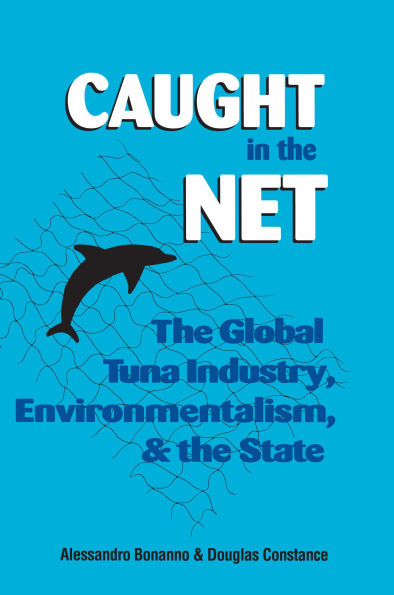
Caught in the Net: The Global Tuna Industry, Environmentalism, and the State
304
Product Details
| ISBN-13: | 9780700639922 |
|---|---|
| Publisher: | University Press of Kansas |
| Publication date: | 08/22/2025 |
| Sold by: | Barnes & Noble |
| Format: | eBook |
| Pages: | 304 |
| File size: | 1 MB |