The story of how Yellowstone, established in 1872 as the world's first national park, has become synonymous with nature conservation-and an examination of today's challenges to preserve the region's wilderness heritage.
For more than 150 years, the Yellowstone region-now widely known as the twenty-three million acre Greater Yellowstone Ecosystem-has played a prominent role in the United States' nature conservation agenda. In this book, Robert B. Keiter, an award-winning public land law and policy expert, traces the evolution and application of fundamental ecological conservation concepts tied to Yellowstone.
Keiter's book highlights both the conservation successes and controversies connected with this storied region, which has been enmeshed in change. But in the face of explosive human population growth and related development pressures, new efforts must also account for the region's privately owned lands along with accelerating recreational activities that present quite different problems. Exploring both notable conservation accomplishments and the ongoing challenges confronting this special place, Keiter's book explains the many forces-scientific, political, economic, legal, cultural, climatic, and more-at work driving controversy and change across the region. But more than this, Conserving Nature in Greater Yellowstone shows us that the lessons gleaned from Yellowstone's expansive nature conservation efforts are profoundly important for both the country and the world.
The story of how Yellowstone, established in 1872 as the world's first national park, has become synonymous with nature conservation-and an examination of today's challenges to preserve the region's wilderness heritage.
For more than 150 years, the Yellowstone region-now widely known as the twenty-three million acre Greater Yellowstone Ecosystem-has played a prominent role in the United States' nature conservation agenda. In this book, Robert B. Keiter, an award-winning public land law and policy expert, traces the evolution and application of fundamental ecological conservation concepts tied to Yellowstone.
Keiter's book highlights both the conservation successes and controversies connected with this storied region, which has been enmeshed in change. But in the face of explosive human population growth and related development pressures, new efforts must also account for the region's privately owned lands along with accelerating recreational activities that present quite different problems. Exploring both notable conservation accomplishments and the ongoing challenges confronting this special place, Keiter's book explains the many forces-scientific, political, economic, legal, cultural, climatic, and more-at work driving controversy and change across the region. But more than this, Conserving Nature in Greater Yellowstone shows us that the lessons gleaned from Yellowstone's expansive nature conservation efforts are profoundly important for both the country and the world.


Conserving Nature in Greater Yellowstone: Controversy and Change in an Iconic Ecosystem
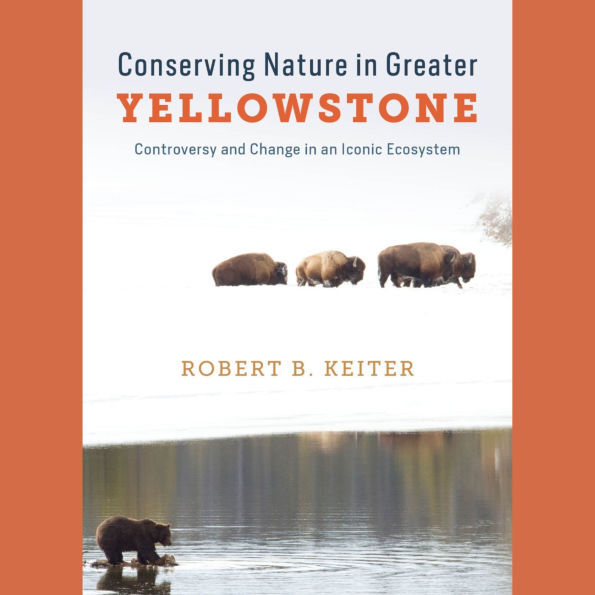
Conserving Nature in Greater Yellowstone: Controversy and Change in an Iconic Ecosystem
FREE
with a B&N Audiobooks Subscription

Product Details
| BN ID: | 2940195630300 |
|---|---|
| Publisher: | University of Chicago Press |
| Publication date: | 06/23/2025 |
| Edition description: | Unabridged |
Videos