
A Times Literary Supplement Best Book of the Year
A major new work by Charles Taylor: the long-awaited follow-up to The Language Animal, exploring the Romantic poetics central to his theory of language.
The Language Animal, Charles Taylor’s 2016 account of human linguistic capacity, was a revelation, illuminating our most fundamental selves. But, as Taylor noted in that work, there was more to be said. Cosmic Connections extends Taylor’s exploration of innovations in language by turning to Romantic and post-Romantic responses to disenchantment.
The fall of cosmic order left Romantics groping toward a new meaning of life. They turned to the symbols and music of poetry to recover contact with reality beyond fragmented existence, developing aesthetic forms that post-Romantics have carried into the present day. Taylor takes us from Hölderlin, Novalis, Keats, and Shelley to Hopkins, Rilke, Baudelaire, and Mallarmé, and on to Eliot, Miłosz, and beyond.
In seeking understanding and a new orientation to life, the language of poetry is not merely a pleasurable presentation of doctrines already elaborated elsewhere. Rather, Taylor insists, poetry persuades us through the experience of connection. The resulting conviction is very different from that gained through the force of argument. Poetry’s reasoning will often be incomplete, tentative, and enigmatic. But at the same time, its insight is too moving—too obviously true—to be ignored.
A Times Literary Supplement Best Book of the Year
A major new work by Charles Taylor: the long-awaited follow-up to The Language Animal, exploring the Romantic poetics central to his theory of language.
The Language Animal, Charles Taylor’s 2016 account of human linguistic capacity, was a revelation, illuminating our most fundamental selves. But, as Taylor noted in that work, there was more to be said. Cosmic Connections extends Taylor’s exploration of innovations in language by turning to Romantic and post-Romantic responses to disenchantment.
The fall of cosmic order left Romantics groping toward a new meaning of life. They turned to the symbols and music of poetry to recover contact with reality beyond fragmented existence, developing aesthetic forms that post-Romantics have carried into the present day. Taylor takes us from Hölderlin, Novalis, Keats, and Shelley to Hopkins, Rilke, Baudelaire, and Mallarmé, and on to Eliot, Miłosz, and beyond.
In seeking understanding and a new orientation to life, the language of poetry is not merely a pleasurable presentation of doctrines already elaborated elsewhere. Rather, Taylor insists, poetry persuades us through the experience of connection. The resulting conviction is very different from that gained through the force of argument. Poetry’s reasoning will often be incomplete, tentative, and enigmatic. But at the same time, its insight is too moving—too obviously true—to be ignored.

Cosmic Connections: Poetry in the Age of Disenchantment
288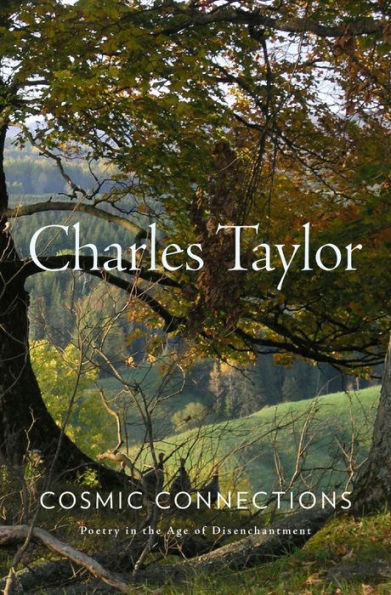
Cosmic Connections: Poetry in the Age of Disenchantment
288Related collections and offers

Product Details
| ISBN-13: | 9780674297067 |
|---|---|
| Publisher: | Harvard University Press |
| Publication date: | 05/21/2024 |
| Sold by: | Barnes & Noble |
| Format: | eBook |
| Pages: | 288 |
| File size: | 2 MB |