
WINNER Best Scholarly Book in Canadian History Prize, Canadian Historical Association (2021)
WINNER Indigenous History Book Prize, Canadian Historical Association (2021)
WINNER Floyd S. Chambers Award for Ontario History, The Champlain Society (2020)
WINNER CLIO History Prize (Ontario), Canadian Historical Association (2021)
WINNER Governor General's History Award for Excellence in Scholarly Research (2021)
WINNER NiCHE Prize for Best Book in Canadian Environmental History, Canadian Historical Association (2022)
COMMENDED Labriola Center American Indian National Book Award (2020)
Dammed explores Canada’s hydroelectric boom in the Lake of the Woods area. It complicates narratives of increasing affluence in postwar Canada, revealing that the inverse was true for Indigenous communities along the Winnipeg River.
Dammed makes clear that hydroelectric generating stations were designed to serve settler populations. Governments and developers excluded the Anishinabeg from planning and operations and failed to consider how power production might influence the health and economy of their communities. By so doing, Canada and Ontario thwarted a future that aligned with the terms of treaty, a future in which both settlers and the Anishinabeg might thrive in shared territories.
The same hydroelectric development that powered settler communities flooded manomin fields, washed away roads, and compromised fish populations. Anishinaabe families responded creatively to manage the government-sanctioned environmental change and survive the resulting economic loss. Luby reveals these responses to dam development, inviting readers to consider how resistance might be expressed by individuals and families, and across gendered and generational lines.
Luby weaves text, testimony, and experience together, grounding this historical work in the territory of her paternal ancestors, lands she calls home. With evidence drawn from archival material, oral history, and environmental observation, Dammed invites readers to confront Canadian colonialism in the twentieth century.
WINNER Best Scholarly Book in Canadian History Prize, Canadian Historical Association (2021)
WINNER Indigenous History Book Prize, Canadian Historical Association (2021)
WINNER Floyd S. Chambers Award for Ontario History, The Champlain Society (2020)
WINNER CLIO History Prize (Ontario), Canadian Historical Association (2021)
WINNER Governor General's History Award for Excellence in Scholarly Research (2021)
WINNER NiCHE Prize for Best Book in Canadian Environmental History, Canadian Historical Association (2022)
COMMENDED Labriola Center American Indian National Book Award (2020)
Dammed explores Canada’s hydroelectric boom in the Lake of the Woods area. It complicates narratives of increasing affluence in postwar Canada, revealing that the inverse was true for Indigenous communities along the Winnipeg River.
Dammed makes clear that hydroelectric generating stations were designed to serve settler populations. Governments and developers excluded the Anishinabeg from planning and operations and failed to consider how power production might influence the health and economy of their communities. By so doing, Canada and Ontario thwarted a future that aligned with the terms of treaty, a future in which both settlers and the Anishinabeg might thrive in shared territories.
The same hydroelectric development that powered settler communities flooded manomin fields, washed away roads, and compromised fish populations. Anishinaabe families responded creatively to manage the government-sanctioned environmental change and survive the resulting economic loss. Luby reveals these responses to dam development, inviting readers to consider how resistance might be expressed by individuals and families, and across gendered and generational lines.
Luby weaves text, testimony, and experience together, grounding this historical work in the territory of her paternal ancestors, lands she calls home. With evidence drawn from archival material, oral history, and environmental observation, Dammed invites readers to confront Canadian colonialism in the twentieth century.
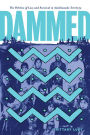

Dammed: The Politics of Loss and Survival in Anishinaabe Territory

Dammed: The Politics of Loss and Survival in Anishinaabe Territory
Related collections and offers

Product Details
| ISBN-13: | 9780887558757 |
|---|---|
| Publisher: | University of Manitoba Press |
| Publication date: | 10/09/2020 |
| Series: | Critical Studies in Native History , #21 |
| Sold by: | Barnes & Noble |
| Format: | eBook |
| File size: | 8 MB |