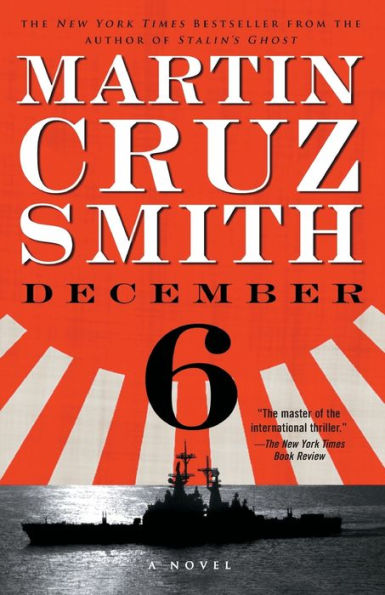
December 6

( 32 )

Pick Up in Store

Reserve and pick up in 60 minutes at your local store

Paperback (Reprint)
$12.84
BN.com price
$15.00 List Price (Save 14%)
Marketplace (New and Used)
from
$0.01
$15.00 List Price (Save 100%)
All (54)  
Used (38)  
New (16)  
Close
Sort by
Page 1 of 6
Showing 1 – 10 of 54 (6 pages)
$0.01
(Save 100%)
Seller since 2006

Feedback rating:

(50891)

Condition:

New — never opened or used in original packaging.

Like New — packaging may have been opened. A "Like New" item is suitable to give as a gift.

Very Good — may have minor signs of wear on packaging but item works perfectly and has no damage.

Good — item is in good condition but packaging may have signs of shelf wear/aging or torn packaging. All specific defects should be noted in the Comments section associated with each item.

Acceptable — item is in working order but may show signs of wear such as scratches or torn packaging. All specific defects should be noted in the Comments section associated with each item.

Used — An item that has been opened and may show signs of wear. All specific defects should be noted in the Comments section associated with each item.

Refurbished — A used item that has been renewed or updated and verified to be in proper working condition. Not necessarily completed by the original manufacturer.

Good
Shows some signs of wear, and may have some markings on the inside. 100% Money Back Guarantee. Shipped to over one million happy customers. Your purchase benefits world literacy!

Ships from: Mishawaka, IN

Usually ships in 1-2 business days

  • Canadian
  • International
  • Standard, 48 States
  • Standard (AK, HI)
  • Express, 48 States
  • Express (AK, HI)
$0.01
(Save 100%)
Seller since 2009

Feedback rating:

(22568)

Condition: Good
Giving great service since 2004: Buy from the Best! 4,000,000 items shipped to delighted customers. We have 1,000,000 unique items ready to ship! Find your Great Buy today!

Ships from: Lakewood, WA

Usually ships in 1-2 business days

  • Canadian
  • International
  • Standard, 48 States
  • Standard (AK, HI)
  • Express, 48 States
  • Express (AK, HI)
$0.01
(Save 100%)
Seller since 2009

Feedback rating:

(18248)

Condition: Good
Buy from the best: 4,000,000 items shipped to delighted customers. We have 1,000,000 unique items ready to ship today!

Ships from: Lakewood, WA

Usually ships in 1-2 business days

  • Canadian
  • International
  • Standard, 48 States
  • Standard (AK, HI)
  • Express, 48 States
  • Express (AK, HI)
$0.15
(Save 99%)
Seller since 2012

Feedback rating:

(23)

Condition: Like New
1416577750 Remainder mark

Ships from: Philadelphia, PA

Usually ships in 1-2 business days

  • Standard, 48 States
  • Standard (AK, HI)
  • Express, 48 States
$0.25
(Save 98%)
Seller since 2012

Feedback rating:

(81)

Condition: Good
Very minimal damage to the cover no holes or tears, only minimal scuff marks minimal wear binding majority of pages undamaged minimal creases or tears. Book may have writing, ... underlining, highlighting, wear to cover and corners, notes in margins, writing Read more Show Less

Ships from: Indianapolis, IN

Usually ships in 1-2 business days

  • Canadian
  • International
  • Standard, 48 States
  • Standard (AK, HI)
  • Express, 48 States
  • Express (AK, HI)
$0.99
(Save 93%)
Seller since 2005

Feedback rating:

(493)

Condition: New
2008 Paperback New Book. Lightest of shelf/storage wear. Bookstore sticker on back. Small remainder mark on bottom page edge. SHIPS W/IN 24 HOURS! FREE INSURANCE! Fast & ... Personal Service & Support! Careful Packaging. No Hassle, Full Refund Return Policy! Over *100, 000* Items Available! Read more Show Less

Ships from: Alton, IL

Usually ships in 1-2 business days

  • Canadian
  • International
  • Standard, 48 States
  • Standard (AK, HI)
  • Express, 48 States
  • Express (AK, HI)
$0.99
(Save 93%)
Seller since 2005

Feedback rating:

(493)

Condition: Good
2008 Paperback Very Good Condition. Reasonable light wear. Text appears free of marks, writing, and highlighting. May have bookstore-related stamps/stickers/marks. SHIPS W/IN 24 ... HOURS! FREE INSURANCE! Fast & Personal Service & Support! Careful Packaging. No Hassle, Full Refund Return Policy! Over *100, 000* Items Available! Read more Show Less

Ships from: Alton, IL

Usually ships in 1-2 business days

  • Canadian
  • International
  • Standard, 48 States
  • Standard (AK, HI)
  • Express, 48 States
  • Express (AK, HI)
$0.99
(Save 93%)
Seller since 2012

Feedback rating:

(42)

Condition: Like New
Like New Condition, Ships Fast.

Ships from: Oakley, CA

Usually ships in 1-2 business days

  • Standard, 48 States
  • Standard (AK, HI)
$0.99
(Save 93%)
Seller since 2008

Feedback rating:

(397)

Condition: Good
2008 Trade paperback Good. Trade paperback (US). Glued binding. 383 p.

Ships from: Phoenix, AZ

Usually ships in 1-2 business days

  • Canadian
  • International
  • Standard, 48 States
  • Standard (AK, HI)
  • Express, 48 States
  • Express (AK, HI)
$1.25
(Save 92%)
Seller since 2007

Feedback rating:

(2667)

Condition: New
2008 Paperback A brand-new, unused, unread copy in perfect condiion.

Ships from: Los Angeles, CA

Usually ships in 1-2 business days

  • Canadian
  • International
  • Standard, 48 States
  • Standard (AK, HI)
  • Express, 48 States
  • Express (AK, HI)
Page 1 of 6
Showing 1 – 10 of 54 (6 pages)
Close
Sort by
NOOK Book (eBook)
$7.99
BN.com price

Available on NOOK devices and apps

  • Nook Devices
  • NOOK
  • NOOK Color
  • NOOK Tablet
  • Tablet/Phone
  • NOOK for iPad
  • NOOK for iPhone
  • NOOK for Android
  • NOOK for Android (Tablet)
  • NOOK Kids for iPad
  • PC/Mac
  • NOOK Study
  • NOOK for PC
  • NOOK for Mac

Want a NOOK? Explore Now

Overview

Amid the imperialist fervor of late 1941 Tokyo, Harry Niles is a man with a mission — self-preservation. But Niles was raised by missionary parents and educated in the shadows of Tokyo's underworld — making his loyalties as dubious as his business dealings.

Now, on the eve of the attack on Pearl Harbor, Niles must decide where his true allegiances lie, as he tries to juggle his Japanese mistress and an affair with the wife of a British diplomat; avoid a modern-day samurai who is honor-bound to kill him; and survive the Japanese high command, whose plans for conquest may just dictate his survival.

Set in a maelstrom of personal temptations and mortal enemies, with a remarkable anti-hero caught in a land he can never call his own, DECEMBER 6 is a triumph of imagination, history, and riveting storytelling.
Editorial Reviews

From Barnes & Noble
The Barnes & Noble Review
No one is better than Martin Cruz Smith (Rose, Red Square, Gorky Park) at evoking the sights, sounds, and peculiar textures of lives lived in extraordinary times and places. With December 6, Smith moves from the contemporary Cuban setting of his previous novel, Havana Bay, to Tokyo City in 1945, giving us a suspenseful, minutely detailed account of the days preceding -- and immediately following -- the attack on Pearl Harbor.

His vehicle for this hypnotic ride is gambler, con man, and suspected collaborator Harry Niles, who grew up on the streets of Tokyo and is, in many respects, more Japanese than American. Harry runs a popular expatriate bar called The Happy Paris and juggles romantic relationships with the wife of the British ambassador and a tempestuous former geisha named Michiko. Like many of his fellow Americans, he's convinced that war is imminent and is determined to catch the last flight out of Japan before hostilities commence. His plans for escape face many obstacles, including the obsessive scrutiny of two zealous agents from Tokyo's "Thought Police" and a crazed modern samurai with a long-standing grudge against Harry that can only be satisfied by bloodshed. All of this is complicated by Harry's penchant for high-stakes gambling and by his own peculiar ethical code -- a code that leads him into a dangerous shell game with Japanese Naval Intelligence and causes him to risk his life protecting friends, lovers, and even strangers.

Like all really good fiction, December 6 works on a number of levels: as a thriller; as a multilayered portrait of a complex, contradictory figure; as a meditation on Japanese culture, character, and beliefs; and as a cogent historical analysis of Japan's decision to initiate a war it could not possibly win. The result is a striking, absolutely authentic novel that illuminates one of the critical moments of the 20th century and confirms Smith's position among the most stylish and intelligent American storytellers. Bill Sheehan

The New Yorker
Smith's new thriller is set in Tokyo in the last days of 1941, just before the bombing of Pearl Harbor; its central character, the American Harry Niles, grew up in Japan, where his missionary parents were preaching the Word. Harry isn't very holy, however: he owns a night club called the Happy Paris, dabbles in assorted short cons, and spends much of his time with various mistresses, including the possibly murderous Michiko, the jukebox girl at the Happy Paris. As the rumors of war heat up, Harry finds that he is the victim of his own equivocal identity: Americans worry that he has become too Japanese, and the Japanese suspect him of being a spy. Smith's plot is more than slightly reminiscent of "Casablanca," and the spectre of the Second World War seems, at this distance, almost quaint, but the characters are so well drawn and the local color so colorful that these quibbles hardly interfere with the novel's pleasures.
School Library Journal
Adult/High School-In early December, 1941, Harry Niles runs his nightclub, Happy Paris, in Tokyo's Asakuza district, keeps a mistress, and makes plans to escape from Japan with the British ambassador's wife. His departure is complicated by the Japanese, who consider him a spy and arrest him several times; the British and Americans, who deny him any help; and a Japanese soldier who wants him dead. He manages to elude most of his problems, narrowly escaping only to discover that he is trapped in Japan on December 7. Smith vividly conjures up the beauty of the country and the ugliness in people. Along with clear descriptions of locations, he creates realistic pictures of a distinct time and place. While the protagonist is the most fully developed, the secondary characters, as well as those who play far lesser roles, quickly take on distinct personalities and attributes. The book has flashbacks of Niles growing up in Japan as a mistreated and neglected son of American missionaries. As the plot progresses, his background helps to explain his attitude toward Japan, the imminent war, his relationships with two lovers, and his love of gambling against the odds. Since the story takes place over three days, the events move quickly and the plot is tightly woven together. The result is a historical thriller brimming with action, odd characters, and an ending well worth the read.-Pam Johnson, Fairfax County Public Library, VA Copyright 2003 Reed Business Information.
Kirkus Reviews
War-ready Japan becomes as nostalgically wonderful as the doomed central Europe of Alan Furst in the latest masterwork from the author of Gorky Park. The gripping pleasure that put Smith (Havana Bay, 1999, etc.) at the top of Cold War-era thriller lists was his detailed and utterly believable revelation of Moscow as a weary city full of real people. Here, it's Tokyo-on December 6, 1941. Smith's guide to the tinderbox megalopolis is Harry Niles, an American supposedly in the care of his drunken uncle (the only iffy premise) while his missionary parents beat the bushes for potential Baptists. As a gaijin-foreigner-Harry is the permanent victim of his schoolboy chums in their re-creations of samurai sagas. The games may be imaginary, but the beatings are real, and Harry gains legendary survival skills along with the language and cultural understanding of a native. December 6 finds him the owner of Happy Paris, a nightclub featuring the d.j. skills of Michiko, a Modern Girl as thoroughly independent and wily as the cynical Harry. The pair's prickly relationship is complicated by Harry's occasional wanderings with the code-breaking wife of a fatuous British peer and by the mortally frightening news that Colonel Ishigami, whom Harry caused to lose face as Ishigami was removing heads in Manchuria, is in town and looking for him. He's not alone. Harry's tormenting childhood friends have grown up, one of them making it into the inner circle of Admiral Yamamoto, and they too appear to have plans for Harry, whose own fate may narrow down to getting out of Tokyo before the balloon goes up. At the heart of Harry's problems is the little bit of bogus intelligence he's slipped into the militarymachinery in an effort to forestall the war that would inevitably obliterate the adopted country he loves so passionately. Intelligent, jazzy, romantic, unbelievably tense, completely absorbing. Worth the wait.

Product Details

  • ISBN-13: 9781416577751
  • Publisher: Pocket Books
  • Publication date: 8/12/2008
  • Edition description: Reprint
  • Pages: 400
  • Sales rank: 394,513
  • Product dimensions: 5.42 (w) x 9.74 (h) x 1.05 (d)

Meet the Author

Martin Cruz Smith
Martin Cruz Smith

Martin Cruz-Smith's novels include Stalin's Ghost, Gorky Park, Rose, December 6, Polar Star and Stallion Gate. A two-time winner of the Hammett Prize from the International Association of Crime Writers and a recipient of Britain's Golden Dagger Award, he lives in California.

Biography

"You have to be an outsider to write," the novelist Martin Cruz Smith has said, and the protagonists of Smith's novels also tend to be outsiders, viewing their surroundings with the wariness and sharpened attention of the displaced. Smith spent his early writing years churning out potboilers, but with the 1977 publication of Nightwing, a bestseller about a plague of vampire bats that descends on a Hopi Indian reservation, Smith finally earned enough money to embark on the book he really wanted to write: a detective novel set in Moscow.

The book opens on a grisly scene: three corpses are found frozen in Gorky Park, their faces and fingerprints obliterated. Homicide investigator Arkady Renko is put on the case, but his superiors seem less than eager to uncover the truth. Dense, atmospheric and intricately plotted, Gorky Park drew comparisons to the spy novels of John le Carré. It was hugely successful, and was made into a movie starring William Hurt in 1983. Smith wrote a historical novel about the first atom bomb, Stallion Gate, before returning to Renko’s checkered career as a detective in Polar Star and Red Square. Though he bears some resemblance to the disaffected detective of noir tradition, the cynical, depressive Renko also exemplifies the Soviet dissident -- an outsider in his own country.

Renko has been immensely popular with readers, some of whom were disappointed when Smith's 1996 novel Rose featured a new protagonist. But most Renko fans were won over by boozy, broke mining engineer Jonathan Blair, who arrives in an English coal-mining town on a mission to clear up the mysterious disappearance of the local curate. Time magazine called Rose "the most interesting and richly textured crime story of the season."

One thing that sets Smith's work apart from other thrillers is the breadth and depth of his research. Before writing Gorky Park, the author visited Moscow, befriended exiled Russians and read scores of Russian newspapers and magazines in translation. For Rose, he spent weeks in Lancashire talking with miners and visiting mines. Smith's recent works Havana Bay, in which Renko goes to Cuba, and December 6, set in Tokyo just before the bombing of Pearl Harbor, are equally fortified with research.

Though he's best known for Gorky Park, now considered a classic in the spy thriller genre, Smith is clearly a writer with more than one trick up his sleeve. "I never thought I would just be doing Arkady books," he once told a Salon interviewer. "I never intended to do any after Gorky Park, so I was pretty amazed when people asked me a few years ago what I was going to do now that the Cold War was over, as if I had been manufacturing missiles. I hate to be categorized. The great thing about being a writer is that you are always recreating yourself."

Good To Know

Martin Cruz Smith was born Martin William Smith, but changed his middle name to his grandmother's surname, Cruz. Smith is the son of a white jazz musician and a Pueblo Indian jazz singer.

George Orwell's The Road to Wigan Pier was one inspiration for Smith's novel Rose, set in the English coal-mining town of Wigan; another was a magazine article about the "pit girls" who flouted Victorian convention by wearing pants for their dangerous jobs above the mines.

Havana Bay, which reached No. 17 on the bestseller list, apparently didn't sell quite well enough to keep both author and publishers happy; a Random House publicity director told Salon that "[Havana Bay] didn't do as well as we'd hoped." After it came out, Smith left Random House for Simon & Schuster, which was looking to add more authors who could draw a male audience.

    1. Also Known As:
      Martin William Smith (birth name); Simon Quinn; Jake Logan
    2. Hometown:
      San Rafael, California
    1. Date of Birth:
      November 3, 1942
    2. Place of Birth:
      Reading, Pennsylvania
    1. Education:
      B.A., University of Pennsylvania, 1964
    2. Website:

Read an Excerpt

Letter from Tokyo
JAPAN APPEARS CALM AT BRINK OF WAR
British Protest "Defeatist Speech" by American
By Al DeGeorge
Special to The Christian Science Monitor

TOKYO, DEC. 5 — While last-minute negotiations to avert war between the United States and Japan approached their deadline in Washington, the average citizen of Tokyo basked in unusually pleasant December weather. This month is traditionally given to New Year's preparations and 1941 is no exception. Residents are sprucing up their houses, restuffing quilts and setting out new tatamis, the grass mats that cover the floor of every Japanese home. When Tokyoites meet, they discuss not matters of state but how, despite food rationing, to secure the oranges and lobsters that no New Year's celebration would be complete without. Even decorative pine boughs are in short supply, since the American embargo on oil has put most civilian trucks on blocks. One way or another, residents find ingenious solutions to problems caused by the embargo's sweeping ban on everything from steel and rubber to aviation fuel. In the case of oil, most taxis now run on charcoal burned by a stove in the trunk. Cars may not have the old oomph, but passengers in Tokyo have learned to be patient.

In a country where the emperor is worshiped, there is no doubt about Japan's position in the negotiations, that Japan has fairly won China and deserves to have the embargo lifted. The American position, that Japan must withdraw its troops first, is considered hypocritical or misguided. Secretary of State Cordell Hull and Secretary of War Henry Stimson are regarded here as unfriendly, but the Japanese people have great faith in President Franklin Roosevelt as a more sympathetic ear. A Ginza noodle vendor gave his appraisal of the high-level stalemate: "It is the same with all negotiations. At the last moment, resolution!"

In fact, one of the most anticipated events is the release of the censor's list of new films from Hollywood. There is no embargo on American movies. They fill the theaters, and stars like Bette Davis and Cary Grant grace the covers of fan magazines here. The older generation may sit still for Kabuki, but the younger set is wild for the silver screen.

The only frayed nerves visible showed in a speech delivered today at the Chrysanthemum Club, the meeting place for Tokyo's banking and industrial elite. American businessman Harry Niles declared that Japan had just as much right to interfere in China as America did to "send the marines into Mexico or Cuba." Niles described the American embargo as an effort to "starve the hardworking people of Japan." He also attacked Great Britain for "sucking the life's blood of half the world and calling it a Christian duty."

British Embassy First Secretary Sir Arnold Beechum said that Niles's words were "out-and-out defeatist. The French and the Danes fell through the treasonous activities of collaborationists just like Niles. We are seriously considering a protest to the American embassy over the activities of their national." The American embassy refused to comment, although one official suggested that Niles had stood outside embassy control for a long time. The official, who preferred anonymity, said the club's choice of Niles as its speaker was telling. "It's a strong suggestion of Japanese impatience with the talks in Washington, an ominous indication, I'm afraid."

Otherwise, the city went about its business in its usual brisk fashion, squirreling away treats for the New Year, perhaps lighting an extra stick of incense to pray with, but apparently confident that no final rupture will break Japan's amiable relationship with the United States.

Copyright © 2002 by Titanic Productions

1

Five samurai crept forward with a scuffle of sandals, eyes lit like opals by a late setting sun. A bloody haze flooded the alley, tinting street banners red, soaking drab wooden shops and houses in a crimson wash.

The story was tragic, true, profoundly satisfying. Lord Asano had been taunted by the unscrupulous Lord Kira into drawing a sword in the shogun's presence, an act punishable by death. He was beheaded, his estate confiscated and his retainers dispersed as ronin, wandering samurai with neither home nor allegiance. Although the evil Kira went unpunished, he watched the samurai, especially their captain, Oishi, for the slightest sign that they plotted revenge. And when, after two years, Kira's vigilance finally relaxed, on a snowy December night, Oishi gathered the forty-six other ronin he trusted most, scaled the walls of Kira's palace, hacked the guards to pieces, hauled Kira himself from his hiding place and cut off his head, which they carried to the grave of their dead Lord Asano.

Gen, the strongest and fastest boy, played Oishi, his leadership marked by the aviator's goggles he set high on his head. Hajime, second in command, had a face round as a pie pan and wore a baseball catcher's quilted vest as his suit of armor. Tetsu wrapped muslin around his waist, the style of a criminal in training. The Kaga twins, Taro and Jiro, were rotund boys in raveled sweaters. Both were ready to eat nails for Gen if he asked. Each of the five boys swung a bamboo rod for a sword, and each was deadly serious.

Gen motioned Hajime to look around the ragpicker's cart, Tetsu to search among the sacks stacked outside the rice shop, the twins to block any escape from a side alley of brothels and inns. Prostitutes watched from their latticed windows. It was summer, the peak of a warm afternoon, with neither clouds nor customers in sight, shabbiness plain, the city's poor clapboard houses huddled like a hundred thousand boats battered and driven by storm from the bay to founder along rivers, canals and filthy sluices, here and there a glint of gilded shrines, at all levels laundry rigged on poles, and everywhere the scurrying of children like rats on a deck.

"Kira!" Gen called out. "Lord Kira, we know you're here!"

A whore with a face painted white as plaster hissed at Tetsu and nodded through her bars to a pile of empty sake tubs at the alley's end. Gen approached with wide-apart legs, his bamboo sword held high over his head with both hands. As he brought it down, the tubs thumped like drums. His second stroke was a thrust. The tubs rolled away and Harry squirmed out, his ear pouring blood.

Tetsu jabbed at Harry. The twins joined in until Harry swung his own rod and drove them back. Harry wore two layers of woolen sweaters, shorts and sneakers. He could take a blow or two.

"Submit, submit," Tetsu screamed, whipping up his courage and raining down blows that Harry had no problem deflecting. Gen swung his pole like a baseball bat across Harry's leg, dropping him to one knee. The twins synchronized their blows on Harry's sword until he threw a tub at their heads and bolted by Tetsu.

"The gaijin," Hajime shouted. "The gaijin is getting away."

This always happened. No one wanted to be the vile Lord Kira. Harry was Kira because he was a gaijin, a foreigner, not Japanese at all. As soon as the hunt began in earnest, the fact that he was a gaijin was reason enough for the chase. Harry's hair was as closely cropped as the other boys'. He went to school with them, dressed and moved exactly like them. Didn't matter.

Down the street, a storyteller in a dirty jacket had gathered smaller kids around his paper slide show of the Golden Bat, champion of justice, a grotesque hero who wore a skull mask, white tights and a scarlet cloak. Harry slipped between them and the cart of an orange-ice vendor.

"It's going for the wagon," Hajime said. A gaijin was always "it."

Harry ducked around the ragpicker's teetering wagon and between the legs of the wagon's swaybacked horse, tipping a sack at the rice shop and pausing only long enough to whack Tetsu's shin. The twins weren't fast, but they understood commands, and Gen ordered them to block the doorway to a peep show called the Museum of Curiosities. Hajime threw his rod like a spear to catch Harry in the back. Harry stumbled and felt a hot, damp stab of blood.

"Submit, submit!" Tetsu hopped on one leg because the muslin had started unwrapping from his stomach from the effort of the chase.

"Got it!" Hajime tripped Harry, sending him rolling over the ground and through an open door into the dark yeasty interior of a bar. A workman drinking beer at the counter stood, measured his boot and kicked Harry back out.

The action had drawn the twins from the peep-show door, and Harry raced for it. The peep show itself was a gallery of muted lights, "mermaids" that were papier-mâché monsters stitched to fish and "exotic nudes" that were plaster statues. Harry backed up the stairs past the peep-show entrance, where constricted space meant he faced only one attacker at a time. The twins squeezed forward, falling over each other to reach Harry. Gen took their place, goggles over his eyes to show he meant business. Harry took a stiff jab in the stomach, another on his knee, gave a short chop on Gen's shoulder in return but knew that, step by step, he was losing ground, and the stairway ended on the second floor at a door with a sign that said No entrance. This door is locked at all times.

Blood ran down Harry's neck and inside his sweater. At school their one-armed military instructor, Sergeant Sato, gave all the boys bayonet practice with bamboo poles. He would march them onto the baseball diamond dressed in padded vests and wicker helmets to train them in thrust and parry. Gen excelled in attack. Since Harry, the only gaijin in school, was always chosen as a target, he had become adept at self-defense.

Hajime launched his spear again. Its tip raked the crown of Harry's head and bounced off the door. Gen broke Harry's pole with one stroke and, with another, hit Harry's shoulder so hard his arm went numb. Pressed against the door, Harry tried to defend himself with the halves of the pole, but the blows came faster, while Gen demanded over and over, "Submit! Submit!"

Magically, the door opened. Harry rolled backward over a pile of shoes and sandals and found himself on a reed mat looking up at a gaunt man in a black suit and French beret and a circle of women in short satin skirts and cardboard crowns. Cigarettes dangled from expressions of surprise. The air was thick with smoke, talcum, the fumes of mosquito coils and the heavily perfumed sweat of chorus girls.

The man carried an ivory cigarette holder in fingers painted red, blue and black. He tipped his chair to count Gen, Hajime, Tetsu and the Kaga twins gathered at the top of the stairs. "Hey, what are you trying to do, kill him? And five against one? What kind of fair fight is that?"

"We were just playing," Gen said.

"The poor boy is covered with blood." One of the women knelt to lift Harry's head and wiped his face with a wet cloth. He noticed that she had painted her eyebrows as perfect half-moons.

"He's not even Japanese," Hajime said over Gen's shoulder.

The woman reacted with such shock that Harry was afraid she would drop him like a spider. "Look at that, he's right."

"It's the missionary boy," another woman said. "He's always running through the street with this gang."

A man in a straw boater heaved into view. "Well" — he laughed — "it looks like the gang has turned on him."

"We were only playing," Harry said.

"He defends them?" the man in the beret said. "That's loyalty for you."

"It speaks Japanese?" Someone pressed forward to observe Harry more carefully.

"It speaks a little," Gen said.

The woman with the cloth said, "Well, your victim isn't going anyplace until he stops bleeding."

Harry's head stung, but he didn't find it unbearable to be in the gentle hands of a chorus girl with half-moon eyes, bare white shoulders and a paper crown, or to have his shoes removed by another chorus girl as if he were a soldier honorably wounded and carried from a field of battle. He took in the narrow room of vanity mirrors, screens, costumes glittering on racks, the photographs of movie stars pinned to the walls. The floor mats were covered with peanut shells and orange rinds, paper fortunes and cigarette butts.

"Achilles stays here." The man in the beret smiled as if he had read Harry's mind. "The rest of you can scram. This is a theater. Can't you see you're in a women's changing room? This is a private area."

"You're here," Gen said.

"That's different," the man with the boater said. "He's an artist, and I'm a manager. Go ahead, get out of here."

"We'll be waiting outside," Hajime threatened. From farther down the stairs, the twins rattled their poles with menace.

Harry looked up at the woman with the cloth. "What is your name?"

"Oharu."

"Oharu, can my friend stay, too?" Harry pointed to Gen.

"That's what you call a friend?" Oharu asked.

"See, that's Japanese spirit, what we call Yamato spirit," the artist said. "Loyal to the bitter, irrational end."

"But he's not Japanese," the manager said.

"Japanese is as Japanese does." The artist laughed through yellowed teeth.

"Can he stay?" Harry asked.

Oharu shrugged. "Okay. Your friend can wait to take you home. But only him, no one else."

"Forget him," Hajime said into Gen's ear. "We'll get him later."

Gen wavered on the threshold. He pulled the goggles from his eyes as if seeing for the first time the women amid their cushions and mirrors, the packs of gold-tipped Westminster cigarettes, tissues and powder puffs, the sardonic men angled in their chairs under a blue cloud of cigarette smoke and mosquito coils stirred languidly by an overhead fan. Gen looked back at the stairway of boys, then handed his bamboo pole to Hajime, slipped off his clogs to step inside and closed the door behind him.

"How is it you speak Japanese?" the artist asked Harry.

"I go to school."

"Japanese school?"

"Yes."

"And bow every day to the emperor's portrait?"

"Yes."

"Extraordinary. Where are your parents?"

"They're missionaries, they're traveling."

"Saving Japanese souls?"

"I guess so."

"Remarkable. Well, fair is fair. We will try to do something for your soul while you are here."

Harry's position as the center of attention was short-lived. A music hall might offer thirty comic skits and musical numbers and as many dancers and singers. Performers shuttled in and out, admitting a brief gasp of orchestra music before the door to the stage slammed shut again. Costume changes from, say, Little Bo Peep to a sailor suit were done on the run, Bo Peep's hoop skirts tossed in all directions for the wardrobe mistress to retrieve. Three or four women shared a single mirror. While Oharu removed Harry's sweaters to wipe blood from his chest, he watched a dancer hardly older than himself slip behind a screen to strip and pull on a ballerina's tutu. In the mirror he could see all of her.

Harry's experience with women was mixed, because his mother was on the road so often as partner to his father's ministry. Since Harry had been a sickly child, he had stayed in Tokyo with his nurse, who knew no better than to treat him like a Japanese. So he had grown up in a world of indulgent warmth and mixed baths, a Japanese boy who pretended to be an American son when his parents visited. But still a boy who had only speculated about the painted faces that stared from the windows of the brothels a few blocks from his home. There was something ancient and still and hooded about the whores in their kimonos. Now he was surrounded by an entirely different kind of woman, casually undressed and full of modern life, and in the space of a few minutes he had fallen in love first with Oharu and her half-moon brows and powdered shoulders, and then with the ballerina. If pain was the price of a sight like this, he could bear it. Sitting up, with the blood wiped off, he was small and skinny with a collection of welts and scratches, but his features were almost as uniform and his eyes nearly as dark as a Japanese boy's.

The artist offered Gen and Harry cigarettes.

"You shouldn't do that," Oharu said. "They don't smoke."

"Don't be silly, these are Tokyo boys, not farm boys from your rice paddy. Besides, cigarettes cut the pain."

"All the same, when the gaijin feels better, they have to go. I have work to do," the manager announced, although Harry hadn't seen him budge. "Anyway, it's too crowded in here. Hot, too."

"Damn." The artist felt his jacket pockets. "Now I'm out of fags."

Harry thought for a second. "What kind of cigarettes? We can get them for you. If you're thirsty, we can get beer, too."

"You'll just take the money and run," the manager said.

"I'll stay. Gen can go."

Gen had been dignified and watchful. He gave Harry a narrow look that asked when he had started giving orders.

"Next time," Harry said, "I'll go and Gen can stay."

It was a matter of adapting to the situation, and Harry's point of view had altered in the last ten minutes. A new reality had revealed itself, with more possibilities in this second-floor music-hall changing room than he'd ever imagined. Much better than playing samurai.

"It would be nice for the girls if we had someone willing to run for drinks and cigarettes," Oharu said. "Instead of men who just sit around and make comments about our legs."

The manager was unconvinced. He picked his collar from the sweat on his neck and gave Harry a closer scrutiny. "Your father really is a missionary?"

"Yes."

"Well, missionaries don't smoke or drink. So how would you even know where to go?"

Harry could have told the manager about his uncle Orin, a missionary who had come from Louisville to Tokyo's pleasure quarter and fallen from grace like a high diver hitting the water. Instead, Harry lit his cigarette and released an O of smoke. It rose and unraveled in the fan.

"For free?" the manager asked.

"Yes."

"Both of you?"

Harry looked over to Gen, who still held back, sensitive about the prerogatives of leadership. The door to the stage flew open for a change of acts, singers dressed in graduation gowns rushing out as ballet dancers poured in. The ballerina Harry had seen before didn't even bother with the privacy of a screen to strip to her skin, towel herself off and pull on a majorette costume with a rising sun on the front. To Harry, her change of costumes suggested a wide range of talents and many facets of personality. Gen had been watching, too.

"Yes," said Gen. "I'm with him."

"You should be. Look at him, a minute ago he was about to lose his head, and now he's in Oharu's lap. That is a lucky boy."

Was it only luck, Harry wondered? The way the fight had unfolded, the stumbling upstairs into the theater's roost, encountering Oharu and the artist, the transition of him and Gen from would-be samurai to men of the world all had a dreamlike quality, as if he had stepped through a looking glass to see a subtly altered, more defined image from the other side.

Otherwise, nothing changed. The following day he and Gen were at school again. They marched onto the baseball field in the afternoon and had the usual bayonet drill with Sergeant Sato. Harry put on his padded vest and wicker helmet so that, one after the other, Jiro and Taro, Tetsu and Hajime could take turns pummeling the gaijin. Gen beat Harry into the ground more viciously than ever.

At the end of the drill, the sergeant asked what their ambition in life was and, to a boy, they shouted. "To die for the emperor!"

No one shouted more fervently than Harry.

Copyright © 2002 by Titanic Productions

Customer Reviews

Average Rating 4
( 32 )

Rating Distribution

5 Star

(14)

4 Star

(9)

3 Star

(3)

2 Star

(2)

1 Star

(4)

Your Rating:

Your Name: Create a Pen Name or Leave Anonymously

Barnes & Noble.com Review Rules

Our reader reviews allow you to share your comments on titles you liked, or didn't, with others. By submitting an online review, you are representing to Barnes & Noble.com that all information contained in your review is original and accurate in all respects, and that the submission of such content by you and the posting of such content by Barnes & Noble.com does not and will not violate the rights of any third party. Please follow the rules below to help ensure that your review can be posted.

Reviews by Our Customers Under the Age of 13

We highly value and respect everyone's opinion concerning the titles we offer. However, we cannot allow persons under the age of 13 to have accounts at BN.com or to post customer reviews. Please see our Terms of Use for more details.

What to exclude from your review:

Please do not write about reviews, commentary, or information posted on the product page. If you see any errors in the information on the product page, please send us an email.

Reviews should not contain any of the following:

  • - HTML tags, profanity, obscenities, vulgarities, or comments that defame anyone
  • - Time-sensitive information such as tour dates, signings, lectures, etc.
  • - Single-word reviews. Other people will read your review to discover why you liked or didn't like the title. Be descriptive.
  • - Comments focusing on the author or that may ruin the ending for others
  • - Phone numbers, addresses, URLs
  • - Pricing and availability information or alternative ordering information
  • - Advertisements or commercial solicitation

Reminder:

  • - By submitting a review, you grant to Barnes & Noble.com and its sublicensees the royalty-free, perpetual, irrevocable right and license to use the review in accordance with the Barnes & Noble.com Terms of Use.
  • - Barnes & Noble.com reserves the right not to post any review -- particularly those that do not follow the terms and conditions of these Rules. Barnes & Noble.com also reserves the right to remove any review at any time without notice.
  • - See Terms of Use for other conditions and disclaimers.
Search for Products You'd Like to Recommend

Recommend other products that relate to your review. Just search for them below and share!

Create a Pen Name

Your Pen Name is your unique identiy on BN.com. It will appear on the reviews you write and other website activities. Your Pen Name cannot be edited, changed or deleted once submitted.

Your Pen Name can be any combination of alphanumeric characters (plus - and _), and must be at least two characters long.

Continue Anonymously

We're sorry, but penname is already taken.

Please select one of the following:
Your Pen Name can be any combination of alphanumeric characters (plus - and _), and must be at least two characters long.

Continue Anonymously

penname is available!

By visiting the BN.com website or marking a purchase on BN.com, a User is deemed to have accepted the Terms of Use.

Continue Anonymously

Welcome, penname

You have successfully created your Pen Name. Start enjoying the benefits of the BN.com Community today.

See All Sort by: Showing 1 – 20 of 33 Customer Reviews
  • Anonymous

    Posted February 15, 2004

    Almost Perfect Pitch

    I felt inclined to add a comment on this book because I think Martin Cruz Smith has done something quite extraordinary: he has written a novel that catches the sense of life in Japan extremely well. His talent in this regard was certainly evident in his Arkady Renko novels, where his version of life inside the Soviet Union seemed to have just the right feel to it. In December 6, he has not only gotten Japan pretty much right -- down to the 'kaeru no uta' song that children sing -- but also paints the varying shades of what it can mean to be a gaijin in Japan just about perfectly. Others have compared this book to Casablanca and they are not wrong. Like Casablanca, this book is true to the intricacies of early World War II history, diplomacy, and politics. Unlike Casablanca, though, the culture of the locale is not just background: it carries the bulk of the story.

    1 out of 1 people found this review helpful.

    Was this review helpful? Yes  No   Report this review
  • Anonymous

    Posted November 3, 2003

    Profound deceit

    It's no wonder that thriller readers will read December 6th and will be puzzled, to say the least. 'Thriller' is the guise of this Kfakaesque novel. The difficulty in understanding Harry Niles is because this is not a linear novel. It's true apex is a single amazing, love scene (which you'll never forget) that occurs in the middle of the novel. His lover is then gone and Harry is as good as dead without even knowing it. Not dead in the Western sense, but in the dramatic, suicidal Japanese way. The sights, sounds and aromas of this novel will lead you in all directions. If you don't try to pegg December 6th into a ready-made genre but let the novel 'come to you' you're in for a litrary treat. A profound and sophisticated work of art that just 'happens to be' a crackiling, suspensful thriller. Unlike Arkady, the hero of Gorkey Park, Harry is not the protagonist who the story happens to -- he IS the story. Realizing it takes unwrapping the novel layer by amazing layer only to find...you'll have to make up your own mind about that. I don't believe any two readers will find the same core. An amazing work of art by a towering master disguised as 'popular fiction' writer.

    1 out of 1 people found this review helpful.

    Was this review helpful? Yes  No   Report this review
  • Posted March 30, 2012

    For everyone who loves fiction base on fact.

    As a person who lived thru WWII and clearly remembers December 7th I thoroughly enjoyed this. It is Martin Cruz Smith's best to date. Gorky Park and Rose were good, December 6 is great. In it I discovered much about Japan and I was held in fantastic suspense even though I knew the big answer of bombing of Pearl Harbor.

    Was this review helpful? Yes  No   Report this review
  • Anonymous

    Posted October 21, 2011

    Excellent Book

    This is a look at Pearl Harbor seen by an American in Japan, who is more Japanese than American. It is a suspenseful read, full of detail about living in Japan and Japanese attitudes towards the world at that time. This is a book that can hold your attention from about page 20 to the end. And, as a Nook book, it is certainly a bargain.

    Was this review helpful? Yes  No   Report this review
  • Posted January 20, 2009

    more from this reviewer

    Great Piece Of Historical Fiction!

    I love Smith's Arkady Renko series but didn't know what to expect here. What I got was a great piece of historical fiction about the Japanese side of the events leading up to Pearl Harbor. Smith's lead, Harry Niles, is a fun somehow relatable character although its unlikely anyone has lead a similar life, as an American missionary living and thriving in '40s Japan. The fantastic atmosphere that's created here really illuminates a part of the world many Americans don't know especially during that time frame. Truely a great read!

    Was this review helpful? Yes  No   Report this review
  • Anonymous

    Posted March 7, 2008

    This is the best of Martin Cruz Smith's books yet.

    This is such a good book that I sat here and read the whole thing in less than a day. As a thriller, it kept me enthralled more than anything I have read in years. What a good entertainment.

    Was this review helpful? Yes  No   Report this review
  • Anonymous

    Posted August 5, 2005

    Complex and Compelling

    On the eve of the Japanese sneak attack against the U.S. at Pearl Harbor, Harry Niles, a roguish expat American adventurer, who had actually been raised in Japan and grown up in a near feral state in the mean streets of the seamy side of Tokyo, finds himself still stuck in that country, angling to get out. All around him the people he knows, both Japanese and foreign, are engaged in an elaborate dance, fearing and expecting war but hoping against hope that they'll be proved wrong. Martin Cruz Smith does a wonderful job of conjuring up this lost pre-war world of depravity, dissolution and Japanese honor, and of creating a sense of what it might have been like to be completely enmeshed in that culture, so alien to us and yet so familiar to his protagonist, Niles. The book actually opens with the young Harry, son of Southern Baptist missionaries and now a Tokyo school boy, fleeing from his schoolmates in an eerie game of 47 Ronin which puts Harry on the receiving end of his friends' relentless blows. As in the best novels, the seeds of the rest of the tale are all found here, for the opening scene will eerily reach its denoument, years later, as Harry struggles for his life amidst a militant Japanese society bent on establishing itself in the modern world. In the meantime, Harry is tied to a lover, a bohemian Japanese woman he barely understands, as he philanders with the British ambassador's wife and struggles to stay afloat amidst the intrigue of competing Japanese factions. The adherents of the Japanese navy and army are in seeming conflict, despite the superficial loyalty to the emperor they share, while the Tokyo police are shadowing him closely. At the same time, a skilled Japanese swordsman, Colonel Ishigami, has returned from the Chinese campaign intent on taking vengeance on Harry for a loss of face he caused him some years before in China where Harry had been doing a little blackmarketeering. There's a secret plan to develop synthetic oil and a question of who may have been stealing oil shipments to the island nation that Harry must decipher for some of the parties and all the while he's got to nail down a way to get out of the country, without giving his exit plans away to a government that wants to keep him there and a lover who threatens to kill him if he goes. This is a deep and complex tale and one that is compelling from beginning to end. For a first class adventure, in the old film noir Humprhey Bogart mold, you won't find better. I don't usually offer glowing praise about the books I read like this, but when they hold me to them and keep calling me back till late in the evening, what else can I do? As an author of a very different sort of adventure, The King of Vinland's Saga, about vikings in North America in the eleventh century, I know how hard it can be to keep a story moving with this kind of power. Martin Cruz Smith is an author with much to teach and well worth reading. -- SWM

    Was this review helpful? Yes  No   Report this review
  • Anonymous

    Posted January 16, 2003

    last day of peace

    This story set in 1941 Japan has many historical twists and almost would lead you to a "what if" situation. Harry Niles, the central character, grew up in Japan,is a son of misionaries who spread their word in Japan. Harry is not a spreader of the good word, he runs a nightclub and follows the Japanese way of life. The biggest struggle for Harry is to decide if he is a Japanese citizen or a true American. He has friends (both men & women) who try to understand him and enemies from the Police and a certain Army Major that challenge his true inner self. Harry has to make a decision which will test his loyalty between the country of his blood or the home of the Rising Sun.

    Was this review helpful? Yes  No   Report this review
  • Anonymous

    Posted November 17, 2002

    Sumptuous, Elegant, Delightful

    This story transports you to Tokyo days before Pearl Harbor. Harry Niles, a quintessentially American con man with a unique moral code, manipulates others as he and the events of this time in Tokyo roil perceptions. Filled with movement, color, intriguing characters. Martin Cruz Smith is a remarkable writer who has created a rich and substantial story.

    Was this review helpful? Yes  No   Report this review
  • Anonymous

    Posted November 27, 2002

    December 6

    I would only recommend this title to people with insomnia. In fact if half a star was an option I would have chosen that. By a long shot this is definitely not one of Mr. Cruz-Smith's best. The mere title of this book suggests action and excitement though that couldn't be further from the truth. Instead you read through endless dialog hoping it will get better but it never does. I read on hoping that at least something would happen to make me like or even care about the main character Harry Niles but that didn't happen either. I found him to be very one-dimensional and callous. I cannot remember the last time I was this bored reading a book, it would often lay untouched for days at a time until I finally finished. Dull and disappointing. Do not waste your money.

    Was this review helpful? Yes  No   Report this review
  • Anonymous

    Posted November 25, 2002

    Kim in Casablanca?

    I don't see the "imagination". Harry is Kim in the youth chapters, Rick Blaine in the 1941 part.

    Was this review helpful? Yes  No   Report this review
  • Anonymous

    Posted October 16, 2002

    December 6

    After reading Martin Cruz Smith's fabulous work in Gorky Park, Polar Star, Red Square and the mysterious Rose I have to say I questioned the fact that I was reading the same author in December 6. I also read with amazement the rave reviews this book received on the B & N website and again questioned whether I had a different version of this book. Overall the book was flat and dull with far too much dialog and not nearly enough action as in Mr. Smith's previous works. I cannot remember ever disliking a main character as much as I disliked Harry Niles. One word to it's credit I do say the sights, sounds and smells of pre-WWII Tokyo are described vividly and well. But overall definitely not recommended.

    Was this review helpful? Yes  No   Report this review
  • Anonymous

    Posted November 4, 2002

    Perhaps his best

    I loved Gorky Park and Red Star his other works not as good as these two but December 6 is his best. Would love a sequel!

    Was this review helpful? Yes  No   Report this review
  • Anonymous

    Posted November 1, 2002

    Thoroughly Original

    I am someone who is sort of a history buff, but prefers to learn about history through a fictional novel. Martin Cruz Smith does a great job of making you feel what life was like in Tokyo on the eve of Pearl Harbor. The characters are well developed and gives you an understanding of the Japanese and why they attacked pearl harbor. The story rolls along and climaxes with a great ending. I highly recommend this book.

    Was this review helpful? Yes  No   Report this review
  • Anonymous

    Posted October 19, 2002

    Martin Cruz Smith is at the Top of his Game

    Cruz Smith is at his best since Gorky Park and Polar Star. His anti-hero, Harry, a gaijin American reared in Japan is a character one hopes to read again in a sequel. Cruz Smith is at his best in researching a culture which few Westerners understand. The historical background has one breathless with wonder at the precision and respect he grants Japanese culture. It is both a thriller and a historical novel. The reader will not be able to put it down.

    Was this review helpful? Yes  No   Report this review
  • Anonymous

    Posted September 19, 2010

    No text was provided for this review.

  • Anonymous

    Posted September 2, 2011

    No text was provided for this review.

  • Anonymous

    Posted December 29, 2010

    No text was provided for this review.

  • Anonymous

    Posted February 27, 2012

    No text was provided for this review.

  • Anonymous

    Posted May 11, 2011

    No text was provided for this review.

See All Sort by: Showing 1 – 20 of 33 Customer Reviews

If you find inappropriate content, please report it to Barnes & Noble
Why is this product inappropriate?
Comments (optional)
500 character limit