
Did Man Create God? Is Your Spiritual Brain at Peace with Your Rational Brain?
Winner of USA Book News Best book for Religion and Finalist for Science. Recipient of the prestigious Mom's Choice Awards that honor excellence in family-friendly media, products and services. Unlike recent popular books that call for the end of faith and religion, this book by Dr. David Comings, an internationally renown physician, human geneticist and neuroscientist, proposes that spirituality is genetically hardwired into a specific part of the brain, is pleasurable, is critical to the evolution and survival of man, and will never go away. The primary goal of the book is to allow the reader to develop a rational spirituality in which their thinking brain and spiritual brain can live in peace. A basic assumption of most humans is that God created man and divinely influenced the writing of all his sacred books. This book dispassionately explores the possibility that in premodern times man created the theory of a personal God to answer questions about the physical world like, Where did we come from? Where do we go when we die? in order to satisfy the transcendent yearnings of our spiritual brain. In an era when politicians are judged on the basis of the strength of their belief in God, when schools are urged to teach Intelligent Design, and when religious terrorists threaten the existence of Western civilization it is critical to dispassionately examine the question Did God Create Man or Did Man Create God? The book examines a wide range of issues including intelligent answers to intelligent design; the relevance of modern cosmology to the existence or non-existence of god; the role of genes in spirituality; the evolution of spirituality; innate morality; the positive and negative aspects of religion; the problem of evil, and many others. Combined these chapters indicate that humans are inherently happy and good, independent of religion, and that spirituality played a critical role in the evolution and survival of man. A feeling of being associated with something that transcends one s self became an important, rewarding, comforting, and innate part of the human condition. Michael Shermer called this the most detailed and up-to-date science ever generated on the subject of religion and suggested it will be the definitive scientific reference on religion for some time to come. The world recently learned that Mother Theresa had life-long doubts about her faith. This book is for others who have also questioned any part of their faith but treasure their spirituality and want answers that are not hostile to religion. Dr. Comings concludes that religious intolerance, wars and terrorism are based on irrational spirituality where there is an incompatibility between the rational and spiritual brain, where individuals believe that one person s God is better than another's. By contrast a rational spirituality allows individuals of all religions to live in peace. This book is a potentially life changing read for anyone who has ever had doubts about their faith or religion but wanted responses that were sympathetic to their spiritual brain.
1113665567
Did Man Create God? Is Your Spiritual Brain at Peace with Your Rational Brain?
Winner of USA Book News Best book for Religion and Finalist for Science. Recipient of the prestigious Mom's Choice Awards that honor excellence in family-friendly media, products and services. Unlike recent popular books that call for the end of faith and religion, this book by Dr. David Comings, an internationally renown physician, human geneticist and neuroscientist, proposes that spirituality is genetically hardwired into a specific part of the brain, is pleasurable, is critical to the evolution and survival of man, and will never go away. The primary goal of the book is to allow the reader to develop a rational spirituality in which their thinking brain and spiritual brain can live in peace. A basic assumption of most humans is that God created man and divinely influenced the writing of all his sacred books. This book dispassionately explores the possibility that in premodern times man created the theory of a personal God to answer questions about the physical world like, Where did we come from? Where do we go when we die? in order to satisfy the transcendent yearnings of our spiritual brain. In an era when politicians are judged on the basis of the strength of their belief in God, when schools are urged to teach Intelligent Design, and when religious terrorists threaten the existence of Western civilization it is critical to dispassionately examine the question Did God Create Man or Did Man Create God? The book examines a wide range of issues including intelligent answers to intelligent design; the relevance of modern cosmology to the existence or non-existence of god; the role of genes in spirituality; the evolution of spirituality; innate morality; the positive and negative aspects of religion; the problem of evil, and many others. Combined these chapters indicate that humans are inherently happy and good, independent of religion, and that spirituality played a critical role in the evolution and survival of man. A feeling of being associated with something that transcends one s self became an important, rewarding, comforting, and innate part of the human condition. Michael Shermer called this the most detailed and up-to-date science ever generated on the subject of religion and suggested it will be the definitive scientific reference on religion for some time to come. The world recently learned that Mother Theresa had life-long doubts about her faith. This book is for others who have also questioned any part of their faith but treasure their spirituality and want answers that are not hostile to religion. Dr. Comings concludes that religious intolerance, wars and terrorism are based on irrational spirituality where there is an incompatibility between the rational and spiritual brain, where individuals believe that one person s God is better than another's. By contrast a rational spirituality allows individuals of all religions to live in peace. This book is a potentially life changing read for anyone who has ever had doubts about their faith or religion but wanted responses that were sympathetic to their spiritual brain.
9.99
In Stock
5
1
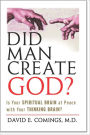

Did Man Create God? Is Your Spiritual Brain at Peace with Your Rational Brain?
657
Did Man Create God? Is Your Spiritual Brain at Peace with Your Rational Brain?
657eBook
$9.99
Related collections and offers
9.99
In Stock

Product Details
| BN ID: | 2940013309296 |
|---|---|
| Publisher: | Hope Press |
| Publication date: | 10/13/2011 |
| Sold by: | Barnes & Noble |
| Format: | eBook |
| Pages: | 657 |
| File size: | 20 MB |
| Note: | This product may take a few minutes to download. |
About the Author
From the B&N Reads Blog