- Shopping Bag ( 0 items )
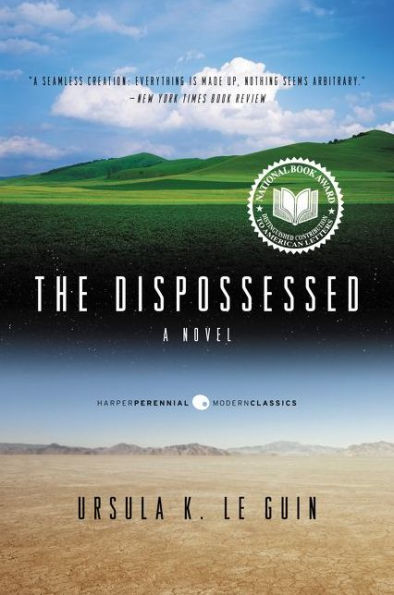
Centuries ago, the moon Anarres was settled by utopian anarchists who left the Earthlike planet Urras in search of a better world, a new beginning. Now a brilliant physicist, Shevek, determines to reunite the two civilizations that have been separated by hatred since long before he was born.
The Dispossessed is a penetrating examination of society and humanity -- and one man's brave undertaking to question the unquestionable and ignite the fires of change.
There was a wall. It did not look important. It was built of uncut rocks roughly mortared. An adult could look right over it, and even a child could climb, it. Where it crossed the roadway, instead of having a gate it degenerated into mere geometry, a line, an, idea of boundary. But the idea was real. It was important. For seven generations there had been nothing in the world more important than that wall.
Like all walls it was ambiguous, two-faced. What was inside it and what was outside it depended upon which side of it you were on.
Looked at from one side, the wall enclosed a barren sixty-acre field called the Port of Anarres. On the field there were a couple of large gantry cranes, a rocket pad, three warehouses, a truck garage, and a dormitory. The dormitory looked durable, grimy, and mournful; it had nogardens, no children; plainly nobody lived there or was even meant to stay there long. It was in fact a quarantine. The wall shut in not only the landing field but also the ships that came down out of space, and the men that came on the ships, and the worlds they came from, and the rest of the universe. It enclosed the universe, leaving Anarres outside, free.
Looked at from the other side, the wall enclosedAnarres: the whole planet was inside it, a great prison camp, cut off from other worlds and other men, in quarantine.
A number of people were coming along the road towards the landing field, or standing around where the road cut through the wall.
People often came out from the nearby city of Abbenay in hopes of seeing a spaceship, or simply to see the wall, After all, it was the only boundary wall on their world. Nowhere else could they see a sign that said No Trespassing. Adolescents, particularly, were drawn to it. They came up to the wall; they sat an it. There might be a gang to watch, offloading crates from track trucks at the warehouses. There might even be a freighter on the pad. Freighters came down only eight times a year, unannounced except to syndics actually working at the Port, so when the spectators were lucky enough to see one they were excited, at first. But there they sat, and there it sat, a squat black tower in a mess of movable cranes, away off across the field. And then a woman came over from one of the warehouse crews and said, "We're shutting down for today, brothers." She was wearing the Defense armband, a sight almost as rare as a spaceship. That was a bit of a thrill. But though her tone was mild, it was final. She was the foreman of this gang, and if provoked would be backed up by her syndics. And anyhow there wasn't anything to see. The aliens, the off-worlders, stayed hiding in their ship. No show.
It was a dull show for the Defense crew, too. Sometimes the foreman wished that somebody would just try to cross the wall, an alien, crewman jumping ship, or a kid from Abbenay trying to sneak in for a. closer look at the freighter. But it never happened. Nothing ever happened. When something did happen she wasn't ready for it.
The captain of the freighter Mindful said to her, "Isthat mob after my ship?"
The foreman looked and saw that, in fact there was a real crowd around the gate, a hundred or more people. They were standing around, just standing, the way people had stood at produce-train stations during the Famine. It gave the foreman a scare.
"No. They, ah, protest," she said in her slow and limited Iotic. "Protest the ah: you know. Passenger?"
"You mean they're after this bastard we're supposed to take? Are they going to try to stop him, or us?"
The word "bastard," untranslatable in the foreman's language, meant nothing to her except some kind of foreign term for her people, but she had never liked the sound of it, or the captain's tone, or the captain. "Can you look after you?" she asked briefly.
"Hell, yes. You just get the rest of this cargo unIoaded, quick. And get this passenger bastard on board. No mob of Oddies is about to give us any trouble." He patted the thing he wore on his belt, a metal object like a deformed penis, and looked patronizingly at the unarmed woman.
She gave the phallic object, which she knew was a weapon, a cold glance. "Ship will be loaded by fourteen hours," she said. "Keep crew on board safe. Lift off at fourteen hours forty. If you need help, leave message on tape at Ground Control." She strode off, before the captain could one-up her. Anger made her more forceful with her crew and the crowd. "Clear the road there!" she ordered as she neared the wall. "Trucks are coming through, somebody's going to get hurt. Clear aside!"
The men and women in the crowd argued with her and with one another. They kept crossing the road, and some came inside the wall. Yet they did more or less clear the way. If the foreman had no experience in bossing a mob, they had no experience in being one. Members of a community, not elements of a collectivity, they were not moved by mass feeling, there were as many emotions there as there were people. And they did not expect commands to be arbitrary, so they had no practice in disobeying them. Their inexperience saved the passenger's life.
Some of them had come there to kill a traitor. Others had come to prevent him from leaving, or to yell insults at him, or just to look at him; and all these others obstructed the sheer brief path of the assassins.
(Continues...)
Excerpted from The Dispossessed by Ursula K. Leguin
Copyright © 2003 by Ursula K. Leguin
Excerpted by permission. All rights reserved. No part of this excerpt may be reproduced or reprinted without permission in writing from the publisher.
There was a wall. It did not look important. It was built of uncut rocks roughly mortared. An adult could look right over it, and even a child could climb, it. Where it crossed the roadway, instead of having a gate it degenerated into mere geometry, a line, an, idea of boundary. But the idea was real. It was important. For seven generations there had been nothing in the world more important than that wall.
Like all walls it was ambiguous, two-faced. What was inside it and what was outside it depended upon which side of it you were on.
Looked at from one side, the wall enclosed a barren sixty-acre field called the Port of Anarres. On the field there were a couple of large gantry cranes, a rocket pad, three warehouses, a truck garage, and a dormitory. The dormitory looked durable, grimy, and mournful; it had nogardens, no children; plainly nobody lived there or was even meant to stay there long. It was in fact a quarantine. The wall shut in not only the landing field but also the ships that came down out of space, and the men that came on the ships, and the worlds they came from, and the rest of the universe. It enclosed the universe, leaving Anarres outside, free.
Looked at from the other side, the wall enclosed Anarres: the whole planet was inside it, a great prison camp, cut off from other worlds and other men, in quarantine.
A number of people were coming along the road towards the landing field, or standing around where the road cut through the wall.
People often came out from the nearby city of Abbenay in hopes of seeing a spaceship, or simply to see the wall, After all, it was the only boundary wall on theirworld. Nowhere else could they see a sign that said No Trespassing. Adolescents, particularly, were drawn to it. They came up to the wall; they sat an it. There might be a gang to watch, offloading crates from track trucks at the warehouses. There might even be a freighter on the pad. Freighters came down only eight times a year, unannounced except to syndics actually working at the Port, so when the spectators were lucky enough to see one they were excited, at first. But there they sat, and there it sat, a squat black tower in a mess of movable cranes, away off across the field. And then a woman came over from one of the warehouse crews and said, "We're shutting down for today, brothers." She was wearing the Defense armband, a sight almost as rare as a spaceship. That was a bit of a thrill. But though her tone was mild, it was final. She was the foreman of this gang, and if provoked would be backed up by her syndics. And anyhow there wasn't anything to see. The aliens, the off-worlders, stayed hiding in their ship. No show.
It was a dull show for the Defense crew, too. Sometimes the foreman wished that somebody would just try to cross the wall, an alien, crewman jumping ship, or a kid from Abbenay trying to sneak in for a. closer look at the freighter. But it never happened. Nothing ever happened. When something did happen she wasn't ready for it.
The captain of the freighter Mindful said to her, "Isthat mob after my ship?"
The foreman looked and saw that, in fact there was a real crowd around the gate, a hundred or more people. They were standing around, just standing, the way people had stood at produce-train stations during the Famine. It gave the foreman a scare.
"No. They, ah, protest," she said in her slow and limited Iotic. "Protest the ah: you know. Passenger?"
"You mean they're after this bastard we're supposed to take? Are they going to try to stop him, or us?"
The word "bastard," untranslatable in the foreman's language, meant nothing to her except some kind of foreign term for her people, but she had never liked the sound of it, or the captain's tone, or the captain. "Can you look after you?" she asked briefly.
"Hell, yes. You just get the rest of this cargo unIoaded, quick. And get this passenger bastard on board. No mob of Oddies is about to give us any trouble." He patted the thing he wore on his belt, a metal object like a deformed penis, and looked patronizingly at the unarmed woman.
She gave the phallic object, which she knew was a weapon, a cold glance. "Ship will be loaded by fourteen hours," she said. "Keep crew on board safe. Lift off at fourteen hours forty. If you need help, leave message on tape at Ground Control." She strode off, before the captain could one-up her. Anger made her more forceful with her crew and the crowd. "Clear the road there!" she ordered as she neared the wall. "Trucks are coming through, somebody's going to get hurt. Clear aside!"
The men and women in the crowd argued with her and with one another. They kept crossing the road, and some came inside the wall. Yet they did more or less clear the way. If the foreman had no experience in bossing a mob, they had no experience in being one. Members of a community, not elements of a collectivity, they were not moved by mass feeling, there were as many emotions there as there were people. And they did not expect commands to be arbitrary, so they had no practice in disobeying them. Their inexperience saved the passenger's life.
Some of them had come there to kill a traitor. Others had come to prevent him from leaving, or to yell insults at him, or just to look at him; and all these others obstructed the sheer brief path of the assassins.
The Dispossessed. Copyright © by Ursula K. Leguin. Reprinted by permission of HarperCollins Publishers, Inc. All rights reserved. Available now wherever books are sold.Shevek, citizen and acclaimed physicist of the world Anarres, believes that he must free his people from the walls that they have built around their anarchist state, blocking out all other worlds. A freethinker and believer in the power of revolution and the individual's right to self-rule, Shevek must risk all to discover the truth about the land that his people escaped from, Urras.
But all is not as he believes on the glittering world of Urras. Coddled within the ivory towers of its university, Shevek is prohibited from seeing the real world of Urras, the world of the poor and indigent from which his people came. Although shunned by his Odonian society for his cutting-edge theories, the Urrasti hold him captive for his knowledge of the General Temporal Theory, a theory that could bring the Urrasti all the power and fortune they desire.
Aware that he has only traded one set of walls for another, Shevek must make an even more dangerous journey if he is truly to succeed in his ultimate mission of fostering understanding and true brotherhood among the races. Enlisting the aid of sympathetic Urrasti and aliens from Terra and Hain, Shevek succeeds in evading the propertarian Urrasti and shares his knowledge with the universe. For it is only when there is a true understanding, that he can finally return home to a new world.
Questions for Discussion
About the Author
A multiple award-winning author, editor, and anthologist, Ursula K. LeGuin was born in 1929 in Berkeley, California -- the daughter of writer Theodora Kroeber and anthropologist Alfred L. Kroeber. She went to Radcliffe College, did graduate work at Columbia University and attained a 1953 Fulbright Fellowship. Le Guin married historian Charles A. Le Guin and has three children and three grandchildren. She has lived in Portland, Oregon since 1958.
Throughout her illustrious literary career -- 19 novels, short stories in nine collections, two volumes of translation, 13 books for children, three collections of essays, and numerous honorary degrees, teaching posts, and awards -- Le Guin has held to the highest standards in her writing, taking risks that would bring great rewards and praise from her contemporaries.
Having received countless awards -- a National Book Award, five Hugo Awards, five Nebula Awards, the Kafka Award, a Pushcart Prize, the Howard Vursell Award of the American Academy of Arts and Letters, and the L.A. Times Robert Kirsch Award to name a few -- Le Guin has also had three of her books become finalists for the American Book Award and the Pulitzer Prize.
Le Guin's first major work of science fiction, The Left Hand of Darkness, propelled her instantly to the forefront of her field. Since then, she has used the context of her work to delve into such issues as gender roles, morality, and the individual's ordinary grief. Working in so many forms -- from poetry and prose to screenplays and voice text for recordings -- Le Guin has transformed the genre in which she works countless times over. An intensely private figure like many of her characters, Le continues to create her fantastical worlds for all ages.
EdwardOtt
Posted July 9, 2011
Fantastic book, Le Guin is the master of soft Science fiction. the worlds really come alive.
Was this review helpful? Yes NoThank you for your feedback. Report this reviewThank you, this review has been flagged.Anonymous
Posted June 13, 2009
Maybe next time.
0 out of 1 people found this review helpful.
Was this review helpful? Yes NoThank you for your feedback. Report this reviewThank you, this review has been flagged.Anonymous
Posted February 11, 2003
I was lucky to start reading Ursula K. L'Guin with this book. Then I read all the others, but this one has always remained special. I read probably 30 SF books and I think this one was the easiest to read, most understandable, most humanist and the one that thaught and reminded me of what it means to be a scientist and to be socially responsible.
Was this review helpful? Yes NoThank you for your feedback. Report this reviewThank you, this review has been flagged.Anonymous
Posted June 26, 2000
This book shows us more about our world, and the walls we build up that limit and narrow our lives, than any philosophy I have read, without the exception of F. Nietzche. Our assumptions about human nature are deeply questioned, and an incredibly humanitarian option is presented to us (one which has been swallowed by the defeat of 'communism'). To her credit, Le Guin does not present either side in this 'debate' in a narrow way, and questions all sides deeply. She gives a view of a utopia that is the most plausible and likely of any I have encountered (largely due to its imperfection). It is a utopia where what we gain is much more important than what we lose, yet the gains are imperiled as the tendency to institutionalize manifests itself within the society. The Marxist idea of a need for constant revolution is made real, so that, after reading this book, we will perhaps be able to make real in our world (and in ourselves) the state of constant revolt, which is the only answer to the problems of entropy, ennui and bureaucracy which plague our modern civilization. Lets not wind up the way we do in The Dispossessed.
Was this review helpful? Yes NoThank you for your feedback. Report this reviewThank you, this review has been flagged.Anonymous
Posted May 15, 2000
No doubt about it, five stars. A whole new concept and perhaps the best science fiction I ever read.
Was this review helpful? Yes NoThank you for your feedback. Report this reviewThank you, this review has been flagged.Anonymous
Posted February 19, 2011
No text was provided for this review.
Anonymous
Posted July 2, 2011
No text was provided for this review.
Anonymous
Posted December 8, 2010
No text was provided for this review.
Anonymous
Posted October 5, 2010
No text was provided for this review.
Anonymous
Posted March 12, 2011
No text was provided for this review.
Anonymous
Posted July 28, 2009
No text was provided for this review.
Anonymous
Posted July 28, 2009
No text was provided for this review.
Anonymous
Posted October 2, 2011
No text was provided for this review.
Anonymous
Posted March 31, 2011
No text was provided for this review.
Anonymous
Posted December 5, 2009
No text was provided for this review.
Anonymous
Posted October 15, 2009
No text was provided for this review.
Anonymous
Posted October 29, 2010
No text was provided for this review.
Anonymous
Posted July 27, 2009
No text was provided for this review.
Anonymous
Posted January 23, 2011
No text was provided for this review.
Anonymous
Posted January 22, 2012
No text was provided for this review.
Overview
Centuries ago, the moon Anarres was settled by utopian anarchists who left the Earthlike planet Urras in search of a better world, a new beginning. Now a brilliant physicist, Shevek, determines to reunite the two civilizations that have been separated by hatred since long before he was born.
The Dispossessed is a penetrating examination of society and humanity -- and one man's brave undertaking to question the unquestionable and ignite the fires of change.