
Dred: A Tale of the Great Dismal Swamp
Harriet Beecher Stowe's second antislavery novel was written partly in response to the criticisms of Uncle Tom's Cabin (1852) by both white Southerners and black abolitionists. In Dred (1856), Stowe attempts to explore the issue of slavery from an African American perspective.
Through the compelling stories of Nina Gordon, the mistress of a slave plantation, and Dred, a black revolutionary, Stowe brings to life conflicting beliefs about race, the institution of slavery, and the possibilities of violent resistance. Probing the political and spiritual goals that fuel Dred's rebellion, Stowe creates a figure far different from the acquiescent Christian martyr Uncle Tom.
In his introduction to the classic novel, Robert S. Levine outlines the antislavery debates in which Stowe had become deeply involved before and during her writing of Dred. Levine shows that in addition to its significance in literary history, the novel remains relevant to present-day discussions of cross-racial perspectives.
1100217804
Through the compelling stories of Nina Gordon, the mistress of a slave plantation, and Dred, a black revolutionary, Stowe brings to life conflicting beliefs about race, the institution of slavery, and the possibilities of violent resistance. Probing the political and spiritual goals that fuel Dred's rebellion, Stowe creates a figure far different from the acquiescent Christian martyr Uncle Tom.
In his introduction to the classic novel, Robert S. Levine outlines the antislavery debates in which Stowe had become deeply involved before and during her writing of Dred. Levine shows that in addition to its significance in literary history, the novel remains relevant to present-day discussions of cross-racial perspectives.
Dred: A Tale of the Great Dismal Swamp
Harriet Beecher Stowe's second antislavery novel was written partly in response to the criticisms of Uncle Tom's Cabin (1852) by both white Southerners and black abolitionists. In Dred (1856), Stowe attempts to explore the issue of slavery from an African American perspective.
Through the compelling stories of Nina Gordon, the mistress of a slave plantation, and Dred, a black revolutionary, Stowe brings to life conflicting beliefs about race, the institution of slavery, and the possibilities of violent resistance. Probing the political and spiritual goals that fuel Dred's rebellion, Stowe creates a figure far different from the acquiescent Christian martyr Uncle Tom.
In his introduction to the classic novel, Robert S. Levine outlines the antislavery debates in which Stowe had become deeply involved before and during her writing of Dred. Levine shows that in addition to its significance in literary history, the novel remains relevant to present-day discussions of cross-racial perspectives.
Through the compelling stories of Nina Gordon, the mistress of a slave plantation, and Dred, a black revolutionary, Stowe brings to life conflicting beliefs about race, the institution of slavery, and the possibilities of violent resistance. Probing the political and spiritual goals that fuel Dred's rebellion, Stowe creates a figure far different from the acquiescent Christian martyr Uncle Tom.
In his introduction to the classic novel, Robert S. Levine outlines the antislavery debates in which Stowe had become deeply involved before and during her writing of Dred. Levine shows that in addition to its significance in literary history, the novel remains relevant to present-day discussions of cross-racial perspectives.
29.99
In Stock
5
1

Dred: A Tale of the Great Dismal Swamp
656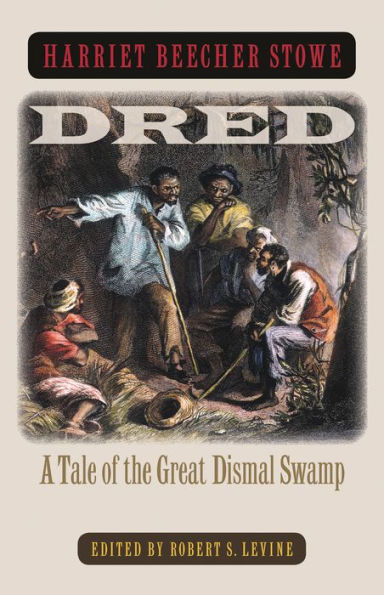
Dred: A Tale of the Great Dismal Swamp
656Related collections and offers
29.99
In Stock

Product Details
| ISBN-13: | 9780807877296 |
|---|---|
| Publisher: | The University of North Carolina Press |
| Publication date: | 11/17/2009 |
| Sold by: | Barnes & Noble |
| Format: | eBook |
| Pages: | 656 |
| File size: | 3 MB |
About the Author
What People are Saying About This
From the B&N Reads Blog