- Shopping Bag ( 0 items )
Available on NOOK devices and apps
Want a NOOK? Explore Now
Knapp was a drinker able to hold down a steady job while convincing herself (and others) that her drinking was not interfering with her life—that, in fact, it was making life easier. She drank to forget her problems or to get through a crisis. She rationalized the drinking by telling herself that she would stop after she came through an especially rough situation, never realizing that the drinking contributed to her difficulties. Knapp drank during her simultaneous involvement with two men, hiding each from the other. She drank through her parents' painful deaths a year apart, raiding their liquor cabinet, hiding bottles in the bathroom. The death of her prominent analyst father—and the subsequent realization that he, too, had been an alcoholic—started her on the slow path to recovery, although it was almost two years after his death before she checked herself into a clinic. His death made her wonder "if I would have been able to let go of alcohol without letting go of my father first." Through rehab and nightly AA meetings she was finally able to take control of her life. Knapp also suffered from anorexia during her 20s, and she believes that there is a link for women between food disorders, drinking, and other addictions. She suggests that women are particularly vulnerable to the belief that the abuse of drink, drugs, and food can and will change them for the better—not realizing the terrible physical and emotional tolls of such behavior.
Knapp is prone to repetitiousness, but this is still a soul- baring memoir with cogent insights into the nightmarish world of addiction.
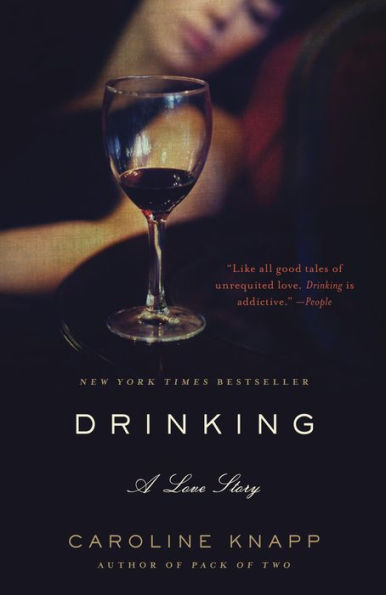
Soon after its release, Caroline Knapp's Drinking: A Love Story became one of America's most talked about bestsellers. In frank, arresting scenes, Knapp chronicles her personal battle with alcoholism, a dangerous seduction begun when she was just fourteen years old. As she pieces together memories such as her father’s fame in the field of psychiatry though he could not address his own household's dysfunction, she creates a family portrait that speaks to anyone coping with a painful past, even those for whom addiction was not a factor. Tracing the patterns of secrecy and self-deception that seeped into every aspect of her life, including her volatile relationships with men, Knapp ultimately leads us through her extraordinary journey to sobriety. A memoir of healing and hope, this is a classic in its category–a true lifeline for millions of readers.
An important book for anyone carrying the burden of addiction or anyone struggling to reach out to a loved one who is in jeopardy, Knapp's story delivers an unflinchingly honest, inspiring voice. The questions and discussion topics that follow are intended to enhance your reading of Caroline Knapp's Drinking: A Love Story. We hope they will enrich your experience of this provocative memoir.
1. Discuss the book's title. In what way is it a love story? What parallels exist between Caroline Knapp's "affair" with alcohol and the way she experienced love throughout her life with family and friends as well as in romantic relationships?
2. Chapter Four, "Hunger,"and Chapter Eight, "Addiction," feature questions that capture an alcoholic's habits and mind-set. How would you respond to these questions? Is there anyone in your family or circle of friends who might be surprised by their responses, or surprised by yours?
3. Knapp mentions many literary figures whose alcoholism is well documented. Do you believe that addiction is more acceptable in creative fields? How do stereotypes of addiction measure up to the real-life profiles provided in Knapp's memoir?
4. What did you discover in Drinking: A Love Story about the similarities among alcoholism and other addictive behaviors, such as bulimia or kleptomania? What challenges are unique to alcoholics? How did your perception of the causes and treatments for addiction change as you read Knapp's story?
5. Knapp writes eloquently of the fears she faced as a child, from her father's clinical, omnipotent persona to her mother's aversion to outward affection. To what extent do you attribute Knapp's alcoholism to genetics, childhood despair, or temperament? How do you account for the differences between Knapp and her twin sister? How were they affected by the knowledge of their father's first wife and the half siblings from that marriage?
6. If Dr. Knapp had come to you for counseling, what recommendations would you have given him? Why might someone with his knowledgeof (and access to) first-rate psychotherapy nonetheless have been unable to change his own pattern of infidelity as well as his detachment from his loved ones? What damaging cycles were set in motion by his parents and by the family of Caroline's mother?
7. Knapp recalls the times her mother and sister expressed concern about her drinking. How would you have responded had you been in their position? What are the responsibilities and limitations of an alcoholic's relatives, friends, colleagues, lovers?
8. What does Knapp tell us about the way she and many other addicts viewed intimacy, sexual and otherwise? Why was it difficult for her to recognize and receive love? What needs did her double life fulfill?
9. Discuss the theme of shame that surfaces throughout the book. Why did Knapp, and those she encountered on the road to recovery, feel comfortable in roles that made them feel ashamed and unworthy? Why was she drawn to Julian's perfectionism?
10. In Chapter Sixteen, "Healing," Knapp writes: "At times I've grumbled to friends about longing for a return to Prohibition." Is alcohol too widely available in the United States? What is your opinion of debates over whether to legalize various non prescription drugs? Should distinctions be made between addicts who consume dangerous levels of legal substances (including prescription medications) and those who use illegal ones? To what extent should addiction be criminalized?
11. The book's closing chapters include poignant images of her parents' final days. Do you believe that their death was the catalyst for Knapp to seek help? Was it trauma, fear, liberation, or something else altogether that led her to seek (and accept) help? What did it take for her to reach her "yet"? Why was she so averse to Alcoholics Anonymous when she attended a meeting earlier in her life?
12. What does Knapp capture while describing the Ritualistic Snipping of the Black Lycra Dress in the final paragraphs of the book? What souvenirs from your past would you like to bid farewell to? What objects or emotions could you replace them with?
13. Discuss the approach of Drinking: A Love Story in comparison to other books in its genre. How does Knapp's storytelling approach differ from that of other memoirists? How does her experience compare to that of other authors who have written about addiction and recovery, such as Susan Cheever or James Frey? In what ways has our approach to addiction shifted in the past decade or in comparison to previous generations?
14. Are there any harmful cycles of behavior in your family? What would it take to keep them from being perpetuated in the lives of your descendants? What irrational legacies are the most difficult ones to end?
15. Caroline Knapp's life ended six years after Drinking: A Love Story was published. How does the brevity of her life affect your impression of this memoir? Reminded that longevity is never guaranteed, how should we approach our most daunting challenges?
1. Discuss the book's title. In what way is it a love story? What parallels exist between Caroline Knapp's "affair" with alcohol and the way she experienced love throughout her life with family and friends as well as in romantic relationships?
2. Chapter Four, "Hunger,"and Chapter Eight, "Addiction," feature questions that capture an alcoholic's habits and mind-set. How would you respond to these questions? Is there anyone in your family or circle of friends who might be surprised by their responses, or surprised by yours?
3. Knapp mentions many literary figures whose alcoholism is well documented. Do you believe that addiction is more acceptable in creative fields? How do stereotypes of addiction measure up to the real-life profiles provided in Knapp's memoir?
4. What did you discover in Drinking: A Love Story about the similarities among alcoholism and other addictive behaviors, such as bulimia or kleptomania? What challenges are unique to alcoholics? How did your perception of the causes and treatments for addiction change as you read Knapp's story?
5. Knapp writes eloquently of the fears she faced as a child, from her father's clinical, omnipotent persona to her mother's aversion to outward affection. To what extent do you attribute Knapp's alcoholism to genetics, childhood despair, or temperament? How do you account for the differences between Knapp and her twin sister? How were they affected by the knowledge of their father's first wife and the half siblings from that marriage?
6. If Dr. Knapp had come to you for counseling, what recommendations would you have given him? Why might someone with his knowledge of (and access to) first-rate psychotherapy nonetheless have been unable to change his own pattern of infidelity as well as his detachment from his loved ones? What damaging cycles were set in motion by his parents and by the family of Caroline's mother?
7. Knapp recalls the times her mother and sister expressed concern about her drinking. How would you have responded had you been in their position? What are the responsibilities and limitations of an alcoholic's relatives, friends, colleagues, lovers?
8. What does Knapp tell us about the way she and many other addicts viewed intimacy, sexual and otherwise? Why was it difficult for her to recognize and receive love? What needs did her double life fulfill?
9. Discuss the theme of shame that surfaces throughout the book. Why did Knapp, and those she encountered on the road to recovery, feel comfortable in roles that made them feel ashamed and unworthy? Why was she drawn to Julian's perfectionism?
10. In Chapter Sixteen, "Healing," Knapp writes: "At times I've grumbled to friends about longing for a return to Prohibition." Is alcohol too widely available in the United States? What is your opinion of debates over whether to legalize various non prescription drugs? Should distinctions be made between addicts who consume dangerous levels of legal substances (including prescription medications) and those who use illegal ones? To what extent should addiction be criminalized?
11. The book's closing chapters include poignant images of her parents' final days. Do you believe that their death was the catalyst for Knapp to seek help? Was it trauma, fear, liberation, or something else altogether that led her to seek (and accept) help? What did it take for her to reach her "yet"? Why was she so averse to Alcoholics Anonymous when she attended a meeting earlier in her life?
12. What does Knapp capture while describing the Ritualistic Snipping of the Black Lycra Dress in the final paragraphs of the book? What souvenirs from your past would you like to bid farewell to? What objects or emotions could you replace them with?
13. Discuss the approach of Drinking: A Love Story in comparison to other books in its genre. How does Knapp's storytelling approach differ from that of other memoirists? How does her experience compare to that of other authors who have written about addiction and recovery, such as Susan Cheever or James Frey? In what ways has our approach to addiction shifted in the past decade or in comparison to previous generations?
14. Are there any harmful cycles of behavior in your family? What would it take to keep them from being perpetuated in the lives of your descendants? What irrational legacies are the most difficult ones to end?
15. Caroline Knapp's life ended six years after Drinking: A Love Story was published. How does the brevity of her life affect your impression of this memoir? Reminded that longevity is never guaranteed, how should we approach our most daunting challenges?
doggyluv
Posted March 9, 2009
I just love this book. I first got it at a public library and then bought my own copy a few years later when the topic became applicable again.
1 out of 2 people found this review helpful.
Was this review helpful? Yes NoThank you for your feedback. Report this reviewThank you, this review has been flagged.Anonymous
Posted August 28, 2007
this book is just amazing. I was drawn by the title when it first came out, and I was in my own love affair with alcohol. Even as an active alcoholic, I loved the drama and story in this book- and must have filed it away for 8 years until I realized my lover was killing me and really didnt love me after all. I have heard many women in and out of recovery rave about this book. Thank you to the author for being another step on my path of sobriety.
1 out of 1 people found this review helpful.
Was this review helpful? Yes NoThank you for your feedback. Report this reviewThank you, this review has been flagged.Anonymous
Posted August 25, 2006
As a teen to late 20's dealing with alcoholism, I found this book to be written for all women who have faced an addiction. Situations were different but the feelings and challenges she faced were the same. The book is very well written, on a personal level. I felt like I knew her and we were going through it together. I found her to have a powerful spirit. I enjoyed the book very much!
1 out of 1 people found this review helpful.
Was this review helpful? Yes NoThank you for your feedback. Report this reviewThank you, this review has been flagged.Anonymous
Posted August 16, 2006
This book was wonderful! I truly commend Ms. Knapp for sharing her story and for doing it so honestly. I could relate to so much of this book as alcoholism runs in my family. It was eye-opening and inspiring and I thank her for sharing her story.
1 out of 1 people found this review helpful.
Was this review helpful? Yes NoThank you for your feedback. Report this reviewThank you, this review has been flagged.Anonymous
Posted May 21, 2006
Caroline Knapp was a truly remarkable individual with so much love to give and share. In her short time after recovering from alcohol and other issues she was working through, she gave us her love, wisdom, strength, and hope in her written word. I have never read an author that has touched my soul like Caroline has. Everyday I think about her, her life, and her legacy. Caroline, even though you are not here in the physical form, you will always be with me in the spiritual form. When I re-read sections of her books, they tend to always be fresh, alive, and as if I have never read them before. God speaks and teaches us through people. Caroline, you have given me the two most important lessons for my own alcohol and emotional recovery ¿ hope and love. I hope Caroline¿s twin sister, Dr. Rebecca Knapp, continues her sister¿s legacy by being a voice for Caroline¿s struggles.
1 out of 1 people found this review helpful.
Was this review helpful? Yes NoThank you for your feedback. Report this reviewThank you, this review has been flagged.Anonymous
Posted March 7, 2012
Caroline Knapp started drinking when she was 14, and spent almost 20 years as an alcoholic. She was a high functioning alcoholic, able to make it through school and become a successful column writer for a well known paper in Boston. She was so well at hiding her alcoholism; almost no one knew she was an alcoholic. Eventually she decided to get clean and produced an excellent book.
There was only one thing I did not like about the book and that was the writing style, but I loved what Knapp was saying. It was an easy read and very interesting. Even though it wasn’t my favorite writing style, I still wanted to keep reading because it was so interesting. The everyday struggles that Knapp faced and the stories she told were enlightening. It was a very informative book about life as an alcoholic, including her mind set before during and after she was drinking. It was inspiring how honestly Knapp wrote this memoir. There was nothing off limits and as the reader we were told every detail and secret about her struggle with being an alcoholic. Not knowing much about alcoholism I thought all alcoholics were “messy drunks” who broke things and called in sick to work. Knapp showed me that I was completely wrong and it was shocking a great to learn about a high functioning alcoholic. I would recommend this book to anyone even if you are not an alcoholic it is just a good read.
Anonymous
Posted February 21, 2012
Honest, Informative..............
Was this review helpful? Yes NoThank you for your feedback. Report this reviewThank you, this review has been flagged.Anonymous
Posted December 6, 2011
Finishing this book is like losing a freind. Caroline was so open and honest about her experiences, I looked forward to eharing form her every day as I read the story. Having alcoholics in my family thatr I never understood drove me to buy this. I cannot say I understand them now but theremany patterns and behaviors I recognize. Great read and I thank her for sharing.
Was this review helpful? Yes NoThank you for your feedback. Report this reviewThank you, this review has been flagged.GreenvilleReader
Posted November 21, 2011
Caroline Knapp tells the unvarnished truth about herself and her alcoholism. Let's the reader draw his own conclusions about the shortcomings of the life she led. For five years after attaining sobriety, she shared a meaningful friendship with Gail Caldwell, fellow writer,memoirist, and recovering alcoholic. Caldwell writes extensively about Knapp in her book, Let's Take the Long Way Home.
Knapp's articulate insight and unsparing soul searching make the book one of my favorite memoirs.
Anonymous
Posted October 13, 2011
Carolien Knapp tells a story that keeps the reader glued to the pages. She takes the reader from her earlier days of moderate drinking to a gradual increase in dependency. The death of her parents sends her from a problem drinker to a highly functioning full blown alcoholic. In the process her personal life goes downhill right along with her increasing dependency on alcohol. I fell in love with Caroline. Her honesty, her insecurities, and her struggles were so well written that the reader almost feels like we are right there with her all the way through the book.
It is tragic that she died so young from lung cancer only six short years after she wrote this fabulous, heartfelt, and honest account of her addiction and recovery from alcoholism.
Anonymous
Posted July 14, 2011
This book helped me understand my mother a functional alcoholic. ITS A EASY READ. Well written. I would read it a second time
Was this review helpful? Yes NoThank you for your feedback. Report this reviewThank you, this review has been flagged.2344569
Posted June 3, 2011
Nuff said!
0 out of 1 people found this review helpful.
Was this review helpful? Yes NoThank you for your feedback. Report this reviewThank you, this review has been flagged.Anonymous
Posted March 28, 2011
I really enjoyed this book. It helped me reach 30 full days of sobriety, and any time I was feeling weak and wanting to take a drink, I picked up the book instead.
Was this review helpful? Yes NoThank you for your feedback. Report this reviewThank you, this review has been flagged.Anonymous
Posted March 21, 2011
As a recovering alcoholic this book hit home in more ways than one. I was much the same as the author...a high functioning alcoholic. It was amazing hear your story told through someone elses life.
Was this review helpful? Yes NoThank you for your feedback. Report this reviewThank you, this review has been flagged.For anyone who thinks they or someone they know has a drinking problem should read this book. It captures the true meaning of a functioning alcoholic. She tells her story in such a honest way. Easy, fast read.
Was this review helpful? Yes NoThank you for your feedback. Report this reviewThank you, this review has been flagged.When you are ready to take a look inside alcoholism (and really, any addiction) with compassion, to look face to face with a fellow human being whose struggles include being an addict, there is no finer description of a woman's alcoholism. Without cheap sentimentality or self-pity, there is no blame delivered or excuses made, "Drinking, A Love Story" is what it was like minute by minute, day by day both in the final months of her drinking followed by Ms. Knapp's rehab and recovery process.
Both linear and eternally circular, the story flows like life, with flashbacks, re-interpreted conversations and events, although Ms. Knapp's courageous honesty provides a constancy while her life twists and turns in the way that addicts' lives convulse upon themselves. Peppered with wit and observations that many of us might rush by and dismiss, this book shows us the greater human in every addict and the greater hope that accompanies that stance.
Anonymous
Posted November 23, 2005
I am a COA(child of an alcoholic). This book helped me understand my parents' addcition a LOT better!
Was this review helpful? Yes NoThank you for your feedback. Report this reviewThank you, this review has been flagged.Anonymous
Posted June 24, 2002
Her fitting some tedious details of her personal life within the matrix of alcoholism may at times trivialize the outstanding meta-message of the text. However, many of my students delight in Knapp's personal touch. This book I've read twice, now on my third reading. And in this reading I'm finding more to the narrative than I realized before. Portions of it I've read many, many times. My reason for my repeated reading is that Knapp does well to illustrate the details of social and psychological dependency happening with substance abuse. With that she reports the myths most of us have about people, the 'kind of people' who abuse substances. And because of those myths we harbor, many of us fail to see self-inflicted damage chemical abuse does. Yet there are times the reading requires a mere surveying by the reader. For the memoir approaches being her autobiography. Which is fine, but her life is really quiet, uneventful and unnoteworthy (sorry Knapp). Nowithstanding her self indulgence, her thesis, that is, to illustrate the love affair she had with alcohol (and still does, though now absent in her life), is conveyed through careful writing, always controlled at the level of the sentence, after sentence after sentence. Her sense of language does well at breathing narrative life into the relationship alcoholics have with their drug of choice. Any reader wanting a lilting text, other than the staid prose of other well meaning authors, on the topic of addiction, this book is for you. Her conscious mastery of the dimensions of both social and psychological dependency stand out of the second dimension of the page to become third dimensional in the mind of the careful reader.
Was this review helpful? Yes NoThank you for your feedback. Report this reviewThank you, this review has been flagged.Anonymous
Posted December 27, 2001
It's too bad that I can only give this book five stars. It deserves more. This is one of the most inspiring books on alcohol addiction I have ever read. I have read this book several times and it always helps in preventing relapse for me. I see myself on every page. Ms. Knapp's thoughts during her addiction are exactly the same thoughts that I had. Her struggles in maintaining sobriety are my struggles.
Was this review helpful? Yes NoThank you for your feedback. Report this reviewThank you, this review has been flagged.Anonymous
Posted October 10, 2001
Carolyn Knapp summed up and explained well the experience of alcoholism. Her candor brought out the little details that add up to great importance; her insight helped me to understand the disease far better. This is a book I would very highly recommend to anyone who wishes to understand the word 'alcoholic.'
Was this review helpful? Yes NoThank you for your feedback. Report this reviewThank you, this review has been flagged.
Overview
Fifteen million Americans a year are plagued with alcoholism. Five million of them are women. Many of them, like Caroline Knapp, started in their early teens and began to use alcohol as "liquid armor," a way to protect themselves against the difficult realities of life. In this extraordinarily candid and revealing memoir, Knapp offers important insights not only about alcoholism, but about life itself and how we learn to cope with it.