- Shopping Bag ( 0 items )
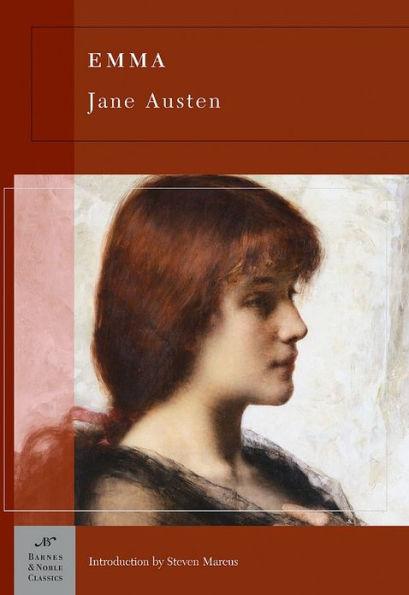
Emma Woodhouse is a wealthy, exquisite, and thoroughly self-deluded young woman who has "lived in the world with very little to distress or vex her."
Jane Austen exercises her taste for cutting social observation and her talent for investing seemingly trivial events with profound moral significance as Emma traverses a gentle satire of provincial balls and drawing rooms, along the way encountering the sweet Harriet Smith, the chatty and tedious Miss Bates, and her absurd father Mr. Woodhousea memorable gallery of Austen's finest personages. Thinking herself impervious to romance of any kind, Emma tries to arrange a wealthy marriage for poor Harriet, but refuses to recognize her own feelings for the gallant Mr. Knightley. What ensues is a delightful series of scheming escapades in which every social machination and bit of "tittle-tattle" is steeped in Austen's delicious irony. Ultimately, Emma discovers that "Perfect happiness, even in memory, is not common."
Virginia Woolf called Jane Austen "the most perfect artist among women," and Emma Woodhouse is arguably her most perfect creation. Though Austen found her heroine to be a person whom "no one but myself will much like," Emma is her most cleverly woven, riotously comedic, and pleasing novel of manners.
Steven Marcus is Professor of English and Comparative Literature and George Delacorte Professor in the Humanities at Columbia University, and a specialist in nineteenth-century literature and culture. A fellow of both the American Academy of Arts and Sciences and the Academy of Literary Studies, he has received Fulbright, American Council of Learned Societies, Guggenheim, Center for Advanced Study in the Behavioral Sciences, Rockefeller, and Mellon grants. He is the author of more than 200 publications.
The first sentence of Emma is only less well known than the legendary opening of Pride and Prejudice. "Emma Woodhouse, handsome, clever, and rich, with a comfortable home and happy disposition, seemed to unite some of the best blessings of existence; and had lived nearly twenty-one years in the world with very little to distress or vex her." The immediate effect of this statement is to stop us, we readers, in our tracks. It is also a heads-up or alert, signaling to us as the narrator's adherents and collaborators to step up the volume and fine-tune the attentiveness that we direct toward the page. It begins with a broadside of affirmations and modulates into a conclusion that intimates serious problems may exist in the offing. Emma is very good looking in a rather striking and forceful way (not pretty or, here, beautiful); she is intelligent and quick-witted; and she is more than affluent when it comes to material means. She takes pleasure as well in the amenities of an established place in which to live, the establishment being part of a settled order in which she also feels at home. And best of all, perhaps, she is blessed with a "happy" temperament or general tone of well-being. With all these fortunate and combined bestowals, is there anything else to ask for? Well, yes—since they amount, the narrator remarks without pausing, to no more than "seemed." The dubiety carried in that ironic reservation turns the sentence around and prepares us for vexation and distress.
Emma has also reached a conventional juncture or locus of passage in the life cycle of European women and men. And this reference to numbers leads to a series of statements that informs us about how, in turn, those twenty-one years are to be regarded. Emma's mother has been dead for about sixteen years, since that is the interval during which Miss Taylor has been employed as her beloved governess—Emma's memory of her goes back to the age of five. Emma's older married sister, Isabella, is at least six years her senior, since we soon learn that she has been married for seven years and already has five children, the youngest of whom is less than a year old. It is reasonable to assume that Emma "had been mistress" of her father's house since she was about thirteen (a number that will come up later). Her father's age we will get to in a bit.
Her father and governess have raised Emma with great affection and equal indulgence. Restraint and authority have been close to absent from her experience, and she has, within this atmosphere of tenderness, permissiveness, and admiration, grown up "doing just what she liked; highly esteeming Miss Taylor's judgment, but directed chiefly by her own." The consequent disadvantages of Emma's situation were "the power of having rather too much her own way, and a disposition to think a little too much of herself." These "real evils" are at once modulated by "rather" and "a little too much." There may be forebodings, but they are neither very dark nor desperate.
The novel begins, however, with Miss Taylor's departure from the Woodhouse home of Hartfield. She has become Mrs. Weston, having just married a prosperous widower neighbor and taken up residence at Randalls, his recently purchased "little estate," only a half-mile from the Woodhouses. The wedding guests have gone, and Emma and her father are left to themselves "to dine together, with no prospect of a third to cheer a long evening." Miss Taylor's wedding precipitates in Emma a "gentle sorrow." She understandably experiences Mrs. Weston's happiness as a "loss" as well, and sits in "mournful thought" pondering "what she had lost." The good fortune of her dear friend is both a source of "satisfaction" to her and yet, more questionably, "a black morning's work." The lightly stressed irony is that Emma is responding to her idealized surrogate mother's marriage as if it were an echo or shadow reenactment of her natural mother's death sixteen years before. Even more, in recent years the two of them have stood on "equal footing" and in "perfect unreserve"; to Emma, Miss Taylor has been that most rare "friend and companion," someone "peculiarly interested in herself, in every pleasure, every scheme of hers;—one to whom she could speak every thought as it arose, and . . . could never find fault."
With this approving mirror of another consciousness, another affirming yet senior female self, moving away into separateness and independence, Emma recognizes in herself the sense that things can never be the same for her again. "How was she to bear the change?" Indeed.
The "melancholy change" is compounded by Emma's awareness that "she was now in great danger of suffering from intellectual solitude. She dearly loved her father, but he was no companion for her. He could not meet her in conversation, rational or playful." Mr. Woodhouse is somewhere between sixty-five and seventy years old. Yet
the evil of the actual disparity in their ages . . . was much increased by his constitution and habits; for having been a valetudinarian all his life, without activity of mind or body, he was a much older man in ways than in years; and though every where beloved for the friendliness of his heart and his amiable temper, his talents could not have recommended him at any time.Although Emma dearly loves her father, they don't have interests or resources in common. Emma loves talk, the back and forth of conversation, the playfulness of wit and the bite of argument; her father is somewhere else. He is obsessed to the point of looniness with his health; he lives in terror of the weather; drafts, heat, cold and colds, damp, snow, the dews of a summer evening all imperil him and everyone he can warn. And he is equally endangered by food: His fearful admonitions on thin gruel, pork, boiled eggs, and baked apples are the stuff of unforgettable comic turns. He has behaved as "quite an invalid" all his life and has in fact become one. He claims that he goes "no where" and is torpid and inert. He exists at such a depressed level of vitality that he seems to be far older than his years. Friendly, affectionate, and amiable as he may be, he is neither brainy nor energetic. Mr. Woodhouse is effectively old enough to be Emma's grandfather, and in the far-distant resolution of this novel he partially fills that functional role.
Anonymous
Posted June 7, 2010
While I love Pride and Prejudice the best, Emma is definitely my second favorite of Ausent's works. I prefer the story of the former novel, but other than that I can say that I love, love, absolutely love Emma. As much as I adore Mr. Darcy (Along with every other female in the world) it must be confessed that I am madly in love with Mr. Knightly, and I read the entire book just for the scenes he is in. Although Pride and Prejudice can be called perfect, I find the Declaration-of-Love scene in Emma to be much more endearing and wonderful. I find that love of Pride and Prejudice generally has to be shared, since it is such a well known story, even to the most illiterate of people. As Emma is not as ubiquitously loved, I feel like the book has a more exclusive place in my heart, and that makes me love it all the more.
10 out of 10 people found this review helpful.
Was this review helpful? Yes NoThank you for your feedback. Report this reviewThank you, this review has been flagged.Anonymous
Posted December 5, 2010
While I enjoyed the book the copy was not good. There were words missing and signs in their place. It was not a good copy.
6 out of 6 people found this review helpful.
Was this review helpful? Yes NoThank you for your feedback. Report this reviewThank you, this review has been flagged.Emma is a hilarious novel which I thoroughly enjoyed. As I escaped into the twists and turns of the social circle in Emma's small town, I found myself laughing, crying, berating characters, and gushing about how much I loved this book. Emma's blindness to what is going on around her in the way of love endears her even more. Emma is beautiful, charming, and what every young lady in those days ought to be. She's a dutiful daughter, and usually very proper, though she has a love of matchmaking, something she really isn't very good at. She encounters very memorable characters and finds herself in the end.
6 out of 6 people found this review helpful.
Was this review helpful? Yes NoThank you for your feedback. Report this reviewThank you, this review has been flagged.Emma Woodhouse has it all. She's the only Austen heroine who doesn't seem to need anything. All the other heroines are either in difficult financial straits or they're going to be, but Emma is actually wealthy. She's the only lady in her home, and since her father is an aging hypochondriac, she makes all the important decisions and has a degree of power and independence. Despite her singleness, Emma has great social standing as the chief well-bred lady of her small town of Highbury, and she's admired and respected by all. On top of that, she's young, smart, and attractive. So what could this heroine possibly need that she doesn't already have? Humility and empathy. Five weddings, a half-dozen major misunderstandings, and 400 pages pass before she gains them, but Emma's ending is as happy and triumphant as the close of Pride and Prejudice.
Most of Emma's plans and notions ultimately tie back to feeding her own ego. She may say--and may fully believe--that she wants Harriet to make a good match simply out of friendship and kindness, but if Harriet, a girl without a dowry or advanced social skills, makes an excellent match, it'll be entirely due to Emma's influence. That's why it's so fortunate that her plans don't work out--it would be bad for Emma's character if she was vindicated in playing God. But though Emma is proven wrong several times, this is a light, optimistic story, so she is never humiliated. She's embarrassed and humbled a little, but the new understanding she gains makes her a better, stronger person.
I've heard that endings in fiction should always be unexpected, but at the same time inevitable, and Emma is a brilliant example of this convention. All the matches that come about are not the ones that Emma expects (it's not just her--Harriet and Mr. and Mrs. Weston also make wrong guesses about who will marry whom), yet at the same time, they are the only suitable and reasonable matches. Mr. Elton is only pretending to be a good-hearted man, so he marries a rich, obnoxious woman who fits better with him than sweet little Harriet would. Mr. Martin is a kind, humble farmer who will never look down on Harriet for her illegitimate parentage, so he's an excellent husband for a girl who has a gentle temperament and good looks, but not much else to recommend her. Jane Fairfax and Frank Churchill seem the most mismatched of the group, but they get by since they're complimentary opposites; she has all the wisdom in the relationship and he has all the energy and zest for life. And Emma and Mr. Knightley make the ultimate perfect-yet-surprising match, mainly because they were both totally content to be single. But Emma needs someone who will call her on her occasional rudeness and pride, and Mr. Knightley is almost too self-sufficient and rigid and needs to soften a little and incorporate another person into his daily life.
Emma is longer than Austen's other books, but it's lovely from start to finish. It's a comedy of manners that ends with the heroine not just receiving, but earning, her happily ever after. It's an old favorite of mine and I hope you'll like it, too.
5 out of 5 people found this review helpful.
Was this review helpful? Yes NoThank you for your feedback. Report this reviewThank you, this review has been flagged.Emma loves matchmaking, but is not very good at it. She is entertaining to read about and this is very romantic. She steers her friend the wrong way, and is all jumbled up at first, but in the end it is fantastic and you will be glad you took the time to read it!! I highly recommend, no faults, and have fun reading this :)
2 out of 4 people found this review helpful.
Was this review helpful? Yes NoThank you for your feedback. Report this reviewThank you, this review has been flagged.I'm deleting from my nook and re-purchasing the B&N Classics edition. This one has tons and tons of mistakes. Boooo!!!
2 out of 2 people found this review helpful.
Was this review helpful? Yes NoThank you for your feedback. Report this reviewThank you, this review has been flagged.8918650
Posted October 14, 2011
Do not download!
1 out of 2 people found this review helpful.
Was this review helpful? Yes NoThank you for your feedback. Report this reviewThank you, this review has been flagged.6907718
Posted March 27, 2011
1 out of 2 people found this review helpful.
Was this review helpful? Yes NoThank you for your feedback. Report this reviewThank you, this review has been flagged.Music_classics
Posted December 29, 2010
This novel is my favorite by Miss Jane Austen. It is witty and entertaining. Despite what Miss Austen believed about her heroine in this novel, Miss Emma Woodhouse is endearing and well loved by readers.
1 out of 1 people found this review helpful.
Was this review helpful? Yes NoThank you for your feedback. Report this reviewThank you, this review has been flagged.Jane Austen truly expresses her greatest knack for writing in her novel, Emma. Miss Woodhouse's character as well as the characters of Miss Smith, Mr. Knightley, and others show great contrast, yet great coordination and interaction between each other. Emma is definitely a must-read for everyone, from those who hardly ever have time to read to the most dedicated bibliophiles.
1 out of 1 people found this review helpful.
Was this review helpful? Yes NoThank you for your feedback. Report this reviewThank you, this review has been flagged.Anonymous
Posted October 6, 2008
This book is inscrutable.
1 out of 3 people found this review helpful.
Was this review helpful? Yes NoThank you for your feedback. Report this reviewThank you, this review has been flagged.Anonymous
Posted March 25, 2005
I LOVE EMMA!!!!!!!!!!!!!!!!! It is an exquisite book. I had a very hard time putting it down.
1 out of 2 people found this review helpful.
Was this review helpful? Yes NoThank you for your feedback. Report this reviewThank you, this review has been flagged.Anonymous
Posted February 4, 2012
,
Was this review helpful? Yes NoThank you for your feedback. Report this reviewThank you, this review has been flagged.Anonymous
Posted January 21, 2012
My mom loves this book so much she named me after it!!
Was this review helpful? Yes NoThank you for your feedback. Report this reviewThank you, this review has been flagged.Anonymous
Posted January 20, 2012
Read this
Was this review helpful? Yes NoThank you for your feedback. Report this reviewThank you, this review has been flagged.Anonymous
Posted January 19, 2012
I cant buy books but I heard this is a good book would anyone who bought this like to lend it to me?I would be more than happy to lend you one of mine
Was this review helpful? Yes NoThank you for your feedback. Report this reviewThank you, this review has been flagged.Anonymous
Posted January 15, 2012
I LOVE THIS BOOK SO SO SO SO SO MUCH!
IF YOU READ THIS BOOK YOU WHAD TO,
SO READ THIS BOOK YOU SHALL BIY THIS BOOK TRAST ME YOU WILL SEE WHAT I MEEN!
Anonymous
Posted January 15, 2012
I do not know if i like it.................But my name is emma
Was this review helpful? Yes NoThank you for your feedback. Report this reviewThank you, this review has been flagged.Anonymous
Posted January 6, 2012
Jane Austen is one of the most talented novelists I know of. The first book I read by Austen is Pride and Prejudice, and when I had the opportunity to read another for pleasure as well as academics, I couldn’t pass it up. The novel, Emma, consists of advanced vocabulary and complex word phrasing, but with a dictionary by my side, nothing was in my way.
Once I picked it up, it was hard to put it back down. In the novel Emma, Emma Woodhouse is the only lady in the house of many men. She therefore makes all the important decisions and has a degree of power and independence. Throughout the life of Emma, there are many situations in which any typical teenage girl can relate to. Emma doesn’t believe in finding her so called soul mate, so she meddles with others’ to help them find theirs. Regardless, she is admired and respected by all. One of the most powerful messages I acquired from this novel is learning that you cannot prevent the inevitable. Whatever road you are on is the one you are meant to take. To get to the man of her dreams, Mr. Knightley, it wasn't quite the simplest road ever. She goes through five weddings, a half-dozen major misunderstandings, and 400 pages pass before she learns of it, but Emma's ending is as happy and triumphant as the close of Pride and Prejudice.
In the beginning of the book up until about the 250 page mark, the story is somewhat slow, but as Emma discovers that her love matchmaking isn’t quite working out for her, Mr. Knightley’s charm speeds up the book. Although the language is somewhat difficult to interpret, it's worth the read. The story is witty, charming and full of loveable characters. I guarantee that you will have the hardest time putting the book down.
Although Emma is one of the longer books Jane Austen has written, it is inspirational in every way from beginning to end. It is a comedy of Emma as she learns to find her happily ever after. Emma is, without a doubt, one of the best books I have read in a very long time. I rarely ever have the time to pick up a well written book and read it from front to back, but I can honestly say that this book fulfilled that need; definitely a good book to pick up on a rainy weekend.
Anonymous
Posted January 5, 2012
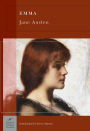
Bought this book for my 9-year old niece, Emma. She LOVED the cover with the embroidery. Not only is this book a great classic, the new cover gives it a fresh young edge to it.
Was this review helpful? Yes NoThank you for your feedback. Report this reviewThank you, this review has been flagged.
Overview
Emma, by Jane Austen, is part of the Barnes & Noble Classics series, which offers quality editions at affordable prices to the student and the general reader, including new scholarship, thoughtful design, and pages of carefully crafted extras. Here are some of the remarkable features of Barnes & Noble Classics: