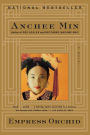
Empress Orchid

( 73 )

Pick Up in Store

Reserve and pick up in 60 minutes at your local store

Paperback (Reprint)
$11.22
BN.com price
$14.00 List Price (Save 20%)
Marketplace (New and Used)
from
$0.49
$14.00 List Price (Save 96%)
Usually ships within 1-2 business days
All (231)  
Used (189)  
New (42)  
Close
Sort by
Page 1 of 24
Showing 1 – 10 of 231 (24 pages)
$0.49
(Save 96%)
Seller since 2008

Feedback rating:

(2580)

Condition:

New — never opened or used in original packaging.

Like New — packaging may have been opened. A "Like New" item is suitable to give as a gift.

Very Good — may have minor signs of wear on packaging but item works perfectly and has no damage.

Good — item is in good condition but packaging may have signs of shelf wear/aging or torn packaging. All specific defects should be noted in the Comments section associated with each item.

Acceptable — item is in working order but may show signs of wear such as scratches or torn packaging. All specific defects should be noted in the Comments section associated with each item.

Used — An item that has been opened and may show signs of wear. All specific defects should be noted in the Comments section associated with each item.

Refurbished — A used item that has been renewed or updated and verified to be in proper working condition. Not necessarily completed by the original manufacturer.

Very Good
VG+, covers clean and crisp,interior is clean and bright,binding is tight,a very nice copy throughout

Ships from: San Jose, CA

Usually ships in 1-2 business days

  • Canadian
  • International
  • Standard, 48 States
  • Standard (AK, HI)
  • Express, 48 States
  • Express (AK, HI)
$0.99
(Save 93%)
Seller since 2009

Feedback rating:

(421)

Condition: Good
2005 Paperback Good Cover has minor wear or damage General Used Condiiton. Minor Defects may Exist. Minimal Shelf wear. Text may contain minor marking or highlighting, Binding ... Tight. Previous owners name or bookplate may be present. Like New, May have remainder mark (black line generally made acrossed bottom page edge to indicate close out by publisher) Read more Show Less

Ships from: Wichita, KS

Usually ships in 1-2 business days

  • Canadian
  • International
  • Standard, 48 States
  • Standard (AK, HI)
  • Express, 48 States
  • Express (AK, HI)
$0.99
(Save 93%)
Seller since 2005

Feedback rating:

(18844)

Condition: Good
2005-04-01 Trade Paperback Good Trade paperback (US). Glued binding. 346 p. Contains: Illustrations.

Ships from: Sparks, NV

Usually ships in 1-2 business days

  • Canadian
  • International
  • Standard, 48 States
  • Standard (AK, HI)
  • Express, 48 States
  • Express (AK, HI)
$0.99
(Save 93%)
Seller since 2005

Feedback rating:

(18844)

Condition: Very Good
2005-04-01 Trade Paperback Very Good Trade paperback (US). Glued binding. 346 p. Contains: Illustrations.

Ships from: Sparks, NV

Usually ships in 1-2 business days

  • Canadian
  • International
  • Standard, 48 States
  • Standard (AK, HI)
  • Express, 48 States
  • Express (AK, HI)
$0.99
(Save 93%)
Seller since 2005

Feedback rating:

(3357)

Condition: Good
Reprint Good [ No Hassle 30 Day Returns ] Publisher: Mariner Books Pub Date: 4/11/2005 Binding: Paperback Pages: 368.

Ships from: College Park, MD

Usually ships in 1-2 business days

  • Canadian
  • International
  • Standard, 48 States
  • Standard (AK, HI)
  • Express, 48 States
  • Express (AK, HI)
$0.99
(Save 93%)
Seller since 2005

Feedback rating:

(3357)

Condition: Good
Reprint Good [ No Hassle 30 Day Returns ] Publisher: Mariner Books Pub Date: 4/11/2005 Binding: Paperback Pages: 368.

Ships from: College Park, MD

Usually ships in 1-2 business days

  • Canadian
  • International
  • Standard, 48 States
  • Standard (AK, HI)
  • Express, 48 States
  • Express (AK, HI)
$0.99
(Save 93%)
Seller since 2005

Feedback rating:

(3357)

Condition: Good
Reprint Good [ No Hassle 30 Day Returns ] Publisher: Mariner Books Pub Date: 4/11/2005 Binding: Paperback Pages: 368.

Ships from: College Park, MD

Usually ships in 1-2 business days

  • Canadian
  • International
  • Standard, 48 States
  • Standard (AK, HI)
  • Express, 48 States
  • Express (AK, HI)
$0.99
(Save 93%)
Seller since 2005

Feedback rating:

(3357)

Condition: Good
Reprint Good [ No Hassle 30 Day Returns ] [ Torn pages: YES ] Publisher: Mariner Books Pub Date: 4/11/2005 Binding: Paperback Pages: 368.

Ships from: College Park, MD

Usually ships in 1-2 business days

  • Canadian
  • International
  • Standard, 48 States
  • Standard (AK, HI)
  • Express, 48 States
  • Express (AK, HI)
$0.99
(Save 93%)
Seller since 2005

Feedback rating:

(18844)

Condition: Very Good
2005-04-01 Paperback Very Good Trade paperback (US). Glued binding. 346 p. Contains: Illustrations.

Ships from: Sparks, NV

Usually ships in 1-2 business days

  • Canadian
  • International
  • Standard, 48 States
  • Standard (AK, HI)
  • Express, 48 States
  • Express (AK, HI)
$0.99
(Save 93%)
Seller since 2005

Feedback rating:

(18844)

Condition: Good
2005-04-01 Paperback Good Trade paperback (US). Glued binding. 346 p. Contains: Illustrations.

Ships from: Sparks, NV

Usually ships in 1-2 business days

  • Canadian
  • International
  • Standard, 48 States
  • Standard (AK, HI)
  • Express, 48 States
  • Express (AK, HI)
Page 1 of 24
Showing 1 – 10 of 231 (24 pages)
Close
Sort by
NOOK Book (eBook)
$9.80
BN.com price
$14.00 List Price (Save 30%)

Available on NOOK devices and apps

  • Nook Devices
  • NOOK
  • NOOK Color
  • NOOK Tablet
  • Tablet/Phone
  • NOOK for iPad
  • NOOK for iPhone
  • NOOK for Android
  • NOOK for Android (Tablet)
  • NOOK Kids for iPad
  • PC/Mac
  • NOOK Study
  • NOOK for PC
  • NOOK for Mac

Need a NOOK? Explore Now

Overview

From a master of the historical novel, Empress Orchid sweeps readers into the heart of the Forbidden City to tell the fascinating story of a young concubine who becomes China’s last empress. Min introduces the beautiful Tzu Hsi, known as Orchid, and weaves an epic of a country girl who seized power through seduction, murder, and endless intrigue. When China is threatened by enemies, she alone seems capable of holding the country together.
In this “absorbing companion piece to her novel Becoming Madame Mao” (New York Times), readers and reading groups will once again be transported by Min’s lavish evocation of the Forbidden City in its last days of imperial glory and by her brilliant portrait of a flawed yet utterly compelling woman who survived, and ultimately dominated, a male world.

Editorial Reviews

The New York Times
An absorbing companion piece to her novel, Becoming Madame Mao (2000), Anchee Min's Empress Orchid is also based on the life of a powerful but frequently denigrated female leader. — John Hartl
From The Critics
She's been written about before, this empress. In 1956 Pearl Buck gave us "Imperial Woman," a romanticized look at the woman who was "in youth a beautiful concubine, in middle life a brilliant strategist, in old age a goddess." The characters in Imperial Woman all talk Buck-speak, and why shouldn't they? ("Am I an infant that I play with toy animals?" The boy emperor expostulates at one point, "How dare you, Li Lien-Yang, defy your sovereign? I will have you sliced for this! Send me here my guardsmen!") But Anchee Min, raised in China, sent to the countryside during the revolution and writing here in English, takes a much less florid view. These are real people she writes about, and the crumbling of a world that -- though, God knows, strange to us -- was all too real to the people who lived in it. … Carolyn See

Product Details

  • ISBN-13: 9780618562039
  • Publisher: Houghton Mifflin Harcourt
  • Publication date: 4/28/2005
  • Edition description: Reprint
  • Pages: 368
  • Sales rank: 214,817
  • Product dimensions: 5.50 (w) x 8.25 (h) x 0.81 (d)

Meet the Author

Anchee Min
Anchee Min
Born in Shanghai in 1957, Anchee Min came to American in 1984. While attending English as a Second Language classes, she worked as a waitress, a house cleaner, a fabric painter, and a model. In 1990 she received a Masters of Fine Arts Degree from the Art Institute of Chicago. Min wrote Red Azalea in English over an eight-year period. It won the Carl Sandburg LIterary Award in 1993 and was a New York Times Notable Book.

Read an Excerpt

One

My imperial life began with a smell. A rotten smell that came from my father’s coffin—he had been dead for two months and we were still carrying him, trying to reach Peking, his birthplace, for burial. My mother was frustrated. “My husband was the governor of Wuhu,” she said to the footmen whom we had hired to bear the coffin. “Yes, madam,” the head footman answered humbly, “and we sincerely wish the governor a good journey home.” In my memory, my father was not a happy man. He had been repeatedly demoted because of his poor performance in the suppression of the Taiping peasant uprisings. Not until later did I learn that my father was not totally to blame. For years China had been dogged by famine and foreign aggression. Anyone who tried on my father’s shoes would understand that carrying out the Emperor’s order to restore peace in the countryside was impossible—peasants saw their lives as no better than death.
I witnessed my father’s struggles and sufferings at a young age. I was born and raised in Anhwei, the poorest province in China. We didn’t live in poverty, but I was aware that my neighbors had eaten earthworms for dinner and had sold their children to pay off debts. My father’s slow journey to hell and my mother’s effort to fight it occupied my childhood. Like a long- armed cricket my mother tried to block a carriage from running over her family.
The summer heat baked the path. The coffin was carried in a tilted position because the footmen were of different heights. Mother imagined how uncomfortable my father must be lying inside. We walked in silence and listened to the sound of our broken shoes tapping the dirt. Swarms of flies chased the coffin. Each time the footmen paused for a break the flies covered the lid like a blanket. Mother asked my sister Rong, my brother Kuei Hsiang and me to keep the flies away. But we were too exhausted to lift our arms. We had been traveling north along the Grand Canal on foot because we had no money to hire a boat. My feet were covered with blisters. The landscape on both sides of the path was bleak. The water in the canal was low and dirt- brown. Beyond it were barren hills, which extended mile after mile. There were fewer inns to be seen. The ones that we did come upon were infested with lice.
“You’d better pay us,” the head footman said to Mother when he heard her complaint that her wallet was near empty, “or you will have to carry the coffin yourselves, madam.” Mother began to sob again and said that her husband didn’t deserve this. She gained no sympathy. The next dawn the footmen abandoned the coffin.
Mother sat down on a rock by the road. She had a ring of sores sprouting around her mouth. Rong and Kuei Hsiang discussed burying our father where he was. I didn’t have the heart to leave him in a place without a tree in sight. Although I was not my father’s favorite at first —he was disappointed that I, his firstborn, was not a son—he did his best in raising me. It was he who insisted that I learn to read. I had no formal schooling, but I developed enough of a vocabulary to figure out the stories of the Ming and Ch’ing classics.
At the age of five I thought that being born in the Year of the Sheep was bad luck. I told my father that my friends in the village said that my birth sign was an inauspicious one. It meant that I would be slaughtered.
Father disagreed. “The sheep is a most adorable creature,” he said. “It is a symbol of modesty, harmony and devotion.” He explained that my birth sign was in fact strong. “You have a double ten in the numbers. You were born on the tenth day of the tenth moon, which fell on the twenty-ninth of November 1835. You can’t be luckier!” Also having doubts regarding my being a sheep, Mother brought in a local astrologer to consult. The astrologer believed that double ten was too strong. “Too full,” the old hag said, which meant “too easily spilled.” “Your daughter will grow up to be a stubborn sheep, which means a miserable end!” The astrologer talked excitedly as white spittle gathered at the corners of her mouth. “Even an emperor would avoid ten, in fear of its fullness!” Finally, at the suggestion of the astrologer, my parents gave me a name that promised I would “bend.” This was how I was called Orchid.
Mother told me later that orchids had also been the favorite subject of my father’s ink paintings. He liked the fact that the plant stood green in all seasons and its flower was elegant in color, graceful in form and sweet in scent.
My father’s name was Hui Cheng Yehonala. When I close my eyes, I can see my old man standing in a gray cotton gown. He was slender with Confucian features. It is hard to imagine from his gentle look that his Yehoonala ancestors were Manchu Bannermen who lived on horseback. Father told me that they were originally from the Nu Cheng people in the state of Manchuria, in northern China between Mongolia and Korea. The name Yehonala meant that our roots could be traced to the Yeho tribe of the Nala clan in the sixteenth century. My ancestors fought shoulder to shoulder with the Bannerman leader Nurhachi, who conquered China in 1644 and became the first Emperor of the Ch’ing Dynasty. The Ch’ing had now entered its seventh generation. My father inherited the title of Manchu Bannerman of the Blue Rank, although the title gave him little but honor.
When I was ten years old my father became the taotai, or governor, of a small town called Wuhu, in Anhwei province. I have fond memories of that time, although many consider Wuhu a terrible place. During the summer months the temperature stayed above one hundred degrees, day and night. Other governors hired coolies to fan their children, but my parents couldn’t afford one. Each morning my sheet would be soaked with sweat. “You wet the bed!” my brother would tease.
Nevertheless, I loved Wuhu as a child. The lake there was part of the great Yangtze River, which drove through China carving out gorges, shaggy crags, and valleys thick with ferns and grasses. It descended into a bright, broad, richly watered plain where vegetables, rice and mosquitoes all thrived. It flowed on until it met the East China Sea at Shanghai. Wuhu meant “the lake of a luxuriant growth of weeds.” Our house, the governor’s mansion, had a gray ceramic-tile roof with the figures of gods standing at the four corners of the tilted eaves. Every morning I would walk to the lake to wash my face and brush my hair. My reflection in the water was mirror-clear. We drank from and bathed in the river. I played with my siblings and neighbors on the slick backs of buffalo. We did fish-and-frog jumps. The long bushy weeds were our favorite hiding places. We snacked on the hearts of sweet water plants called chiao-pai.
In the afternoon, when the heat became unbearable, I would organize the children to help cool the house. My sister and brother would fill buckets, and I would pull them up to the roof where I poured the water over the tiles. We would go back to the water afterward. P’ieh, bamboo rafts, floated by. They came down the river like a giant loose necklace. My friends and I would hop onto the rafts for rides. We joined the raft men singing songs. My favorite tune was “Wuhu Is a Wonderful Place.” At sunset Mother would call us home. Dinner was set on a table in the yard under a trellis covered with purple wisteria.
My mother was raised the Chinese way, although she was a Manchu by blood. According to Mother, after the Manchus conquered China they discovered that the Chinese system of ruling was more benevolent and efficient, and they adopted it fully. The Manchu emperors learned to speak Mandarin. Emperor Tao Kuang ate with chopsticks. He was an admirer of Peking opera and he hired Chinese tutors to teach his children. The Manchus also adopted the Chinese way of dressing. The only thing that stayed Manchu was the hairstyle. The Emperor had a shaved forehead and a rope- like braid of black hair down his back called a queue. The Empress wore her hair with a thin black board fastened on top of her head displaying ornaments.
My grandparents on my mother’s side were brought up in the Ch’an, or Zen, religion, a combination of Buddhism and Taoism. My mother was taught the Ch’an concept of happiness, which was to find satisfaction in small things. I was taught to appreciate the fresh air in the morning, the color of leaves turning red in autumn and the water’s smoothness when I soaked my hands in the basin.
My mother didn’t consider herself educated, but she adored Li Po, a Tang Dynasty poet. Each time she read his poems she would discover new meanings. She would put down her book and gaze out the window. Her goose-egg-shaped face was stunningly beautiful.
Mandarin Chinese was the language I spoke as a child. Once a month we had a tutor who came to teach us Manchu. I remember nothing about the classes but being bored. I wouldn’t have sat through the lessons if it hadn’t been to please my parents. Deep down I knew that my parents were not serious about having us master the Manchu language. It was only for the appearance, so my mother could say to her guests, “Oh, my children are taking Manchu.” The truth was that Manchu was not useful. It was like a dead river that nobody drank from.
I was crazy about Peking operas. Again, it was my mother’s influence. She was such an enthusiast that she saved for the entire year so she could hire a local troupe for an in-house performance during the Chinese New Year. Each year the troupe presented a different opera.My mother invited all the neighbors and their children to join us. When I turned twelve the troupe performed Hua Mulan.
I fell in love with the woman warrior, Hua Mulan. After the show I went to the back of our makeshift stage and emptied my wallet to tip the actress, who let me try on her costume. She even taught me the aria “Goodbye, My Dress.” For the rest of the month people as far as a mile from the lake could hear me singing “Goodbye, My Dress.” My father took pleasure in telling the background to the operas. He loved to show off his knowledge. He reminded us that we were Manchus, the ruling class of China. “It is the Manchus who appreciate and promote Chinese art and culture.” When liquor took hold of my father’s spirit, he would become more animated. He would line up the children and quiz us on the details of the ancient Bannerman system. He wouldn’t quit until every child knew how each Bannerman was identified by his rank, such as Bordered, Plain, White, Yellow, Red and Blue.
One day my father brought out a scroll map of China. China was like the crown of a hat ringed by countries eager and accustomed to pledging their fealty to the Son of Heaven, the Emperor. Among the countries were Laos, Siam and Burma to the south; Nepal to the west; Korea, the Ryukyu Islands and Sulu to the east and southeast; Mongolia and Turkestan to the north and northwest.
Years later, when I recalled the scene, I understood why my father showed us the map. The shape of China was soon to change. By the time my father met his fate, during the last few years of Emperor Tao Kuang, the peasant revolts had worsened. In the midst of a summer drought, my father didn’t come home for months. My mother worried about his safety, for she had heard news from a neighboring province about angry peasants setting their governor’s mansion on fire. My father had been living in his office and trying to control the rebels. One day an edict arrived. To everyone’s shock the Emperor dismissed him.
Father came home deeply shamed. He shut himself in the study and refused visitors. Within a year his health broke down. It didn’t take him long to die. Our doctor bills piled up even after his death. My mother sold all of the family possessions, but we still couldn’t clear the debts. Yesterday Mother sold her last item: her wedding souvenir from my father, a butterfly hairpin made of green jade.

Before leaving us, the footmen carried the coffin to the bank of the Grand Canal so we could see the passing boats, where we might get help. The heat worsened and the air grew still. The smell of decay from the coffin grew stronger. We spent the night under the open sky, tormented by the heat and mosquitoes. My siblings and I could hear one another’s stomachs rumbling.
I woke at dawn and heard the clattering of a horse’s hooves in the distance. I thought I was dreaming. In no time a rider appeared in front of me. I felt dizzy with fatigue and hunger. The man dismounted and walked straight toward me. Without saying a word he presented me with a package tied with ribbon. He said it was from the taotai of the local town. Startled, I ran to my mother, who opened the package. Inside were three hundred taels of silver.
“The taotai must be a friend of your father’s!” Mother cried. With the help of the rider we hired back our footmen. But our good luck didn’t last. A few miles down the canal we were stopped by a group of men on horses led by the taotai himself. “A mistake has been made,” he said. “My rider delivered the taels to the wrong family.” Hearing this, Mother fell to her knees.
The taotai’s men took back the taels.
Exhaustion suddenly overwhelmed me and I fell on my father’s coffin.
The taotai walked to the coffin and squatted as if studying the grains of the wood. He was a stocky man with rough features. A moment later he turned to me. I expected him to speak but he didn’t.
“You are not a Chinese, are you?” he finally asked. His eyes were on my unbound feet.
“No, sir,” I replied. “I am Manchu.” “How old are you? Fifteen?” “Seventeen.” He nodded. His eyes continued to travel up and down, examining me.
“The road is filled with bandits,” he said. “A pretty girl like you should not be walking.” “But my father needs to go home.” My tears ran.
The taotai took my hand and placed the silver taels in my palm. “My respects to your father.” I never forgot about the taotai. After I became the Empress of China I sought him out. I made an exception to promote him. I made him a provincial governor, and he was given a handsome pension for the rest of his life.

Copyright © 2004 by Anchee Min. Reprinted by permission of Houghton Mifflin Company.

First Chapter

One

My imperial life began with a smell. A rotten smell that came from my
father's coffin—he had been dead for two months and we were still carrying
him, trying to reach Peking, his birthplace, for burial. My mother was
frustrated. 'My husband was the governor of Wuhu,' she said to the footmen
whom we had hired to bear the coffin. 'Yes, madam,' the head footman
answered humbly, 'and we sincerely wish the governor a good journey home.'
In my memory, my father was not a happy man. He had been
repeatedly demoted because of his poor performance in the suppression of
the Taiping peasant uprisings. Not until later did I learn that my father was
not totally to blame. For years China had been dogged by famine and foreign
aggression. Anyone who tried on my father's shoes would understand that
carrying out the Emperor's order to restore peace in the countryside was
impossible—peasants saw their lives as no better than death.
I witnessed my father's struggles and sufferings at a young age. I
was born and raised in Anhwei, the poorest province in China. We didn't live
in poverty, but I was aware that my neighbors had eaten earthworms for
dinner and had sold their children to pay off debts. My father's slow journey
to hell and my mother's effort to fight it occupied my childhood. Like a long-
armed cricket my mother tried to block a carriage from running over her
family.
The summer heat baked the path. The coffin was carried in a tilted
position because the footmen were of different heights. Mother imagined how
uncomfortable my father must be lying inside. We walked in silence and
listenedto the sound of our broken shoes tapping the dirt. Swarms of flies
chased the coffin. Each time the footmen paused for a break the flies covered
the lid like a blanket. Mother asked my sister Rong, my brother Kuei Hsiang
and me to keep the flies away. But we were too exhausted to lift our arms.
We had been traveling north along the Grand Canal on foot because we had
no money to hire a boat. My feet were covered with blisters. The landscape
on both sides of the path was bleak. The water in the canal was low and dirt-
brown. Beyond it were barren hills, which extended mile after mile. There
were fewer inns to be seen. The ones that we did come upon were infested
with lice.
'You'd better pay us,' the head footman said to Mother when he
heard her complaint that her wallet was near empty, 'or you will have to carry
the coffin yourselves, madam.' Mother began to sob again and said that her
husband didn't deserve this. She gained no sympathy. The next dawn the
footmen abandoned the coffin.
Mother sat down on a rock by the road. She had a ring of sores
sprouting around her mouth. Rong and Kuei Hsiang discussed burying our
father where he was. I didn't have the heart to leave him in a place without a
tree in sight. Although I was not my father's favorite at first —he was
disappointed that I, his firstborn, was not a son—he did his best in raising
me. It was he who insisted that I learn to read. I had no formal schooling, but
I developed enough of a vocabulary to figure out the stories of the Ming and
Ch'ing classics.
At the age of five I thought that being born in the Year of the
Sheep was ba told my father that my friends in the village said that
my birth sign was an inauspicious one. It meant that I would be slaughtered.
Father disagreed. 'The sheep is a most adorable creature,' he
said. 'It is a symbol of modesty, harmony and devotion.' He explained that
my birth sign was in fact strong. 'You have a double ten in the numbers. You
were born on the tenth day of the tenth moon, which fell on the twenty-ninth
of November 1835. You can't be luckier!'
Also having doubts regarding my being a sheep, Mother brought in
a local astrologer to consult. The astrologer believed that double ten was too
strong. 'Too full,' the old hag said, which meant 'too easily spilled.' 'Your
daughter will grow up to be a stubborn sheep, which means a miserable end!'
The astrologer talked excitedly as white spittle gathered at the corners of her
mouth. 'Even an emperor would avoid ten, in fear of its fullness!'
Finally, at the suggestion of the astrologer, my parents gave me a
name that promised I would 'bend.'
This was how I was called Orchid.
Mother told me later that orchids had also been the favorite
subject of my father's ink paintings. He liked the fact that the plant stood
green in all seasons and its flower was elegant in color, graceful in form and
sweet in scent.
My father's name was Hui Cheng Yehonala. When I close my
eyes, I can see my old man standing in a gray cotton gown. He was slender
with Confucian features. It is hard to imagine from his gentle look that his
Yehonala ancestors were Manchu Bannermen who lived on horseback.
Father told me that they were originally from the Nu Cheng peop
state of Manchuria, in northern China between Mongolia and Korea. The
name Yehonala meant that our roots could be traced to the Yeho tribe of the
Nala clan in the sixteenth century. My ancestors fought shoulder to shoulder
with the Bannerman leader Nurhachi, who conquered China in 1644 and
became the first Emperor of the Ch'ing Dynasty. The Ch'ing had now entered
its seventh generation. My father inherited the title of Manchu Bannerman of
the Blue Rank, although the title gave him little but honor.
When I was ten years old my father became the taotai, or
governor, of a small town called Wuhu, in Anhwei province. I have fond
memories of that time, although many consider Wuhu a terrible place. During
the summer months the temperature stayed above one hundred degrees, day
and night. Other governors hired coolies to fan their children, but my parents
couldn't afford one. Each morning my sheet would be soaked with
sweat. 'You wet the bed!' my brother would tease.
Nevertheless, I loved Wuhu as a child. The lake there was part of
the great Yangtze River, which drove through China carving out gorges,
shaggy crags, and valleys thick with ferns and grasses. It descended into a
bright, broad, richly watered plain where vegetables, rice and mosquitoes all
thrived. It flowed on until it met the East China Sea at Shanghai. Wuhu
meant 'the lake of a luxuriant growth of weeds.'
Our house, the governor's mansion, had a gray ceramic-tile roof
with the figures of gods standing at the four corners of the tilted eaves. Every
morning I would walk to the lake to wash my face and brush my hair. My
reflection in the wa mirror-clear. We drank from and bathed in the
river. I played with my siblings and neighbors on the slick backs of buffalo.
We did fish-and-frog jumps. The long bushy weeds were our favorite hiding
places. We snacked on the hearts of sweet water plants called chiao-pai.
In the afternoon, when the heat became unbearable, I would
organize the children to help cool the house. My sister and brother would fill
buckets, and I would pull them up to the roof where I poured the water over
the tiles. We would go back to the water afterward. P'ieh, bamboo rafts,
floated by. They came down the river like a giant loose necklace. My friends
and I would hop onto the rafts for rides. We joined the raft men singing
songs. My favorite tune was 'Wuhu Is a Wonderful Place.' At sunset Mother
would call us home. Dinner was set on a table in the yard under a trellis
covered with purple wisteria.
My mother was raised the Chinese way, although she was a
Manchu by blood. According to Mother, after the Manchus conquered China
they discovered that the Chinese system of ruling was more benevolent and
efficient, and they adopted it fully. The Manchu emperors learned to speak
Mandarin. Emperor Tao Kuang ate with chopsticks. He was an admirer of
Peking opera and he hired Chinese tutors to teach his children. The Manchus
also adopted the Chinese way of dressing. The only thing that stayed
Manchu was the hairstyle. The Emperor had a shaved forehead and a rope-
like braid of black hair down his back called a queue. The Empress wore her
hair with a thin black board fastened on top of her head displaying ornaments.
My grandparents on my mo side were brought up in the
Ch'an, or Zen, religion, a combination of Buddhism and Taoism. My mother
was taught the Ch'an concept of happiness, which was to find satisfaction in
small things. I was taught to appreciate the fresh air in the morning, the color
of leaves turning red in autumn and the water's smoothness when I soaked
my hands in the basin.
My mother didn't consider herself educated, but she adored Li Po,
a Tang Dynasty poet. Each time she read his poems she would discover new
meanings. She would put down her book and gaze out the window. Her
goose-egg-shaped face was stunningly beautiful.
Mandarin Chinese was the language I spoke as a child. Once a
month we had a tutor who came to teach us Manchu. I remember nothing
about the classes but being bored. I wouldn't have sat through the lessons if
it hadn't been to please my parents. Deep down I knew that my parents were
not serious about having us master the Manchu language. It was only for the
appearance, so my mother could say to her guests, 'Oh, my children are
taking Manchu.' The truth was that Manchu was not useful. It was like a
dead river that nobody drank from.
I was crazy about Peking operas. Again, it was my mother's
influence. She was such an enthusiast that she saved for the entire year so
she could hire a local troupe for an in-house performance during the Chinese
New Year. Each year the troupe presented a different opera.My mother
invited all the neighbors and their children to join us. When I turned twelve the
troupe performed Hua Mulan.
I fell in love with the woman warrior, Hua Mulan. After the show I
went to t makeshift stage and emptied my wallet to tip the
actress, who let me try on her costume. She even taught me the
aria 'Goodbye, My Dress.' For the rest of the month people as far as a mile
from the lake could hear me singing 'Goodbye, My Dress.'
My father took pleasure in telling the background to the operas.
He loved to show off his knowledge. He reminded us that we were Manchus,
the ruling class of China. 'It is the Manchus who appreciate and promote
Chinese art and culture.' When liquor took hold of my father's spirit, he would
become more animated. He would line up the children and quiz us on the
details of the ancient Bannerman system. He wouldn't quit until every child
knew how each Bannerman was identified by his rank, such as Bordered,
Plain, White, Yellow, Red and Blue.
One day my father brought out a scroll map of China. China was
like the crown of a hat ringed by countries eager and accustomed to pledging
their fealty to the Son of Heaven, the Emperor. Among the countries were
Laos, Siam and Burma to the south; Nepal to the west; Korea, the Ryukyu
Islands and Sulu to the east and southeast; Mongolia and Turkestan to the
north and northwest.
Years later, when I recalled the scene, I understood why my father
showed us the map. The shape of China was soon to change. By the time
my father met his fate, during the last few years of Emperor Tao Kuang, the
peasant revolts had worsened. In the midst of a summer drought, my father
didn't come home for months. My mother worried about his safety, for she
had heard news from a neighboring province about angry peasants setting
their governor's mansion fire. My father had been living in his office and
trying to control the rebels. One day an edict arrived. To everyone's shock
the Emperor dismissed him.
Father came home deeply shamed. He shut himself in the study
and refused visitors. Within a year his health broke down. It didn't take him
long to die. Our doctor bills piled up even after his death. My mother sold all
of the family possessions, but we still couldn't clear the debts. Yesterday
Mother sold her last item: her wedding souvenir from my father, a butterfly
hairpin made of green jade.

Before leaving us, the footmen carried the coffin to the bank of the Grand
Canal so we could see the passing boats, where we might get help. The heat
worsened and the air grew still. The smell of decay from the coffin grew
stronger. We spent the night under the open sky, tormented by the heat and
mosquitoes. My siblings and I could hear one another's stomachs rumbling.
I woke at dawn and heard the clattering of a horse's hooves in the
distance. I thought I was dreaming. In no time a rider appeared in front of me.
I felt dizzy with fatigue and hunger. The man dismounted and walked straight
toward me. Without saying a word he presented me with a package tied with
ribbon. He said it was from the taotai of the local town. Startled, I ran to my
mother, who opened the package. Inside were three hundred taels of silver.
'The taotai must be a friend of your father's!' Mother cried. With
the help of the rider we hired back our footmen. But our good luck didn't last.
A few miles down the canal we were stopped by a group of men on horses
led by the taotai himself. has been made,' he said. 'My rider
delivered the taels to the wrong family.'
Hearing this, Mother fell to her knees.
The taotai's men took back the taels.
Exhaustion suddenly overwhelmed me and I fell on my father's
coffin.
The taotai walked to the coffin and squatted as if studying the
grains of the wood. He was a stocky man with rough features. A moment
later he turned to me. I expected him to speak but he didn't.
'You are not a Chinese, are you?' he finally asked. His eyes were
on my unbound feet.
'No, sir,' I replied. 'I am Manchu.'
'How old are you? Fifteen?'
'Seventeen.'
He nodded. His eyes continued to travel up and down, examining
me.
'The road is filled with bandits,' he said. 'A pretty girl like you
should not be walking.'
'But my father needs to go home.' My tears ran.
The taotai took my hand and placed the silver taels in my
palm. 'My respects to your father.'
I never forgot about the taotai. After I became the Empress of
China I sought him out. I made an exception to promote him. I made him a
provincial governor, and he was given a handsome pension for the rest of his
life.

Copyright © 2004 by Anchee Min. Reprinted by permission of Houghton
Mifflin Company.
Customer Reviews
Average Rating 4.5
( 73 )

Rating Distribution

If you've bought this product, tell the world how you liked it.
Write a Review
See All Sort by: Showing 1 – 20 of 74 Customer Reviews
  • Posted February 6, 2009

    Responding to last anonymous reviewer.

    In regards to the last anonomous reviwer, this book is classified as a fiction. Min has every right to express or portay Empress Orchid in her view. However, you seemed almost convinced (maybe even brainwashed from Chinese history which tends to blame everything on the women) that it is Empress Orchid is a negative person. For example, how many thousands of years has the women been responsible to bring sons to the family and it is still going on today!!! Look at all the babies girls being thrown away just so families can have a son to bear their last name! Yet, it was never the sons fault!!! Bound by tradition, Orchid fought her way to save China, and try to help her son become Emperor. Perhaps it was ShunShim that poisoned Guang-Xsu? How was it provened it was Empress Orchid? Please enlighten us with your fact!!! Dont forget, its a fictional novel! Either you enjoy it for its sensitivity, or you are just ONE-Minded!

    4 out of 4 people found this review helpful.

    Was this review helpful? Yes  No   Report this review
  • Anonymous

    Posted March 2, 2009

    I Also Recommend:

    enlightening!

    entertaining and easy to read, great to learn more about imperial life in the XIX century China.

    1 out of 1 people found this review helpful.

    Was this review helpful? Yes  No   Report this review
  • Anonymous

    Posted January 2, 2006

    just a penny thought

    The elaborate details of the Qing Dynasty¿s court life and etiquette made this book extremely enjoyable as I have been very interested in this particular dynasty since I was young. Moreover, this book was written in the form of Cixi¿s autobiography, making it even more intriguing as you can imagine yourself to be in her shoes and think the same thoughts as she did. However, there are some inaccurate historical details in this book that left me quite fustrated such as how Lin Zhe Xu destroyed opium after the Opium Wars. In Anchee Min¿s book, he set fire to 20000 cases of opium and that the burning pit was as large as a lake. That is the most common misconception anyone can ever have about the Opium Wars. Commissioner Lin did not set fire to the opium cases, he in fact dissolved the opium into sea after chemically treating it with sulphur, etc such that it could no longer serve as an addicitve drug. That was the biggest sorepoint of the entire book.

    1 out of 1 people found this review helpful.

    Was this review helpful? Yes  No   Report this review
  • Anonymous

    Posted January 28, 2012

    One of my favorites

    If u like this read the twenty first wife

    Was this review helpful? Yes  No   Report this review
  • Posted January 28, 2012

    Shoukd have been called Empress Indecision

    I gave this book 3 stars because it did keep me entertained and was a fast read at the airport. However, many story lines were left without a conclusion - for example: I spanked the Emperor and now I would be punished - then nothing - was she punished? How? There are also some unjustified pseudo-passions that lead to nothing. An admirer risks getting sealed in the Emperor's grave while she is deciding whether to live or die. Really silly.

    Was this review helpful? Yes  No   Report this review
  • Anonymous

    Posted January 14, 2012

    Interesting Historical Fiction

    The descriptions of life in the Forbidden City from the point of view of a concubine are fascinating.

    Was this review helpful? Yes  No   Report this review
  • Anonymous

    Posted December 9, 2011

    Good read

    Had me at the first chapter

    Was this review helpful? Yes  No   Report this review
  • Posted June 8, 2011

    Excellent

    As+an+fan+of+historically+based+fiction+I+would+certainly+recommend+this+book.+The+author+does+a+great+job+of+painting+a+vivid+and+memorable+story.

    Was this review helpful? Yes  No   Report this review
  • Posted October 17, 2009

    Empress Orchid--A Woman Trapped as a Royal

    This is an interesting peek into the life of what it must have been like for a woman chosen as a concubine - or wife - of a Chinese Emperor. She has to bend with the whims of her husband, who is shared amongst as many partners as he pleases. She may not even be able to raise her own son, if she is not the #1 wife, designated as Empress.

    Also a very intriguing historical read of the frustrations of the Chinese court and the inability of the emperor in the mid-1800s to stop the invasion economic control of foreigners into his own domain.

    Was this review helpful? Yes  No   Report this review
  • Posted June 13, 2009

    The ascent to Royalty in China

    A history lesson of China. Gives a wonderful feel of the country itself.

    Was this review helpful? Yes  No   Report this review
  • Anonymous

    Posted January 13, 2009

    Not realistic or true to history...tries to make Empress Cixi into an angel...

    This book first of all is a highly glorified attempt to paint the Empress Orchid=Cixi in a favorable light making excuses for her crimes in history or covering them up. I would not by far count this as realistic in any way. It has been proven now that the Emperor Guang-Xsu was poisoned with arsenic by Empress Cixi, that she forced him into a marriage he did not like, and that she had drowned the woman he did love. In the book all of this is glazed over ...it is so unrealistic. Another thing is Empress Cian or Neharoo was a well love Empress who was poisoned by Cixi so she could take over full power behind the empire. In the book Anchee minn paints EMpress Cian as an idiot/air head who has no clue over politics and she dies of the flu. Sorry Anchee Minn you can't distort history in order to make your main character appealing and have a happy ending. I would not recommend this hogwash...!

    0 out of 2 people found this review helpful.

    Was this review helpful? Yes  No   Report this review
  • Anonymous

    Posted November 26, 2006

    Excellent look into chinese sociology!

    This is a vibrant fascinating historical fiction tale of China's last Empress. The story line is over-loaded with so much detail that fans who appreciate intrinsic depth into a bygone era will want to read the EMPRESS ORCHID. However, the profundity of each elaborate description of court life and the Forbidden City in the late 1800s also tends to slow down the action in which intrigue and executions are the norm. Those who enjoy historical sociology as the prime theme will cherish Anchee Min's tale, but those who want to swim in the shark infested pool will find this first person account too slow.

    Was this review helpful? Yes  No   Report this review
  • Anonymous

    Posted August 17, 2006

    Holds you spellbound!

    I love to read a book that transports you into the story. This book does that beautifully. I was no longer in my humble home in south east Texas, I was walking in lavish gardens and gilded halls of the Forbidden City. Anchee Min holds her readers captive from the first page to the last. I never wanted this book to end. One of my new favorites.

    Was this review helpful? Yes  No   Report this review
  • Anonymous

    Posted November 17, 2005

    Loved this book

    Amazing! Anchee Min has captured the soul of Imperialist China. I was lost in a China that was both picturesque and dim. The contrast of the pageantry of the Forbidden City to the sadness and loneliness of it inhabitants is magnificently woven in the tapestry of this story.

    Was this review helpful? Yes  No   Report this review
  • Anonymous

    Posted July 23, 2005

    Great from start to finish

    Min writes beautifully. Her descriptions of life in the Forbidden City are heart wrenching, gorgeous, and humorous. After reading Empress Orchid I ran out and bought her other two books. All which are great!

    Was this review helpful? Yes  No   Report this review
  • Anonymous

    Posted July 27, 2005

    Flows like a dream!

    This book is written like a fairytale and the words just flow off the pages. It's a wonderful novel that I would recommend anyone who's looking for a good book to curl up with on a lazy Sunday morning!

    Was this review helpful? Yes  No   Report this review
  • Anonymous

    Posted August 4, 2005

    ADDICTIVE...

    I couldn't find myself to part with the book. I really felt as if I was looking through the eyes of Yehonala and experiencing what she went through. It's like a good soap opera that you never want to see end. Beautifully written, detailed descriptions, and really knows how to pull the reader in.

    Was this review helpful? Yes  No   Report this review
  • Anonymous

    Posted May 11, 2005

    Stunning

    Anchee Min writes with vivid color that will enfold the reader. She makes China's mid-19th Century history come alive. Eagerly awaiting the next installment!

    Was this review helpful? Yes  No   Report this review
  • Anonymous

    Posted April 12, 2005

    A Surprising Gem

    I stumbled upon this book as I was walking through the aisles of B&N. I've never read or heard of Anchee Min before, but I decided to take a chance on this book. It is a wonderful read! It has great detail; the story is intriguing and holds your attention to the very end. As one story line dies down, a new one develops quickly. Anchee Min is a delightful writer and awesome storyteller. I strongly recommend this book.

    Was this review helpful? Yes  No   Report this review
  • Anonymous

    Posted June 2, 2005

    Wonderful depiction of Imperial Life

    Empress Orchid is a truly amazing novel! Min Anchee provides such rich detail and a powerful voice for Orchid, that the reader is immediately enchanted by the beauty of the story and character. Orchid's strength is moving and inspiring. She overcomes so much in the span of her life, it is truly stunning.

    Was this review helpful? Yes  No   Report this review
See All Sort by: Showing 1 – 20 of 74 Customer Reviews

If you find inappropriate content, please report it to Barnes & Noble
Why is this product inappropriate?
Comments (optional)
500 character limit