The Decline and Fall of the Roman Empire
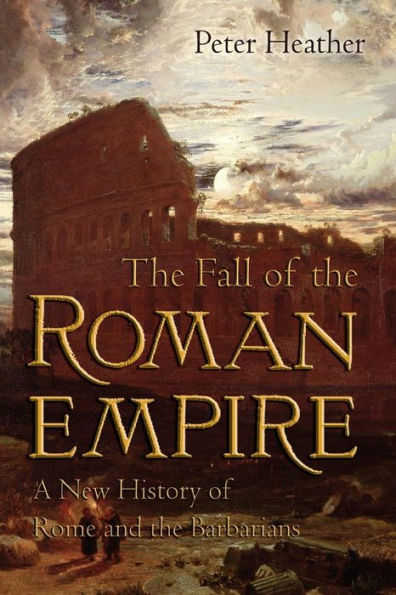
Peter Heather's analysis of the resultant decline and fall of the Roman Empire is based on its great predecessor- Edward Gibbon's The History of the Decline and Fall of the Roman Empire. Overall, Edward Gibbon's 1,252 page analysis has the underlying thesis that Rome had a glorious aetataureate or a Golden Age during the Antonine Principate Period. After the passing of these benevolent despots, the Roman Empire underwent stagnation and then inevitable dilapidation, decline and ulimate abjuration as it was to be swept away. This thesis of Edward Gibbon has sparked a controversy. Multitudinous theses have been proposed on the fall of the Roman Empire with Peter Heather being one of them. Peter Heather utilizes socio-demographic means with illustrative methods such as tables, graphs and charts to stress the decentralization of the political unit into the feudal period of manorialism. Within the greater context, society was disrupted to an extent in the fact that the geographic constitution of the Roman Empire had collapsed. This point is where the multifarious theses converge. Edward Gibbon proposed that the fall of Rome was a catastrophe that led Europe into an age of less civilized societies that lacked centralization, unity and internal coherence. For Edward Gibbon, the fall of Rome led to the "Dark Ages". Pirenne's thesis, however, states that Greco-Roman culture continued until 638 CE when the Muslim forces disrupted Byzantine and Mediterranean mercantile activities and deprived the Byzantine forces and all of its Greek and Roman legacies of the Exarchate of Carthage, the Exarchate of Hispania, Syria, Egypt, Cyrenaica and other outlying and semi-peripheral zones. With the disruption of trade and commerce, the age of antiquity finally gave way to the Mediaeval Period. The theory of Late Antiquity maintains that whilst geographic hegemony of Rome fell, it gave way to an era of transition with the Byzantine state and the revival in the West or Charlemagne's Empire as well as the Holy Roman Empire that maintained the Greco-Roman tradition. Peter Heather brings together all these inimical and conflicting theories and adds through assiduous research, interior images, charts, tables, graphs and a rigorous works cited/bibliography list a concise reiteration and a new perspective. For example, Peter Heather mentions that 40% of the Byzantine forces were held in check against the Sassanian Persians. The overall military expenditure, over-extension of manpower and economic exhaustion were some causes of the fall of Rome and an interesting outlook to the continuity/disruption theories that concern the topic of the fall of Rome.
1 out of 2 people found this review helpful.
Was this review helpful? Yes NoThank you for your feedback.
Report this reviewThank you, this review has been flagged.