- Shopping Bag ( 0 items )
Available on NOOK devices and apps
Want a NOOK? Explore Now
Whoever saves a single life saves the entire world . . .
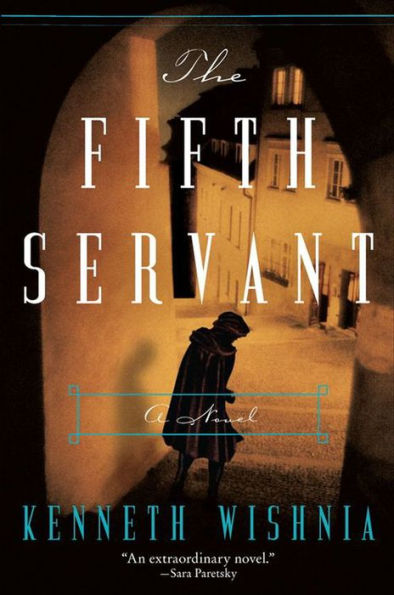
In 1592, as the Catholic Church and the Protestants battle for control of the soul of Europe, Prague is a relatively safe harbor in the religious storm. Ruled by Emperor Rudolph II, the city is a refuge for Jews who live within the gated walls of its ghetto. But their lives are jeopardized when a young Christian girl is found with her throat slashed in a Jewish shop on the eve of Passover. Charged with blood libel, the shopkeeper and his family are arrested. All that stands in the way of a rabid Christian mob is a clever Talmudic scholar, newly arrived from Poland, named Benyamin Ben-Akiva. Pleading the shopkeeper's innocence to the city's sheriff, Benyamin is given three days to bring the true killer to justice.
But the search will not be easy. Hampered by rabbinic law, and with no allies or connections, Benyamin has only his wits, knowledge, and faith to guide him on his quest—a trail that weaves from the city's teeming streets to the quiet of a shul, from the forbidden back rooms of a ghetto brothel to the emperor's lavish palace.
The Talmud says many things in life depend on mazl, luck. Fortunately, Benyamin is blessed, for an unlikely group of heroes will risk their own lives to help him discover the truth: Anya, a Christian butcher's daughter; the renowned reformist rabbi Judah Loew; a wise herbal healer known as Kassandra the Bohemian; and even the emperor himself.
Who would most profit from the girl's murder—and from having the entire ghetto sealed off? Is the killer a Christian indebted to the girl's apothecary father? Or a messianic Jew bent on the destruction of his people to precipitate the Messiah's coming? The desperate search for answers is complicated by the arrival of a new Holy Inquisitor determined to root out witchcraft and heresy, and reclaim the fractious Bohemian territory for Rome. With time running out, Benyamin must dare the impossible—and commit the unthinkable—to save the Jews of Prague . . . and his own life.
Infused with history and spiritual insight, rich in atmosphere and color, The Fifth Servant vividly re-creates sixteenth-century Prague—a bustling city where superstition, ignorance, and hatred clash with curiosity, knowledge, and tolerance; a world in which innocent lives are swept away by political and religious struggles, and righteous men and women sacrifice everything in the name of justice and truth.
Fascinating period piece about a Polish Jewish town in the 1500's. Benjamin is a Shammes, new to the town and a murder of a Christian girl takes place and the body is found in the shop of a Jewish shopowner. Tempers are high and the Christians plan to burn the Jewish town in three days if the murderer is not brought forward. Benjamin must become a detective and try to find who did it.
The book presents the frightening horrors presented to the Jewish community. Totally misunderstood and branded as "heretics" by the Inquisition, they live in the constant fear of being murdered by angry mobs. Additionally, they are not allowed to work in most professions allowed to Christians.
Those of Jewish background will love the many discussions of Torah, Talmud, Mishnah and Kabbalah that are prevelent throughout this work and there are a great deal of Yiddish expressions thrown in. There are a lot of typical Jewish arguing such as when the Shammes has to argue with a Rabbi as to whether it is alright to build a wall to protect the city at the beginning of Shabbes. Benjamin says by protecting the people, they will be able to atone for a disgression at many succeeding Shabbes' while the Rabbi says that it is worse to commit a sin of building on the Shabbes.
The author tries to throw in some expressions that are modern slang and he says that these expressions were actually around during that time.
5 out of 5 people found this review helpful.
Was this review helpful? Yes NoThank you for your feedback. Report this reviewThank you, this review has been flagged."The Fifth Servant" by Kenneth Wishnia is a fictional mystery set in 1592 at Jewish Ghetto in the city of Prague. The book is rich with Jewish culture and the tensions between Jews and Christians.
Benyamin Ben Akivah is a shamash, the caretaker of a temple, and new to the Jewish community. Benyamin is not only a scholar but a proud Jew with a temper which he finds difficult to control. When a Christian girl's body is found in the ghetto just before Passover Benyamin must prove to the Christian community that it is a blood libel case before the ghetto is destroyed.
Working together with the freethinker Rabbi Lowe they must work fast while keeping the Jewish laws and restrictions regarding the holiday of Passover.
"The Fifth Servant" by Kenneth Wishnia is told through the eyes of Benyamin Ben Akivah, a Talmudic scholar who follows his disgruntled wife from Poland to Prague. The book takes place over three days and two nights when Benyamin tries to solve a blood libel incident which weighed down the Jewish communities up until the 20th Century.
This is a clever book, filled with excellent research, vivid imagery, and good writing sprinkled with humor. The medieval ghetto life is convincing and rich in detail, city of Prague comes to life even though it wouldn't be a place I'd want to live in (especially not at that time). While the book is a mystery it is not formulaic and uses a new and unique voice which examines the ancient Jewish texts like the bible, Talmud, Torah, Kabbalah and to my joy The Book of Zohar to tell the story.
There are many conflicts in the book, not only between Jews and Christians but also between rich and poor, men and women, freethinking rabbis and their conservative counterparts as well as leaders of the Christian church who see the role of the inquisition as fleshing out heretics and those who are just a bit too happy to use it as an excuse to torture Jews and take their fortune (splitting it between the emperor and the Church as was the costume).
I liked the way that Mr. Wishnia imagined how people in the 16th Century thought. Women, who were part of the community, had to do things in secret even though they were pillars of the community. There is great insight on how Jews were persecuted and the struggles they faced. However, the author uses these adversities to highlight the Jewish spirit and perseverance.
There are many characters in the book but and they are all very well drawn. Besides the protagonist a standout characters was Anya, a bright Christian girl, daughter of a butcher as well as Sheriff Zizska of Prague, Rabbi Loew and even Emperor Rudolph II made an appearance.
While I truly enjoyed this book, it is not for everyone (but really, what book is?). The book is filled with my kind of humor, sarcastic, self deprecating and sardonic however it is not a light or easy read. This book will most likely appeal to those interested in Jewish history, Jewish folklore and/or the time period.
There are many Hebrew, Yiddish and some German words/phrases peppered throughout the book, the author does translate the important ones and also includes and excellent glossary at the end to assist the readers.
1 out of 1 people found this review helpful.
Was this review helpful? Yes NoThank you for your feedback. Report this reviewThank you, this review has been flagged.dm050
Posted March 13, 2010
An enjoyable book, although the ending is rushed. A little on the scholarly side with a lot of deep questions posed within the context of the story. Not a light read. Still, the best book I read all winter.
1 out of 1 people found this review helpful.
Was this review helpful? Yes NoThank you for your feedback. Report this reviewThank you, this review has been flagged.There is no way I could finish this book...I got half way through it and wondered why I was punishing myself.
1 out of 1 people found this review helpful.
Was this review helpful? Yes NoThank you for your feedback. Report this reviewThank you, this review has been flagged.Richly described and exuding the smells and sounds of what 16th century Prague surely must have been like, Wishnia has clearly researched thoroughly for The Fifth Servant, and it is a strikingly beautiful and gritty look into this time period. Whether it is a group of Jesuits walking on the cobbled streets, or a tough scene of torture and interrogation of a potential "witch," Wishnia has superbly captured scenes so vivid that in several instances, a moment of reflection was needed before proceeding. I look forward to more of his work. Once I got used to the modernization of the language even though it was set in the 16th century, it was a highly enjoyable read. I appreciate Jewish fiction and especially historical fiction, so to be able to combine the two and then throw a murder mystery on top of that, added to my overall pleasure. While I do wish the mystery played a more central part throughout the story, I could accept that the primary discussionWishnia focused on was of the interaction and struggles that the Jewish community experienced during this time. The spiritual and personal challenges of Ben-Akiva and others provided fantastic character development, and I enjoyed the insight into these characters. Wishnia does provide a helpful glossary in the back of the book, however he does a fantastic job of sentence structure to contextualize it so that you may not need to use the glossary.
Was this review helpful? Yes NoThank you for your feedback. Report this reviewThank you, this review has been flagged.Anonymous
Posted August 30, 2011
No text was provided for this review.
Anonymous
Posted February 14, 2010
No text was provided for this review.
Anonymous
Posted June 6, 2011
No text was provided for this review.
Anonymous
Posted December 3, 2010
No text was provided for this review.
Overview
Whoever saves a single life saves the entire world . . .
In 1592, as the Catholic Church and the Protestants battle for control of the soul of Europe, Prague is a relatively safe harbor in the religious storm. Ruled by Emperor Rudolph II, the city is a refuge for Jews who live within the gated walls of its ghetto. But their lives are jeopardized when a young Christian girl is found with her throat slashed in a Jewish shop on the eve of Passover. Charged with blood libel, the shopkeeper and his family are arrested. All that stands in the way of a rabid Christian mob is a clever Talmudic scholar, newly arrived from ...