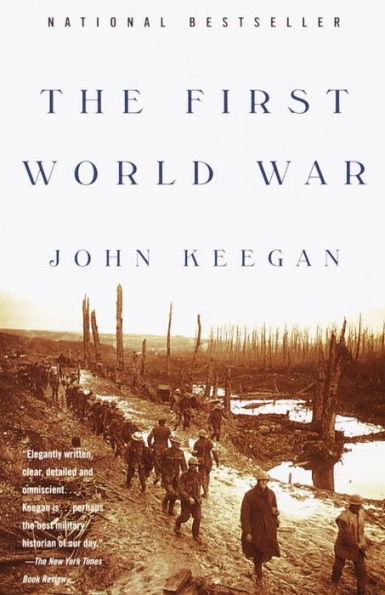
The First World War

( 18 )

Pick Up in Store

Reserve and pick up in 60 minutes at your local store

Paperback (1 VINTAGE)
$10.87
BN.com price
$17.00 List Price (Save 36%)
Marketplace (New and Used)
from
$3.00
$17.00 List Price (Save 82%)
Usually ships within 1-2 business days
All (44)  
Used (25)  
New (19)  
Close
Sort by
Page 1 of 5
Showing 1 – 10 of 44 (5 pages)
$3.00
(Save 82%)
Seller since 2012

Feedback rating:

(32)

Condition:

New — never opened or used in original packaging.

Like New — packaging may have been opened. A "Like New" item is suitable to give as a gift.

Very Good — may have minor signs of wear on packaging but item works perfectly and has no damage.

Good — item is in good condition but packaging may have signs of shelf wear/aging or torn packaging. All specific defects should be noted in the Comments section associated with each item.

Acceptable — item is in working order but may show signs of wear such as scratches or torn packaging. All specific defects should be noted in the Comments section associated with each item.

Used — An item that has been opened and may show signs of wear. All specific defects should be noted in the Comments section associated with each item.

Refurbished — A used item that has been renewed or updated and verified to be in proper working condition. Not necessarily completed by the original manufacturer.

Acceptable
Used - Acceptable Paperback Slight wear to cover, corners, and edges.

Ships from: Fort Lauderdale, FL

Usually ships in 1-2 business days

  • Canadian
  • International
  • Standard, 48 States
  • Standard (AK, HI)
  • Express, 48 States
  • Express (AK, HI)
$3.91
(Save 77%)
Seller since 2006

Feedback rating:

(4840)

Condition: Good
Shipped by Better World Books. Shows some signs of wear, and may have some markings on the inside. 100% Money Back Guarantee. Shipped to over one million happy customers. For ... California residents, the list price includes applicable sales tax. Read more Show Less

Ships from: Mishawaka, IN

Usually ships in 1-2 business days

  • Standard, 48 States
  • Standard (AK, HI)
  • Express, 48 States
  • Express (AK, HI)
$4.98
(Save 71%)
Seller since 2012

Feedback rating:

(888)

Condition: Very Good
" *****We Ship FAST. Usually within 24 hours. FREE Tracking/Confirmation.*****"

Ships from: Garden Grove, CA

Usually ships in 1-2 business days

  • Standard, 48 States
  • Standard (AK, HI)
  • Express, 48 States
  • Express (AK, HI)
$4.99
(Save 71%)
Seller since 2005

Feedback rating:

(254)

Condition: Very Good
New York, New York, U.S.A. 2000 Soft Cover Near Fine 0-375-70045-5 Book shows no use. A nice copy. A little bit smokey. ***PROMPT, PROFESSIONAL SERVICE! ***

Ships from: Broken Arrow, OK

Usually ships in 1-2 business days

  • Canadian
  • International
  • Standard, 48 States
  • Standard (AK, HI)
  • Express, 48 States
  • Express (AK, HI)
$6.00
(Save 65%)
Seller since 2009

Feedback rating:

(108)

Condition: Very Good
New York, New York, U.S.A. 2000 Paperback Near Fine Tight, clean.

Ships from: Memphis, TN

Usually ships in 1-2 business days

  • Canadian
  • International
  • Standard, 48 States
  • Standard (AK, HI)
  • Express, 48 States
  • Express (AK, HI)
$6.63
(Save 61%)
Seller since 2005

Feedback rating:

(45317)

Condition: Very Good
SHIPS FAST! via UPS(AK/HI Priority Mail) within 24 hrs/ used sticker/some hilite

Ships from: Columbia, MO

Usually ships in 1-2 business days

  • Standard, 48 States
  • Standard (AK, HI)
  • Express, 48 States
  • Express (AK, HI)
$7.00
(Save 59%)
Seller since 2012

Feedback rating:

(612)

Condition: Very Good
This is a softcover(paperback) book. In very good condition, a nice, clean book!!

Ships from: Oakdale, CA

Usually ships in 1-2 business days

  • Canadian
  • International
  • Standard, 48 States
  • Standard (AK, HI)
$7.05
(Save 59%)
Seller since 2008

Feedback rating:

(26)

Condition: Very Good
John Gail (Cover Design); Robert C. Olsson (Design) New York 2000 Trade Paperback 1st Vint. Bks Ed. Jun. 2000/9th Pr. Very Good Academic, Scholarly, Research. 8vo-over 7"-9" tall. ... 475 pp. Solidly bound copy with minimal external wear, crisp pages and clean text. Small stain on top edge. Read more Show Less

Ships from: Bronx, NY

Usually ships in 1-2 business days

  • Canadian
  • International
  • Standard, 48 States
  • Standard (AK, HI)
  • Express, 48 States
  • Express (AK, HI)
$7.25
(Save 57%)
Seller since 2005

Feedback rating:

(25)

Condition: Good
New York 1999 Soft Cover 1st Printing Very Good. No Jacket 8vo-over 7"-9" tall. The First World War, a cataclysm that left ten million dead, created the modern world. Author sheds ... fascinating light on weaponry & technology; shows the doomed negotiations between the monarchs & ministers of 1914 from the verminous trenches of the Western front to the council-rooms of Haig, Hindenburg, & Joffre to key conflagrations from Gallipoli to East Africa to the Carpathians. Glossy pictorial soft covers, not a remainder or ex-library book, minor edge soil, no markings or dog ears, 475 bright & tight pages includes photos & maps. Read more Show Less

Ships from: Buckley, MI

Usually ships in 1-2 business days

  • Canadian
  • International
  • Standard, 48 States
  • Standard (AK, HI)
  • Express, 48 States
  • Express (AK, HI)
$8.00
(Save 53%)
Seller since 2010

Feedback rating:

(17)

Condition: Very Good
New York 2000 Trade Paperback Trade Paperback Edition Near Fine 8vo-over 7?"-9?" tall. FIRST VINTAGE BOOKS EDITION, JUNE 2000. FIRST PRINTING. 475 pages. IIlustrated. Index, ... Notes, Bibliography. A book by the British military historian, lecturer, journalist and the author of THE SECOND WORLD WAR and FIELDS OF BATTLE: THE WARS OF NORTH AMERICA. A near fine first trade pbk copy in pictorial white wrappers. The text is very clean and sound. No reading or folding creases. Read more Show Less

Ships from: TYRONE, NM

Usually ships in 1-2 business days

  • Canadian
  • International
  • Standard, 48 States
  • Standard (AK, HI)
  • Express, 48 States
  • Express (AK, HI)
Page 1 of 5
Showing 1 – 10 of 44 (5 pages)
Close
Sort by

Overview

The First World War created the modern world. A conflict of unprecedented ferocity, it abruptly ended the relative peace and prosperity of the Victorian era, unleashing such demons of the twentieth century as mechanized warfare and mass death. It also helped to usher in the ideas that have shaped our times—modernism in the arts, new approaches to psychology and medicine, radical thoughts about economics and society—and in so doing shattered the faith in rationalism and liberalism that had prevailed in Europe since the Enlightenment. With The First World War, John Keegan, one of our most eminent military historians, fulfills a lifelong ambition to write ...

See more details below
Sending request ...

Overview

The First World War created the modern world. A conflict of unprecedented ferocity, it abruptly ended the relative peace and prosperity of the Victorian era, unleashing such demons of the twentieth century as mechanized warfare and mass death. It also helped to usher in the ideas that have shaped our times—modernism in the arts, new approaches to psychology and medicine, radical thoughts about economics and society—and in so doing shattered the faith in rationalism and liberalism that had prevailed in Europe since the Enlightenment. With The First World War, John Keegan, one of our most eminent military historians, fulfills a lifelong ambition to write the definitive account of the Great War for our generation.

Probing the mystery of how a civilization at the height of its achievement could have propelled itself into such a ruinous conflict, Keegan takes us behind the scenes of the negotiations among Europe's crowned heads (all of them related to one another by blood) and ministers, and their doomed efforts to defuse the crisis. He reveals how, by an astonishing failure of diplomacy and communication, a bilateral dispute grew to engulf an entire continent.

But the heart of Keegan's superb narrative is, of course, his analysis of the military conflict. With unequalled authority and insight, he recreates the nightmarish engagements whose names have become legend—Verdun, the Somme and Gallipoli among them—and sheds new light on the strategies and tactics employed, particularly the contributions of geography and technology. No less central to Keegan's account is the human aspect. He acquaints us with the thoughts of the intriguing personalities who oversaw the tragically unnecessary catastrophe—from heads of state like Russia's hapless tsar, Nicholas II, to renowned warmakers such as Haig, Hindenburg and Joffre. But Keegan reserves his most affecting personal sympathy for those whose individual efforts history has not recorded—"the anonymous millions, indistinguishably drab, undifferentially deprived of any scrap of the glories that by tradition made the life of the man-at-arms tolerable."

By the end of the war, three great empires—the Austro-Hungarian, the Russian and the Ottoman—had collapsed. But as Keegan shows, the devastation ex-tended over the entirety of Europe, and still profoundly informs the politics and culture of the continent today. His brilliant, panoramic account of this vast and terrible conflict is destined to take its place among the classics of world history.

With 24 pages of photographs, 2 endpaper maps, and 15 maps in text

Editorial Reviews

Chris Barsanti
Keegan, the best popular military historian of our time, has chronicled the four-year cataclysm of World War I with his customary mixture of incisive analysis and compassionate commentary. Sometimes it’s all too easy to forget the apocalyptic forces WWI unleashed upon the world. The patina of Europe’s civilized aristocracy was swept away by the endless killing, paving the way for the more efficient barbarism and nationalist psychoses of World War II. This is Keegan’s theme, and while not a revolutionary one, it is convincingly delivered. He dismisses many revisionist studies of the war that would have one believe “if only” this or that had happened, the war would never have been fought. As in his other work, Keegan’s ability to clearly portray the plight of the individual soldier is what carries the book. Through all the accounts of strategies and battles, he never lets us forget these are people he is writing about. He acknowledges that in WWI, unlike other wars he has written on, heroism is not remembered and only graveyards remain: “[N]o brave trumpets sound in memory for the drab millions who plodded to death on the featureless plains of Picardy and Poland; no litanies are sung for the leaders who coaxed them to slaughter.”
From The Critics
An elegant narrative by a distinguished historian.

Product Details

  • ISBN-13: 9780375700453
  • Publisher: Knopf Doubleday Publishing Group
  • Publication date: 5/28/2000
  • Edition description: 1 VINTAGE
  • Pages: 475
  • Sales rank: 83,070
  • Series: Vintage Series
  • Product dimensions: 5.18 (w) x 7.97 (h) x 1.06 (d)

Meet the Author

John Keegan was for many years the senior lecturer in military history at the Royal Military Academy, Sandhurst.  He lives in Wiltshire, England.

Read an Excerpt

From Chapter One: A European Tragedy

The First World War was a tragic and unnecessary conflict. Unnecessary because the train of events that led to its outbreak might have been broken at any point during the five weeks of crisis that preceded the first clash of arms, had prudence or common goodwill found a voice; tragic because the consequences of the first clash ended the lives of ten million human beings, tortured the emotional lives of millions more, destroyed the benevolent and optimistic culture of the European continent and left, when the guns at last fell silent four years later, a legacy of political rancour and racial hatred so intense that no explanation of the causes of the Second World War can stand without reference to those roots. The Second World War, five times more destructive of human life and incalculably more costly in material terms, was the direct outcome of the First. On 18 September 1922, Adolf Hitler, the demobilised front fighter, threw down a challenge to defeated Germany that he would realise seventeen years later: "It cannot be that two million Germans should have fallen in vain . . . No, we do not pardon, we demand—vengeance!"

The monuments to the vengeance he took stand throughout the continent he devastated, in the reconstructed centres of his own German cities, flattened by the strategic bombing campaign that he provoked, and of those—Leningrad, Stalingrad, Warsaw, Rotterdam, London—that he himself laid waste. The derelict fortifications of the Atlantic Wall, built in the vain hope of holding his enemies at bay, are monuments to his desire for vengeance; so, too, are the decaying hutments of Auschwitz and the remnants of the obliterated extermination camps at Sobibor, Belzec and Treblinka. A child's shoe in the Polish dust, a scrap of rusting barbed wire, a residue of pulverised bone near the spot where the gas chambers worked, these are as much relics of the First as of the Second World War. They have their antecedents in the scraps of barbed wire that litter the fields where the trenches ran, filling the French air with the smell of rust on a damp morning, in the mildewed military leather a visitor finds under a hedgerow, in the verdigrised brass of a badge or button, corroded clips of ammunition and pockmarked shards of shell. They have their antecedents also in the anonymous remains still upturned today by farmers ploughing the bloodsoaked soil of the Somme—"I stop work at once. I have a great respect for your English dead"—just as the barely viewable film of bodies being heaped into the mass graves at Belsen in 1945 has its antecedents in the blurred footage of French soldiers stacking the cordwood of their dead comrades after the Second Battle of Champagne in 1915. The First World War inaugurated the manufacture of mass death that the Second brought to a pitiless consummation.

There are more ceremonial monuments. Few French and British communities lack a memorial to the dead of the Second World War. There is one in my West Country village, a list of names carved at the foot of the funerary crucifix that stands at the crossroads. It is, however, an addition and an afterthought. The cross itself was raised to commemorate the young men who did not return from the First World War and their number is twice that of those killed in the Second. From a population of two hundred in 1914, W. Gray, A. Lapham, W. Newton, A. Norris, C. Penn, L. Penn and W. J. White, perhaps one in four of the village's men of military age, did not come back from the front. Theirs are names found in the church registers that go back to the sixteenth century. They survive in the village today. It is not difficult to see from the evidence that the Great War brought heartbreak on a scale never known since the settlement was established by the Anglo-Saxons before the Norman Conquest and, thankfully, has not been known since. The memorial cross is, the church apart, the only public monument the village possesses. It has its counterpart in every neighbouring village, in the county's towns, where the names multiply many times, and in the cathedral of the diocese at Salisbury. It has its counterpart, too, in every cathedral in France, in each of which will be seen a tablet bearing the inscription, "To the Glory of God and in memory of one million men of the British Empire who died in the Great War and of whom the greater number rest in France."

Nearby, certainly, will stand a memorial to the locality's own dead, itself replicated in every surrounding town and village. France lost nearly two million in the Great War, two out of every nine men who marched away. They are often symbolised by the statue of a poilu, defiant in horizon blue, levelling a bayonet eastward at the German frontier. The list of names on the plinth is heartrendingly long, all the more heartrending because repetition of the same name testifies to more than one death, often several, in the same family. There are similar lists to be seen graven in stone in the towns and cities of most combatant nations of the Great War. Particularly poignant, I find, is the restrained classicism of the memorial to the cavalry division of the Veneto that stands beside the cathedral of Murano in the lagoon of Venice, bearing row after row of names of young men from the lowlands of the River Po who died in the harsh uplands of the Julian Alps. I am touched by the same emotion in the churches of Vienna where severe stone tablets recall the sacrifice of historic Habsburg regiments now almost forgotten to history.

The Germans, who cannot decently mourn their four million dead of the Second World War, compromised as the Wehrmacht was by the atrocities of the Nazi state, found a materially, if not morally equivalent difficulty in arranging an appropriately symbolic expression of grief for their fallen of the First, since so many lay on foreign soil. The battlefields of the east were closed to them by the Bolshevik revolution, those of the west made at best grudgingly accessible for the retrieval and reburial of bodies. The French and the Belgians found little room in their hearts or in the national soil for the creation of German war cemeteries.

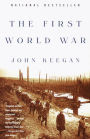
Table of Contents

Acknowledgments 5
Map List 9
Chronology 10
Introduction: The Coming of War 14
First thoughts
The variety of historical explanation
Making a choice
Ch. 1 1914 30
The plans of war
The plans in action
The onset of stalemate
The persistence of stalemate
Ch. 2 1915 50
The limits on choice
Falkenhayn's dilemma
The Eastern Front in profile
Germany strikes east
Italy to war
The elimination of Serbia
Anglo-French decision-making
Travail on the Western Front
The limits of accomplishment
Ch. 3 Peripheries 76
The expanding conflict
Action in the Pacific
The war in Africa
Gallipoli
Mesopotamia and Palestine
Summing up the sideshows
Ch. 4 1916 96
Germany faces west
The Entente makes decisions
Supplying the armies
Verdun
Brusilov
The Somme
End of the day
Ch. 5 1917 130
Choices
The U-boat campaign
Exit Russia
Nivelle's day
Third Ypres
Cambrai
Caporetto
Gains and losses
Ch. 6 1918 160
Culmination
Germany's options
Ludendorff's choice: the east
Ludendorff's choice: the west
Midway
The great reversal
Other fronts
Conclusion: The Peace Settlement and Beyond 200
Reconsideration
The issue of compensation
Disappointments and accomplishments
The failure of enforcement
Final thoughts
Biographical details 214
Further reading 218
Index 220
Picture credits 224

First Chapter

From Chapter One: A European Tragedy

The First World War was a tragic and unnecessary conflict. Unnecessary because the train of events that led to its outbreak might have been broken at any point during the five weeks of crisis that preceded the first clash of arms, had prudence or common goodwill found a voice; tragic because the consequences of the first clash ended the lives of ten million human beings, tortured the emotional lives of millions more, destroyed the benevolent and optimistic culture of the European continent and left, when the guns at last fell silent four years later, a legacy of political rancour and racial hatred so intense that no explanation of the causes of the Second World War can stand without reference to those roots. The Second World War, five times more destructive of human life and incalculably more costly in material terms, was the direct outcome of the First. On 18 September 1922, Adolf Hitler, the demobilised front fighter, threw down a challenge to defeated Germany that he would realise seventeen years later: "It cannot be that two million Germans should have fallen in vain . . . No, we do not pardon, we demand--vengeance!"

The monuments to the vengeance he took stand throughout the continent he devastated, in the reconstructed centres of his own German cities, flattened by the strategic bombing campaign that he provoked, and of those--Leningrad, Stalingrad, Warsaw, Rotterdam, London--that he himself laid waste. The derelict fortifications of the Atlantic Wall, built in the vain hope of holding his enemies at bay, are monuments to his desire for vengeance; so, too, are the decaying hutments of Auschwitz and the remnants of theobliterated extermination camps at Sobibor, Belzec and Treblinka. A child's shoe in the Polish dust, a scrap of rusting barbed wire, a residue of pulverised bone near the spot where the gas chambers worked, these are as much relics of the First as of the Second World War. They have their antecedents in the scraps of barbed wire that litter the fields where the trenches ran, filling the French air with the smell of rust on a damp morning, in the mildewed military leather a visitor finds under a hedgerow, in the verdigrised brass of a badge or button, corroded clips of ammunition and pockmarked shards of shell. They have their antecedents also in the anonymous remains still upturned today by farmers ploughing the bloodsoaked soil of the Somme--"I stop work at once. I have a great respect for your English dead"--just as the barely viewable film of bodies being heaped into the mass graves at Belsen in 1945 has its antecedents in the blurred footage of French soldiers stacking the cordwood of their dead comrades after the Second Battle of Champagne in 1915. The First World War inaugurated the manufacture of mass death that the Second brought to a pitiless consummation.

There are more ceremonial monuments. Few French and British communities lack a memorial to the dead of the Second World War. There is one in my West Country village, a list of names carved at the foot of the funerary crucifix that stands at the crossroads. It is, however, an addition and an afterthought. The cross itself was raised to commemorate the young men who did not return from the First World War and their number is twice that of those killed in the Second. From a population of two hundred in 1914, W. Gray, A. Lapham, W. Newton, A. Norris, C. Penn, L. Penn and W. J. White, perhaps one in four of the village's men of military age, did not come back from the front. Theirs are names found in the church registers that go back to the sixteenth century. They survive in the village today. It is not difficult to see from the evidence that the Great War brought heartbreak on a scale never known since the settlement was established by the Anglo-Saxons before the Norman Conquest and, thankfully, has not been known since. The memorial cross is, the church apart, the only public monument the village possesses. It has its counterpart in every neighbouring village, in the county's towns, where the names multiply many times, and in the cathedral of the diocese at Salisbury. It has its counterpart, too, in every cathedral in France, in each of which will be seen a tablet bearing the inscription, "To the Glory of God and in memory of one million men of the British Empire who died in the Great War and of whom the greater number rest in France."

Nearby, certainly, will stand a memorial to the locality's own dead, itself replicated in every surrounding town and village. France lost nearly two million in the Great War, two out of every nine men who marched away. They are often symbolised by the statue of a poilu, defiant in horizon blue, levelling a bayonet eastward at the German frontier. The list of names on the plinth is heartrendingly long, all the more heartrending because repetition of the same name testifies to more than one death, often several, in the same family. There are similar lists to be seen graven in stone in the towns and cities of most combatant nations of the Great War. Particularly poignant, I find, is the restrained classicism of the memorial to the cavalry division of the Veneto that stands beside the cathedral of Murano in the lagoon of Venice, bearing row after row of names of young men from the lowlands of the River Po who died in the harsh uplands of the Julian Alps. I am touched by the same emotion in the churches of Vienna where severe stone tablets recall the sacrifice of historic Habsburg regiments now almost forgotten to history.

The Germans, who cannot decently mourn their four million dead of the Second World War, compromised as the Wehrmacht was by the atrocities of the Nazi state, found a materially, if not morally equivalent difficulty in arranging an appropriately symbolic expression of grief for their fallen of the First, since so many lay on foreign soil. The battlefields of the east were closed to them by the Bolshevik revolution, those of the west made at best grudgingly accessible for the retrieval and reburial of bodies. The French and the Belgians found little room in their hearts or in the national soil for the creation of German war cemeteries.

Customer Reviews
Average Rating 4
( 18 )

Rating Distribution

  • ( 7 )
  • ( 7 )
  • ( 3 )
  • ( 1 )
  • ( 0 )
If you've bought this product, tell the world how you liked it.
Write a Review
Sort by: Showing all of 18 Customer Reviews
  • Anonymous

    Posted May 1, 2000

    Truly excellent book

    This book was great for me, especially since I didn't know the causes of World War I as much as for WWII. Keegan gives a full explanation of the incident that triggered it and the context behind all of it. Then, he provides an excellent account of the war from the first days to the very end. He also tells us more about the most important men involved in it without forgetting to tell us about more than just the battles and their technical side. This book is a great overview of the conflict, its causes, its meaning and its consequences.

    2 out of 2 people found this review helpful.

    Was this review helpful? Yes  No   Report this review
  • Anonymous

    Posted January 25, 2001

    Excellent history

    Mr. Keegan continues his string of excellent historical war accounts. This work is remarkable in many ways, but its greatest asset is the author's ability to distill the massively, complex history of the Great War into a single volume. His insights are often fresh and perceptive. I particularly enjoyed his personal histories and wish he'd included many more. And the questions raised on his last page are truly important. The work's few minor flaws need not dissuade neophyte or experienced readers. It suffers most seriously from a deficit of maps. A standard atlas remedies the problem, but I suspect Mr. Keegan overestimates American understanding of world geography. Civilian privations are given slight shift. And I believe Mr. Keegan's generosity toward Generals French, Haig and Joffre (at a minimum) is far too complimentary. They are responsible for the wholesale butchering of countless innocent soldiers, as the author so well documents. But their cavalier, unsympathetic dispositions are inexcusable, regardless of Mr. Keegan's attempts to explain of their points of view. Yet this history is very much worth reading. I followed with great interest Mr. Keegan's Near and Middle Eastern discourses. He proves himself a master of the history of sea warfare in his presentations of naval battles and technologies. He deftly positions Lenin, Hitler, Churchill, Hindenburg and many other important personalities in their appropriate roles. We are again in debt to Mr. Keegan for this concise, excellent book.

    1 out of 1 people found this review helpful.

    Was this review helpful? Yes  No   Report this review
  • Posted February 21, 2011

    Like WW-I, Keegan is a long slog.

    Started by trying to listen to the CD: Ugh!!! Worst I've ever heard!
    Prebble is mush-mouthed. And what's worse, the content/context of the text he is reading is such that without the 15 maps included in the printed version, one is quickly lost among movements of obscurely-named divisions and armies advancing to and retreating from equally obscure villages, rivers and mountains.

    So, alas, I was forced (by curiosity and a burning desire to find maps of what the hell Keegan's talking about) to the used bookstore.

    There, having confirmed that, indeed, Keegan (or, more likely, his editor) had the sense/decency to include the aforementioned 15 maps in the book, I purchased a copy.

    Yeah, Keegan covers the whole four years, including the basic events which led to its unnecessary start. But, alas, I believe that many, many authors have done so more logically, cogently and readably: See Barbara Tuchman's "The Guns of August" and, for the battles on the Gallipoli peninsula (and the key to success/failure, the sea-battles in the Dardanelles and Sea of Marmara -- facets which Keegan almost completely ignores), see Alan Moorehead's "Gallipoli".

    Then there is Keegan's voice, which is often confusing, with verbs, adverbs, and modifying phrases reversed in order or distantly removed from their object in long, convoluted sentences not familiar to the ear expecting standard English. Sentences more reminiscent of Faulkner than of Hemingway. Thus, Keegan's points, perhaps critical to the outcome of a given action or subsequent reaction, are often obscurely or overly referenced and conditioned, though apparently not intended to be under-emphasized, through the insertion of names, places, dates, ground conditions, weather, preceding events, or other numerous and relevent (or not) facts, are lost.

    If you like that previous sentence, you'll love Keegan!

    I speculate that Keegan dictated the text, and that it was only lightly edited. On several occasions, facts are repeated verbatim three or four pages apart. His references to direction - north, south, east and west - and to rivers, towns or other landmarks are often inconsistent with those implied by the maps. Are the maps wrong? Is Keegan picturing a battle in his mind which does not match reality?

    I got through it. But as a result, I am convinced that there was a whole lot more to (and perhaps a whole lot different than) World War I than Keegan tells us -- or perhaps than he knows.

    --- gwg

    Was this review helpful? Yes  No   Report this review
  • Posted December 5, 2009

    Generally good, but a little dry

    I listen to a lot of audio books; this is the fastest narrated one I have yet heard. The speed was less than ideal for the complex subject material, which tended to the dry side with its details of military maneuvers. The book is recommended more for those who specialize in military history, especially strategy and tactics, than it is for the general public.

    Was this review helpful? Yes  No   Report this review
  • Anonymous

    Posted July 29, 2005

    Keegan is a master

    The First World War does not seem to demand the attention as does the second. A book such as this puts them together in the proper context. The Great War as the precursor to the Second World War. Keegan decribes the theaters of operations, the complex personalities, and the poltics in enough detail to understand the terrible conflict. He may be the greatest living historian and this may be his most impressive work to date.

    Was this review helpful? Yes  No   Report this review
  • Anonymous

    Posted May 24, 2001

    Superior Historical Methods

    Keegan again proves himself one of the world's finest military historians. His methods are virtually flawless, and the portrait he paints of the first war is so vivid in its sheer foolishness and desperation that the reader is almost drawn to tears by the conclusion. A must read for any student of military history, serious or casual.

    Was this review helpful? Yes  No   Report this review
  • Anonymous

    Posted February 6, 2001

    The Book Made Me Want to Know More

    The greatest compliment that I can give this book is that it made me want to read more about the causes of the Great War, and how it was fought. It is a wonderful introduction for anyone even slightly interested in one of the great defining events of the last century. Hopefully it will effect others the way it did me, and lead them to explore other perspectives of this horrible and destructive war. In understanding what and how this happened, perhaps we can understand how to avoid such man-made catastrophies in the future

    Was this review helpful? Yes  No   Report this review
  • Anonymous

    Posted January 29, 2001

    Good History on WWI

    Keegan does a great job providing the background events leading up to the war as well as a detailed history of the war's first 2 years. Book could use a little more detail re events of 1917-18 and American involvement in the war.

    Was this review helpful? Yes  No   Report this review
  • Anonymous

    Posted October 25, 2010

    No text was provided for this review.

  • Anonymous

    Posted April 20, 2009

    No text was provided for this review.

  • Anonymous

    Posted February 10, 2010

    No text was provided for this review.

  • Anonymous

    Posted May 29, 2009

    No text was provided for this review.

  • Anonymous

    Posted September 22, 2009

    No text was provided for this review.

  • Anonymous

    Posted December 10, 2008

    No text was provided for this review.

  • Anonymous

    Posted October 31, 2009

    No text was provided for this review.

  • Anonymous

    Posted March 19, 2010

    No text was provided for this review.

  • Anonymous

    Posted February 20, 2011

    No text was provided for this review.

  • Anonymous

    Posted November 4, 2008

    No text was provided for this review.

Sort by: Showing all of 18 Customer Reviews

If you find inappropriate content, please report it to Barnes & Noble
Why is this product inappropriate?
Comments (optional)
500 character limit