
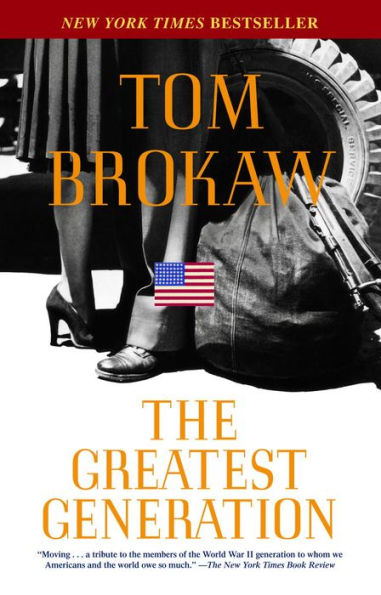
In this magnificent testament to a nation and her people, Tom Brokaw brings to life the extraordinary stories of a generation that gave new meaning to courage, sacrifice, and honor.
From military heroes to community leaders to ordinary citizens, he profiles men and women who served their country with valor, then came home and transformed it: Senator Daniel Inouye, decorated at the front, fighting prejudice at home; Martha Settle Putney, one of the first black women to serve in the newly formed WACs; Charles Van Gorder, a doctor who set up a MASH-like medical facility in the middle of battle, then opened a small clinic in his hometown; Navy pilot and future president George H. W. Bush, assigned to read the mail of the enlisted men under him, who says that in doing so he “learned about life”; and many other laudable Americans.
To this generation that gave so much and asked so little, Brokaw offers eloquent tribute in true stories of everyday heroes in extraordinary times.
Praise for The Greatest Generation
“Moving . . . a tribute to the members of the World War II generation to whom we Americans and the world owe so much.”—The New York Times Book Review
“Full of wonderful, wrenching tales of a generation of heroes. Tom Brokaw reminds us what we are capable of as a people. An inspiring read for those who wish their spirits lifted.”—Colin L. Powell
“Offers welcome inspiration . . . It is impossible to read even a few of these accounts and not be touched by the book’s overarching message: We who followed this generation have lived in the midst of greatness.”—The Washington Times
“Entirely compelling.”—The Wall Street Journal
In this magnificent testament to a nation and her people, Tom Brokaw brings to life the extraordinary stories of a generation that gave new meaning to courage, sacrifice, and honor.
From military heroes to community leaders to ordinary citizens, he profiles men and women who served their country with valor, then came home and transformed it: Senator Daniel Inouye, decorated at the front, fighting prejudice at home; Martha Settle Putney, one of the first black women to serve in the newly formed WACs; Charles Van Gorder, a doctor who set up a MASH-like medical facility in the middle of battle, then opened a small clinic in his hometown; Navy pilot and future president George H. W. Bush, assigned to read the mail of the enlisted men under him, who says that in doing so he “learned about life”; and many other laudable Americans.
To this generation that gave so much and asked so little, Brokaw offers eloquent tribute in true stories of everyday heroes in extraordinary times.
Praise for The Greatest Generation
“Moving . . . a tribute to the members of the World War II generation to whom we Americans and the world owe so much.”—The New York Times Book Review
“Full of wonderful, wrenching tales of a generation of heroes. Tom Brokaw reminds us what we are capable of as a people. An inspiring read for those who wish their spirits lifted.”—Colin L. Powell
“Offers welcome inspiration . . . It is impossible to read even a few of these accounts and not be touched by the book’s overarching message: We who followed this generation have lived in the midst of greatness.”—The Washington Times
“Entirely compelling.”—The Wall Street Journal

eBook
Available on Compatible NOOK devices, the free NOOK App and in My Digital Library.
Related collections and offers
Overview
In this magnificent testament to a nation and her people, Tom Brokaw brings to life the extraordinary stories of a generation that gave new meaning to courage, sacrifice, and honor.
From military heroes to community leaders to ordinary citizens, he profiles men and women who served their country with valor, then came home and transformed it: Senator Daniel Inouye, decorated at the front, fighting prejudice at home; Martha Settle Putney, one of the first black women to serve in the newly formed WACs; Charles Van Gorder, a doctor who set up a MASH-like medical facility in the middle of battle, then opened a small clinic in his hometown; Navy pilot and future president George H. W. Bush, assigned to read the mail of the enlisted men under him, who says that in doing so he “learned about life”; and many other laudable Americans.
To this generation that gave so much and asked so little, Brokaw offers eloquent tribute in true stories of everyday heroes in extraordinary times.
Praise for The Greatest Generation
“Moving . . . a tribute to the members of the World War II generation to whom we Americans and the world owe so much.”—The New York Times Book Review
“Full of wonderful, wrenching tales of a generation of heroes. Tom Brokaw reminds us what we are capable of as a people. An inspiring read for those who wish their spirits lifted.”—Colin L. Powell
“Offers welcome inspiration . . . It is impossible to read even a few of these accounts and not be touched by the book’s overarching message: We who followed this generation have lived in the midst of greatness.”—The Washington Times
“Entirely compelling.”—The Wall Street Journal

Product Details
| ISBN-13: | 9780375504624 |
|---|---|
| Publisher: | Random House Publishing Group |
| Publication date: | 02/23/2000 |
| Sold by: | Random House |
| Format: | eBook |
| Pages: | 432 |
| File size: | 6 MB |
About the Author
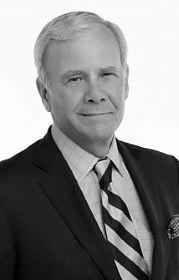
Date of Birth:
February 6, 1940Place of Birth:
Webster, South DakotaEducation:
B.A., University of South DakotaRead an Excerpt
"This generation of Americans has a rendezvous with destiny." —Franklin Delano Roosevelt
The year of my birth, 1940, was the fulcrum of America in the twentieth century, when the nation was balanced precariously between the darkness of the Great Depression on one side and the storms of war in Europe and the Pacific on the other. It was a critical time in the shaping of this nation and the world, equal to the revolution of 1776 and the perils of the Civil War. Once again the American people understood the magnitude of the challenge, the importance of an unparalleled national commitment, and, most of all, the certainty that only one resolution was acceptable. The nation turned to its young to carry the heaviest burden, to fight in enemy territory and to keep the home front secure and productive. These young men and women were eager for the assignment. They understood what was required of them, and they willingly volunteered for their duty.
Many of them had been born just twenty years earlier than I, in a time of national promise, optimism, and prosperity, when all things seemed possible as the United States was swiftly taking its place as the most powerful nation in the world. World War I was over, America's industrial might was coming of age with the rise of the auto industry and the nascent communications industry, Wall Street was booming, and the popular culture was rich with the likes of Babe Ruth, Eugene O'Neill, D. W. Griffith, and a new author on the scene, F. Scott Fitzgerald. What those unsuspecting infants could not have realized, of course, was that these were temporary conditions, a false spring to a life that would be buffeted by winds of change dangerous and unpredictable, so fierce that they threatened not just America but the very future of the planet.
Nonetheless, 1920 was an auspicious year for a young person to enter the world as an American citizen. The U.S. population had topped 106 million people, and the landscape was changing rapidly from agrarian to urban, even though one in three Americans still lived on a farm. Women were gaining the right to vote with the ratification of the Nineteenth Amendment, and KDKA in Pittsburgh was broadcasting the first radio signals across the middle of America. Prohibition was beginning, but so was the roaring lifestyle that came with the flouting of Prohibition and the culture that produced it. In far-off Russia the Bolshevik revolution was a bloody affair, but its American admirers were unable to stir comparable passions here.
Five years later this American child born in 1920 still seemed to be poised for a life of ever greater prosperity, opportunity, and excitement. President Calvin "Silent Cal" Coolidge was a benign presence in the White House, content to let the bankers, industrialists, and speculators run the country as they saw fit.
As the twenties roared along, the Four Horsemen of Notre Dame were giving Saturdays new meaning with their college football heroics. Jack Dempsey and Gene Tunney were raising the spectacle of heavyweight boxing matches to new heights of frenzy. Baseball was a daytime game and a true national pastime, from the fabled Yankee Stadium to the sandlots in rural America.
The New Yorker was launched, and the place of magazines occupied a higher order. Flappers were dancing the Charleston; Fitzgerald was publishing The Great Gatsby; the Scopes trial was under way in Tennessee, with Clarence Darrow and William Jennings Bryan in a passionate and theatrical debate on evolution versus the Scriptures. A. Philip Randolph organized the Brotherhood of Sleeping Car Porters, the beginning of a long struggle to force America to face its shameful policies and practices on race.
By the time this young American who had such a promising start reached the age of ten, his earlier prospects were shattered; the fault lines were active everywhere: the stock market was struggling to recover from the crash of 1929, but the damage was too great. U.S. income was falling fast. Thirteen hundred banks closed. Businesses were failing everywhere, sending four and a half million people onto the streets with no safety net. The average American farm family had an annual cash income of four hundred dollars.
Herbert Hoover, as president, seemed to be paralyzed in the face of spreading economic calamity; he was a distant figure of stern bearing whose reputation as an engineering genius and management wizard was quickly replaced by cruel caricatures of his aloofness from the plight of the ever larger population of poor.
Congress passed the disastrous Smoot-Hawley Tariff Act, establishing barriers to world trade and exacerbating an already raging global recession. Yet Henry Luce managed to launch Fortune, a magazine specializing in business affairs. United Airlines and American Airlines, still in their infancy, managed to stay airborne. Lowell Thomas began a nightly national radio newscast on NBC and CBS. The Lone Ranger series was heard on radio.
Overseas, three men were plotting to change the world: Adolf Hitler in Germany, Joseph Stalin in Russia, and Mao Zedong in China. In American politics, the New York governor, Franklin Delano Roosevelt, was planning his campaign for the 1932 presidential election.
By 1933, when the baby born in 1920 was entering teenage years, the promise of that early childhood was shattered by crashing world economies. American farmers were able to produce only about sixteen bushels of corn per acre, and the prices were so low that it was more efficient to feed the corn to the hogs than take it to market. It was the year my mother moved with her parents and sister off their South Dakota farm and into a nearby small town, busted by the markets and the merciless drought. They took one milk cow, their pride, and their determination to just keep going somehow.
My mother, who graduated from high school at sixteen, had no hope of affording college, so she went to work in the local post office for a dollar a day. She was doing better than her father, who earned ten cents an hour working at a nearby grain elevator.
My father, an ambitious and skilled construction equipment operator, raced around the Midwest in his small Ford coupe, working hellishly long hours on road crews, hoping he could save enough in the warm weather months to get through another long winter back home in the small wood-frame hotel his sisters ran for railroad men, traveling salesmen, and local itinerants in the Great Plains village founded by his grandfather Richard Brokaw, a Civil War veteran who came to the Great Plains as a cook for railroad crews.
A mass of homeless and unemployed men drifted across the American landscape, looking for work or a handout wherever they could find it. More than thirty million Americans had no income of any kind. The American military had more horses than tanks, and its only action had been breaking up a demonstration of World War I veterans demanding their pension bonuses a year earlier.
Franklin Roosevelt took the oath of office as president of the United States, promising a New Deal for the beleaguered American people, declaring to a nation with more than fifteen million people out of work, "The only thing we have to fear is fear itself."
He pushed through an Emergency Banking Act, a Federal Emergency Relief Act, a National Industrial Recovery Act, and by 1935 set in motion the legislation that would become the Social Security system.
Not everyone was happy. Rich Americans led by the Du Ponts, the founders of General Motors, and big oil millionaires founded the Liberty League to oppose the New Deal. Privately, in the salons of the privileged, Roosevelt was branded a traitor to his class.
In Germany, a former painter with a spellbinding oratorical style took office as chancellor and immediately set out to seize control of the political machinery of Germany with his National Socialist German Workers party, known informally as the Nazis. Adolf Hitler began his long march to infamy. He turned on the Jews, passing laws that denied them German citizenship, codifying the anti-Semitism that eventually led to the concentration camps and the gas chambers, an act of hatred so deeply immoral it will mark the twentieth century forever.
By the late thirties in America, anti-Semitism was the blatant message of Father James Coughlin, a messianic Roman Catholic priest with a vast radio audience. Huey Long, the brilliant Louisiana populist, came to power, first as governor and then as a U.S. senator, preaching in his own spellbinding fashion the power of the little guy against the evils of Wall Street and corporate avarice.
When our young American was reaching eighteen, in 1938, the flames of war were everywhere in the world: Hitler had seized Austria; the campaign against Jews had intensified with Kristallnacht, a vicious and calculated campaign to destroy all Jewish businesses within the Nazi realm. Japan continued its brutal and genocidal war against the Chinese; and in Russia, Stalin was presiding over show trials, deporting thousands to Siberia, and summarily executing his rivals in the Communist party. The Spanish Civil War was a losing cause for the loyalists, and a diminutive fascist general, Francisco Franco, began a reign that would last forty years.
In this riotous year the British prime minister, Neville Chamberlain, believed he had saved his country with a pact negotiated with Hitler at Munich. He returned to England to declare, "I believe it is peace for our time . . . peace with honor."
It was neither.
At home, Roosevelt was in his second term, trying to balance the continuing need for extraordinary efforts to revive the economy with what he knew was the great peril abroad. Congress passed the Fair Labor Standards Act, setting a limit on hours worked and a minimum wage. The federal government began a system of parity payments to farmers and subsidized foreign wheat sales.
Table of Contents
- Thomas and Eileen Broderick: Insurance Agency Owner
- Charles O. Van Gorder, MD: Surgeon
- Wesley Ko: Printing Business
- James and Dorothy Dowling: Highway Superintendent
- Rev. Harry Reginald "Reg" Hammond: Anglican Priest
- Lloyd Kilmer: County Clerk and Real Estate Executive
- Gordon Larsen: Powerhouse Operator
- John "Lefty" Caulfield: School Principal
- Charles O. Van Gorder, MD: Surgeon
- Charles Briscoe: Boeing Engineer
- Dorothy Haener: UAW Organizer
- Bob Bush: Lumber and Building Supply Business
- Joe Foss: U.S. Marine Corps Pilot
- Leonard "Bud" Lomell: Lawyer
- Joe Foss: U.S. Marine Corps Pilot
- Mary Hallaren: Colonel, U.S. Army, Women's Auxiliary Corps
- Jeanne Holm: General, U.S. Air Force
- Marion Rivers Nittel
- Claudine "Scottie" Lingelbach: Teacher/Real Estate Agent
- Alison Ely Campbell
- Margaret Ray Ringenberg: Women's Air Force Service Pilot
- Mary Louise Roberts Wilson: U.S. Army Nurse Corps
- Jeanne Holm: General, U.S. Air Force
- Martha Settle Putney: History Professor
- Johnnie Holmes: Real Estate Investor
- Luis Armijo: Schoolteacher
- Nao Takasugi: California State Assemblyman
- Norman Mineta: California Congressman
- Johnnie Holmes: Real Estate Investor
- John and Peggy Assenzio: Salesman/Teacher
- The Dumbos
- Gaylord and Carrie Lee Nelson: Governor and Senator
- Jeanette Gagne Norton
- Daphne Cavin
- The Dumbos
- George Bush: President of the United States
- Ben Bradlee: Journalist
- Art Buchwald: Writer
- Andy Rooney: Journalist
- Julia Child: Chef
- Gertrude Belle "Trudy" Elion: Chemist
- Chesterfield Smith: Attorney, President of the American Bar Association
- Al Neuharth: Founder, USA Today
- Maurice "Hank" Greenberg: CEO, American International Group
- Ben Bradlee: Journalist
- Mark Hatfield: U.S. Senator
- Robert Dole: U.S. Senator, Presidential Candidate
- Daniel Inouye: U.S. Senator
- Caspar Weinberger: Secretary of Defense
- Lloyd Cutler: Counsel to Presidents Carter and Clinton
- George Shultz: Cabinet Member
- Arthur Schlesinger: Historian
- Ed Guthman: Journalist, Press Secretary to Robert F. Kennedy
- Robert Dole: U.S. Senator, Presidential Candidate
Interviews
On Monday, April 5th, barnesandnoble.com welcomed Tom Brokaw to discuss THE GREATEST GENERATION.
Moderator: Welcome, Tom Brokaw! Thank you for taking the time to join us online this evening to discuss THE GREATEST GENERATION. Congratulations on the tremendous success of your book, which has been atop the New York Times bestseller list for 17 weeks. Did you have any idea how special this book was when you were writing it?
Tom Brokaw: It meant a lot to me, obviously, and was a labor of love, but the reaction has been overwhelming, mostly because I didn't anticipate it would touch so many different generations.
theresapw from Redmond, WA: Do you believe today's generation could match the example set by "the greatest generation"?
Tom Brokaw: I do, and I think that this generation should know that the greatest generation has a lot of faith in the young people today. They are kind of in awe of the mental intelligence and cyberspace and a whole new way of communication, grateful this generation will not have the challenges of their grandparents. It will be unlikely we will have a Great Depression again, and God knows we don't want another world war.
Niki_palek@yahoo.com from xx: Mr. Brokaw, you have been a pervasive public figure -- in the sense of media -- since I was a kid. What kind of role do media personalities play in terms of shifting ideology?
Tom Brokaw: I think it depends on the individual. For example, Pat Buchanan, who had a prominent role at CNN, was and is an ideologue, and part of his mission was to persuade people to accept his point of view. Geraldo Rivera has another point of view and has no qualms about advertising it. I have always seen my role as a traditional journalist who tells the facts, not trying to move people in one direction or the other.
Seagull from Rhode Island: You were born just five years after me, Tom...can you differentiate between the moral values of the '40s and the millennium generation that is forthcoming? Thank you!
Tom Brokaw: I think that there has a been a big shift, driven in part by the social upheaval of the '60s. But it is always hard to measure quantitatively something as subjective as moral values because it means you have to get into a generation's inner psyche to know their most private behavior, and it is difficult at times to measure that. I am not sure if we are any less honest today or any less moral today then we were 40 years ago, I am just sure we know more about the behavior of individuals.
John from Berkeley: How did you get your start in broadcast news?
Tom Brokaw: I had the unusual opportunity of living in a small town in South Dakota that had two radio stations, and because I knew the people who ran the station, and they knew me as a gabby teenager, I was able to, at the age of 16, get work nights reading the news and spinning records and learning how broadcast worked. At the time it was almost a lark; it was a good way to meet girls after basketball practice, and I had no idea I would end up making a career out of it.
Pat Corbin from Spartanburg, SC: Sir, I have always felt that the '40s were our brightest and darkest place in history, yet we had courage and conviction, and there was a clear knowledge of right and wrong. There are some real correlations between Nazi Germany and Bosnia, yet the country is so divided over our response. Can you give me some insight as to what you think the difference may be?
Tom Brokaw: Yes, by the time the U.S. got involved with World War II, we had been attacked by Japan, and Hitler dominated most of Europe and was attacking on a daily basis Great Britain, our closest ally, so there are substantial differences between then and now -- for all the troubles of Bosnia, it has been mostly confined to that part of Europe.
Marcia J. Weaver from Dunedin, FL: No question. Want to let Mr. Brokaw know for years I have watched only NBC with him for news. Keep up "The Fleecing of America." When the book came out I got it at my Barnes & Noble as a gift for my aunt. She was a career U.S. Army nurse in ETO and the first MASH in Korea. Of course, she loved it and recognized many people in it. Keep up all your good work.
Tom Brokaw: I am very grateful. It is that kind of response that made all the late nights and early mornings and missed fishing trips worthwhile while writing the book.
Julie Rabe from Pulaski, WI: Do you think 40 years from now we will look back at this generation and find that as a whole it, too, is a great generation, or is society really so far gone that the only great generation is already gone, never to be repeated?
Tom Brokaw: I think that this generation is better than it gets credit for. If you look at the TV coverage of all the refugee camps along the Kosovo borders, you see hundreds of young Americans doing what they can to help that humanitarian catastrophe. It was this generation that invented this medium on which we are now chatting, which is one of the most empowering inventions in the history of mankind. So I think that this generation will get good credit 40 years from now. I just wish it would spend a little more time worrying about the common ground we all occupy and a little less time worrying about selfish issues.
Francine from Plano, TX: What was your primary influence behind this book?
Tom Brokaw: My personal experience with members of this generation, close family members and close friends. And then the men and women I began to meet in the '80s and '90s when I went to Normandy and Pearl Harbor for the anniversaries of these events. It really is a book written as a kind of payback, I suppose, for all they did for me, and I wanted to do something for them.
Chris from New York City: Mr. Brokaw, I am big fan of yours, and I just purchased a copy of your new book. Curious to know, on this opening day of baseball, who you like this season. Or are you only a basketball fan?
Tom Brokaw: I am a baseball fan, and in fact as I sit here doing the chat, I am watching the Cardinals and Milwaukee. I have been a Dodger fan all of my life, but a small confession: I never thought this would happen, but since I have lived in New York, I have gotten more attached to the Yankees.
Julia from Chicago: You've reported on so many different stories. Which ones have had the biggest impact on you?
Tom Brokaw: Going back to the beginning of my career, I was a young reporter on duty when the wires began to ring and I read on the air in Omaha the news that JFK had been assassinated, and I remember thinking at the end of that day that my life would never be the same again. It was an intersection in American life then, during the '60s -- covering the civil rights movement in the South and the antiwar protests also had a big impact on me. The three big stories that I will never forget are the fall of communism, the resignation of Nixon, and the explosion of the shuttle Challenger.
Jeff from D.C.: We have been a lucky country to have such outstanding talent in our population. Do you feel it was more amazing for this country to have had such an incredible group of founding fathers or a whole generation of people willing to make the sacrifices that the World War II generation made? P.S. Thanks for the book and for bringing attention to this group of Americans.
Tom Brokaw: I think that the generation of this book really is an extension of the generation of founding fathers. The genius of the American system is that it has so much political freedom and economic opportunity that it attracts the very best people from all over the world, so 1,000 years from now historians will look back with a sense of awe at the breathtaking achievements of this immigrant nation.
ninlil from San Diego: Since I am in this generation you wrote about, I wonder why you chose this subject for your first book, although I realize people my age have gone through a lot of stressful things.
Tom Brokaw: Actually, I was involved with writing another book when this subject kept pushing through my consciousness. I was using it in the themes and speeches and dinner-table conversations, and I found that wherever I went and whoever I was talking to, people responded to this book or to the themes in this book, so I thought I better write it.
Dennis T. Willette from Lewiston, ME: Mr. Brokaw, of all the interviews you did for this book that were not printed, is there one you wish you had -- that you had just one more chapter left so you could include it? Thank you.
Tom Brokaw: Yes, there were two or three people that I wish I had spent more time with, one being Senator John Chaffee of Rhode Island. I also should have mentioned that Henry Kissinger was a member of this generation and a veteran of World War II -- many people don't realize that. My biggest regret is that I couldn't get to all the stories, because each is fascinating in its own way.
Alan Cohen from North Attleboro, MA: It has been said that this is the most violent century in the history of mankind. We are currently close to war in Kosovo. If the "greatest generation" were 18, how do you think they would react to this conflict, and what type of advice do you think they would offer the current generation?
Tom Brokaw: I think when they were 18, Hitler was on the move across Europe and there was a very bitter debate about whether or not should get involved, but once they did get involved they learned their lessons well. I think they would tell this generation that you always have to be wary that these kinds of practices don't spread.
Denise Ezell from Rock Spring, GA: Mr. Brokaw, I have been a fan of yours for 23 years now! My father is 85 years old and was growing up in America during much simpler times. Do you feel that the stresses we have imposed upon ourselves to form the "perfect" society have proven to be our own downfall? By that I mean have we created a monster through higher levels of expectation of ourselves through our performance, knowledge, and skills, so that we are failing to meet any or all of the above proficiently?
Tom Brokaw: No, I think that every generation sets its own pace and measures its own time by the achievements that generation assigns importance to. I do think that we are operating on fast forward too much of the time. Just because we have the ability to make telephone calls from anywhere, to retrieve information with a keystroke, to expect great enterprises to be finished in less than a week doesn't mean that we have to be hostage to the technology and the psychology that creates that kind of climate.
Tim from Santa Clara, CA: Hello, Tom Brokaw. You have brought my family the news for years now, and I want to thank you. I gave your book to my grandfather as a gift, and he loved it. I am just curious to get your overall view on the direction we are heading as people as we enter the millennium. Thanks!
Tom Brokaw: My major concern as we head into the millennium is that we are spending too little time on issues of common concern and too much time on narrowly focused interests. The great hallmark of the greatest generation was that it knew when to subsume individual interests and join hands for the common good.
Nikki from Virginia: With the success of this book being so great, do you plan on writing another? If so, what path are you planning to take?
Tom Brokaw: I am going to write another book. I have not yet fully settled on the subject; unfortunately the response to this book has been so great that it is going to very difficult for me to reach this threshold the next time.
BMW from PA: Mr. Brokaw, just a thank-you for recognizing our parents' generation. Your book has given many meaningful hours to both my folks. I guess my purchase of the book was my way of thanking them and many, many like them.
Tom Brokaw: It is that kind of response that has been the biggest surprise for me and the most gratifying -- younger people seeing in this book all that their parents or grandparents meant to the lives they have today.
Rhonna from Seattle: Sir, several years ago you said in an interview that with the growing popularity of the Internet and 24-hour cable news, network news would have to change, or it would cease to exist. Do you think that it has now changed enough to compete and survive?
Tom Brokaw: I think part of the change is that we are now more, much more, synergistic -- at NBC we have MSNBC and CNBC, and just today I appeared on all of them plus on MSNBC on the Internet.
Lilo from Bradenton, FL: What do you like to read in your spare time? Could you recommend three books? I also would like to know what you read every day to keep on top of the news. Thanks.
Tom Brokaw: I am a voracious reader, and I have pretty eclectic tastes -- at the moment I am reading Henry Kissinger's latest book, YEARS OF RENEWAL, also Harold Bloom's SHAKESPEARE: THE INVENTION OF THE HUMAN, and I just finished SINGLE AND SINGLE.
Sandy S. from Phoenix, AZ: Although I enjoyed your book very much and learned a great deal, I noted that there was no mention or story of the Navajo code talkers. They played a very important part in the war, and I am curious if there was a reason you omitted that from your book.
Tom Brokaw: I actually did think of putting them in and went back and looked at their lives and was going to include it in the section on Luis Armijo, but most of the code talkers returned to their reservations and lived traditional Hopi lives, so it was not, in my judgment, as representative of these other stories, but they are an amazing group. One of the things I learned is that some returned to their reservations and burned their uniforms because they take pride in peace, not war.
Donald Fraser from Psychedelic Book Club: Are you in favor of American military bases in Europe remaining indefinitely?
Tom Brokaw: I think that the long- and short-term lessons of history are that Europe has a kind of low boiling point about once every 60 years or so, and it should be in our interest to see that it doesn't boil over.
Bob from Fredericksburg, VA: Mr. Brokaw, I have always wondered, with your fascination with this century's history, what other time in history would you have like to have reported on? Maybe the front lines of Gettysburg or hanging out at election time with the young "Father of Our Country"?
Tom Brokaw: There are really four periods of history that fascinate me -- the birth of our country; then, as a child of the West, I would have loved to cover the early explorers so I could have gotten to know the Native American culture as well; then I believe the most traumatic time in America was the Civil War, when we came perilously close to coming apart, so as a reporter that would have been a fascinating story to cover.
Carol from upstate NY: I bought your book in honor and memory of my dad, who was killed in the Battle of the Bulge when I was 11 years old. It is so great to have someone like you bring the greatest generation to the attention of all Americans. Thank you, Tom!
Tom Brokaw: One of the hopes that I had, and I must say that this hope has almost been exceeded, is that this book will be a kind of catalyst for more dialogue between generations about the lesson of that time and what we can be doing together now. When you think that more than a half million young men and some women lost their lives in World War II, you realize what a terrible price this country paid, but if they had not answered the call we would be living in a far different world today.
Ed from Minneapolis: Do you have favorites among various network anchorpersons, reporters, journalists, et cetera?
Tom Brokaw: It is a small club, so we all know each other very well, so it is fair to say there is a lot of mutual respect. For 25 years now, Dan Rather, Peter Jennings, and I have competed against each other; we have shared overnight plane rides to hellholes across the world; we have had some differences along the way -- but by and large, I think that we have a real mutual admiration society.
Moderator: Well, this has certainly been a historic moment for us at barnesandnoble.com. Thank you for joining us this evening. Any final words for the many admirers of THE GREATEST GENERATION?
Tom Brokaw: I cannot tell you how flattered I am that you would take part of your evening to share your thoughts with me about this book. I have been saying that anchormen don't fake humility very well, so I will not try. But what I know in my heart and in my mind is that the success of this book is a tribute to the people whose stories I tell, not to the name of the author.