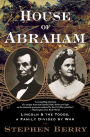
House of Abraham: Lincoln and the Todds, a Family Divided by War

( 3 )

Pick Up in Store

Reserve and pick up in 60 minutes at your local store

Paperback (Reprint)
$13.02
BN.com price
$15.95 List Price (Save 18%)
Marketplace (New and Used)
from
$0.01
$15.95 List Price (Save 100%)
All (43)  
Used (29)  
New (14)  
Close
Sort by
Page 1 of 5
Showing 1 – 10 of 43 (5 pages)
$0.01
(Save 100%)
Seller since 2006

Feedback rating:

(50880)

Condition:

New — never opened or used in original packaging.

Like New — packaging may have been opened. A "Like New" item is suitable to give as a gift.

Very Good — may have minor signs of wear on packaging but item works perfectly and has no damage.

Good — item is in good condition but packaging may have signs of shelf wear/aging or torn packaging. All specific defects should be noted in the Comments section associated with each item.

Acceptable — item is in working order but may show signs of wear such as scratches or torn packaging. All specific defects should be noted in the Comments section associated with each item.

Used — An item that has been opened and may show signs of wear. All specific defects should be noted in the Comments section associated with each item.

Refurbished — A used item that has been renewed or updated and verified to be in proper working condition. Not necessarily completed by the original manufacturer.

Good
Shows some signs of wear, and may have some markings on the inside. 100% Money Back Guarantee. Shipped to over one million happy customers. Your purchase benefits world literacy!

Ships from: Mishawaka, IN

Usually ships in 1-2 business days

  • Canadian
  • International
  • Standard, 48 States
  • Standard (AK, HI)
  • Express, 48 States
  • Express (AK, HI)
$0.01
(Save 100%)
Seller since 2010

Feedback rating:

(180)

Condition: Like New
0547085699

Ships from: philadelphia, PA

Usually ships in 1-2 business days

  • Canadian
  • International
  • Standard, 48 States
  • Standard (AK, HI)
  • Express, 48 States
  • Express (AK, HI)
$0.79
(Save 95%)
Seller since 2008

Feedback rating:

(13615)

Condition: New
Brand New!.

Ships from: Frederick, MD

Usually ships in 1-2 business days

  • Canadian
  • International
  • Standard, 48 States
  • Standard (AK, HI)
  • Express, 48 States
  • Express (AK, HI)
$0.79
(Save 95%)
Seller since 2008

Feedback rating:

(13615)

Condition: Like New
Like New Condition..

Ships from: Frederick, MD

Usually ships in 1-2 business days

  • Canadian
  • International
  • Standard, 48 States
  • Standard (AK, HI)
  • Express, 48 States
  • Express (AK, HI)
$0.99
(Save 94%)
Seller since 2011

Feedback rating:

(92)

Condition: Like New
PAPERBACK Fine 0547085699.

Ships from: Chalfont, PA

Usually ships in 1-2 business days

  • Canadian
  • International
  • Standard, 48 States
  • Standard (AK, HI)
  • Express, 48 States
  • Express (AK, HI)
$0.99
(Save 94%)
Seller since 2010

Feedback rating:

(474)

Condition: New
2/11/2009 Paperback Reprint New 0547085699.

Ships from: Philadelphia, PA

Usually ships in 1-2 business days

  • Canadian
  • International
  • Standard, 48 States
  • Standard (AK, HI)
  • Express, 48 States
  • Express (AK, HI)
$0.99
(Save 94%)
Seller since 2011

Feedback rating:

(316)

Condition: Like New
PAPERBACK Fine 0547085699 May have a remainder mark FROM A COMPANY YOU TRUST, HUGE SELECTION. RELIABLE CUSTOMER SERVICE! ! HASSLE FREE RETURN POLICY, SATISFACTION GURANTEED****

Ships from: Philadelphia, PA

Usually ships in 1-2 business days

  • Canadian
  • International
  • Standard, 48 States
  • Standard (AK, HI)
  • Express, 48 States
  • Express (AK, HI)
$1.49
(Save 91%)
Seller since 2010

Feedback rating:

(33)

Condition: Like New
Paperback Fine New book with minor shelf wear. *bin*

Ships from: Colchester, CT

Usually ships in 1-2 business days

  • Canadian
  • International
  • Standard, 48 States
  • Standard (AK, HI)
  • Express, 48 States
  • Express (AK, HI)
$1.99
(Save 88%)
Seller since 2008

Feedback rating:

(3636)

Condition: New
0547085699 SHIPS TODAY!! GREAT BOOK!!

Ships from: BAY SHORE, NY

Usually ships in 1-2 business days

  • Canadian
  • International
  • Standard, 48 States
  • Standard (AK, HI)
  • Express, 48 States
  • Express (AK, HI)
$1.99
(Save 88%)
Seller since 2008

Feedback rating:

(12865)

Condition: Like New
Used Like New, no missing pages, no damage to binding, may have a remainder mark.

Ships from: East Patchogue, NY

Usually ships in 1-2 business days

  • Canadian
  • International
  • Standard, 48 States
  • Standard (AK, HI)
  • Express, 48 States
  • Express (AK, HI)
Page 1 of 5
Showing 1 – 10 of 43 (5 pages)
Close
Sort by

Overview

For all the talk of the Civil War's pitting brother against brother, no book has told fully the story of one family ravaged by that conflict. And no family better illustrates the personal toll the war took than Lincoln’s own. Mary Todd Lincoln was one of fourteen siblings who were split between the Confederacy and the Union. Three of her brothers fought, and two died, for the South. Several Todds—including Mary herself—bedeviled Lincoln’s administration with their scandalous behavior. Their struggles haunted the president and moved him to avoid tactics or rhetoric that would dehumanize or scapegoat the Confederates. By drawing on his own familial experience, Lincoln was able to articulate...

See more details below
Sending request ...

Overview

For all the talk of the Civil War's pitting brother against brother, no book has told fully the story of one family ravaged by that conflict. And no family better illustrates the personal toll the war took than Lincoln’s own. Mary Todd Lincoln was one of fourteen siblings who were split between the Confederacy and the Union. Three of her brothers fought, and two died, for the South. Several Todds—including Mary herself—bedeviled Lincoln’s administration with their scandalous behavior. Their struggles haunted the president and moved him to avoid tactics or rhetoric that would dehumanize or scapegoat the Confederates. By drawing on his own familial experience, Lincoln was able to articulate a humanistic, even charitable view of the enemy that seems surpassingly wise in our time, let alone his.
In House of Abraham, the award-winning historian Stephen Berry fills a gap in Civil War history, showing how the war changed one family and how that family changed the course of the war.

Editorial Reviews

Michael F. Bishop
House of Abraham is a compelling chronicle of a unique American family, and sheds new light on the domestic pressures endured by the Civil War president.
—The Washington Post
Publishers Weekly

Divided families make the stuff of drama. When the divided family is Abraham Lincoln's, its divisions are metaphors for the nation's own collapse. With a skilled and pleasing pen, Berry tells the tangled story of the sad and often painful element of Lincoln's life that deepened his understanding of the nation's travails. Lincoln was closer to his wife's large clan-she had 13 siblings-than to his own. Originally from Kentucky, the Todds had members in both the North and South and backed both the Union and the Confederacy. Four of them, including Lincoln, died as a result of the conflict. Some were honorable and others scoundrels, some were easygoing and others problematic. Berry, an assistant professor of history at the University of Georgia, calls many of them "miserable," and their family a "wreck." He manages to tell the story of each Todd with full sympathy yet critical distance, and adds another level of understanding to the president who would "bind the nation's wounds." Finally, he rescues the Southern Todds from their obscurity. The result is a fast-paced, sobering story, never better told, of the pains of a clan and their significance for American history. 8 pages of b&w photos. (Nov. 5)

Copyright 2007 Reed Business Information
Library Journal

Placing the Civil War President in the context of his wife, Mary Todd Lincoln, and her many siblings and half-siblings, Berry (history, Univ. of Georgia) shows the Todds as metaphor for the nation: ripped asunder, never to be the same. His demystification of Lincoln's depression is acute, albeit his use of Joshua Shenk (Lincoln's Melancholy) as a source expands on an error relating to Shakespeare. Lincoln knew the Bard well, which makes such errors by Lincoln scholars a pity. Berry covers new ground on the Todds with brio-and with a rather rushed finish. For public libraries. [See Prepub Alert, LJ7/07.]


—Margaret Heilbrun
Kirkus Reviews
A compelling collective biography of the Kentucky in-laws of Abraham Lincoln. Berry (History/Univ. of Georgia; All That Makes a Man: Love and Ambition in the Civil War South, 2003, etc.) brings to vibrant life Lexington aristocrats never before studied in depth by Lincoln biographers-all the more remarkable given that before the war, the rising politico was closer to them than to his own family, and that in the conflict their divisions caused him no end of heartbreak and scandal. Mary Todd Lincoln and her 13 siblings symbolized the war's divisive toll on families-six sided with the Union, eight with the Confederacy. Four either became casualties themselves or had husbands who were-most notably Lincoln. With swift strokes, Berry sketches the broad characteristics of the clan (intelligence, quick tempers, alcoholism, litigiousness, ambition), as well as the individual traits that led them to nearly every major event and theater of the conflict. The children or their spouses included a Confederate brigadier general killed at Chickamauga; a Richmond prison commandant accused of mistreating Union soldiers; a talented rebel surgeon also charged with prison abuse; a brother-in-law who tried to blackmail Lincoln so he could retain an appointive Illinois post; and another sister who not only showed up in Mississippi at Jefferson Davis's inauguration as Confederate president but likely committed treason. Berry is especially shrewd in analyzing the Lincolns's marriage, showing how Abraham's pity for Mary's blind rages often fed her desire to punish him for this feeling. Berry also sensitively examines how the president's anguish over his in-laws led him to transform the shopworn metaphor of familyinto transcendent rhetoric that united the nation in a new "House of Abraham" built on freedom and forgiveness. A riveting account of the bluegrass bluebloods who embodied Lincoln's prewar notion of a "house divided" more than he ever expected. Agent: Andrew Wylie/Wylie Agency

Product Details

  • ISBN-13: 9780547085692
  • Publisher: Houghton Mifflin Harcourt
  • Publication date: 2/11/2009
  • Edition description: Reprint
  • Pages: 288
  • Sales rank: 220,962
  • Product dimensions: 5.31 (w) x 8.00 (h) x 0.63 (d)

Meet the Author

Stephen Berry is an assistant professor of history at the University of Georgia. He has been awarded fellowships from the National Endowment for the Humanities and the Gilder Lehrman Institute of American History, among other honors. Berry lives in Athens, Georgia.

Read an Excerpt

Introduction

The division of "house against house” foretold by our Lord was never more complete and utter.
—Union army recruiter, 1861

By September 1861, the Todd family, once "united and happy,” was a wreck. Like the nation itself, they had come apart at the seams, leaving sister Elodie to marvel at the political world’s destructive power. "Sometimes it seems hard to realize all that has transpired in the last five months,” she noted. "It appears more like a painful dream.” Elodie was a member of the Kentucky Todds. Her sister was Mary Todd Lincoln. Two of their brothers had joined the Confederate army. Elodie had made her choice when she had rashly become engaged to a Confederate captain she barely knew. Now, with Kentucky standing by the Union, she was trapped in the Deep South, cut off from her home and her mother. Her sister Mary seemed inclined to cut her off entirely. Stretched between the federal White House and the Confederate trenches, the Todds were a national catastrophe, and Elodie worried that worse was yet to come. "Surely there is no other family in the land placed in the exact situation of ours,” she lamented, "and I hope [there] will never be [another] so unfortunate as to be surrounded by trials so numerous.” Of the fourteen children born to Robert Smith Todd, six sided with the Union and eight sided with the Confederacy. Four of them were either casualties of the Civil War or had husbands who were, if we count Lincoln in that number. And certainly Lincoln should be counted a casualty of the war. Less obviously, but no less certainly, he should be counted a Todd. His contact with his wife’s family was far more sustained than his contact with his own. His entire adult life had been awash in a sea of Todds. Not including his wife, he dated a Todd, loafed with Todds, confided in Todds politically and personally, benefited from Todds, and benefited Todds in turn. For all the important moments of his adult life—the births and deaths of his children, the successes and failures of his career—there was always a Todd around to slap his back or squeeze his hand. And it was a presence he counted on. From the house on Eighth and Jackson in Springfield, and later from the White House, the call to "Come” continually rang out from the Lincolns, and Todds came. Extending the survey to cousins, Todds introduced Lincoln to his wife and to the law; they plucked him from obscurity, marveled at his rise, and then followed his body to its deathbed and its grave. In short, the Todds were a critical part of the matrix in which Lincoln was formed.
He was not unappreciative. "In the scramble for jobs presidential relatives did well,” reported the New York World in 1861. "In an unparalleled display of nepotism, [President Lincoln] has appointed his whole family to government posts.” Mary Lincoln objected vehemently to such characterizations. These are "villainous aspersion[s],” she wrote of a later case. "Mr. L. has neither brother nor sister, aunt or uncle, and only a few third cousins, no nearer ones; that clears him entirely as to any connection.” Technically, she was right. With no brothers or sisters, with a mother who had died early and a father with whom he was never close, Mr. L. was unusually alone in the world. But in pointing all this out, Mary had only cinched the World’s case. If the Todds weren’t Lincoln’s family, then who was?
And Lincoln was good to his family. Worried that the war would divide them, he had offered political and military positions to many of the Todd males, some of whom had rejected the offers and instead joined the Confederacy. Even then, he did not turn his back on them; over the course of the war he wrote multiple passes for various rebel Todds to come north, and on one occasion allowed Emilie Todd, the wife of a slain Confederate general, to stay in the White House, despite the ensuing scandal. The Todds became for Lincoln the emblematic family of the war: his attempt to keep them together paralleled his larger struggle to keep the national family together. From the Todds, he learned much of what he knew about family; through the Todds, he experienced many of the agonies of a family divided by war and shattered by grief.
In their grief, the Todds were not always as good to Lincoln. Even before the Civil War he was sued and slandered by Todds. Some of introduction xi them disliked him because they thought he would never amount to anything, and then disliked him even more when he did. During the Civil War, things got progressively worse. Sometimes innocently, often on purpose, a few members of the Southern wing of the family waged psychological war on the White House and used their connection to assail and scandalize its occupants. For the entirety of his presidency, Lincoln had to live down one after another humiliation at Todd handsssss.
Taken as a clan, then, the Todds were not always very nice. They could be pampered and prideful. They could be quick-tempered and vain. They made grudges easily, and they held them long. They were often preoccupied with the surfaces of things and insensitive to the substance. Mary Lincoln once described her sister Ann as malicious, miserable, false, wrathful, and vindictive. Glancing over the list, Ann recognized the traits instantly: "Mary was writing about herself,” she responded coolly. Sister Elodie was more self-aware, though no less critical. Above all, she warned her fiancé, "I am a Todd, and some of these days you may be unfortunate enough to find out what they are.” Of course, with his gift for language, it was Lincoln himself who most pithily lampooned the pretensions of his wife’s family. "One 'd’ was good enough for God,” he quipped, "but not for the Todds.” The Todds suffered for their sins, however. Before the war, as North drifted from South, the Todds drifted from one another. The older sisters moved one by one to Springfield. The younger brothers moved one by one to New Orleans. The rest of the siblings remained in a Kentucky that began its career as a western state and ended it as a Southern one. Thus, by the time Lincoln was elected, the Todds found themselves strung across the nation’s great divide; their experience of the war would be an emotional mess. But it was a mess on a grand scale. The Todds were everywhere in the war. They were present at Lincoln’s inaugural. They were present at Jefferson Davis’s inaugural. They were present at most of the war’s major engagements, from Bull Run and Shiloh to Gettysburg, Vicksburg, and more. And they paid the price for their participation. Brother Sam was shot through the gut and died at Shiloh. Brother Aleck was killed in a friendly fire incident outside Baton Rouge. Hardin Helm, Emilie Todd’s husband, was shot off his horse and died at Chickamauga. Abraham Lincoln, Mary Todd’s husband, was shot in the back of the head at Ford’s Theatre. As a family, the Todds lived the war—in all its drama, division, confusion, exhaustion, and trauma—more completely than any other. Indeed, if one wanted to write the history of Civil War misery on both sides from the perspective of a single family, one could scarcely do better than the Todds, who belonged, after all, to the first family of the United States.
The Todds, then, were a miserable family in both senses of the word. They were occasionally hard to like. They were not merely divided by the Civil War but shattered by it, left broken down, hollowed out, and haunted by ghosts. But this is the war as it really was: damage heaped upon damaged people. And all this partly deserved, totally self-inflicted suffering was all but irredeemable, except perhaps by Lincoln. In this respect, the Todds’ misery was critical. Though it achieved nothing lasting for themselves and only embarrassed the nation, it moved the nation’s president. Despite and sometimes because of their disreputable conduct, the Todds helped to constitute Lincoln’s understanding of family and, most important, his understanding of a family at war. In the trials of the Todds, Lincoln saw all the fractured families, and he took their collective grief and fashioned it into words that gave the war whatever redemptive meaning it has. When Lincoln delivered his second inaugural address, calling on Americans to "bind up the nation’s wounds, to care for him who shall have borne the battle and for his widow and his orphan,” he was talking, in part, about his own family. Two Todd brothers had been killed in the war; one Todd sister had lost her husband. There were two widows and seven orphans in the Todd family alone. In prescribing "malice toward none” and "charity for all,” Lincoln was addressing a nation of Todds, united by blood and divided by bloodshed.

This book is not a complete biography of the Todds, nor could it be. The historical record, especially for the early years, is too thin. Besides, following fourteen "principal characters”—and their spouses, and their children—over the course of a lifetime would be unwieldy. Of necessity and by design, this book focuses on the fates and movements of the handful of Todds about whom the most is known and with whom Lincoln had the closest association. And of necessity and by design it focuses on the war years, when the Todds’ tragedy played before a national audience.
Of the Northern wing of the family, particular attention is paid to two sisters: Elizabeth and Mary. Elizabeth was the eldest Todd and was like a mother to her younger sisters. It was she who first moved from Lexington, Kentucky, to Springfield, Illinois, and there established the seat of the Northern Todds. In the 1830s, Lincoln and Elizabeth’s husband, Ninian Edwards, were up-and-coming Whigs together. Their relationship soured, but Lincoln and Elizabeth remained close all their lives.
The Southern wing of the family has never been studied. Most biographies of Mary mention the irony of her Confederate connections but nothing more. Here particular attention is paid to two sisters, Emilie and Elodie, and one brother, David. Emilie was called "Little Sister” by the Lincolns. She was their favorite and remained so even after she married a fellow Kentuckian, Hardin Helm, who rose to the level of brigadier general in the Confederate army. Elodie—"Dedee” to the Lincolns—was not as dear to them. She married her Confederate captain, Nathaniel Dawson, and managed to love the Lincolns personally even as she loathed them politically. Brother David was not close to the Lincolns at all. During the war he often said that he wanted to cut his brother-in-law’s heart out. Together these Todds represent the full range of Confederate relations with the Lincolns. They are given the most attention, however, not because they are the most informative but because the most information has survived about them. Other Todds will be introduced, sink, and resurface as the limits of the historical record, and of narrative, permit.
What emerges is a portrait not of a family but a nation. Perhaps the Todds weren’t always likable. Neither was America. But America punished the Todds for being representative of itself. The siblings who sided with the North were suspected of Confederate leanings. The siblings who sided with the South were suspected of Union leanings. It didn’t matter how many of them fought or bled or died for their respective sections; still they could not do enough to prove their patriotism. To their contemporaries, the Todds’ division was not tragic or heart-rending but pathetic and disturbing. The family embodied something the nation wanted to forget—that the war wasn’t "us vs. them” but "us vs. us.” And yet precisely because the Todds’ experience was so relevant, the nation could not avert its eyes. The family received inordinate press coverage. They were the wound into which America couldn’t help sticking its finger. And so the Todds lived the war in a fishbowl, as a constant source of speculation and scandal, even as their numbers dwindled, even as brother after brother sacrificed his "last full measure.” No family could have survived such a test. The war was an emotional amplifier. Whatever dynamics a family had going in only became more pronounced as the conflict dragged on. Thus fault lines became rifts and rifts became chasms under the remorseless weight of suffering. By war’s end, there was little familial feeling left between the two halves of the Todd family. Emilie Todd, the Southern sister closest to the Lincolns, was the last to pour hate into the spaces love had filled. In 1864, she wrote a blistering letter to Lincoln, blaming him for all her family’s misery. Her husband and two brothers lay buried in hasty graves, some of them in places she had never heard of. At twenty-eight, she was threatened with becoming a brotherless, fatherless, husbandless mother of three. The man who had made her so, the commander in chief of the Union army, was her own brother-in-law and, perhaps most painfully, the only man left who could help her. What could she do with such grief except to lay it at his door? And when, shortly after she wrote this letter, she learned that Lincoln himself had been assassinated, what could she do with those feelings but write to his son Robert to ask if he needed her to come comfort him?
The Civil War was a vast mosaic of such family crises. Across the country, husbands, brothers, and fathers left their homes to kill or be killed; wives, sisters, and daughters were left to tend to the dying, the newborn, and the fields. No family had ever experienced such dislocation; many would never be the same afterward. But the Civil War was a family crisis in a larger, more symbolic, sense too. In the nineteenth century, the language of politics was infused with familial meaning. Today, we rarely call George Washington the "father” of our country. Senators don’t call each other "brothers” (and not merely because the brothers now have sisters). We don’t talk about "fraternal feelings” or "sister states.” We don’t talk about our "national family.” But once we did. In a still young country almost without history, these tropes grounded our nascent patriotism in the sturdier soil of family love. At every barbecue and picnic, ruddy politicians tight with whiskey and bloated with rhetoric reminded every man in earshot that he owed two great and reinforcing debts: one to his father for giving him a roof, an education, and a name and another to the Founding Fathers because he breathed free air in a world everywhere else ruled by tyrants and kings.
But by drawing familial meaning into civic life, such tropes made the Civil War all the more disturbing. A Union was breaking up. A House was dividing against itself. Siblings were seething with fratricidal rage. The familial metaphor no longer underlined national affection but national dysfunction. As Elijah Babbit warned his fellow Americans in 1860: "Feuds which exist between members of the same families, where they do exist, are the most bitter of all feuds. Wars [between] the same people . . . are the most bloody, the most savage, and the longest continued, of any wars that take place in this world.” And so it was with the Civil War. Americans hated Americans with an intensity that can only come from the perversion of former affection. Capturing the prevailing mood, Mary Chesnut penned in her famous diary: "We are divorced, North from South, because we hated each other so.” As with many divorces, the separation was protracted and painful; as with many, hate, like love, proved too cramped a category to capture the feelings of people who had lived together so long. And this is what makes the Todds so emblematic. They lived all the untenable emotions of a nation at war with itself. They were our nation in miniature—a maddened family in a house divided, struggling vainly to hate its own blood.

Copyright © 2007 by Stephen Berry. Reprinted by permission of Houghton Mifflin Company.

Table of Contents

The Todd Family vi Introduction ix 1. Bluegrass Beginnings 1 2. Scattered 24 3. 1861: Divided We Fall 53 4. 1862: "Blood Galore” 97 5. 1863: The Death of Absalom 131 6. 1864–65: A Whole People 157 Epilogue 182 Acknowledgments 193 Notes 196 Index 241

Customer Reviews

Average Rating 4.5
( 3 )

Rating Distribution

5 Star

(2)

4 Star

(1)

3 Star

(0)

2 Star

(0)

1 Star

(0)

Your Rating:

Your Name: Create a Pen Name or Leave Anonymously

Barnes & Noble.com Review Rules

Our reader reviews allow you to share your comments on titles you liked, or didn't, with others. By submitting an online review, you are representing to Barnes & Noble.com that all information contained in your review is original and accurate in all respects, and that the submission of such content by you and the posting of such content by Barnes & Noble.com does not and will not violate the rights of any third party. Please follow the rules below to help ensure that your review can be posted.

Reviews by Our Customers Under the Age of 13

We highly value and respect everyone's opinion concerning the titles we offer. However, we cannot allow persons under the age of 13 to have accounts at BN.com or to post customer reviews. Please see our Terms of Use for more details.

What to exclude from your review:

Please do not write about reviews, commentary, or information posted on the product page. If you see any errors in the information on the product page, please send us an email.

Reviews should not contain any of the following:

  • - HTML tags, profanity, obscenities, vulgarities, or comments that defame anyone
  • - Time-sensitive information such as tour dates, signings, lectures, etc.
  • - Single-word reviews. Other people will read your review to discover why you liked or didn't like the title. Be descriptive.
  • - Comments focusing on the author or that may ruin the ending for others
  • - Phone numbers, addresses, URLs
  • - Pricing and availability information or alternative ordering information
  • - Advertisements or commercial solicitation

Reminder:

  • - By submitting a review, you grant to Barnes & Noble.com and its sublicensees the royalty-free, perpetual, irrevocable right and license to use the review in accordance with the Barnes & Noble.com Terms of Use.
  • - Barnes & Noble.com reserves the right not to post any review -- particularly those that do not follow the terms and conditions of these Rules. Barnes & Noble.com also reserves the right to remove any review at any time without notice.
  • - See Terms of Use for other conditions and disclaimers.
Search for Products You'd Like to Recommend

Recommend other products that relate to your review. Just search for them below and share!

Create a Pen Name

Your Pen Name is your unique identiy on BN.com. It will appear on the reviews you write and other website activities. Your Pen Name cannot be edited, changed or deleted once submitted.

Your Pen Name can be any combination of alphanumeric characters (plus - and _), and must be at least two characters long.

Continue Anonymously

We're sorry, but penname is already taken.

Please select one of the following:
Your Pen Name can be any combination of alphanumeric characters (plus - and _), and must be at least two characters long.

Continue Anonymously

penname is available!

By visiting the BN.com website or marking a purchase on BN.com, a User is deemed to have accepted the Terms of Use.

Continue Anonymously

Welcome, penname

You have successfully created your Pen Name. Start enjoying the benefits of the BN.com Community today.

Sort by: Showing all of 3 Customer Reviews
  • Anonymous

    Posted January 8, 2008

    A reviewer

    This book has made Lincoln a modern Saint, for me. He was not only dealing with a divided country, a dysfunctional cabinet and lazy Generals--but his wife's family vexed him at every road. It is no wonder that he felt the weight of the world on his shoulders. His wife's family--the Todds, from Lexington, KY--were a very needy bunch--and all of them were courting the President for favors. I do not know how he endured all the bothersome activity of these people. I have 125% more respect for this man after reading Stephen Berry's book. It is well written, like a novel, and is a real page turner. I wish more historians would write this way. I am a Mississippian, who now has a greater understanding and respect for Lincoln's performance as President during the War Between the States. Karen LaBach

    2 out of 2 people found this review helpful.

    Was this review helpful? Yes  No   Report this review
  • Anonymous

    Posted April 1, 2011

    No text was provided for this review.

  • Anonymous

    Posted October 22, 2010

    No text was provided for this review.

Sort by: Showing all of 3 Customer Reviews

If you find inappropriate content, please report it to Barnes & Noble
Why is this product inappropriate?
Comments (optional)
500 character limit