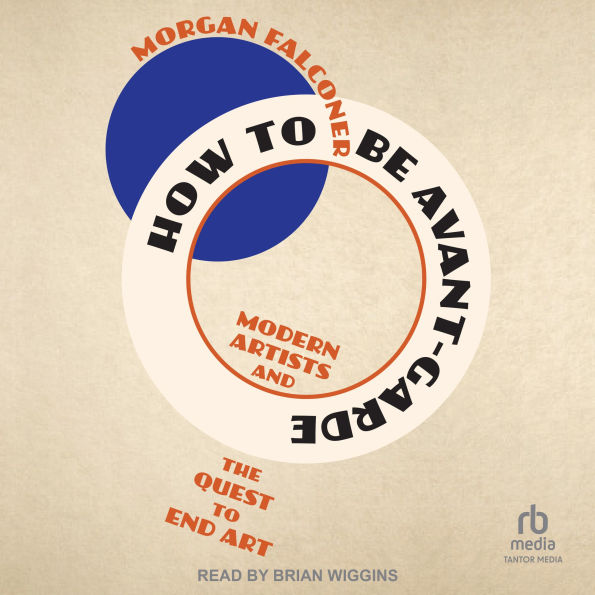
How to Be Avant-Garde: Modern Artists and the Quest to End Art
Reacting to the tumultuous crises of the twentieth century, especially the horrors of World War I, avant-garde artists and writers sought to destroy art by transforming it into the substance of everyday life. Following the evolution of these revolutionary groups, How to Be Avant-Garde charts its pioneers and radical ideas.


Avant-gardists challenged the confines of the definition of art along with the confines of the canvas itself. Art historian Morgan Falconer starts with the Futurist founder Filippo Tommaso Marinetti, whose manifesto seeded avant-gardes across Europe. In turn, Dadaists Hugo Ball and Emmy Hennings sought to replace art with political cabaret, and the Surrealists tried to exchange it for tools to plumb the unconscious. He guides us through the Russian Constructivists with their adventures in advertising and utopianism and De Stijl with the geometric abstractions of Piet Mondrian. The Bauhaus broke more boundaries, transmuting art into architecture and design. Finally, the Situationists swapped art for politics, with their ideas inspiring the 1968 Paris student protests.


How to Be Avant-Garde is a journey through the interlocking networks of these creative lives with their visions of a better world, their sometimes sympathetic but often strange conversations, and their objects and writings that defied categorization.
1145603487
How to Be Avant-Garde: Modern Artists and the Quest to End Art
Reacting to the tumultuous crises of the twentieth century, especially the horrors of World War I, avant-garde artists and writers sought to destroy art by transforming it into the substance of everyday life. Following the evolution of these revolutionary groups, How to Be Avant-Garde charts its pioneers and radical ideas.


Avant-gardists challenged the confines of the definition of art along with the confines of the canvas itself. Art historian Morgan Falconer starts with the Futurist founder Filippo Tommaso Marinetti, whose manifesto seeded avant-gardes across Europe. In turn, Dadaists Hugo Ball and Emmy Hennings sought to replace art with political cabaret, and the Surrealists tried to exchange it for tools to plumb the unconscious. He guides us through the Russian Constructivists with their adventures in advertising and utopianism and De Stijl with the geometric abstractions of Piet Mondrian. The Bauhaus broke more boundaries, transmuting art into architecture and design. Finally, the Situationists swapped art for politics, with their ideas inspiring the 1968 Paris student protests.


How to Be Avant-Garde is a journey through the interlocking networks of these creative lives with their visions of a better world, their sometimes sympathetic but often strange conversations, and their objects and writings that defied categorization.
19.99 In Stock
How to Be Avant-Garde: Modern Artists and the Quest to End Art

How to Be Avant-Garde: Modern Artists and the Quest to End Art

by Morgan Falconer

Narrated by Brian Wiggins

Unabridged — 8 hours, 56 minutes

How to Be Avant-Garde: Modern Artists and the Quest to End Art

How to Be Avant-Garde: Modern Artists and the Quest to End Art

by Morgan Falconer

Narrated by Brian Wiggins

Unabridged — 8 hours, 56 minutes

Audiobook (Digital)

$19.99
FREE With a B&N Audiobooks Subscription | Cancel Anytime
$0.00

Free with a B&N Audiobooks Subscription | Cancel Anytime

START FREE TRIAL

Already Subscribed? 

Sign in to Your BN.com Account


Listen on the free Barnes & Noble NOOK app


Related collections and offers

FREE

with a B&N Audiobooks Subscription

Or Pay $19.99

Overview

Reacting to the tumultuous crises of the twentieth century, especially the horrors of World War I, avant-garde artists and writers sought to destroy art by transforming it into the substance of everyday life. Following the evolution of these revolutionary groups, How to Be Avant-Garde charts its pioneers and radical ideas.


Avant-gardists challenged the confines of the definition of art along with the confines of the canvas itself. Art historian Morgan Falconer starts with the Futurist founder Filippo Tommaso Marinetti, whose manifesto seeded avant-gardes across Europe. In turn, Dadaists Hugo Ball and Emmy Hennings sought to replace art with political cabaret, and the Surrealists tried to exchange it for tools to plumb the unconscious. He guides us through the Russian Constructivists with their adventures in advertising and utopianism and De Stijl with the geometric abstractions of Piet Mondrian. The Bauhaus broke more boundaries, transmuting art into architecture and design. Finally, the Situationists swapped art for politics, with their ideas inspiring the 1968 Paris student protests.


How to Be Avant-Garde is a journey through the interlocking networks of these creative lives with their visions of a better world, their sometimes sympathetic but often strange conversations, and their objects and writings that defied categorization.

Editorial Reviews

From the Publisher

"[A]n engrossing survey, full of colorful characters and winning personal touches… [Falconer] takes readers on a tour of last century's most radical avant-garde movements."— Michael Patrick Brady Boston Globe

"[A] group biography of the modern artists who at one point or another had enough of the artistic status quo… [B]eing avant-garde, Mr. Falconer reminds us, meant going yet further and abandoning art as traditionally conceived."— Max Norman Wall Street Journal

"The book rushes readers at a velocity [Filippo Tommaso] Marinetti would have enjoyed… What’s fascinating in Falconer’s brief studies of these avant-gardists is how, in stark contrast to many artists today, their art-making seemed to exist outside the context of the market."— Orlando Whitfield New York Times

"From André Breton to Robert Smithson, the book nimbly threads the stories of many figures into a coherent and pleasurable read… [A] talent for setting the scene and rendering vivid portraits."— Aaron Peck Times Literary Supplement

"With entertaining asides about his own experiences as critic, scholar, and maker of art, Falconer offers a vivid picture of the fervent efforts of artists questioning the meaning of art itself.

A well-informed, spirited cultural history."— Kirkus Reviews, starred review

"A future classic along the lines of Lipstick Traces, one of those books that anyone hoping to bring true newness into the world will find and pass along like a shibboleth to others seeking the same."— Mark Braude, author of Kiki Man Ray

"Morgan Falconer is the pitch-perfect cheering but skeptical guide through the intricacies, infighting, backbiting, dead ends, crazy schemes, mad ideas, wild leaps, and triumphs of the avant-garde."— Jerry Saltz, Pulitzer Prize winner and best-selling author of How to Be an Artist

"Chock full of engaging details and anecdotes, Morgan Falconer’s book takes us on a lively romp through many of the locales where twentieth-century vanguard figures sought to create a new relationship between art and life. How to be Avant-Garde should appeal both to those in search of a good read and to those intrigued by the vexing question of what it all meant."— Jerrold Seigel, author of Bohemian Paris and The Private Worlds of Marcel Duchamp

"What is art for? How to Be Avant-Garde examines what happened when the horrors of World War I made it clear that the traditional answer?that it’s for making rich people’s homes nicer?could no longer apply. Maybe art’s time was up? Maybe it should no longer exist at all? Why was art between the wars so vivid and interesting? Read How to Be Avant-Garde and find out.”"— Ruth Brandon, author of Spellbound by Marcel: Duchamp, Love, and Art

"How to Be Avant-Garde can take its place alongside such mainstays as Roger Shattuck’s The Banquet Years and Robert Hughes’s The Shock of the New as a lively and thought-provoking survey of the twentieth century’s most impactful contribution to cultural life."— Mark Polizzotti, author of Why Surrealism Matters

Product Details

BN ID: 2940194517718
Publisher: Tantor Audio
Publication date: 02/18/2025
Edition description: Unabridged
From the B&N Reads Blog

Customer Reviews