- Shopping Bag ( 0 items )
Isaac Asimov’s Robot series and Foundation series comprise some of the greatest classics in their genre. They probe the questions of technology and destiny, war and politics that have captured readers’ imaginations for generations.
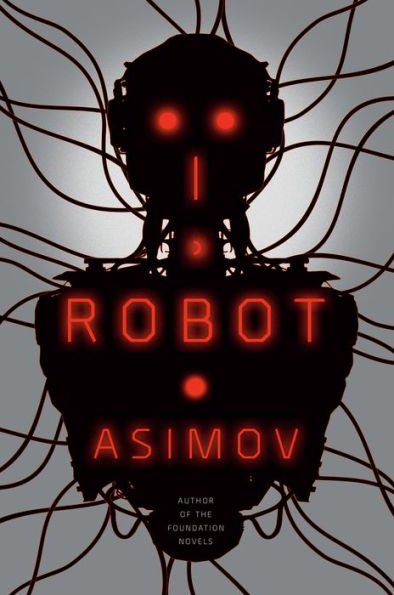
I, Robot, the first and most widely read book in Asimov’s Robot series, is a collection of nine stories that forever changed the world’s perception of artificial intelligence. Here are stories of sensitive robots, robots gone mad, mind-reading robots, prankster robots, and closeted robots that secretly dominate politics. Chronicling the robot’s development from primitive prototype to ultimate perfection, I, Robot blends scientific fact with science fiction in Asimov’s provocative style.
Foundation, Foundation and Empire, and Second Foundation tell the story of Hari Seldon, a brilliant visionary who synthesized history, psychology, and mathematical probability to shape a bold commandment for the future and steer humanity through a series of brutal eras. Following the collapse of a Galactic Empire, Hari gathered together the top scientists and scholars on a bleak planet at the very edge of the Galaxy in order to preserve the accumulated knowledge of mankind. He called his sanctuary the Foundation and designed it to withstand a dark age of ignorance, barbarism, and warfare that would last for the next thirty thousand years. But not even Hari could have predicted the intense barbarism lurking in space, or the birth of an extraordinary creature whose mutant intelligence would destroy all that Hari held dear.
The questions, discussion topics, and author biography that followare intended to enhance your reading of these four classics written by one of the most widely recognized fiction authors of our time.
I, Robot
Isaac Asimov
0-553-29438-5 (paperback)
0-553-80370-0 (hardcover)
Foundation
Isaac Asimov
0-553-29335-4 (paperback)
0-553-80371-9 (hardcover)
Foundation and Empire
Isaac Asimov
0-553-29337-0 (paperback)
0-553-80372-7 (hardcover)
Second Foundation
Isaac Asimov
0-553-29336-2 (paperback)
0-553-80373-5 (hardcover)
1. Do Asimov’s now-famous Three Laws of Robotics mirror humanity’s ethics code in any way? Whose orders are human beings required to obey? Do our definitions of “harm” ever lead to the same confounding dilemmas experienced in I, Robot?
2. Why was Gloria’s mother unable to accept Robbie as an excellent nursemaid? Was Robbie premonitory on Asimov’s part—a prediction that children in the twenty-first century might form intense emotional attachments to electronics?
3. Cutie (QT) questions his origins and finds it impossible to believe that a human created him. In what ways did Powell and Donovan reinforce this belief?
4. Does the case of Stephen Byerley indicate that robots might make better politicians? Would this only hold true if, as the novel envisions, nations dissolve into massive world regions?
5. What is the ultimate commodity produced by U.S. Robot & Mechanical Men, Inc.? Does our global workforce follow this model in any way? Were humor and compassion inevitable traits in the robots? Do these traits interfere with productivity in the world of I, Robot?
6. In the book’s closing lines, Dr. Susan Calvin tells the narrator, “You will see what comes next,” as robots stand between mankind and destruction. How did her career lead up to such a precarious conclusion?
7. I, Robot has been turned into a major motion picture starring Will Smith. How does the movie compare with your book-reading experience? What do you think of the adjustments made and liberties taken when converting this collection of stories to one seamless film adaptation?
8. Foundationopens with the perspective of Gaal Dornick, “a country boy who had never seen Trantor before.” What is the effect of opening the novel with Gaal’s observations? Why did Hari Seldon extend such an invitation to Gaal?
9. In the trial portrayed in chapter 6, the Commission’s Advocate repeatedly rejects Hari’s deductions regarding the future. What has made Hari a target for exile? Why are his projections—supported by seemingly irrefutable logic and mathematics—so easily dismissed by his accusers?
10. Part 3 of Foundation begins with an entry from the Encyclopedia Galactica that reads, “Undoubtedly the most interesting aspect of the history of the four Kingdoms involves the strange society forced temporarily upon it during the administration of Salvor Hardin.” In what ways does Hardin distinguish himself from the other rulers described in the novel? What conditions fostered his rise to power?
11. The Foundation is intended in some ways as a kind of religious center. What are its doctrines? Can a religion of science fail?
12. Discuss the novel’s references to energy—in this case, nuclear power—in relation to political and economic supremacy. What other forces drive the novel’s hierarchies of dominance? How does the role of the Traders evolve in the novel’s closing chapters?
13. What were the root causes of the Foundation’s fall? Could its demise have been avoided, even after war had begun?
14. As Lord of the Universe, is Cleon II naïve or perceptive? In what ways do his sensibilities affect his fate?
15. What, ultimately, is the source of the Mule’s power to perform Conversions in Foundation and Empire? What role did psychology play in his own origins?
16. Do the Independent Trading Worlds accurately perceive their vulnerabilities? In contrast, what perpetuated Neotrantor’s survival?
17. Bayta’s final conversation with the Mule explains his moniker as well as his perceptions of how power is perpetuated. What does this dialogue indicate about gender roles in the realm of the Second Foundation, and about the possibility of democracy?
18. Discuss the spectrum of characters affected by the Mule in Second Foundation’s five opening interludes. In what ways do the Mule’s tactics vary?
19. In what ways does Bail Channis’s personality reflect a cultural shift from the previous Foundation novels?
20. Near the beginning of the fifteenth chapter, Arcadia is described as “dressed in borrowed clothes, standing on a borrowed planet in a borrowed situation of what seemed even to be a borrowed life.” In what ways is she both an unlikely and an ideal savior?
21. Scholarship such as the Encyclopedia project represented Hari’s belief in the power of learning (and even the power of the mind itself, in the form of neural microcurrents). To what extent is a civilization’s success measured by the survival of its knowledge?
22. The final chapter of Second Foundation offers a thoughtful coda to the novel. What is the “true” question to that chapter’s “answer that was true?”
23. If Hari Seldon’s equations were applied to Earth’s societies, what might the results be?
24. What connotations and root words were you able to derive from the character names and geographic locations featured in the series?
25. How does the series evolve as a whole? What overarching narrative is propelled by the events that occur within the individual books?
26. Isaac Asimov wrote these three books very early in his career, during the 1950s—an era marked by the Cold War, McCarthyism, and the early stages of the space race. How might the events of this period have shaped the Foundation storyline?
27. In what sense does the trilogy offer a cautionary tale for contemporary leaders in politics, science, and the humanities?
1. Do Asimov’s now-famous Three Laws of Robotics mirror humanity’s ethics code in any way? Whose orders are human beings required to obey? Do our definitions of “harm” ever lead to the same confounding dilemmas experienced in I, Robot?
2. Why was Gloria’s mother unable to accept Robbie as an excellent nursemaid? Was Robbie premonitory on Asimov’s part—a prediction that children in the twenty-first century might form intense emotional attachments to electronics?
3. Cutie (QT) questions his origins and finds it impossible to believe that a human created him. In what ways did Powell and Donovan reinforce this belief?
4. Does the case of Stephen Byerley indicate that robots might make better politicians? Would this only hold true if, as the novel envisions, nations dissolve into massive world regions?
5. What is the ultimate commodity produced by U.S. Robot & Mechanical Men, Inc.? Does our global workforce follow this model in any way? Were humor and compassion inevitable traits in the robots? Do these traits interfere with productivity in the world of I, Robot?
6. In the book’s closing lines, Dr. Susan Calvin tells the narrator, “You will see what comes next,” as robots stand between mankind and destruction. How did her career lead up to such a precarious conclusion?
7. I, Robot has been turned into a major motion picture starring Will Smith. How does the movie compare with your book-reading experience? What do you think of the adjustments made and liberties taken when converting this collection of stories to one seamless film adaptation?
8. Foundation opens with the perspective of Gaal Dornick, “a country boy who had never seen Trantor before.” What is the effect of opening the novel with Gaal’s observations? Why did Hari Seldon extend such an invitation to Gaal?
9. In the trial portrayed in chapter 6, the Commission’s Advocate repeatedly rejects Hari’s deductions regarding the future. What has made Hari a target for exile? Why are his projections—supported by seemingly irrefutable logic and mathematics—so easily dismissed by his accusers?
10. Part 3 of Foundation begins with an entry from the Encyclopedia Galactica that reads, “Undoubtedly the most interesting aspect of the history of the four Kingdoms involves the strange society forced temporarily upon it during the administration of Salvor Hardin.” In what ways does Hardin distinguish himself from the other rulers described in the novel? What conditions fostered his rise to power?
11. The Foundation is intended in some ways as a kind of religious center. What are its doctrines? Can a religion of science fail?
12. Discuss the novel’s references to energy—in this case, nuclear power—in relation to political and economic supremacy. What other forces drive the novel’s hierarchies of dominance? How does the role of the Traders evolve in the novel’s closing chapters?
13. What were the root causes of the Foundation’s fall? Could its demise have been avoided, even after war had begun?
14. As Lord of the Universe, is Cleon II naïve or perceptive? In what ways do his sensibilities affect his fate?
15. What, ultimately, is the source of the Mule’s power to perform Conversions in Foundation and Empire? What role did psychology play in his own origins?
16. Do the Independent Trading Worlds accurately perceive their vulnerabilities? In contrast, what perpetuated Neotrantor’s survival?
17. Bayta’s final conversation with the Mule explains his moniker as well as his perceptions of how power is perpetuated. What does this dialogue indicate about gender roles in the realm of the Second Foundation, and about the possibility of democracy?
18. Discuss the spectrum of characters affected by the Mule in Second Foundation’s five opening interludes. In what ways do the Mule’s tactics vary?
19. In what ways does Bail Channis’s personality reflect a cultural shift from the previous Foundation novels?
20. Near the beginning of the fifteenth chapter, Arcadia is described as “dressed in borrowed clothes, standing on a borrowed planet in a borrowed situation of what seemed even to be a borrowed life.” In what ways is she both an unlikely and an ideal savior?
21. Scholarship such as the Encyclopedia project represented Hari’s belief in the power of learning (and even the power of the mind itself, in the form of neural microcurrents). To what extent is a civilization’s success measured by the survival of its knowledge?
22. The final chapter of Second Foundation offers a thoughtful coda to the novel. What is the “true” question to that chapter’s “answer that was true?”
23. If Hari Seldon’s equations were applied to Earth’s societies, what might the results be?
24. What connotations and root words were you able to derive from the character names and geographic locations featured in the series?
25. How does the series evolve as a whole? What overarching narrative is propelled by the events that occur within the individual books?
26. Isaac Asimov wrote these three books very early in his career, during the 1950s—an era marked by the Cold War, McCarthyism, and the early stages of the space race. How might the events of this period have shaped the Foundation storyline?
27. In what sense does the trilogy offer a cautionary tale for contemporary leaders in politics, science, and the humanities?
Anonymous
Posted May 5, 2010
IMPORTANT: The book does not resemble the movie in any great detail.
This is a must read for SF fans out there, packed in a very affordable package.
6 out of 6 people found this review helpful.
Was this review helpful? Yes NoThank you for your feedback. Report this reviewThank you, this review has been flagged.Justint
Posted December 8, 2008
I, Robot by Isaac Asimov is made up of a series of nine science fiction short stories that all are connected through a robot psychologist named Dr. Susan Calvin. The stories are told as if Susan Calvin is relaying them to a reporter, the narrator. The first story, ¿Robbie¿ is about a young girl who has a robot friend, but her mother disapproves of the relationship. Her mother tries desperately to keep them away from each other. In the next few stories, we are told of two scientists who are distraught with problems in development of labor robots. The two come across danger while trying to relieve the issues almost costing them their lives in the process. A common thread among each story is the Three Law of Robotics, which underlines and governs the way robots should behave as well as the interaction of humans and robots. In the next five stories, Susan Calvin is the main character and the stories talk about the evolution of robots. The stories also talk about her removal from humanity. She retreats due to a mind-reading robot that discovers her romantic feelings for a fellow colleague. Throughout the novel the robots show intelligence and understanding which in some cases surpasses that of the humans. Soon the humans begin to realize that the robots may have more power then they themselves have. Their ability to deduce and analyze creates a major problem for the humans and it seems as though the robots could remove the humans. After their creation it is evident that the increasing knowledge of the robots will be too much for the humans. Isaac Asimov wrote a break through novel many years ahead of its time. His creativity and shear brilliance is shown through his attention to detail and development of the story as a whole. It is good read for anyone interested in the mind versus machine aspect of entertainment.
5 out of 6 people found this review helpful.
Was this review helpful? Yes NoThank you for your feedback. Report this reviewThank you, this review has been flagged.Anonymous
Posted September 9, 2009
I Also Recommend:
This book is a collection of short stories tied together by a common theme that sets the stage for and ties together many of the other robot stories of Asimov and frames the three Laws of Robotics.
2 out of 2 people found this review helpful.
Was this review helpful? Yes NoThank you for your feedback. Report this reviewThank you, this review has been flagged.Anonymous
Posted July 22, 2004
The book is pretty old, and has a few plot holes, but it's still very entertaining and makes you think a bit. Note that while the movie claims to be based on Asimov's books, that's a big fat lie. The movie takes two elements from these short stories: robots, and the Three Laws of Robotics. That's it. The inclusion of the movie picture on the cover of the new edition is a travesty. It would be more appropriate to put the poster from Mel Gibson's 'Passion' movie on the cover of the Bible -- hey, at least they have some characters and story elements in common!
2 out of 2 people found this review helpful.
Was this review helpful? Yes NoThank you for your feedback. Report this reviewThank you, this review has been flagged.QMS
Posted June 7, 2010
I, Robot is a fantastic book that takes place in a futuristic world. Humans and robots live in harmony under three rules and as long as these rules aren't conflicted there is peace. As the robots are becoming more intelligent and needing the humans less and less, there was an uprising... The heros in the book will have to stop them all before it's too late. This is a science fiction book that will be best for someone interested in that subject.
1 out of 3 people found this review helpful.
Was this review helpful? Yes NoThank you for your feedback. Report this reviewThank you, this review has been flagged.Anonymous
Posted April 5, 2006
You'll need to provide your own batteries to get 'I, Robot' up and running to speed. the famous three laws of robotics is the only groundbreaking contribution offered before the mechanics malfunction. Nothing of consequence happens that hasn't happened before or since. Questions of what defines selfawareness, what it is to be human and if such creations could eventually make humanity obsolete were explored in Fritz Lang's 1927 'Metropolis' and Karel Capek's 1921 'R.U.R. Rossum's Universal Robots.' Similar themes appeared in the 1970 release 'Colossus The Forbin Project' and again in 1984 with 'The Terminator' and following sequels. Considering the above mentioned works are far more eloquent than Asimov's entry it is no wonder the film adaption required required a major rework prior to reaching the big screen. Truth is, there's more talk than action. What is truly mindboggling is that Asimov, a holder of a PhD in biochemistry and author of over 400 books of diverse scientific and science fiction subjects, envisioned robots and computers as massive clunky creations. The total lack of inovative insight is shocking. Such harsh judgement is justified as great things are expected from those who are considered great, so when they fall so far short of these expectations there remains little to be said in their defense. Pass this one by.
1 out of 9 people found this review helpful.
Was this review helpful? Yes NoThank you for your feedback. Report this reviewThank you, this review has been flagged.Anonymous
Posted August 1, 2004
This book and the movie of the same title have very few things in common. The plot of the movie is not one of those things. This book is a wonderful collection of 'hard sci-fi' short stories that explore the implications (and complications) inherent in Asimov's Three Laws of Robotics. The movie is NOT based on any of the short stories in the book. In fact, the movie presents a rather apocalyptic view of intelligent robots in society, while the book attempts to show that robots would be a useful addition to society as long as the Laws work as advertised. The book is required reading for any true Science Fiction fan, but don't expect to find a preview of the movie. It ain't in there. (It's not a bad movie, really - it's kinda like 'Terminator meets Minority Report'.)
1 out of 1 people found this review helpful.
Was this review helpful? Yes NoThank you for your feedback. Report this reviewThank you, this review has been flagged.Anonymous
Posted January 5, 2012
Another fantastic, easy-to-read book that just pulls you in.
Was this review helpful? Yes NoThank you for your feedback. Report this reviewThank you, this review has been flagged.Anonymous
Posted January 2, 2012
As have already been pointed out but, I will say it too. The cover is misleading and will turn off people who have seen the movie. Thinking the book is the movie and not read it. The movie is BASED on the characters and idea of the short stories and is a completely different plot. The main robot character spans through the robot and foundation series. If you judge this book by its cover you will truely miss out on the wonderful story telling of Issic Asimov.
Was this review helpful? Yes NoThank you for your feedback. Report this reviewThank you, this review has been flagged.Anonymous
Posted December 16, 2011
When I was a girl, I was told after Asimov let one lf his books become a movie, he vowed never to do it again. After seeing how Hollywood ruined the I, Robot short story series, I can understand his feelings. I love Will Smith, but after seeing how he helped run one of my favorite short story collections, I still having feelings of resentment against him.
The book is a collection of short stories that can be viewed as a collection of Susan Calvin's memories. She discuss the three laws of Robotics and how they can present difficulties in our lives even when they are designed to protect us. The story about the "Get Lost" command is one of my favorites and is briefly referenced to in the movie.
If you read the book, you can see some of it's influences in the movie, but it really didnt do the book justice.
Anonymous
Posted October 6, 2011
I read this novel as a youngster and i would venture to say that this is a must read for all sci fi fans!!! Asimov set the tone with the 3 laws of robotics that are still being quoted today as if they are THE laws!!!! Don't be fooled by the cover pic, that movie is NOT what this book is about. This novel introduces the 3 laws and a prime character that reververates through all of Asimov's science fiction, Susan Calvin!!! The stories progress from the simple to the sublime and when you finish, you will realize why Asimov was and still is a master of sci-fi stories!! Read his Robot series, Foundation series and his biography and you will see that all his stories come from his life's experiences!!! READ THIS BOOK!!!
Was this review helpful? Yes NoThank you for your feedback. Report this reviewThank you, this review has been flagged.TheDarkStar
Posted August 2, 2011
Im 15 and i read it when i was 12 (im not saying its a kids book, it deff isnt, i had a college reading level then) and i fell in love with the book. It isnt like the movie....but WAYYYYY better :) its worth more than $20, but luckily it doesnt cost much at all! (Only a few $!) BUY IT!
0 out of 1 people found this review helpful.
Was this review helpful? Yes NoThank you for your feedback. Report this reviewThank you, this review has been flagged.Anonymous
Posted August 1, 2011
Compared to the movie, this book is jesus. That is all.
0 out of 1 people found this review helpful.
Was this review helpful? Yes NoThank you for your feedback. Report this reviewThank you, this review has been flagged.It's a classic because it's so well written. Enjoy!
Was this review helpful? Yes NoThank you for your feedback. Report this reviewThank you, this review has been flagged.5073512
Posted January 17, 2011
it just pulls u in and makes me want to
Was this review helpful? Yes NoThank you for your feedback. Report this reviewThank you, this review has been flagged.This is a great book, it makes me want to keep turnlilng the page!
Was this review helpful? Yes NoThank you for your feedback. Report this reviewThank you, this review has been flagged.Anonymous
Posted October 3, 2010
This book took me awhile to read, longer than it was supposed to, actually, because, it was very twisty and turney. it's great for Sci-Fi fans, just not for me. it goes from story to story, and that kind of confuses me.
Was this review helpful? Yes NoThank you for your feedback. Report this reviewThank you, this review has been flagged.I think that this book is genius. Isaac Asimov really used creativity and his novel really was ahead of the times. Loved it.
Was this review helpful? Yes NoThank you for your feedback. Report this reviewThank you, this review has been flagged.Anonymous
Posted April 15, 2008
I, Robot is about conflicts between the creator's plan and the creation's path. My favorite three cases are with the characters Cutie, Herbie, and Byerley. Cutie is a robot who just can't accept the fact that humans made him, an entity superior to them. Following only the tangible elements present, Cutie comes up with his own reasoning. Herbie is another robot who somehow obtained the ability of telepathy. The scientists try to learn how this event occurred, but not without using the robot's ability for their own agendas. And with my third favorite case, a man is against seeing the character Byerley win an election. After investigating Byerley, the man suspects that the candidate is a robot! Politics become more complicated with this accusation, especially in the aspects of a citizen's privacy. Man's grip on his creation of robots is not big enough to keep it to his complete will.
Was this review helpful? Yes NoThank you for your feedback. Report this reviewThank you, this review has been flagged.Anonymous
Posted February 13, 2006
Isaac Asimov was, of course, a mover and shaker not just in science fiction, but as a science educator for the masses. His prodigious output of books and articles was one of the seven wonders of the modern world, yet it's a relatively small number of short stories and novels for which (I predict) he'll be remembered. Stories like 'Nightfall,' 'Bicentennial Man,' and of course his robot stories with their 'three laws' will still be read and appreciated for years to come. By showing us how the three laws worked (or sometimes didn't) in these stories, he created a practical foundation for the future of robotics, and Carl Capek aside (who wrote one of the first robot stories, RUR, in 1921) Asimov is still considered by many as the father of modern robotics. The Japanese in particular seem fascinated with robots, so it shouldn't be surprising that Honda named their sophisticated humanoid robot Asimo in his honor. These stories do show the era in which they were written by the language, but the innovative theories behind them and the 'why didn't I think of that?' reaction from readers remain. Another novel that raises some thoughtful issues about our near future is An Audience for Einstein by Mark Wakely.
0 out of 1 people found this review helpful.
Was this review helpful? Yes NoThank you for your feedback. Report this reviewThank you, this review has been flagged.
Overview
In the late 1940s and early 1950s Isaac Asimov found a home on the pages of the science-fiction magazines Astounding and Super-Science Stories. World War II had just ended and the world was obsessed with air combat and the role of technology in society. Asimov’s stories reflected the concerns over the danger of technology but they also humanized robots, indicating that it is not technology that is evil but the way it is sometimes abused. His stories were so successful that in 1950 nine of his best short stories were ...