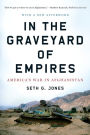
In the Graveyard of Empires: America's War in Afghanistan

( 19 )

Overview

During his repeated travels through Afghanistan, Seth G. Jones watched American optimism evaporate with increasing dismay. Culling from declassified government documents, new research on insurgencies, and interviews with prominent figures, In the Graveyard of Empires "zero[es] in on what went awry after America's successful routing of the Taliban in late 2001" (Michiko Kakutani, New York Times) to explain how a growing sanctuary for insurgents in Pakistan and a collapsing government in Kabul catalyzed the Taliban...

See more details below
Paperback (Reprint)
$12.95
BN.com price
(Save 18%)$15.95 List Price

Pick Up In Store

Reserve and pick up in 60 minutes at your local store

Other sellers (Paperback)
  • All (25) from $2.56   
  • New (15) from $2.56   
  • Used (10) from $3.00   
In the Graveyard of Empires: America's War in Afghanistan

Available on NOOK devices and apps  
  • Nook Devices
  • NOOK HD/HD+ Tablet
  • NOOK
  • NOOK Color
  • NOOK Tablet
  • Tablet/Phone
  • NOOK for Windows 8 Tablet
  • NOOK for iOS
  • NOOK for Android
  • NOOK Kids for iPad
  • PC/Mac
  • NOOK for Windows 8
  • NOOK for PC
  • NOOK for Mac
  • NOOK Study
  • NOOK for Web

Want a NOOK? Explore Now

NOOK Book (eBook)
$10.84
BN.com price
(Save 32%)$15.95 List Price

Overview

During his repeated travels through Afghanistan, Seth G. Jones watched American optimism evaporate with increasing dismay. Culling from declassified government documents, new research on insurgencies, and interviews with prominent figures, In the Graveyard of Empires "zero[es] in on what went awry after America's successful routing of the Taliban in late 2001" (Michiko Kakutani, New York Times) to explain how a growing sanctuary for insurgents in Pakistan and a collapsing government in Kabul catalyzed the Taliban resurgence. Examining what has worked thus far-and what hasn't-Jones lays out "a blueprint for winning in a region that has historically brought mighty armies to their knees" (Doug Childers, Richmond Times-Dispatch).

Read More Show Less

Editorial Reviews

San Francisco Chronicle
Offers a valuable window onto how officials have understood the military campaign.— Robert D. Crews
Wall Street Journal
How we got to where we are in Afghanistan.— Matthew Kaminski
The New Republic
Seth G. Jones’s book provides a vivid sense of just how paltry and misguided the American effort has been.… In the Graveyard of Empires will help to show what might still be done to build something enduring in Afghanistan and finally allow the U.S. to go home.— Dexter Filkins
Richmond Times-Dispatch
A blueprint for winning in a region that has historically brought mighty armies to their knees.— Doug Childers
Publishers Weekly

Since 2001, RAND Corporation political scientist Jones (The Rise of European Security Cooperation) has been observing the reinvigorated insurgency in Afghanistan and weighing the potency of its threat to the country's future and American interests in the region. Jones finds the roots of the re-emergence in the expected areas: the deterioration of security after the ousting of the Taliban regime in 2002, the U.S.'s focus on Iraq as its foreign policy priority and Pakistan's role as a haven for insurgents. He revisits Afghan history, specifically the invasions by the British in the mid- and late-19th century and the Russians in the late-20th to rue how little the U.S. has learned from these two previous wars. He sheds light on why Pakistan-a consistent supporter of the Taliban-continues to be a key player in the region's future. Jones makes important arguments for the inclusion of local leaders, particularly in rural regions, but his diligent panorama of the situation fails to consider whether the war in Afghanistan is already lost. (July)

Copyright © Reed Business Information, a division of Reed Elsevier Inc. All rights reserved.
Library Journal

Jones (RAND Corp.) examines American successes and failures in Afghanistan and argues for a radically different approach from the primarily kinetic strategy of 2002-03. He considers security, development aid, construction, close coordination with local populations, and—most difficult—solving the problem of insurgent sanctuary in Pakistan. Most readers keeping up with wars in the region will want this.


—Edwin B. Burgess
Kirkus Reviews
A scholarly account of America's unsuccessful effort to avoid the same fate as three other great powers who tried to tame Afghanistan. RAND political scientist Jones (Foreign Service/Georgetown Univ.; The Rise of European Security Cooperation, 2007) begins by describing the failures of Alexander the Great, Victorian Britain and the Soviet Union, reminding readers that the United States missed its first opportunity in the area after the Soviet withdrawal in 1989. Delighted at humiliating our Cold War enemy, American forces withdrew, well-armed Afghan factions turned on each other and the nation descended into lawless chaos. Some semblance of order returned in the '90s when the Taliban conquered most of the country and established an oppressive Islamic regime. In 2001, enraged at its refusal to surrender Osama bin Laden, U.S. forces attacked the country and aided Taliban opponents, who triumphed in a few months. At this point, Jones slows to deliver a blow-by-blow account of how America squandered this victory. As fighting died down, U.S. leaders turned their attention to an invasion of Iraq. During several relatively peaceful postwar years, Afghanistan made progress in establishing a constitutional government, improving education and rebuilding infrastructure. Unfortunately, it never achieved a stable government's primary duty-providing security. Police and officials remained ineffective and corrupt and warlords and criminals reclaimed their turf. The chaos that followed the Soviet withdrawal returned-along with the Taliban and other insurgencies, rested and rejuvenated in Pakistan. Jones admits that America is trying to correct its mistake but rightly wonders if the government will beable to devote as much effort, time and money as was devoted to a similar mistake-not yet corrected-in Iraq. An impressively researched, often grueling illustration of how U.S. leaders failed-once again-to learn from experience. Agent: Eric Lupfer/William Morris Agency
Esquire
Seth Jones has the answer to the million-dollar question….until Seth Jones, nobody actually sought an empirical answer. Nobody crunched the numbers.— John H. Richardson
Financial Times
Gauging whether the US and its allies can succeed in Afghanistan is only part of what Jones’s excellent book is about.— James Blitz
Foreign Affairs
A useful and generally lively account of what can go wrong when outsiders venture onto the Afghan landscape. Those ventures have generally not turned out well…This is ominous, because [Jones] knows too much about recent interventions for his pessimism to be disregarded.— Steven Simon
Booklist
This is a serious work that should be factored in as a new policy as Afghanistan evolves.— Jay Freeman
Library Journal
Political scientist Jones's (RAND Corporation) groundbreaking, detailed account of American involvement in Afghanistan from the Soviet invasion of 1979 through 2009 is finally available on audio. Drawing from declassified documents and interviews with military, political, and national security experts, Jones holds that the United States followed the same failed path taken in Afghanistan by both Britain and the former Soviet Union. The chapter outlining the theoretical basis for insurgency is particularly enlightening. Voice-over artist William Hughes does an excellent job of presenting this important work, a definitive account of perhaps the most questionable American military and foreign policy exercise since Vietnam. Essential listening for all.—Stephen Hupp, West Virginia Univ. Parkersburg Lib.
The Barnes & Noble Review
A few years ago, the Turkish defense minister bragged that the Turkish contingent in the International Security Assistance Force (ISAF) had finished an entire tour in Afghanistan's Wardak province without firing a shot. To some, including his intended audience of Turks, this boast was cause for approval and appreciation. To others -- presumably the battle-weary American soldiers who complained bitterly that ISAF had come to stand for I Saw Americans Fight -- the boast demonstrated all that was wrong or bogus about the NATO effort in Afghanistan, and epitomized the woes that the Americans would eventually have to redouble their efforts to repair.

In the Graveyard of Empires, Seth Jones's history of post-invasion Afghanistan, is at its best when it describes the follies and occasional acts of heroism emanating from the patchwork of nations that now take collective responsibility for Afghanistan. The coalition he describes includes many dedicated soldiers and canny diplomats, but it errs frequently, and in the end its members amount to just a few fully committed nations: the U.S., the U.K., Canada, and the Netherlands. Most others commit soldiers only in nominal amounts, or halfheartedly -- under the condition, say, that they build roads and schools instead of killing Taliban, even if the Taliban are destroying the roads or murdering the teachers.

Among general surveys of recent Afghan history, Jones's book is rare in its having taken seriously the war concept that was originally conceived: a coalition of NATO armies coming to the defense of a member state, namely the U.S., that was under attack. The U.S. military campaigns in the early days of the war, such as Operation Jawbreaker (the Tora Bora assault on Bin Laden) and the late 2001 horseback Special Forces action in the north, have already drawn plenty of ink, some of it ink well spent. Gary Schroen, the CIA operative who led Jawbreaker, produced a book of his own, and Sean Naylor's Not a Good Day to Die delivers a more serious account than its breathlessly macho title promises.

Jones describes other campaigns that have attracted less attention, not because they are less interesting battlefield case studies but because the U.S. part in them is secondary. His is one of the few histories to devote more than a few paragraphs, for example, to Operation Medusa, the worthwhile Canadian initiative that ended in the largest land battle in NATO history -- a days-long, costly conventional fight between NATO forces and the Taliban. The Canadian-led coalition routed the Taliban, but the region has remained extremely dangerous. ever since. Jones provides step-by-step coverage of how the battle unfolded, with interviews of the key officers involved.

If Jones had confined his study to overlooked battles and the NATO politics that continue to keep the war effort from proceeding as efficiently as it might, his book would be laudable and insightful throughout. Unfortunately, its scope is hilariously broad, and its ambitions both more and less than its readers deserve. The narrative veers from battlefield accounts to pre-invasion tales of Taliban brutality to descriptions of the poppy question; there are even several pages on counterinsurgency theory placed awkwardly in the middle of the book. None but the first focus is especially fresh or at all unorthodox in its approach.

As if to justify its inauspicious and clichéd title, the book starts with a potted chronicle of the previous 2,000-odd years of invasions and failed occupations, from Alexander the Great to the Soviets, and then pronounces a head-shaking warning that we should remember our history. But Jones is a little too quick to embrace the conclusions of the doomed-to-repeat-it school of historical insight, for the lessons of the past are by no means clear. Alexander, for example, famously insisted that his officers take local wives and gave his men reason to believe that most would never see Macedon again; surely forcing an officer to marry an Afghan and never to go home counts as a sign of resolve and a commitment to "local" initiatives, if not of the precise modern liberal variety Jones prefers.

The Soviet lesson is equally ambiguous. Are we to conclude that big countries always fail to occupy Afghanistan? Or that countries with terroristic policies toward Afghans eventually get booted out? The only clear lesson from these horror tales, from the Hellenistic period to the Anglo-Afghan wars to the Soviet period, is that wars in Afghanistan are not easy. This is hardly news, and hardly justification for so many pages of pre-modern history.

Jones has visited Afghanistan repeatedly, and his endnotes reveal much original interviewing and greasy-fingered lunching with Afghans. Compared to the re-rehearsed narratives of the rise of the Taliban, and the career path of Osama bin Laden, these interviews pay dividends: he shows flashes of color and detail, illuminating known public figures like Zalmay Khalilzad, as well as other, more obscure Afghan ones. This Afghan perspective is one that Jones includes too sparingly. He suspects (and so do I) that figures like Khalilzad and Canadian generals mean a great deal to each other but not much to the average Afghan, who knows and cares little about politics but is obsessed with achieving security. Afghans do not think in the language of NATO.

This realization is important. It is a shame, then, that while Jones is smart enough to make it, he fails to deliver anything but a sadly bland and anodyne set of remedies for Afghanistan's ills -- fight corruption, act locally, and undermine the Taliban's sanctuaries in Pakistan. This is a prescription that could have come from Brussels, one that would have been implemented by now if it were anything less than fiendishly difficult. Jones would have done well to explicate these suggestions more clearly, and to come up with a few less familiar. A study that boldly tries to encompass so much might have aimed to be bolder in its advice as well. --Graeme Wood

Graeme Wood is a staff editor at The Atlantic. His articles and reviews have appeared in many publications, including The New Yorker, Good magazine, and The American.

Read More Show Less

Product Details

  • ISBN-13: 9780393338515
  • Publisher: Norton, W. W. & Company, Inc.
  • Publication date: 4/12/2010
  • Edition description: Reprint
  • Pages: 464
  • Sales rank: 282,257
  • Product dimensions: 5.40 (w) x 8.20 (h) x 1.00 (d)

Meet the Author

Seth G. Jones has served as a senior advisor at U.S. Special Operations Command and is currently associate director of the International Security and Defense Policy Center at RAND, an adjunct professor at Johns Hopkins University, and the author of In the Graveyard of Empires.

Read More Show Less

Table of Contents

List of Maps and Graphs ix

Chronology xi

Introduction xix

1 Descent into Violence 3

2 The Mujahideen Era 23

3 Uncivil War 41

4 The Rise of the Taliban 52

5 Al Qa'ida's Strategic Alliance 69

6 Operation Enduring Freedom 86

7 Light Footprint 109

8 Early Successes 134

9 The Logic of Insurgency 151

10 Collapse of Law and Order 163

11 A Growing Cancer 183

12 The Perfect Storm 203

13 A Three-Front War 223

14 National Caveats 238

15 The Water Must Boil 256

16 Al Qa'ida: A Force Multiplier 279

17 In the Eye of the Storm 296

18 Back to the Future 313

Afterword 327

Acknowledgments 341

Notes 345

Index 417

Read More Show Less

Customer Reviews

Average Rating 3.5
( 19 )
Rating Distribution

5 Star

(6)

4 Star

(5)

3 Star

(4)

2 Star

(2)

1 Star

(2)

Your Rating:

Your Name: Create a Pen Name or

Barnes & Noble.com Review Rules

Our reader reviews allow you to share your comments on titles you liked, or didn't, with others. By submitting an online review, you are representing to Barnes & Noble.com that all information contained in your review is original and accurate in all respects, and that the submission of such content by you and the posting of such content by Barnes & Noble.com does not and will not violate the rights of any third party. Please follow the rules below to help ensure that your review can be posted.

Reviews by Our Customers Under the Age of 13

We highly value and respect everyone's opinion concerning the titles we offer. However, we cannot allow persons under the age of 13 to have accounts at BN.com or to post customer reviews. Please see our Terms of Use for more details.

What to exclude from your review:

Please do not write about reviews, commentary, or information posted on the product page. If you see any errors in the information on the product page, please send us an email.

Reviews should not contain any of the following:

  • - HTML tags, profanity, obscenities, vulgarities, or comments that defame anyone
  • - Time-sensitive information such as tour dates, signings, lectures, etc.
  • - Single-word reviews. Other people will read your review to discover why you liked or didn't like the title. Be descriptive.
  • - Comments focusing on the author or that may ruin the ending for others
  • - Phone numbers, addresses, URLs
  • - Pricing and availability information or alternative ordering information
  • - Advertisements or commercial solicitation

Reminder:

  • - By submitting a review, you grant to Barnes & Noble.com and its sublicensees the royalty-free, perpetual, irrevocable right and license to use the review in accordance with the Barnes & Noble.com Terms of Use.
  • - Barnes & Noble.com reserves the right not to post any review -- particularly those that do not follow the terms and conditions of these Rules. Barnes & Noble.com also reserves the right to remove any review at any time without notice.
  • - See Terms of Use for other conditions and disclaimers.
Search for Products You'd Like to Recommend

Recommend other products that relate to your review. Just search for them below and share!

Create a Pen Name

Your Pen Name is your unique identity on BN.com. It will appear on the reviews you write and other website activities. Your Pen Name cannot be edited, changed or deleted once submitted.

 
Your Pen Name can be any combination of alphanumeric characters (plus - and _), and must be at least two characters long.

Continue Anonymously
Sort by: Showing all of 19 Customer Reviews
  • Anonymous

    Posted August 15, 2009

    Highly recommend this book to anyone interested in Afghanistan

    This is a great read and helps you understand how the Taliban insurgency heated up. Reading this book helped me understand why General Mcchrystal's new US strategy in Afghanistan is essential for victory. I would recommend this book to anyone who is interested in the war in Afghanistan and why it is far different from wars the US is traditionally used to fighting. It is a good account military and CIA efforts to liberate Afghanistan after 9/11, also the policies and factors off the battlefield that led us to where we are now. You also get general but important information on Afghanistan from the Soviet invasion to the rise of the Taliban in the first chapters. I just finished reading "Ghost Wars" by Steve Coll and this was a great place to pick up where Ghost Wars left off.

    1 out of 1 people found this review helpful.

    Was this review helpful? Yes  No   Report this review
  • Posted January 27, 2011

    more from this reviewer

    A SUCCINCT, COMPELLING ACCOUNT

    While much has surely been written about the war in Afghanistan Seth G. Hughes who serves as an advisor and plans officer for the commanding general of U.S. Special Operations Forces in Afghanistan adds new dimensions to an assessment of our country's longest war since Vietnam.

    Based upon interviews with countless military, diplomats, and experts in national security plus information from declassified government documents IN THE GRAVEYARD OF EMPIRES delivers a clear, concisely rendered account of our military efforts in Afghanistan. The begins with what first appeared to be a success, and follows with the many crises that ensued including, of course, how Pakistan became "a sanctuary for the Taliban and Al Qaeda." Jones not only offers what might be best described as an accurate reportorial view of these events but also emphasizes where we erred and what we should do in order to bring stability to that area.

    William Hughes, a professor of political science at Southern Oregon University provides a succinct, deliberate narration. This is the first time we've heard a reading by Hughes, and we certainly hope it won't be the last.

    - Gail Cooke

    Was this review helpful? Yes  No   Report this review
  • Posted November 24, 2010

    Gives a great understanding

    Seth Jones gives a great telling of what led to the US's involvement what went wrong and what's next.

    Was this review helpful? Yes  No   Report this review
  • Posted July 25, 2010

    more from this reviewer

    Well Above Average

    Seth Jones writes an engaging take on the Afghan picture from a historical context, painting the current international engagement against the backdrop of past invasions and nearly universal failure. While he takes the objective approach of "we don't know how this thing is going to end" he leans heavily towards the reality that every military invasion of Afghanistan has ended in failure. The greatest weakness of the book is that it doesn't go into enough details about the pitfalls of past invasions and explain in details, the shortcomings of their engagement. While he touches on the ancient and industrial age engagements of failed sate invasions, he doesn't go quite enough into depth about the failures of states that dared to engage in a state that refuses to be tamed. On the other hand he does an excellent job of tying the current, international experience in Afghanistan to the long line of engagements that have made Afghanistan what it is today. Perhaps what would have been the greatest contribution for this work would have been a forthright prognostication of what may happen to the international experience and possible ways to mitigate shortfalls. All-in-all Mr. Jones has a gem on his hands and I would enjoy reading another work from this author.

    Was this review helpful? Yes  No   Report this review
  • Anonymous

    Posted December 29, 2010

    No text was provided for this review.

  • Anonymous

    Posted March 12, 2011

    No text was provided for this review.

  • Anonymous

    Posted September 24, 2010

    No text was provided for this review.

  • Anonymous

    Posted September 14, 2011

    No text was provided for this review.

  • Anonymous

    Posted October 6, 2011

    No text was provided for this review.

  • Anonymous

    Posted March 29, 2013

    No text was provided for this review.

  • Anonymous

    Posted May 2, 2011

    No text was provided for this review.

  • Anonymous

    Posted May 8, 2011

    No text was provided for this review.

  • Anonymous

    Posted July 13, 2011

    No text was provided for this review.

  • Anonymous

    Posted March 3, 2011

    No text was provided for this review.

  • Anonymous

    Posted February 21, 2011

    No text was provided for this review.

  • Anonymous

    Posted September 2, 2011

    No text was provided for this review.

  • Anonymous

    Posted December 27, 2009

    No text was provided for this review.

  • Anonymous

    Posted June 2, 2011

    No text was provided for this review.

  • Anonymous

    Posted June 21, 2010

    No text was provided for this review.

Sort by: Showing all of 19 Customer Reviews

If you find inappropriate content, please report it to Barnes & Noble
Why is this product inappropriate?
Comments (optional)