
Indexing A–Z from The Chicago Manual of Style—the undisputed authority for style, usage, and grammar.
In this age of searchable text, the need for an index made with human input is sometimes questioned. But a good index can do what a plain search cannot: It gathers all the substantive terms and subjects of the work, sorts them alphabetically, provides cross-references to and from related terms, and includes specific page numbers or other locators or, for electronic formats, direct links to the text. This painstaking intellectual labor serves readers of any longer work, whether it is searchable or not. For searchable texts, an index provides insurance against fruitless queries and unintended results. In a word, a good index makes the text more accessible.
Most book indexes must be assembled swiftly between the time page proofs are issued and the time they are returned to the typesetter—usually about four weeks. An author preparing their own index will have to proofread as well as index the work in that short time span.
This insightful chapter-length booklet will guide both professionals and first-time indexers in assembling an index that will do justice to both the book and the reader.
1144959058
In this age of searchable text, the need for an index made with human input is sometimes questioned. But a good index can do what a plain search cannot: It gathers all the substantive terms and subjects of the work, sorts them alphabetically, provides cross-references to and from related terms, and includes specific page numbers or other locators or, for electronic formats, direct links to the text. This painstaking intellectual labor serves readers of any longer work, whether it is searchable or not. For searchable texts, an index provides insurance against fruitless queries and unintended results. In a word, a good index makes the text more accessible.
Most book indexes must be assembled swiftly between the time page proofs are issued and the time they are returned to the typesetter—usually about four weeks. An author preparing their own index will have to proofread as well as index the work in that short time span.
This insightful chapter-length booklet will guide both professionals and first-time indexers in assembling an index that will do justice to both the book and the reader.
Indexes: A Chapter from "The Chicago Manual of Style," Eighteenth Edition
Indexing A–Z from The Chicago Manual of Style—the undisputed authority for style, usage, and grammar.
In this age of searchable text, the need for an index made with human input is sometimes questioned. But a good index can do what a plain search cannot: It gathers all the substantive terms and subjects of the work, sorts them alphabetically, provides cross-references to and from related terms, and includes specific page numbers or other locators or, for electronic formats, direct links to the text. This painstaking intellectual labor serves readers of any longer work, whether it is searchable or not. For searchable texts, an index provides insurance against fruitless queries and unintended results. In a word, a good index makes the text more accessible.
Most book indexes must be assembled swiftly between the time page proofs are issued and the time they are returned to the typesetter—usually about four weeks. An author preparing their own index will have to proofread as well as index the work in that short time span.
This insightful chapter-length booklet will guide both professionals and first-time indexers in assembling an index that will do justice to both the book and the reader.
In this age of searchable text, the need for an index made with human input is sometimes questioned. But a good index can do what a plain search cannot: It gathers all the substantive terms and subjects of the work, sorts them alphabetically, provides cross-references to and from related terms, and includes specific page numbers or other locators or, for electronic formats, direct links to the text. This painstaking intellectual labor serves readers of any longer work, whether it is searchable or not. For searchable texts, an index provides insurance against fruitless queries and unintended results. In a word, a good index makes the text more accessible.
Most book indexes must be assembled swiftly between the time page proofs are issued and the time they are returned to the typesetter—usually about four weeks. An author preparing their own index will have to proofread as well as index the work in that short time span.
This insightful chapter-length booklet will guide both professionals and first-time indexers in assembling an index that will do justice to both the book and the reader.
18.99
In Stock
5
1


Indexes: A Chapter from "The Chicago Manual of Style," Eighteenth Edition
64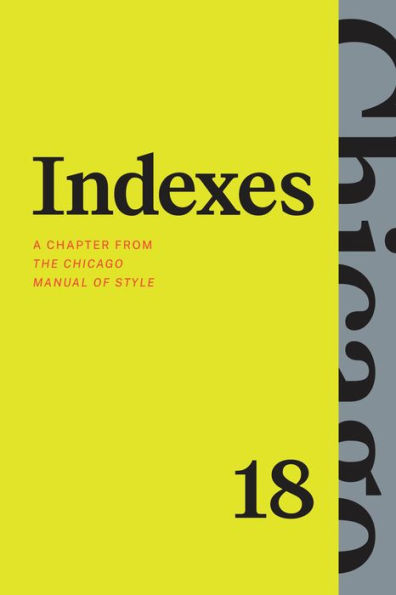
Indexes: A Chapter from "The Chicago Manual of Style," Eighteenth Edition
64Related collections and offers
18.99
In Stock

Product Details
| ISBN-13: | 9780226837697 |
|---|---|
| Publisher: | University of Chicago Press |
| Publication date: | 11/11/2024 |
| Sold by: | Barnes & Noble |
| Format: | eBook |
| Pages: | 64 |
| File size: | 366 KB |
About the Author
From the B&N Reads Blog