
This book examines Israel’s civil-military relations (CMR) in order to explore alternatives to orthodox Western models of security sector reform (SSR) in post-conflict societies.
This book argues that the guidelines of SSR have always tended to draw on theoretical work in the field of CMR and focus too heavily on Western, liberal democratic models of governance. Consequently, reform programs based on these guidelines, and intended for use in post-conflict and conflict-affected states, have had, at best, mixed results. The book challenges the necessity for this over-reliance on traditional Western liberal democratic solutions and instead advocates an alternative approach. It proposes that by drawing on an unconventional CMR model, that in turn references the specific context and cultural background of the particular state being subject to reform, there is a significantly higher chance of success. Drawing on a case study of Israel's CMR, the author seeks to provide practical assistance to those working in this area and considers the question of how this unorthodox CMR model might usefully inform post-conflict and conflict-affected SSR programmes.
This book will be of interest to students of military studies, security studies, Israeli politics, and International Relations.
This book examines Israel’s civil-military relations (CMR) in order to explore alternatives to orthodox Western models of security sector reform (SSR) in post-conflict societies.
This book argues that the guidelines of SSR have always tended to draw on theoretical work in the field of CMR and focus too heavily on Western, liberal democratic models of governance. Consequently, reform programs based on these guidelines, and intended for use in post-conflict and conflict-affected states, have had, at best, mixed results. The book challenges the necessity for this over-reliance on traditional Western liberal democratic solutions and instead advocates an alternative approach. It proposes that by drawing on an unconventional CMR model, that in turn references the specific context and cultural background of the particular state being subject to reform, there is a significantly higher chance of success. Drawing on a case study of Israel's CMR, the author seeks to provide practical assistance to those working in this area and considers the question of how this unorthodox CMR model might usefully inform post-conflict and conflict-affected SSR programmes.
This book will be of interest to students of military studies, security studies, Israeli politics, and International Relations.

Israel's Civil-Military Relations and Security Sector Reform: Lessons for Conflict-Affected Societies
190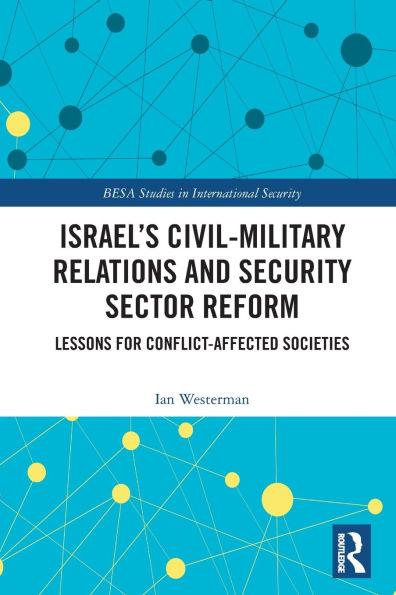
Israel's Civil-Military Relations and Security Sector Reform: Lessons for Conflict-Affected Societies
190
Product Details
| ISBN-13: | 9781032589152 |
|---|---|
| Publisher: | Taylor & Francis |
| Publication date: | 06/27/2025 |
| Series: | BESA Studies in International Security |
| Pages: | 190 |
| Product dimensions: | 6.12(w) x 9.19(h) x (d) |