- Shopping Bag ( 0 items )
Ships from: Aurora, IL
Usually ships in 1-2 business days
- •Standard, 48 States
- •Standard (AK, HI)
Ships from: Aurora, IL
Usually ships in 1-2 business days
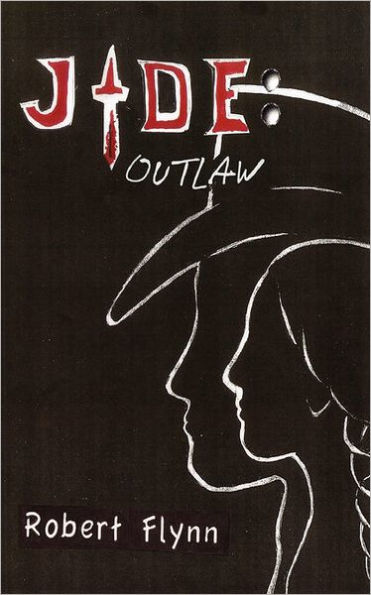
Award winning author Robert Flynn once again takes his readers on a journey to a past they can imagine through his words, with people that are hard to forget, in a story that could be set in a modern day war...or placed like it is...deep in the Old West.
robert_nagle
Posted April 5, 2012
I don’t normally read Westerns, but I’m a fan of this dark and brooding novel. It takes place in a Texas town beset by all kinds of disruptive forces. Towns are small, individuals are vulnerable to attack and robbery and there’s a lot friction between ethnic groups. The white man is outraged at how Indians attack settlers and steal their belongings. Indians are outraged by the heavy-handed way that the white man encroaches on their territory and retaliates for crimes committed by Indians from other tribes. Caught in the middle are farming families, Mexicans, merchants, drifters, religious people and people with multiple loyalties.
It’s a rough life that claims many casualties. This novel depicts many of these inhabitants, starting with a tough cowboy haunted by the memory of an Indian raid where he shoots his wife to prevent the Indians from getting to her first. He consoles himself that it had to be done — and other white woman agree –but after talking to Crow Poison, a white woman who used to be married to an Indian, he has to face the real possibility that the Indians wouldn’t have killed and molested his wife’s body after all. Was it possible that his murderous deed — though committed with the purest of motives — was ultimately a senseless act of destruction?
I wouldn’t call this a religious or even a spiritual novel, but the novel raises questions about what role religion can play (if any) in a society lacking order and a settled structure of governance. A preacher and his family live among the people to offer guidance and comfort and an upright example. But most of the transients and townspeople scoff at the preacher’s efforts. The preacher has dreams of mending relations between Indians and Americans, but he practically inhabits a war zone. For someone to intervene (either morally or physically) on behalf of the downtrodden is almost an invitation to self-destruction or martyrdom. The preacher preaches forgiveness and respect and charity, but in the open land, such currencies have no real value.
This remarkable novel provides a compelling panorama of Texas settlers in the late 19th century. I can’t speak of its historical accuracy, but the book is overflowing with details and slang (the slang is not too intrusive, and there is a helpful glossary at the end). My main complaint is more formal than thematic. The book throws out so many minor characters and backstory that I got lost several times. Gradually it becomes possible to piece together the character’s personality during the novel — but it takes a while.
Why should people be reading this kind of novel today? Surely society today is nowhere as dangerous as Jade’s world. The novel asks important questions. How do you enforce a moral code? How can people learn to suppress the thirst for vengeance when pursuing justice? What kinds of actions can we forgive in a loved one? How do peacemakers bridge the barriers between groups of people who deny the other’s humanity?
The end hints at a sequel, and indeed, Flynn wrote one called Jade: The Law. I’m hoping that the second novel will offer less violence and more time to focus on the ordinary (and less stressful) part of people’s lives. Jade: Outlaw has a few lighter moments, but for the most part it depicts humans in a precarious state who are beset by anxiety and sadness. Great writing, yes, but when (and how) will the inhabitants find peace and contentment?
Anonymous
Posted January 13, 2011
This is a wonderful book. Here's why--the characterization and the stories take place in the past, but the people and the issues are also contemporary. Though it's technically a "Western," it's really a book for everybody. All the timeless and universal themes are there--love, power, theology, multiculturalism, community, and the stories are told in a way that you can't put the book down. I highly recommend this book.
Was this review helpful? Yes NoThank you for your feedback. Report this reviewThank you, this review has been flagged.Anonymous
Posted December 12, 2010
No text was provided for this review.