- Shopping Bag ( 0 items )
Born to aristocratic parents in the English countryside, young Jane Parker found a suitable match in George Boleyn, brother to Anne, the woman who would eventually be the touchstone of England’s greatest political and religious crisis. Once settled in the bustling, spectacular court of Henry VIII as the wife of a nobleman, Jane was privy to the regal festivities of masques and jousts, royal births and funerals, and she played an intimate part in the drama and gossip that swirled around the king’s court.
But it was Anne Boleyn’s descent from palace to prison that first thrust Jane into the spotlight. Impatient with Anne’s inability to produce a male heir, King Henry accused the queen of treason and adultery with a multitude of men, including her own brother, George. Jane was among those interrogated in the scandal, and following two swift strokes from the executioner’s blade, she lost her husband and her sister-in-law, her inheritance and her place in court society.
Now the thirty-year-old widow of a traitor, Jane had to ensure her survival and protect her own interests by securing land and income. With sheer determination, she navigated her way back into royal favor by becoming lady-in-waiting to Henry’s three subsequent brides, Jane Seymour, Anne of Cleves, and Catherine Howard. At last Jane’s future seemed secure–until an unwitting misstep involving the sexual intrigues of young Queen Catherine destroyed the life and reputation Jane worked so hard to rebuild.
Drawing upon her own deep knowledge and years of original research, Julia Fox brings us into the inner sanctum of court life, laced with intrigue and encumbered by disgrace. Through the eyes and ears of Jane Boleyn, we witness the myriad players of the stormy Tudor period. Jane emerges as a courageous spirit, a modern woman forced by circumstances to fend for herself in a privileged but vicious world.
Historian Fox does an admirable job relating the life of Jane Boleyn (née Parker), sister-in-law to Anne Boleyn. Jane was expected to lead the usual life of a noble, but she too ended up a participant in extraordinary historical events. She began her time in Henry VIII's court as a lady-in-waiting to his first wife, Katherine of Aragon, and ultimately would be lady-in-waiting to five of Henry's wives. Fox's detailed descriptions of the extravagance, arrogance, and dangerous political maneuvers of the Tudor court help readers understand how Jane's "addiction" to court life began and led to her downfall. Her infamous reputation as the woman whose accusations aided the executions of her husband, George Boleyn, and his sister Anne is undeserved and was fabricated during the reign of Elizabeth I, according to Fox. But Fox confirms Jane's culpability in aiding Catherine Howard in her extramarital affair, which led to the execution of both women. Family trees of the Parkers, the Boleyns, and the Howards are included along with notes and a bibliography. This would make an exceptional reading group selection. Recommended for academic and public libraries. (Index not seen.) [The finished book will refer readers to a conversation with the author, posted online.-Ed.]
—Tonya Briggs
Excerpted from Jane Boleyn by Julia Fox Copyright © 2007 by Julia Fox. Excerpted by permission.
All rights reserved. No part of this excerpt may be reproduced or reprinted without permission in writing from the publisher.
Excerpts are provided by Dial-A-Book Inc. solely for the personal use of visitors to this web site.
1. When Julia Fox started this book she knew that she might challenge established views about Jane Boleyn. Did you come to the book with any preconceived views about Jane, and if so, what were they?
2. Although no one during Jane’s lifetime suggested she gave the fatal evidence that condemned Anne and George Boleyn—and handwritten originals of sixteenth-century sources prove that she did not do so—the idea that she betrayed them has crept into popular culture and has persisted. One of Fox’s aims was to question this mistaken idea by tracing this belief back through the centuries to its origin in Elizabeth’s reign. Did you find the research Fox outlined in her Epiloguen convincing?
3. Fox’s book is based on her study of Tudor documents in their original form. She says that some of her most thrilling moments while researching Jane Boleyn came from holding in her hand documents that had once been, almost five hundred years ago, in the hands of Henry VIII,Wolsey, the Boleyns, and Jane herself.What aspect of historical research do you think you would find the most thrilling?
4. One of Fox’s finds was a previously forgotten document in an English country record office that lists the terms of Jane’s marriage settlement. It reflects the trouble that she had prying a satisfactory income from her in-laws should her husband die.What light do you feel this sheds on Jane’s conduct when George was arrested?
5. One problem facing Fox was that she could not prove that Jane was present at certain events, even if she felt sure of it in her own mind, because the names of only the most important figures there wererecorded. This meant that the author used such stratagems as “probably” or “most likely.” Do you think that she was right to be such a stickler for accuracy or do you feel that she should have been more willing to commit herself?
6. Do you feel that Fox’s explanation of how Jane Boleyn became involved in Catherine Howard’s escapades rings true? Can you suggest any other explanation?
7. Did you have any sympathy for Anne Boleyn as she faced the executioner’s sword that May morning in 1536, or with Catherine Howard as she picked her way across the icy cobbles of the Tower to meet a similar death a few years later? Did you feel that, within the context of their time, either deserved her fate?
8. What light do you think the book sheds on the role of women within the prevailing culture of Henry VIII’s England?
9. When Henry VIII became king he was a handsome, generous, and talented youth. By the time he died, Fox believes, he had become a monster with little regard for the law or for human life. Do you feel that she has painted too dark a picture of Henry?
10. The Tudors are perennially popular subjects for films, TV series, and historical fiction. Do you think that this blurring of fact and fiction is good or bad for understanding history?
1. When Julia Fox started this book she knew that she might challenge established views about Jane Boleyn. Did you come to the book with any preconceived views about Jane, and if so, what were they?
2. Although no one during Jane's lifetime suggested she gave the fatal evidence that condemned Anne and George Boleyn-and handwritten originals of sixteenth-century sources prove that she did not do so-the idea that she betrayed them has crept into popular culture and has persisted. One of Fox's aims was to question this mistaken idea by tracing this belief back through the centuries to its origin in Elizabeth's reign. Did you find the research Fox outlined in her Epilogue convincing?
3. Fox's book is based on her study of Tudor documents in their original form. She says that some of her most thrilling moments while researching Jane Boleyn came from holding in her hand documents that had once been, almost five hundred years ago, in the hands of Henry VIII,Wolsey, the Boleyns, and Jane herself.What aspect of historical research do you think you would find the most thrilling?
4. One of Fox's finds was a previously forgotten document in an English country record office that lists the terms of Jane's marriage settlement. It reflects the trouble that she had prying a satisfactory income from her in-laws should her husband die.What light do you feel this sheds on Jane's conduct when George was arrested?
5. One problem facing Fox was that she could not prove that Jane was present at certain events, even if she felt sure of it in her own mind, because the names of only the most important figures there were recorded. This meant that the author used such stratagems as “probably” or “most likely.” Do you think that she was right to be such a stickler for accuracy or do you feel that she should have been more willing to commit herself?
6. Do you feel that Fox's explanation of how Jane Boleyn became involved in Catherine Howard's escapades rings true? Can you suggest any other explanation?
7. Did you have any sympathy for Anne Boleyn as she faced the executioner's sword that May morning in 1536, or with Catherine Howard as she picked her way across the icy cobbles of the Tower to meet a similar death a few years later? Did you feel that, within the context of their time, either deserved her fate?
8. What light do you think the book sheds on the role of women within the prevailing culture of Henry VIII's England?
9. When Henry VIII became king he was a handsome, generous, and talented youth. By the time he died, Fox believes, he had become a monster with little regard for the law or for human life. Do you feel that she has painted too dark a picture of Henry?
10. The Tudors are perennially popular subjects for films, TV series, and historical fiction. Do you think that this blurring of fact and fiction is good or bad for understanding history?
Anonymous
Posted January 25, 2008
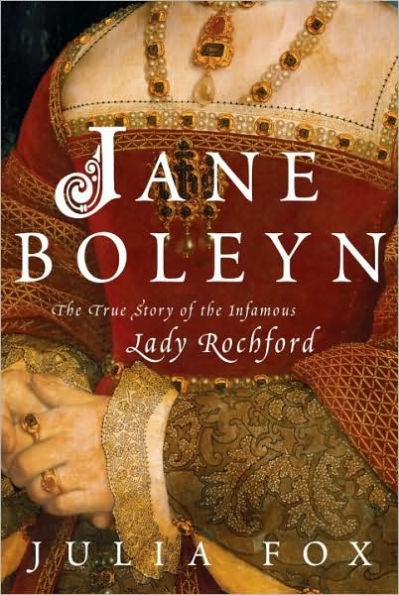
Although this book is a very well-researched historical account of Henry VIII's court during Jane Boleyn's lifetime, I bought this book hoping to find out more about, well, Jane. This is more of a general history of the time period rather than a biography. It contains few biographical details until the very end, although it does provide rich insight into the lives of Henry VIII's wives. In the afterword, Fox wrote that she started out writing a book about Henry's wives, and clearly, she had done a great amount of research, which she poured into her book about Jane Boleyn, essentially writing a book about the six wives despite her intention to write about Jane Boleyn. There is no characterization the Jane Boleyn of Fox's book is flat and unreadable. Fox claims to be writing a vindication of Jane's poor reputation, yet provides scant and weak research that leaves Jane's true character ambiguous. But the question that puzzles me most is: Why is Jane Seymour on the cover?
3 out of 3 people found this review helpful.
Was this review helpful? Yes NoThank you for your feedback. Report this reviewThank you, this review has been flagged.I found this book to be intriguing and felt it offered a different perspective on Jane Rochford. History has alwats protrayed her as an evil traitor, but this book suggests that she was just as much a victum o Henry VIII as her relatives. The book dragged a bit in the middle, but overall an interesting historical perspective.
1 out of 1 people found this review helpful.
Was this review helpful? Yes NoThank you for your feedback. Report this reviewThank you, this review has been flagged.Anonymous
Posted April 12, 2008
This book was a HUGE disappointment. Not only was it slow and tedious, but we already KNOW that there is little to nothing known about Jane parker. Everything in here is pure speculation, and ridiculous speculation, at that. The other thing I think that bothers me more, if that's possible, is that the cover of this book is Jane Seymour. WHY? Not worth it. Friends of mine have attempted to read it and have had to put it down. Ughh...Ms. Fox, sorry, but this as your debut book??? Disappointing.
1 out of 1 people found this review helpful.
Was this review helpful? Yes NoThank you for your feedback. Report this reviewThank you, this review has been flagged.Anonymous
Posted January 14, 2008
While this book claims to tell the 'true' story of Jane Boleyn, it actually gives us no more insight about her than the little we already knew. The author gives us a quick, not always accurate, reading through Tudor marriage history, with many 'Jane should have been there,' and 'Jane might have been there' with no historical documentation beyond the stories of the major characters that were already well-known. It is minutely researched so that we know how many shillings were spent on each dress, and how many yards of cloth were allotted to each of the Queen's ladies, but almost everything written about Jane herself is pure speculation. Very disappointing.
1 out of 1 people found this review helpful.
Was this review helpful? Yes NoThank you for your feedback. Report this reviewThank you, this review has been flagged.Julia Fox tries to seperate what the reader may already know about Jane Parker from what is truely known about her. Jane Parker has forever been known throughout history as manipulative sneak who sent her husband, sister-in-law and others to be beheaded for allegations that were completely unfounded and drudged up by a king wanting a new wife.
Jane Parker is infamous for horrible deeds she probably never did. I thought Julia Fox did a wonderful job giving the reader an thorough overview of what was going on at that time, and pulling apart what Jane would and wouldn't have been able to see or do. Trying to give the reader a thorough understanding of what would be expected of Jane in a family clawing and scheming their way to the top of a social ladder, Julia does a wonderful job of showing just how difficult it must have been being in the middle of the malicious Boleyn family, who would throw any one of each other under the bus to save their own lands and head.
While it does read slowly, anyone with a love for the Tudor time period, I think, would thoroughly enjoy the events shown through a different view. It's very easy to fall in love with Anne, George or Mary Boleyn through all the stories written about them, but seeing the story through Jane's eyes changes your perspective drastically on what it must have been like to be there.
5809949
Posted August 22, 2011
I love reading about the tudor period and was anxious to read this. Of course its not really about jane boleyn persay. Its more about what was occuring at the time, the authir throws in stuff like " jane would have seen this" to tie her in to the story which is just historical fact written like a term paper. Since it is on a subject i enjoy im not entirely disappointed, just unsatisfied since the title is so misleading.
Was this review helpful? Yes NoThank you for your feedback. Report this reviewThank you, this review has been flagged.JCRobin
Posted August 4, 2011
I've read books about all the characters surrounding Jane Boleyn but
couldn't get through this VERY BORING book about one of the protagonists
in King Henry VIII's court!
I found this story to a bit disappointing. Since I've been reading plenty of Philippa Gregory novels of the Tudors and other Tudor tales that I was interested in know more about these real characters. So I decided to borrow this audio book from the library. The narration wasn't quite bad, nor excellent either. As for the story it had little explanation about Jane Boleyn's relationship with her husband or of Anne Boleyn. Only about where she was than & what she felt. Which wasn't so enthralling, I just felt that the author could have done more research of the Tudor history. That's just my opinion. This is the first novel of Julia Fox that I've read.
Was this review helpful? Yes NoThank you for your feedback. Report this reviewThank you, this review has been flagged.Melroch
Posted February 23, 2011
As an avid fan of the Tudor period, I strongly recommend this book to others who wish to read an account of the court so wonderfully tied together from letters, books, accounts, and other primary resources. I looked forward to the times that I could sit down to read the book. There is so much information in here on the people of the court including those who were on the sidelines. Though not a historical fiction novel, it still kept me interested in what was going to happen next even though I know the history. Wonderful book to add to your collection of history books or even to a collection of historical fiction from this time period.
Was this review helpful? Yes NoThank you for your feedback. Report this reviewThank you, this review has been flagged.cdcMT
Posted May 3, 2010
Very good book. Once started I could barely put it down. The incredible intrigue and every day life in the court of King Henry VIII is brought to life with every nuance imaginable. One can almost be transported back in time to the age of elegance and beauty in the court itself. Captivating read! Loved it!
Was this review helpful? Yes NoThank you for your feedback. Report this reviewThank you, this review has been flagged.Jane lived in Henry VIII's court, so he naturally permeates the story. However, Julia Fox is writing about Jane Parker and her Boleyn and Howard relatives. The entire book fascinated me. The parts where Anne Boleyn was executed, and where Jane was executed were a bit depressing.
Was this review helpful? Yes NoThank you for your feedback. Report this reviewThank you, this review has been flagged.SarahT
Posted November 12, 2009
Suffers somewhat from a paucity of documentation written by or about Jane Boleyn in her early years, but presents viable scenarios throughout. I found some of the writing regarding how Jane "must have felt" a bit speculative. Overall, a good read, but take some of the assertions with a grain of salt.
Was this review helpful? Yes NoThank you for your feedback. Report this reviewThank you, this review has been flagged.The book was well balanced and written. For a biography it is a very easy read. I have read every book I can on Anne Boleyn and Elizabeth and this one had a lot of information I had not seen before. There was no judgement in the writing, just a layout of the facts as we can find them. Thank you for a great book.
Was this review helpful? Yes NoThank you for your feedback. Report this reviewThank you, this review has been flagged.When I first read this book, I was just looking for an absorbing read. I indeed found one. Although not focused entirely on Jane Boleyn, it was very good at portraying England at the time of Henry VIII. I found that by reading this book, I was able to make connections and better understand what I was taking in when reading books about the same time period. Though a little monotonous in some parts, I would recommend Jane Boleyn to someone looking to find out more about Henry VIII and his wives, not just Jane Boleyn.
Was this review helpful? Yes NoThank you for your feedback. Report this reviewThank you, this review has been flagged.GabbysMommy
Posted May 16, 2009
I was really looking forward to finding out more about this interesting woman, however this book greatly disappointed me there. I am about halfway through and am debating whether to finish it or not. Most of the book so far has been about King Henry VIII and Anne Boleyn (all information I already knew) with unimpotant mentions of Jane Boleyn thrown in, much of which is only speculation, such as she MAY have been at such and such an event!
Not impressed.
Anonymous
Posted September 7, 2009
No text was provided for this review.
Anonymous
Posted November 30, 2011
No text was provided for this review.
Anonymous
Posted August 2, 2010
No text was provided for this review.
Anonymous
Posted October 7, 2011
No text was provided for this review.
Anonymous
Posted May 5, 2010
No text was provided for this review.
Overview
In a life of extraordinary drama, Jane Boleyn was catapulted from relative obscurity to the inner circle of King Henry VIII. As powerful men and women around her became victims of Henry’s ruthless and absolute power, including her own husband and sister-in-law, Queen Anne Boleyn, Jane’s allegiance to the volatile monarchy was sustained and rewarded. But the price for her loyalty would eventually be her undoing and the ruination of her name. For centuries, little beyond rumor and scandal has been associated with “the infamous Lady Rochford.” But now historian Julia Fox sets the record straight and restores dignity to this much-maligned figure whose life and reputation were taken from her. ...