- Shopping Bag ( 0 items )
Available on NOOK devices and apps
Want a NOOK? Explore Now
Kingdom of Shadows begins in March of 1938 and ends during the summer of 1939, a period of uneasy "peace" in which national boundaries shift overnight, political alliances are forged and broken, anti-Semitic sentiments proliferate, and the armies of Europe mobilize for war. Significant events from this period -- all of them part of the fabric of this book -- include Hitler's annexation of Austria, the German occupation of Czechoslovakia, and the nonaggression pact between Stalin and Hitler, a pact that paves the way for the invasion of Poland and the formal beginning of the war.
Furst shows us these events from the partisan perspective of his deeply sympathetic hero, Nicholas Morath, a Hungarian aristocrat living in exile in Paris. Morath, on the surface, is an unlikely sort of hero. Part owner of a successful advertising agency, he cultivates the appearance of a bon vivant and ladies' man born to a life of privilege. Beneath that surface, he is a committed anti-Fascist, a decorated war hero, and a true descendant of his Magyar ancestors. Following the directives of his wealthy, enigmatic uncle, Count Janos Polanyi, Morath travels from his home in Paris to the trouble spots of Europe, gathering information, collecting money from anti-Nazi sympathizers, doing "favors" for influential friends, and putting himself repeatedly in harm's way.
Morath's adventures form the substance of this plotless, peripatetic novel, and they take him from the mountain fortresses of Czechoslovakia to a Romanian prison, from the aristocratic enclaves of Budapest to the decadent environs of Nazi-dominated Vienna. Together, they illuminate the changing face of a world sliding rapidly into chaos and night. They also illuminate the essential nature of Morath himself, a complex, romantic, thoroughly admirable figure who has dedicated his life to the destruction of National Socialism.
Furst has been compared to a great many writers -- Eric Ambler, Graham Greene, John le Carré -- but none of these comparisons seem particularly apt. Furst is very much his own man, and his six-volume cycle of war novels represents a unique achievement. At their best, as in Kingdom of Shadows, these books literally bring the past to life, resurrecting the sights, sounds, and tensions of a bygone world with passion, artistry, and scrupulous historical accuracy.
--Bill Sheehan
Bill Sheehan reviews horror, suspense, and science fiction for Cemetery Dance, The New York Review of Science Fiction, and other publications. His book-length critical study of the fiction of Peter Straub, At the Foot of the Story Tree, has recently been published by Subterranean Press (www.subterraneanpress.com).
1. How does Nicholas Morath's experience as a cavalry officer in World War I affect his behavior in this book?
2. During many of Morath's assignments, he acts with very limited knowledge--he knows what he is to do, but not why, or who is involved. His uncle, a diplomat at the Hungarian legation, does not tell him the full story. Why? Is his uncle morally right to do this? Is he right in any sense? How is this used as a plot device?
3. The first verse of the Hungarian national anthem, quotes in the epigraph of Kingdom of Shadows, speaks of a people "torn by misfortune," a nation that has "already paid for its sins." How is the tone of this national anthem different from that of other patriotic songs? What can you infer about the history of Hungary from its national anthem?
4. Critics praise Furst's ability to re-create the atmosphere of World War II-era Europe with great accuracy. What elements of description make the setting come alive? How can you account for the fact that the settings seem authentic even though you probably have no first-hand knowledge of the times and places he writes about?
5. Furst's novels have been described as "historical novels" and as "spy novels". He call them "historical spy novels." Some critics have insisted they are, simply, novels. How does his work compare with other spy novels you've read? What does he do that is the same? Different? If you owned a bookstore, in what section would you display his books?
6. Furst is often praised for his minor characters, which have been described as "sketched out in a few strokes." Do you have a favorite inthis book? Characters in Furst's books often take part in the action for a few pages and then disappear. What do you think becomes of them? And, if you know, how do you know? What in the book is guiding you toward that opinion?
7. At the end of an Alan Furst novel, the hero is always still alive. What becomes of Furst's heroes? Will they survive the war? Does Furst know what becomes of them? Would it be better if they were somewhere safe and sound, to live out the end of the war in comfort? If not, why not?
8. Love affairs are always prominent in Furst's novels, and "love in a time of war" is a recurring theme. Do you think these affairs might last, and lead to marriage and domesticity?
9. How do the notions of good and evil work in Kingdom of Shadows? Would you prefer a confrontation between villian and hero at the end of the book? Do you like Furst's use of realism in the novel?
1. How does Nicholas Morath's experience as a cavalry officer in World War I affect his behavior in this book?
2. During many of Morath's assignments, he acts with very limited knowledge--he knows what he is to do, but not why, or who is involved. His uncle, a diplomat at the Hungarian legation, does not tell him the full story. Why? Is his uncle morally right to do this? Is he right in any sense? How is this used as a plot device?
3. The first verse of the Hungarian national anthem, quotes in the epigraph of Kingdom of Shadows, speaks of a people "torn by misfortune," a nation that has "already paid for its sins." How is the tone of this national anthem different from that of other patriotic songs? What can you infer about the history of Hungary from its national anthem?
4. Critics praise Furst's ability to re-create the atmosphere of World War II-era Europe with great accuracy. What elements of description make the setting come alive? How can you account for the fact that the settings seem authentic even though you probably have no first-hand knowledge of the times and places he writes about?
5. Furst's novels have been described as "historical novels" and as "spy novels". He call them "historical spy novels." Some critics have insisted they are, simply, novels. How does his work compare with other spy novels you've read? What does he do that is the same? Different? If you owned a bookstore, in what section would you display his books?
6. Furst is often praised for his minor characters, which have been described as "sketched out in a few strokes." Do you have a favorite in this book? Characters in Furst's books often take part in the action for a few pages and then disappear. What do you think becomes of them? And, if you know, how do you know? What in the book is guiding you toward that opinion?
7. At the end of an Alan Furst novel, the hero is always still alive. What becomes of Furst's heroes? Will they survive the war? Does Furst know what becomes of them? Would it be better if they were somewhere safe and sound, to live out the end of the war in comfort? If not, why not?
8. Love affairs are always prominent in Furst's novels, and "love in a time of war" is a recurring theme. Do you think these affairs might last, and lead to marriage and domesticity?
9. How do the notions of good and evil work in Kingdom of Shadows? Would you prefer a confrontation between villian and hero at the end of the book? Do you like Furst's use of realism in the novel?
From the Trade Paperback edition.
Preserved-Killick
Posted July 19, 2011
Published just a year after his previous work, it seems like a brutally edited film. Furst's rich, dark prose is wonderfully intoxicating. But scenes cut from one to the next, jumping in time and place with zero transition, almost as though there wasn't time to waste on the interim. Still, the plot and the characters absorb and the read is satisfying, wistfully over too soon.
1 out of 1 people found this review helpful.
Was this review helpful? Yes NoThank you for your feedback. Report this reviewThank you, this review has been flagged.Anonymous
Posted May 12, 2012
Kingdom of Gardinia
Was this review helpful? Yes NoThank you for your feedback. Report this reviewThank you, this review has been flagged.Anonymous
Posted August 6, 2002
Didn't hit me as hard as Night Soldiers. Many subplots, a tiny bit difficult to follow, but not bad. Good use of suggestion. Interesting to have a fatalist in Paris - of course the period would have lent itself to that. As always, Furst's infusion of history makes the story a legitimate learning experience as well as an adventure.
Was this review helpful? Yes NoThank you for your feedback. Report this reviewThank you, this review has been flagged.Anonymous
Posted January 12, 2002
For those that like exciting spy novels similar to those of Eric Ambler, and in atmosphere similar to the movie Casablance, I highly recommend this novel. The worldwise hero, somewhat cynical, but in the end heroic, honorable and brave - a great character protrayal by Mr. Furst. I plan to read the rest of this series.
Was this review helpful? Yes NoThank you for your feedback. Report this reviewThank you, this review has been flagged.Anonymous
Posted January 26, 2001
fascinating romantic story of prewar bordercrossings by night. if you have lived yourself through those days, you are amazed at the authenticity of the many details, long forgotten, but brought back -heaven knows how- by the author.
Was this review helpful? Yes NoThank you for your feedback. Report this reviewThank you, this review has been flagged.Anonymous
Posted December 23, 2010
No text was provided for this review.
Anonymous
Posted May 23, 2010
No text was provided for this review.
Anonymous
Posted April 5, 2011
No text was provided for this review.
Anonymous
Posted June 18, 2011
No text was provided for this review.
Anonymous
Posted January 21, 2010
No text was provided for this review.
Anonymous
Posted May 15, 2010
No text was provided for this review.
Anonymous
Posted November 29, 2008
No text was provided for this review.
Anonymous
Posted May 24, 2010
No text was provided for this review.
Anonymous
Posted December 4, 2008
No text was provided for this review.
Anonymous
Posted December 6, 2010
No text was provided for this review.
Anonymous
Posted April 16, 2011
No text was provided for this review.
Anonymous
Posted March 21, 2012
No text was provided for this review.
Anonymous
Posted May 6, 2011
No text was provided for this review.
Anonymous
Posted February 5, 2011
No text was provided for this review.
Anonymous
Posted August 20, 2010
No text was provided for this review.
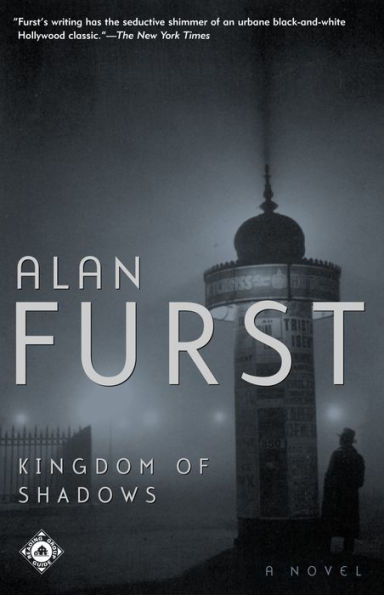
Overview
In spymaster Alan Furst's most electrifying thriller to date, Hungarian aristocrat Nicholas Morath—a hugely charismatic hero—becomes embroiled in a daring and perilous effort to halt the Nazi war machine in eastern Europe.From the Hardcover edition.