- Shopping Bag ( 0 items )
Available on NOOK devices and apps
Want a NOOK? Explore Now
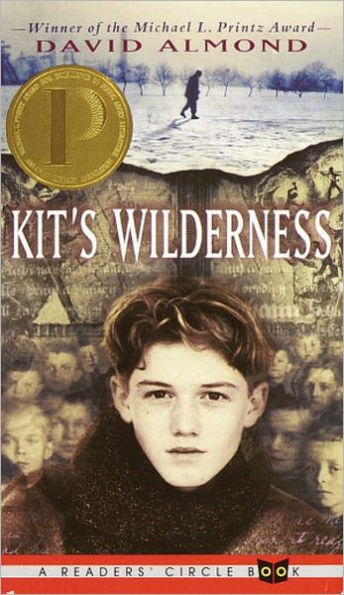
Thirteen-year-old Kit goes to live with his grandfather in the decaying coal mining town of Stoneygate, England, and finds both the old man and the town haunted by ghosts of the past.
When 13-year-old Christopher "Kit" Watson and his family pack up and move to the onetime coal-mining town of Stoneygate, it is to care for recently widowed Grandpa Watson. The move is a stressful one for Kit, who struggles to fit in with a new crowd of kids in this depressed, dying town. Plus, Grandpa isn't doing well; his health is deteriorating, and his mind seems prone to odd flights of fancy. Kit finds himself drawn toward two new friends: Alison Keenan, a flashy, bright young gal who is full of energy and life, and John Askew, a hulking, moody fellow who likes to play a game called Death. When Kit is picked as the next to "die" and left alone in a dark, abandoned mine shaft, he has an otherworldly experience that piques his curiosity about the mine's history and the past connections between his family and the Askews.
Kit discovers that generation after generation of his own family eked out an existence in the town's treacherous mines, including a 13-year-old boy named Christopher Watson, who died in the worst mine disaster on record. Another 13-year-old victim from that long-ago tragedy also bore a familiar name: John Askew. These ghosts from the past seem tied to their modern-day namesakes, connected by a thread of fate that stretches across generations. And suddenly Grandpa's crazy musings don't seem so crazy anymore. When John faces a crisis that threatens both his life and his family, the only person who knows how to help him is Kit. But it involves great risk, and Kit must choose between his own safety and that of his friend, a decision that will ultimately save and redeem them both.
Almond's prose has a mesmerizing lyrical quality that is deceptive in its simplicity. His underlying theme of magic -- both ordinary and profound -- and his blend of mystery and mysticism will likely appeal to young audiences who like their stories seasoned with powerful imagery and occasional ambiguity. Kit's Wilderness is a little spooky, a lot of fun, and utterly unforgettable.
--Beth Amos
In Stoneygate there was a wilderness. It was an empty space between the houses and the river, where the ancient pit, the mine, had been. That's where we played Askew's game, the game called Death. We used to gather at the school's gates after the bell had rung. We stood there whispering and giggling. After five minutes, Bobby Carr told us it was time and he led us through the wilderness to Askew's den, a deep hole dug into the earth with old doors slung across it as an entrance and a roof. The place was hidden from the school and from the houses of Stoneygate by the slope and by the tall grasses growing around it. The wild dog Jax waited for us there. When Jax began to growl, Askew drew one of the doors aside. He looked out at us, checked the faces, called us down.
We stumbled one by one down the crumbling steps. We crouched against the walls. The floor was hard-packed clay. Candles burned in niches in the walls. There was a heap of bones in a corner. Askew told us they were human bones, discovered when he'd dug this place. There was a blackened ditch where a fire burned in winter. The den was lined with dried mud. Askew had carved pictures of us all, of animals, of the dogs and cats we owned, of the wild dog Jax, of imagined monsters and demons, of the gates of Heaven and the snapping jaws of Hell. He wrote into the walls the names of all of us who'd died in there. My friend Allie Keenan sat across the den from me. The blankness in her eyes said: You're on your own down here.
Askew wore black jeans, black sneakers, a black T-shirt with "Megadeth" in white across it. He lit a cigarette and passed it round the ring. He passed around a jug of water that he said was special water, collected from a spring that had its source in the blocked-up tunnels of the ancient coal mine far below. He crouched at the center, sharpening his sheath knife on a stone. His dark hair tumbled across his eyes, his pale face flickered in the candlelight.
"You have come into this ancient place to play the game called Death," he whispered.
He laid the knife at the center on a square of glass. He eyed us all. We chewed our lips, held our breath, our hearts thudded. Sometimes a squeak of fear from someone, sometimes a stifled snigger.
"Whose turn is it to die?" he whispered.
He spun the knife.
We chanted, "Death Death Death Death . . ."
And then the knife stopped, pointing at the player.
The player had to reach out, to take Askew's hand. Askew drew him from the fringes to the center.
"There will be a death this day," said Askew.
The player had to kneel before Askew, then crouch on all fours. He had to breathe deeply and slowly, then quickly and more quickly still. He had to lift his head and stare into Askew's eyes. Askew held the knife before his face.
"Do you abandon life?" said Askew.
"I abandon life."
"Do you truly wish to die?"
"I truly wish to die."
Askew held his shoulder. He whispered gently into his ear, then with his thumb and index finger he closed the player's eyes and said, "This is Death."
And the player fell to the floor, dead still, while the rest of us gathered in a ring around him.
"Rest in peace," said Askew.
"Rest in peace," said all of us.
Then Askew slid the door aside and we climbed out into the light. Askew came out last. He slid the door back into place, leaving the dead one in the dark.
We lay together in the long grass, in the sunlight, by the shining river.
Askew crouched apart from us, smoking a cigarette, hunched over, sunk in his gloom.
We waited for the dead one to come back.
Sometimes the dead came quickly back to us. Sometimes it took an age, and on those days our whispering and sniggering came to an end. We glanced nervously at each other, chewed our nails. As time went on, the more nervous ones lifted their schoolbags, glanced fearfully at Askew, set off singly or in pairs toward home. Sometimes we whispered of sliding the door back in order to check on our friend down there, but Askew, without turning to us, would snap,
"No. Death has its own time. Wake him now and all he'll know forever after is a waking death."
So we waited, in silence and dread. In the end, everyone came back. We saw at last the white fingers gripping the door from below. The door slid back. The player scrambled out. He blinked in the light, stared at us. He grinned sheepishly, or stared in amazement, as if emerged from an astounding dream.
Askew didn't move.
"Resurrection, eh?" he murmured. He laughed dryly to himself.
We gathered around the dead one.
"What was it like?" we whispered. "What was it like?"
We left Askew hunched there by the river, strolled back together through the wilderness with the dead one in our midst.
From the Paperback edition.
1. When Kit and his friends play the game they call "Death," they claim they can see the ghosts of children killed in the mine. Are the ghosts that Kit and his friends see real?
2. What do you think makes John Askew, Kit, and Kit's grandfather able to see ghosts?
3. David Almond calls this book Kit's Wilderness. Why? What is Kit's "wilderness"
4. While studying the Ice Age in school, Kit and his classmates are asked to write a story about a young caveman called Lak. How is Kit's own life similar to the story he writes about Lak? How is it different?
5. What is "the pit" What do you think it represents?
6. The author sets the story in wintertime. How do the physical landscape and season reflect the characters' emotional landscapes and states of mind?
7. Despite his fading memory, Kit's grandfather is always able to recognize Allie. Why? What might she represent for him? What might she represent in the story?
8. When Kit's grandfather gives him treasures from the mine, fossils from the ancient past, Kit slips the ammonite into his pocket and tells himself, "I'd keep it with me always now. A treasure from my grandfather. A gift from the deep, dark past." What other "gifts" does his grandfather bestow upon Kit?
9. John Askew is perceived as a no-good troublemaker by the townspeople. Is he really as bad as everyone thinks he is? In what ways is he darker? In what ways is he lighter?
10. What is the role of storytelling in Kit's Wilderness? How is storytelling used throughout the novel and in what different ways?
1. When Kit and his friends play the game they call "Death, " they claim they can see the ghosts of children killed in the mine. Are the ghosts that Kit and his friends see real?
2. What do you think makes John Askew, Kit, and Kit's grandfather able to see ghosts?
3. David Almond calls this book Kit's Wilderness. Why? What is Kit's "wilderness"?
4. While studying the Ice Age in school, Kit and his classmates are asked to write a story about a young caveman called Lak. How is Kit's own life similar to the story he writes about Lak? How is it different?
5. What is "the pit"? What do you think it represents?
6. The author sets the story in wintertime. How do the physical landscape and season reflect the characters' emotional landscapes and states of mind?
7. Despite his fading memory, Kit's grandfather is always able to recognize Allie. Why? What might she represent for him? What might she represent in the story?
8. When Kit's grandfather gives him treasures from the mine, fossils from the ancient past, Kit slips the ammonite into his pocket and tells himself, "I'd keep it with me always now. A treasure from my grandfather. A gift from the deep, dark past." What other "gifts" does his grandfather bestow upon Kit?
9. John Askew is perceived as a no-good troublemaker by the townspeople. Is he really as bad as everyone thinks he is? In what ways is he darker? In what ways is he lighter?
10. What is the role of storytelling in Kit's Wilderness? How is storytelling used throughout the novel and in what different ways?
Anonymous
Posted January 27, 2007
i am a twelve year old and i hate reading but wen i was told i had to get a book i didn't until the last minuit and i just randomly picked a book and it was Kit's Wilderness. at first i thought it was just like all the other boring books i've read before but wen i started reading it i couldn't stop and my friends thought i was sick or somthing but i ended up reading it in about two days and loved the whole thing.
Was this review helpful? Yes NoThank you for your feedback. Report this reviewThank you, this review has been flagged.Anonymous
Posted September 7, 2006
I was about twelve or thirteen when I first read this book. I was in a reading club and it was assigned to me. I've been smitten ever since. I simply fell in love with Kit's Wilderness! I didn't quite understand the story when I first read it, but for some reason, I loved it anyway. It was so strange and chilling and foreign. So beautifully written. I would definitely recommend this book to any and all avid readers.
Was this review helpful? Yes NoThank you for your feedback. Report this reviewThank you, this review has been flagged.Anonymous
Posted January 29, 2005
I hated this really confusing book. I do not think it suited my age when i read it(about 12) and i do not understand why anyone would enjoy it
Was this review helpful? Yes NoThank you for your feedback. Report this reviewThank you, this review has been flagged.Anonymous
Posted July 8, 2003
this book was really good, but it was also really wierd. it wasn't weird in a bad way though. it was really thought provoking. good read.
Was this review helpful? Yes NoThank you for your feedback. Report this reviewThank you, this review has been flagged.Anonymous
Posted May 29, 2002
I think Almond does great things when mixing good vs. evil.He has a twist with all the charecters interacting with eachother in one way or another.
Was this review helpful? Yes NoThank you for your feedback. Report this reviewThank you, this review has been flagged.Anonymous
Posted June 4, 2002
david almond is a fantastic writer, i particularly enjoyed his bk 'skellig'. all his bks make u think and consider the world. read it or else.
Was this review helpful? Yes NoThank you for your feedback. Report this reviewThank you, this review has been flagged.Anonymous
Posted December 1, 2001
David Almond has outdone himself. The situation is both magical and believable. The relationships and characters ring true. This is an extraordinary, powerful book
Was this review helpful? Yes NoThank you for your feedback. Report this reviewThank you, this review has been flagged.Anonymous
Posted December 13, 2001
This is a great book for kids anywhere from ages 12-15. Although the book is often dark and sometimes frightening, it is a challenge I am glad I took. I couldn't put the book down it was so great. I would definetly put it in my top book list. If you're interested in the paranormal, or an interesting point of view on a historical coal mining town, you don't want to miss this book!
Was this review helpful? Yes NoThank you for your feedback. Report this reviewThank you, this review has been flagged.Anonymous
Posted November 17, 2001
I thought Kit's Wilderness was a great book. I love how David Almond described eveything so clearly and the characters were just so different from eachother and interesting. Iread the whole book in two days because I couldn't put it down. It was great. I would recommed it to everybody, you have to read it.
Was this review helpful? Yes NoThank you for your feedback. Report this reviewThank you, this review has been flagged.Anonymous
Posted January 11, 2002
I just read Kit's Wilderness in English class and it was a great book! I couldn't put it down! It has that suspense in it that makes you want to keep reading it. I read it in class with the tape and I think the man who read it to my class did an excellent job.
Was this review helpful? Yes NoThank you for your feedback. Report this reviewThank you, this review has been flagged.Anonymous
Posted September 21, 2001
This book relates to me. I love to write stories just like Kit. When I read about the game called Death, I wanted to play it like Kit. I've always loved to be scared. I've always been drawn into the darkness. I also felt myself being drawn to John. I love this book! It kept me awake at night, with my mind wirling. Anybody who reads this reveiw, the onlt thing I have to say to you is, you made a fine choice with Kit's Wilderness.
Was this review helpful? Yes NoThank you for your feedback. Report this reviewThank you, this review has been flagged.Anonymous
Posted May 19, 2001
This book was a thriller,I couldn't put it down.I felt myself at the brink of tears at times and laughter at others.I felt like I was one of his charicters b/c she did seem alot like myself.All in all a great book!
Was this review helpful? Yes NoThank you for your feedback. Report this reviewThank you, this review has been flagged.Anonymous
Posted March 25, 2001
My thoughts on this book was that it was one of those stories that you wouldn't mind reading over and over again. I beleive that Almond did a good job of putting himself in the position of a 13 yaer old boy who thinks of the dark past. I would recomend it to anyone who loves to read a book with mystery and with supernatural things. This story is filled with ghosts of the children who seem to haunt the world Kit is in.
Was this review helpful? Yes NoThank you for your feedback. Report this reviewThank you, this review has been flagged.Anonymous
Posted December 25, 2010
No text was provided for this review.
Anonymous
Posted August 8, 2011
No text was provided for this review.
Anonymous
Posted February 7, 2010
No text was provided for this review.
Anonymous
Posted November 13, 2009
No text was provided for this review.
Overview
The Watson family moves to Stoneygate, an old coal-mining town, to care for Kit’s recently widowed grandfather. When Kit meets John Askew, another boy whose family had both worked and died in the mines, Askew invites Kit to join him in playing a game called Death. Kit’s association with Askew takes him into the mines where the boys look to find the childhood ghosts of their long-gone ancestors.Thirteen-year-old Kit goes to live with his grandfather in the decaying coal mining town of Stoneygate, England, and finds both the old man and the town haunted by ghosts of the past.