
Ludic Feminism and After: Postmodernism, Desire, and Labor in Late Capitalism
Following the equal-rights struggles of the 1960s, feminism became involved in the theoretical problems posed by poststructuralism, psychoanalysis, semiotics, queer theory, postcolonialism, and Marxism. After years of debate about whether feminism can or should accommodate these other modes of contemporary thought, Ludic Feminism and After provides a way of making a leap forward. Teresa Ebert rethinks such notions as "pleasure," "essentialism," "performance," "labor," "class," "body," and "difference" through readings of influential texts by feminists such as Gayatri Spivak, Rigoberta Mench, Donna Haraway, Jane Gallop, Judith Butler, Diana Fuss, and Teresa de Lauretis. She not only engages the theories of Derrida, Foucault, Lyotard, and Baudrillard, but also moves beyond the academic arena to address the "backlash" phenomenon and the writings of "popular" critics like Camille Paglia. Ebert argues that the crisis of feminist theory in postmodernity is about the very meaning of politics and the possibility for effective social change. The future of feminism and feminist theory, believes Ebert, lies in reclaiming radical knowledge(s) that have been obscured by what she calls "ludic theory": the branch of postmodernism that sees politics primarily as a linguistic and textual practice, and focuses on subverting cultural representations of difference. She argues instead for the possibilities of a "resistance postmodernism" in feminism: theory grounded in the social struggle over the "material differences" of labor and access to economic means and resources. Ebert's provocative and powerful book challenges ludic feminism within the academy, and outlines transformative politics and feminist theory that can address material crises, such as the international trade in young women for prostitution, dowry murders in India, and the genocidal rape in Bosnia. The author seeks to go beyond dominant theories to open a radically new space for an active third wave feminism. Ludic Feminism and After is sure to be influential and controversial.
1114514673
Ludic Feminism and After: Postmodernism, Desire, and Labor in Late Capitalism
Following the equal-rights struggles of the 1960s, feminism became involved in the theoretical problems posed by poststructuralism, psychoanalysis, semiotics, queer theory, postcolonialism, and Marxism. After years of debate about whether feminism can or should accommodate these other modes of contemporary thought, Ludic Feminism and After provides a way of making a leap forward. Teresa Ebert rethinks such notions as "pleasure," "essentialism," "performance," "labor," "class," "body," and "difference" through readings of influential texts by feminists such as Gayatri Spivak, Rigoberta Mench, Donna Haraway, Jane Gallop, Judith Butler, Diana Fuss, and Teresa de Lauretis. She not only engages the theories of Derrida, Foucault, Lyotard, and Baudrillard, but also moves beyond the academic arena to address the "backlash" phenomenon and the writings of "popular" critics like Camille Paglia. Ebert argues that the crisis of feminist theory in postmodernity is about the very meaning of politics and the possibility for effective social change. The future of feminism and feminist theory, believes Ebert, lies in reclaiming radical knowledge(s) that have been obscured by what she calls "ludic theory": the branch of postmodernism that sees politics primarily as a linguistic and textual practice, and focuses on subverting cultural representations of difference. She argues instead for the possibilities of a "resistance postmodernism" in feminism: theory grounded in the social struggle over the "material differences" of labor and access to economic means and resources. Ebert's provocative and powerful book challenges ludic feminism within the academy, and outlines transformative politics and feminist theory that can address material crises, such as the international trade in young women for prostitution, dowry murders in India, and the genocidal rape in Bosnia. The author seeks to go beyond dominant theories to open a radically new space for an active third wave feminism. Ludic Feminism and After is sure to be influential and controversial.
50.0
Pre Order
5
1

Ludic Feminism and After: Postmodernism, Desire, and Labor in Late Capitalism
352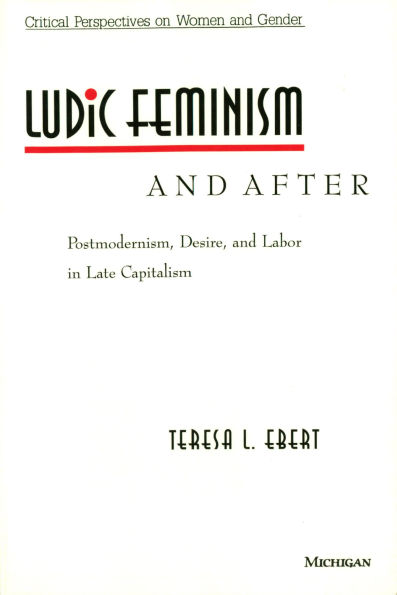
Ludic Feminism and After: Postmodernism, Desire, and Labor in Late Capitalism
352
50.0
Pre Order

Product Details
| ISBN-13: | 9780472224463 |
|---|---|
| Publisher: | University of Michigan Press |
| Publication date: | 12/10/2025 |
| Series: | Critical Perspectives On Women And Gender |
| Sold by: | Barnes & Noble |
| Format: | eBook |
| Pages: | 352 |
| File size: | 3 MB |
About the Author
From the B&N Reads Blog