
- Shopping Bag ( 0 items )
-
All (25) from $58.55
-
New (15) from $81.18
-
Used (10) from $58.55
More About This Textbook
Overview
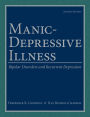
The revolution in psychiatry that began in earnest in the 1960s led to dramatic advances in the understanding and treatment of manic-depressive illness. Hailed as the most outstanding book in the biomedical sciences when it was originally published in 1990, Manic-Depressive Illness was the first to survey this massive body of evidence comprehensively and to assess its meaning for both clinician and scientist. It also vividly portrayed the experience of manic-depressive illness from the perspective of patients, their doctors, and researchers. Encompassing an understanding about the illness as Kraeplin conceived of it- about its cyclical course and about the essential unity of its bipolar and recurrent unipolar forms- the book has become the definitive work on the topic, revered by both specialists and nonspecialists alike.
Now, in this magnificent second edition, Drs. Frederick Goodwin and Kay Redfield Jamison bring their unique contribution to mental health science into the 21st century. In collaboration with a team of other leading scientists, a collaboration designed to preserve the unified voice of the two authors, they exhaustively review the biological and genetic literature that has dominated the field in recent years and incorporate cutting-edge research conducted since publication of the first edition. They also update their surveys of psychological and epidemiological evidence, as well as that pertaining to diagnostic issues, course, and outcome, and they offer practical guidelines for differential diagnosis and clinical management. The medical treatment of manic and depressive episodes is described, strategies for preventing future episodes are given in detail, and psychotherapeutic issues common in this illness are considered. Special emphasis is given to fostering compliance with medication regimens and treating patients who abuse drugs and alcohol or who pose a risk of suicide. This book, unique in the way that it retains the distinct perspective of its authors while assuring the maximum in-depth coverage of a vastly expanded base of scientific knowledge, will be a valuable and necessary addition to the libraries of psychiatrists and other physicians, psychologists, clinical social workers, neuroscientists, pharmacologists, and the patients and families who live with manic-depressive illness.
Guides for differential diagnosis & clinical mgmt/medical trmt of manic & depressive episodes/prevention/medications.
Editorial Reviews
From The Critics
Reviewer: Howard M. Kravitz, DO, MPH(Rush University Medical Center)Description: This is the revised and updated version of this classic text on manic-depressive illness (MDI). First published in 1990, it was a "unique contribution to the literature on MDI." This edition has been expanded to consider spectrum diagnoses as well as recurrent depression. Its foundation is "the inclusive Kraepelinian concept of MDI," covering "all of the recurrent major mood disorders."
Purpose: Expanding the first edition's comprehensive and interpretive review of the scientific literature on MDI, the purpose of this second edition is to "help improve diagnosis and treatment for those who suffer from the illness" and to be "a resource for research."
Audience: The targeted audience is psychiatric clinicians and researchers, and other mental health professionals, trainees, and students with a serious interest in and/or desiring the most comprehensive coverage of the manic-depressive/bipolar spectrum, as the authors define it.
Features: Assisted by "close colleagues with various specialized interests" who have "added their expertise," the principal authors, Goodwin and Jamison, have labored long to "preserve the unity and structure" of the first edition and avoid the unevenness found in textbooks that try to integrate the contributions of many individuals. The result is a physically larger book approximately 200 pages longer than its predecessor. The subtitle ("Bipolar Disorders and Recurrent Depression") is new. Its five sections follow the general structure of the first edition — clinical description and diagnosis, clinical studies, psychology/neuropsychology, pathophysiology, treatment — with the expected changes in emphasis and balance in the content of individual chapters (the scientific study of bipolar disorder has expanded greatly in 17 years!). References, recent through 2006, all are listed by chapter at the end of the book, making them more difficult to access and unnecessarily lengthening the references section by duplicating those cited in multiple chapters. A single alphabetical listing at the end of the book would have been a more sensible approach.
Assessment: As stated in the foreword, "to attempt a repeat of their efforts in a new edition was an enormous challenge...." Much has been learned about bipolar disorders and its spectrum since 1990. This definitive text on MDI/bipolar disorders documents what we have learned circa 2006, presents it clearly and logically, and should stimulate serious students of these disorders to seek and learn more. However, new knowledge continues to accrue and we can't wait another 17 years for the next edition — a mechanism for e-version updating would be welcomed. Finally, the price is affordable in these days of exorbitant textbook costs.
Product Details
Related Subjects
Meet the Author
Johns Hopkins University School of Medicine
Table of Contents
2. Clinical Description
3. Evolution of the Biopolar-Unipolar Concept
4. Manic-Depressive Spectrum
5. Diagnosis
6. Course and Outcome
7. Epidemiology
8. Childhood and Adolescence
9. Alcohol and Drug Abuse
10. Suicide
11. Thought Disorder, Perception, and Cognition
12. Personality and Interpersonal Behavior
13. Manic-Depressive Illness and Creativity
14. Measurement of Manic and Depressive States
15. Genetics
16. Biochemical Models
17. Biochemical and Pharmacological Studies
18. Anatomical and Physiological Studies
19. Sleep and Biological Rhythms
20. Pathopsychology: Critical Evaluation, Integration, and Future Directions
21. Medical Treatment of Acute Mania
22. Medical Treatment of Acute Bipolar Depression
23. Maintenance Medical Treatment
24. Psychotherapy
25. Medication Compliance
26. Treatment of Alcohol and Drug Abuse in Manic-Depressive Patients
27. Clinical Management of Suicidal Patients

