
Nonlinear Dynamics in Physiology and Medicine
Je tiens impossible de connaître les parties sans connaître le tout, non plus que de connaître le tout sans connaître particulierement les parties -Pascal The eterna[ mystery of the world is its comprehensibility -Einstein This book deals with the application of mathematical tools to the study of physiological systems. It is directed toward an audience of physiologists, physicians, physicists, kinesiologists, psychologists, engineers, mathematicians, and others interested in finding out more about the complexities and subtleties of rhythmic physiological processes from a theoretical per spective. We have attempted to give a broad view of the underlying notions behind the dynamics of physiological rhythms, sometimes from a theoretical perspective and sometimes from the perspective of the experimentalist. This book can be used in a variety of ways, ranging from a more traditional approach such as a textbook in a biomathematics course (at either the advanced undergraduate or graduatelevel) to a research re source in which someone interested in a particular problem might look at the corresponding discussion here to guide their own thinking. We hope that researchers at all levels will find inspiration from the way we have dealt with particular research problems to tackle completely new areas of investigation, or even approach these in totally new ways.
1100088190
Nonlinear Dynamics in Physiology and Medicine
Je tiens impossible de connaître les parties sans connaître le tout, non plus que de connaître le tout sans connaître particulierement les parties -Pascal The eterna[ mystery of the world is its comprehensibility -Einstein This book deals with the application of mathematical tools to the study of physiological systems. It is directed toward an audience of physiologists, physicians, physicists, kinesiologists, psychologists, engineers, mathematicians, and others interested in finding out more about the complexities and subtleties of rhythmic physiological processes from a theoretical per spective. We have attempted to give a broad view of the underlying notions behind the dynamics of physiological rhythms, sometimes from a theoretical perspective and sometimes from the perspective of the experimentalist. This book can be used in a variety of ways, ranging from a more traditional approach such as a textbook in a biomathematics course (at either the advanced undergraduate or graduatelevel) to a research re source in which someone interested in a particular problem might look at the corresponding discussion here to guide their own thinking. We hope that researchers at all levels will find inspiration from the way we have dealt with particular research problems to tackle completely new areas of investigation, or even approach these in totally new ways.
54.99
In Stock
5
1

Nonlinear Dynamics in Physiology and Medicine
436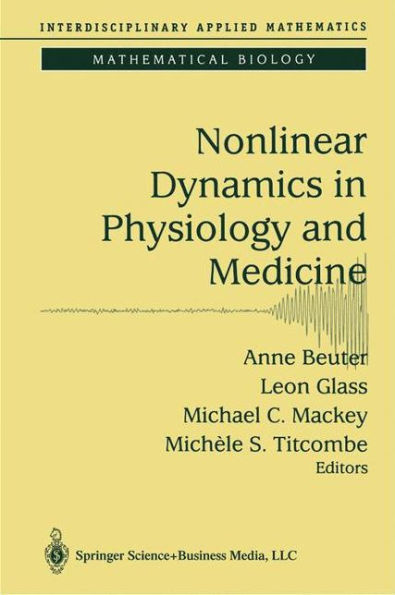
Nonlinear Dynamics in Physiology and Medicine
436
54.99
In Stock

Product Details
| ISBN-13: | 9780387004495 |
|---|---|
| Publisher: | Springer New York |
| Publication date: | 09/12/2003 |
| Series: | Interdisciplinary Applied Mathematics , #25 |
| Edition description: | 2003 |
| Pages: | 436 |
| Product dimensions: | 6.14(w) x 9.21(h) x 0.04(d) |
From the B&N Reads Blog