- Shopping Bag ( 0 items )
-
All (33) from $1.99
-
New (9) from $18.48
-
Used (24) from $1.99
More About This Textbook
Overview
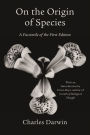
It is now fully recognized that the publication of Darwin's Origin of Species in 1859 brought about a revolution in man's attitude toward life and his own place in the universe. This work is rightly regarded as one of the most important books ever published, and a knowledge of it should be part of the intellectual equipment of every educated person. The book remains surprisingly modern in its assertions and is also remarkably accessible to the layman, much more so than recent treatises necessarily encumbered with technical language and professional jargon.
This first edition had a freshness and uncompromising directness that were considerably weakened in later editions, and yet nearly all available reprints of the work are based on the greatly modified sixth edition of 1872. In the only other modern reprinting of the first edition, the pagination was changed, so that it is impossible to give page references to significant passages in the original. Clearly this facsimile reprint of the momentous first edition fills a need for scholars and general readers alike.
Editorial Reviews
Publishers Weekly
Originally published in 1859, Darwin's revolutionary idea is revisited in this spirited and profoundly enthralling reading by Professor Richard Dawkins, who in reading Darwin's material aloud manages to rediscover old ideas and unearth some dramatic subtleties in his prose. Dawkins offers a well-pronounced, pitch-perfect delivery and smartly never attempts to turn the reading into a performance from Darwin's point of view. Instead, Dawkins delivers the material from his own context as a modern-day interpreter of the classical work. Dawkins also splendidly adapts this abridgment, leaving out sections of Darwin's original theories that have been discredited by modern science. Dawkins says he believes his alterations are what Darwin himself would have wished for the recording, and the final result is an absolutely astounding glimpse into life as we know it. (Aug.)
Copyright © Reed Business Information, a division of Reed Elsevier Inc. All rights reserved.Library Journal
As a milestone not only in the history of science but also in cultural history, On the Origin of Species belongs in every library, high school and above. Nature writer Quammen (The Reluctant Mr. Darwin) offers a gloriously illustrated and richly annotated volume, which testifies to the book's enduring legacy. Throughout the text, relevant sidebars from other of Darwin's writings, including his Autobiography, field notes from the HMS Beagle, and his myriad letters, are presented for their insight. Illustrations include historical images, such as sketches, woodcuts, and portraits of people and places, but also included are contemporary photographs of the flora and fauna that Darwin described. Between the contextual additions and the edifying illustrations, there is no comparable volume. For all libraries.
—Gregg Sapp
Product Details
Related Subjects
Meet the Author
Dame Gillian Beer is Fellow of the British Academy and of the Royal Society of Literature. Her Darwin's Plots (1983; second edition 2000) was followed by Open Fields: Science in Cultural Encounter (1996). More recently she has been working on Carroll's Alice books in the context of nineteenth-century intellectual controversies and a new collection of her essays on literature and science is scheduled for 2008.
Biography
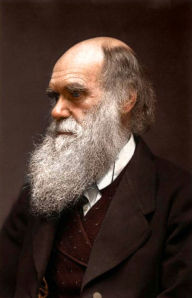
Robert Charles Darwin was born in Shrewsbury, England, on February 12, 1809, into a wealthy and highly respected family. His grandfather, Erasmus Darwin, was a doctor and the author of many works, including his well-known Zoonomia, or the Laws of Organic Life, which suggested a theory of evolution. Charles's father, Robert Waring Darwin, was also a prosperous doctor; his mother, Susannah, was the daughter of Josiah Wedgwood, founder of the renowned Wedgwood potteries. The Darwins and the Wedgwoods had close and long-standing relations, and Charles was to marry his cousin, Emma Wedgwood.In 1825 at age sixteen, Darwin matriculated at Edinburgh University to study medicine. There, his early interest in natural history developed, and he studied particularly crustaceans, sea creatures, and beetles. Nauseated by the sight of blood, however, he decided that medicine was not his vocation, left Edinburgh in 1827 and entered Christ's College, Cambridge University, with no clear sense of possible vocation, theology itself being an option. At Cambridge he became friends with J. S. Henslow, a clergyman who was also professor of botany. Although Darwin was to graduate from Cambridge with a B.A. in theology, he spent much time with Henslow, developing his interest in natural science. It was Henslow who secured a position for Darwin on an exploratory expedition aboard the HMS Beagle.
In December 1831, the year he graduated from Cambridge, Darwin embarked upon a five-year voyage to Africa and South America, acting as a companion to the captain, Robert Fitzroy. Darwin spent more time in land expeditions than at sea, where he was always seasick, but during the long voyages he continued his collecting and, cramped in his tiny cabin, meticulously wrote up his ideas. Several years after his return, at the time of the birth of his first son, William, Darwin fell ill. It is conjectured that while in South America he had contracted Chagas's disease, but whatever the cause, the effects were debilitating for the rest of Darwin's life.
By the time he returned to London in 1835, many of his letters, some to scientists like Charles Lyell and Adam Sedgwick, had been read before scientific societies, and he was already a well known and respected naturalist. His first published book, an account of his voyage aboard the Beagle, entitled Journal of Researches, appeared in 1839 and was widely popular. He married the same year; soon after, the family moved from London to a secluded house at Down, in Kent, where Darwin wrote initial sketches of his theory and then preparing himself for the full exposition, spent eight years writing a detailed set of definitive monographs on barnacles.
In 1858, when Darwin was halfway through writing his book, "Natural Selection," A. R. Wallace sent him a paper called, "On the Tendency of Varieties to Depart Indefinitely from the Original Type." In language similar to Darwin's own, Wallace laid out the argument for natural selection. Wallace asked Darwin to help get the paper published -- obviously an alarming development for a man who had given twenty years of his life to getting the argument for natural selection right. Darwin's scientific friends advised him to gather materials giving evidence of his priority but to have the Wallace paper read before the Linnaean Society, along with a brief account of his own ideas. Immediately after the reading, Darwin began work on his "abstract" of "Natural Selection." The result was On the Origin of Species by Means of Natural Selection, published in 1859. Despite the controversy it generated, it was an immense success and went through five more editions in Darwin's lifetime.
Darwin devoted the rest of his life to researching and writing scientific treatises, drawing on his notebooks and corresponding with scientists all over the world, and thus developing and modifying parts of his larger argument.
Darwin never traveled again and much of his scientific work was done in his own garden and study at home. Others, particularly his "bulldog," T. H. Huxley, fought the battle for evolution publicly, and as Darwin remained quietly ailing at home, his family grew -- he had ten children -- and so did his reputation. Although he was always ill with symptoms that made it impossible for him to work full days, he produced an enormous volume of work. His death, on April 19, 1882, was a national event. Despite the piety of his wife, Emma, Darwin had fallen away from religion as he reflected both on the way nature worked and on the way his favorite daughter, Annie, died painfully from an unknown feverish illness, when she was ten. Nevertheless, ironically, he was buried in Westminster Abbey.
Author biography from the Barnes & Noble Classics edition of The Origin of Species.
Good To Know
Darwin was born on the same day as U.S. president Abraham Lincoln.He broke his longtime snuff habit by keeping his snuff box in the basement and the key to it in the attic.
Table of Contents
A Chronology of Charles Darwin
On the Origin of Species 1
App. 1 Register of Writers 361
App. 2 Glossary of Scientific Terms 371
Index 385