- Shopping Bag ( 0 items )
Available on NOOK devices and apps
Want a NOOK? Explore Now
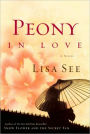
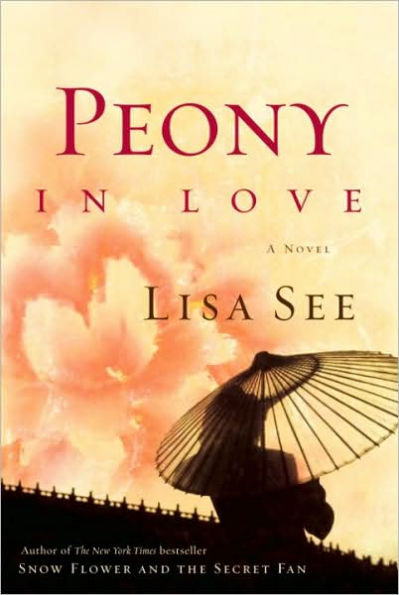
Set in 17th-century China, See's fifth novel is a coming-of-age story, a ghost story, a family saga and a work of musical and social history. As Peony, the 15-year-old daughter of the wealthy Chen family, approaches an arranged marriage, she commits an unthinkable breach of etiquette when she accidentally comes upon a man who has entered the family garden. Unusually for a girl of her time, Peony has been educated and revels in studying The Peony Pavilion, a real opera published in 1598, as the repercussions of the meeting unfold. The novel's plot mirrors that of the opera, and eternal themes abound: an intelligent girl chafing against the restrictions of expected behavior; fiction's educative powers; the rocky path of love between lovers and in families. It figures into the plot that generations of young Chinese women, known as the lovesick maidens, became obsessed with The Peony Pavilion, and, in a Werther-like passion, many starved themselves to death. See (Snow Flower and the Secret Fan, etc.) offers meticulous depiction of women's roles in Qing and Ming dynasty China (including horrifying foot-binding scenes) and vivid descriptions of daily Qing life, festivals and rituals. Peony's vibrant voice, perfectly pitched between the novel's historical and passionate depths, carries her story beautifully-in life and afterlife. (July)
Copyright 2007 Reed Business InformationTeenaged Peony lives in late 16th-century China, protected by her wealthy family, her entire life arranged for marriage and the birth of sons. Prior to her marriage, she overhears passages from the famous opera The Peony Pavilion and has a brief but life-altering conversation with a very handsome man-both strictly forbidden to an unmarried maiden. The "love-sickness" brought on by these secrets leads to Peony's death by self-starvation, as she pines for the man whose name she does not know. After her death, owing to a lapse in protocol, Peony is condemned to wander the earth as a "hungry ghost." The descriptions of her ghostly existence over the decades are interwoven with her devotion to the poet she could have married, the women he later marries, other wanderers, and The Peony Pavilion itself. As the book reveals, during the Manchu Dynasty women were oppressed severely, even in death; the foot-binding process depicted here is truly horrible. The writing is compellingly exotic and vivid, and listeners are drawn into this world by the beautiful voice of Janet Song, who brings Peony's journey to life. Highly recommended for public libraries, especially those with collections for young adults.-Barbara Valle, El Paso P.L., TX
Copyright 2006 Reed Business Information.1. On page 76, Lisa See quotes the poet Han Yun, who wrote, “All things not at peace will cry out.” What do you think he meant by that? And in what ways does this inspire Peony and the other women writers in the novel?
2.What are the different kinds of love that Peony experiences? How does her love for Ren (as well as for her mother, father, grandmother, Yi, and even Willow) change through the years? Have you had similar experiences in your life?
3.Anticipating her first meeting with Ren in the Moon-Viewing Pavilion, Peony states: “Monthly bleeding doesn’t turn a girl into a woman, nor does betrothal or new skills. Love had turned me into a woman” (p. 49). Is Peony’s statement true?
4.Peony is filled with doubt after meeting Ren–doubt about their relationship, doubt about ever finding love, and doubt about being a good mother. What is the source of this doubt and how does it grow within Peony?
5.In the nights of watching The Peony Pavilion, Peony has many visions of the man she will marry, and many visions of “her poet.” Why isn’t she able to make the connection that both men are one and the same? What signs does she overlook and why?
6.On page 94, Peony thinks she’s being dressed for her wedding, but instead she’s taken to the courtyard to die. Peony is certainly surprised by this turn of events. Were you? How does this moment affect Peony’s future actions and her feelings about her family? How do you feel about this practice?
7.Many men have told Lisa See that they don’t like the idea of the Chinese afterworld, where your relatives are still your relatives and your position remains the same as it was in life. Many women, on the other hand, have told her that they find the idea of the Chinese afterworld comforting. They want to be united with their families in the afterworld and still be able to interfere in the living world. What are the differences and similarities between the Chinese afterworld and Western religions’ concept of heaven and hell? Which would you prefer–for yourself and for your loved ones–and why?
8.We see a difference in Peony’s actions after Ze marries Ren and again after Ze dies. Do you see redemption here for Peony?
9.In what ways is mother love, from both a mother’s perspective and a daughter’s perspective, explored? What does Peony learn about mother love, and in what ways does she experience it herself? What aspects of mother love still hold true for mothers and daughters today?
10.How does what happened during the Cataclysm change depending on who’s telling the story?
11.Peony in Love shows the strength of women and women’s friendship, but in what ways does it also show the dark shadow side of women, whether in the women’s chambers, between a mother and daughter, between wives, or even between friends?
12.Peony in Love is very much a tale of secrets and the power secrets can exercise over others. What are the secrets? Who is affected by the secrets and how do they change through the story?
13.You have read about three generations of women, and also about the people around them–both male and female. Of all the characters, which do you feel you are most like, and why? Are there any people like these characters in your life today?
14.Often what we hate most about ourselves–our weight, our tendency toward selfishness, our vanity, etc.– is what we are most critical of in others. Trace the progress of Peony’s relationship with Tan Ze–through life together in the Chen Family Villa and then in the afterlife. In what ways are Peony and Tan Ze alike, and in what ways are they different? Why do they need each other, and how do they serve one another? Do you have similar symbiotic relationships in your life, and in what ways would you expect those relationships to change in the afterlife?
15.How do Peony’s experiences as a living girl and then as a hungry ghost parallel Liniang’s experiences in The Peony Pavilion?
Anonymous
Posted January 26, 2008
With too much intelligent history to be pegged a romance, Peony in Love is, indeed, romantic. It is a tale of love and death in 17th century China - a time of Cataclysm and a place where, pound for pound, salt was more valuable than women. Painting her words on a ghostly dreamscape, See once again explores themes of love, language and the strength of women amidst a revealing and sometimes disturbing history................ Already promised in marriage, young Peony Chen falls in love under the spell of her favorite opera, The Peony Pavillion. Fated to follow in the footsteps of the opera's heroine, Peony dies of lovesickness soon thereafter. It is only after she dies and her tortured soul waits to be dispersed in the proper way that she learns her beloved and her betrothed were one in the same. Now a hungry ghost, Peony hopes to be reconciled with Wu Ren just as her opera heroine was reunited with her own true love............. But Peony confronts many obstacles, the least of which is the unfinished state of her written critical commentary on The Peony Pavillion. Although abundant in number and talent, China's earliest female writers were often published posthumously and anonymously. Yet, working between the worlds of life and death, Peony manages to have her work published and, more important, her words recognized by Wu Ren................ What kind of reconciliation can Peony possibly expect when so many ancient rules were broken, so many rituals left unperformed? How can a ghost-wife love a husband who loves someone else? See's rich writing style will keep you turning pages for answers. Drawing from resources including Tang Xianzu's opera The Peony Pavillion 'first published in 1598', Wu Wushan's Three Wives' Collaborative Commentary on The Peony Pavillion, Jingmei Chen's dissertation The Dream World of Love-Sick Maidens, a plethora of scholarly research and personal interviews See weaves a haunting blend of history and love.
4 out of 4 people found this review helpful.
Was this review helpful? Yes NoThank you for your feedback. Report this reviewThank you, this review has been flagged.Anonymous
Posted October 1, 2007
I was concerned that this book would be too complicated since I didn't know much about the Chinese culture and traditions but it wasn't a problem. Lisa See tells an amazing story and is very knowledgeable herself. As already stated, this isn't a fast read. I took my time and paid attention to the names and the descriptions. I was rewarded with an inspiring story about Peony and her family and how she learns and grows even in the afterworld. This was my first book by this author but I will be reading more of hers now.
3 out of 5 people found this review helpful.
Was this review helpful? Yes NoThank you for your feedback. Report this reviewThank you, this review has been flagged.Anonymous
Posted August 4, 2008
Earlier I had read Snow Flower and the Secret Fan, by Lisa See, which I loved. This prompted me to buy Peony in Love. What an unexpected dissapointment...I wonder are the authors other books as wonderful at Snow Flower.
2 out of 6 people found this review helpful.
Was this review helpful? Yes NoThank you for your feedback. Report this reviewThank you, this review has been flagged.Anonymous
Posted October 3, 2007
This is my first book by Lisa See, but it will definitely not be my last! Although there is certainly a point in the book that is so heartbreaking I almost stopped reading it, I'm so glad I continued on this journey with Peony. What a wonderful, incredible book on women, men, love, passion, mothers, daughters, and the golden threads of words that bind our souls together forever. Take your time reading this book - it is a complex, beautiful tapestry that deserves your time and attention.
2 out of 2 people found this review helpful.
Was this review helpful? Yes NoThank you for your feedback. Report this reviewThank you, this review has been flagged.Anonymous
Posted August 10, 2007
I just finished reading this novel, and I cannot seem to let her 'Peony' go. Such a beautifu, haunting story, all the more so knowing that the three wives did exist. While See has invented their biography here, she's done it in such a way that even the most supernatural elements seem to be their truths. In reading the novel, I can see where some impatient readers might not like it--if you're looking for a quick and airy summer read, don't go for this book--it is not meant to be read as such. It is meant to be reflected upon and savored. The themes within it are many, and are deep--they will not leave once you have closed the book for the last time. I myself became a little frustrated right around the time Peony died in the book--I stopped reading, because I didn't want her to die so unfulfilled! But I was so wrong in this, and once I resumed my reading, I could barely put the book down, let alone stop thinking about it. This work is a wonderful blessing, about a world that most of us, sadly, know little about.
2 out of 3 people found this review helpful.
Was this review helpful? Yes NoThank you for your feedback. Report this reviewThank you, this review has been flagged.I have enjoyed all of Lisa See's other books so got this one. What a disappointment. I couldn't even finish it.
1 out of 2 people found this review helpful.
Was this review helpful? Yes NoThank you for your feedback. Report this reviewThank you, this review has been flagged.sinlessbeauty116
Posted October 21, 2008
i remember not being able to put the book down once i caught a hold of it...a truly powerful novel held through the eye of a 16 years old woman up in heaven
1 out of 2 people found this review helpful.
Was this review helpful? Yes NoThank you for your feedback. Report this reviewThank you, this review has been flagged.Anonymous
Posted May 31, 2008
This was the second book I read by Lisa See and it was just as good as I hoped it to be! I love how she told the story from a unique point of view.....
1 out of 2 people found this review helpful.
Was this review helpful? Yes NoThank you for your feedback. Report this reviewThank you, this review has been flagged.Anonymous
Posted February 22, 2008
Peony In Love was by far the most enjoyable book I have ever read. It takes a great look at China's society and reveals women's desire to be heard. The book mixes undying love with suspense, revenge, joy, and heartbreak. The book kept me on my toes, and as I became emotionally involved, I began to relate to the characters very easily. Reading Peony In Love was extremely full filing and I will never forget it.
1 out of 1 people found this review helpful.
Was this review helpful? Yes NoThank you for your feedback. Report this reviewThank you, this review has been flagged.Anonymous
Posted February 10, 2008
I loved this book b/c it is so rich in the Chinese culture and Lisa See does a wonderful job in explaining certain traditions and sticking to the facts. Although some parts were extremely depressing, I couldn't put down the book without wondering what will happen in the end. In some aspects I was so touched by the main character (Peony) that I started picking up on her emotions and feeling them myself. Through the experiences I've gone through in life and the beautifully crafted story of Peony, I've gained lots of insight about dreams, love, and death after reading See's book. I highly recommend it to anyone who is fascinated by the Chinese culture.
1 out of 1 people found this review helpful.
Was this review helpful? Yes NoThank you for your feedback. Report this reviewThank you, this review has been flagged.Anonymous
Posted April 23, 2012
this is a book that you don't want to end....Ms See is a master of weaving a tale
Was this review helpful? Yes NoThank you for your feedback. Report this reviewThank you, this review has been flagged.Anonymous
Posted March 1, 2012
.
Was this review helpful? Yes NoThank you for your feedback. Report this reviewThank you, this review has been flagged.Anonymous
Posted February 26, 2012
Peony in Love tells the story of The Three Wives and how their lives have become interconnected all because of one play, The Peony Pavilion. Lisa See weaves an intricate story of love, life, death, and a harrowing history into the life of Peony. By doing so, See makes the book very revealing of Chinese society during this time period. The reader learns about the day-to-day lives of Chinese women, marital customs, burial rites, and the traumatic Yangzhou massacre. While reading about Peony's tragic life, the reader also learns about the history and culture of China. Lisa See does a wonderful job telling the story of Peony while weaving a story of love, life, and death. From the first page, I was entranced by Peony in Love and the story it tells. I learned more from this book than I did from the lesson on the Manchu conquest in class because Peony in Love vividly describes how the Manchus affected the lives of regular people, not just the government officials and the elite. Lisa See provides a rare glimpse into the lives of Chinese women and as a result captures the reader immediately. I would recommend this book to anybody interested in learning more about the lives of women in China during the Manchu Empire.
Was this review helpful? Yes NoThank you for your feedback. Report this reviewThank you, this review has been flagged.Anonymous
Posted February 4, 2012
I have read 3 other books by this author and really enjoyed them. However I had to force myself to keep reading Peony in Love. I kept hoping the story would get better, if possible it became more tedious.
Was this review helpful? Yes NoThank you for your feedback. Report this reviewThank you, this review has been flagged.Anonymous
Posted January 17, 2012
I enjoyed this book much more than Shanghai Sisters. Very curious as to how Peony would 'grow' or mature in death and See demonstrates Peony's maturation and changing view on love through the Three Wives Commentary. Thoroughly enjoyed this novel's combination of Chinese literature (Peony Pavilion), culture, and spirituality.
Was this review helpful? Yes NoThank you for your feedback. Report this reviewThank you, this review has been flagged.I was really excited to read this story because I'm a big Lisa See fan,unfortunately this story lacked something. I felt as if I was reading page after page but I wasn't moving forward in the story. It was so drawn out that by the time I got to the ending it lacked any emotion for me. I'm a hopeless romantic, and this story pretty much went against a lot of my own personal feelings. So unfortunately I didn;t enjoy this story as much I was hoping to. All in all it is a pretty story, but don't be fooled by the title be ready for a story that twists and turns.
Was this review helpful? Yes NoThank you for your feedback. Report this reviewThank you, this review has been flagged.Anonymous
Posted January 11, 2012
This book was really intrguing.
Was this review helpful? Yes NoThank you for your feedback. Report this reviewThank you, this review has been flagged.Anonymous
Posted January 2, 2012
Yes, the writer took her time with her words in developing the time, the culture and its intricacies, but the story is worth the wait... You grow to love the characters and their surprising passion, pain, and love.
Was this review helpful? Yes NoThank you for your feedback. Report this reviewThank you, this review has been flagged.Anonymous
Posted December 28, 2011
I was captivated and didn't find the story to be slow at all...
Was this review helpful? Yes NoThank you for your feedback. Report this reviewThank you, this review has been flagged.REDCATCT
Posted September 8, 2011
I do not recommend this book. I found it to be very drawn out & unrealistic. I will never purchase a book by this author again.
0 out of 1 people found this review helpful.
Was this review helpful? Yes NoThank you for your feedback. Report this reviewThank you, this review has been flagged.
Overview
BONUS: This edition contains an excerpt from Lisa See's Shanghai Girls.“I finally understand what the poets have written. In spring, moved to passion; in autumn only regret.”
For young Peony, betrothed to a suitor she has never met, these lyrics from The Peony Pavilion mirror her own longings. In the garden of the Chen Family Villa, amid the scent of ginger, green tea, and jasmine, a small theatrical troupe is performing scenes from this epic opera, a live spectacle few females have ever seen. Like the heroine in ...