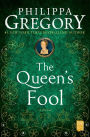
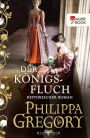
The Queen's Fool [NOOK Book]

NOOK Book (eBook)
$12.99
BN.com price

Available on NOOK devices and apps

  • Nook Devices
  • NOOK
  • NOOK Color
  • NOOK Tablet
  • Tablet/Phone
  • NOOK for iPad
  • NOOK for iPhone
  • NOOK for Android
  • NOOK for Android (Tablet)
  • NOOK Kids for iPad
  • PC/Mac
  • NOOK Study
  • NOOK for PC
  • NOOK for Mac

Need a NOOK? Explore Now

Overview


A young woman caught in the rivalry between Queen Mary and her half sister, Elizabeth, must find her true destiny amid treason, poisonous rivalries, loss of faith, and unrequited love.

It is winter, 1553. Pursued by the Inquisition, Hannah Green, a fourteen-year-old Jewish girl, is forced to flee Spain with her father. But Hannah is no ordinary refugee. Her gift of "Sight," the ability to foresee the future, is priceless in the troubled times of the Tudor court. Hannah is adopted by the glamorous Robert Dudley, the charismatic son of King Edward's protector, who brings her to court as a "holy fool" for Queen Mary and, ultimately, Queen Elizabeth. Hired ...

See more details below

Overview


A young woman caught in the rivalry between Queen Mary and her half sister, Elizabeth, must find her true destiny amid treason, poisonous rivalries, loss of faith, and unrequited love.

It is winter, 1553. Pursued by the Inquisition, Hannah Green, a fourteen-year-old Jewish girl, is forced to flee Spain with her father. But Hannah is no ordinary refugee. Her gift of "Sight," the ability to foresee the future, is priceless in the troubled times of the Tudor court. Hannah is adopted by the glamorous Robert Dudley, the charismatic son of King Edward's protector, who brings her to court as a "holy fool" for Queen Mary and, ultimately, Queen Elizabeth. Hired as a fool but working as a spy; promised in wedlock but in love with her master; endangered by the laws against heresy, treason, and witchcraft, Hannah must choose between the safe life of a commoner and the dangerous intrigues of the royal family that are inextricably bound up in her own yearnings and desires.

Teeming with vibrant period detail and peopled by characters seamlessly woven into the sweeping tapestry of history, The Queen's Fool is another rich and emotionally resonant gem from this wonderful storyteller.

Editorial Reviews

Kirkus Reviews
It's 1553, and a teenaged girl with a dangerous secret is caught up in royal intrigue as she tries to serve a scheming lord, an unhappy queen, and the queen's ambitious sister. As Edward VI, only male heir of Henry VIII, lies dying, 14-year-old Hannah Green is helping her father in his London printing and bookshop. Because young girls are not supposed to set print or deliver books, she's dressed in boy's clothing, but that's not Hannah's only secret. She and her father are Spanish Jews who fled the Inquisition after her mother was burned as a heretic. Finding refuge in Protestant England, the Greens observe Christian rituals in public, but privately they still honor the old ways. One day Hannah attracts the attention of a shop customer, handsome Lord Dudley, by innocently revealing that she has the gift of second sight-a particularly useful gift in these uncertain times, when it seems that Protestant Edward will be succeeded by Catholic Mary. Hannah becomes an aide to Lord Dudley, who recommends her to the young king to be his Fool. While serving Edward, she follows Dudley's orders to attend and spy upon the king's older sister Mary, whom she grows to love. When Mary becomes Queen, Hannah attends her at court, but (again at Dudley's request) also makes contact with her sister Elizabeth. Hannah admires the young princess's courage as Elizabeth faces losing her life when Mary starts burning Protestants as heretics. Her loyalties divided, fearful that she and her father are vulnerable in Catholic England, Hannah relies on her wits to survive threats, intrigue, and danger. She must also decide whether she will marry Daniel, a family friend, to whom she is officially betrothed. Tudor Englandis not a merry place, but Hannah is no fool. Another intelligent and engrossing tale of Tudor England from Gregory (The Other Boleyn Girl, 2002, etc.). Agent: Esther Newberg/ICM

Product Details

  • ISBN-13: 9781416593973
  • Publisher: Touchstone
  • Publication date: 2/3/2004
  • Sold by: SIMON & SCHUSTER
  • Format: eBook
  • Pages: 512
  • Sales rank: 10,404
  • Series: Philippa Gregory Tudor Series, #4
  • File size: 588 KB
  • Items ship to U.S, APO/FPO and U.S. Protectorate addresses.

Meet the Author

Philippa Gregory
Philippa Gregory
Philippa Gregory has been penning compelling works of dramatic historical fiction since the mid-1980s, breaking out with the bestselling Wideacre trilogy and creating a buzz with The Other Boleyn Girl. As fellow author Peter Ackroyd once said of her, "She writes from instinct, not out of calculation, and it shows."

Biography

Philippa Gregory, author of the bestselling Wideacre trilogy and other celebrated historical novels, holds a B.A. in history and a Ph.D. in 18th-century literature. In her youth, however, the meticulous writer-researcher almost skipped going to university (she was, as she put it, "a bit of a rebel at school"). When she finally did enroll at Sussex University, she took a course taught by the historian Maurice Hutt, and the rest is -- what else? -- history.

"It was such a powerful experience that, really, it transformed my life," she explained in an interview with The Guardian. "I was looking for something that would explain everything -- I was that kind of earnest young woman! -- and history seemed to be able to do that."

Gregory earned her degree from Sussex, then traveled to Edinburgh to research 18th-century popular novels. The research spawned both a Ph.D. thesis and Gregory's first novel, Wideacre, which was a New York Times bestseller. It came, Gregory pointed out in a Barnes and Noble interview, "at a time when people wanted a new sort of historical fiction: more realistic, more radical, more sexy, and harder edged. That's how I see the world, so I never wrote for a market, I always wrote to reflect my own view of the period, and it has been phenomenally successful."

After extending Wideacre into a trilogy, Gregory continued to write fiction, delving into 16th-century witchcraft , 17th-century political turmoil, and 18th-century slave trading, as well as exploring contemporary life.

But while Gregory -- in her own view and in the views of many critics -- continued to improve as a writer, none of her books matched the popular success of Wideacre until she wrote The Other Boleyn Girl, a provocative tale of sexual politics in the court of Henry VIII, and The Queen's Fool, the story of a 14-year-old Jewish girl brought to the court of Queen Mary. Both novels became bestsellers and widely acclaimed storytelling tour de forces.

Gregory continues to mine the territory of Tudor England for stories -- and she continues with her historical research, building up an ever more dazzling, daring and complete picture of the period. "Accuracy is very important to me because I have a total commitment to history," Gregory told The Guardian. "It answered my deepest questions, of which, I suppose, the most profound is: ‘Why am I here?' Understanding your history can tell you that. It's how I understand who I am and where I came from. I would never lie to anyone about history."

Good To Know

I love reading and I love thinking -- the reason that I love my books so much is that in order to write them I have to read and to think for years at a time about the same period of time. By the time I settle down to write I have to know fairly intensely about the characters, the period, and the issues. I always get interested in some of the side issues -- like the currency or the change of agriculture.

I have a great passion for the countryside and I can't be happy unless I am walking in the country or riding once or twice a week. When we go on author tour my husband always makes sure that we have walking breaks to keep me sane!
    1. Hometown:
      Yorkshire, England
    1. Date of Birth:
      January 9, 1954
    2. Place of Birth:
      Nairobi, Kenya, East Africa
    1. Education:
      B.A. in history, Sussex University, 1982; Ph.D., 18th-century popular fiction, Edinburgh, 1984
    2. Website:

Read an Excerpt


Summer 1548

The girl, giggling and overexcited, was running in the sunlit garden, running away from her stepfather, but not so fast that he could not catch her. Her stepmother, seated in an arbor with Rosamund roses in bud all around her, caught sight of the fourteen-year-old girl and the handsome man chasing around the broad tree trunks on the smooth turf and smiled, determined to see only the best in both of them: the girl she was bringing up and the man she had adored for years.

He snatched at the hem of the girl's swinging gown and caught her up to him for a moment. "A forfeit!" he said, his dark face close to her flushed cheeks.

They both knew what the forfeit would be. Like quicksilver she slid from his grasp and dodged away, to the far side of an ornamental fountain with a broad circular bowl. Fat carp were swimming slowly in the water; Elizabeth's excited face was reflected in the surface as she leaned forward to taunt him.

"Can't catch me!"

" 'Course I can."

She leaned low so that he could see her small breasts at the top of the square-cut green gown. She felt his eyes on her and the color in her cheeks deepened. He watched, amused and aroused, as her neck flushed rosy pink.

"I can catch you any time I want to," he said, thinking of the chase of sex that ends in bed.

"Come on then!" she said, not knowing exactly what she was inviting, but knowing that she wanted to hear his feet pounding the grass behind her, sense his hands outstretched to grab at her; and, more than anything else, to feel his arms around her, pulling her against the fascinating contours of his body, the scratchy embroidery of his doublet against her cheek, the press of his thigh against her legs.

She gave a little scream and dashed away again down an allée of yew trees, where the Chelsea garden ran down to the river. The queen, smiling, looked up from her sewing and saw her beloved stepdaughter racing between the trees, her handsome husband a few easy strides behind. She looked down again at her sewing and did not see him catch Elizabeth, whirl her around, put her back to the red papery bark of the yew tree and clamp his hand over her half-open mouth.

Elizabeth's eyes blazed black with excitement, but she did not struggle. When he realized that she would not scream, he took his hand away and bent his dark head.

Elizabeth felt the smooth sweep of his moustache against her lips, smelled the heady scent of his hair, his skin. She closed her eyes and tipped back her head to offer her lips, her neck, her breasts to his mouth. When she felt his sharp teeth graze her skin, she was no longer a giggling child, she was a young woman in the heat of first desire.

Gently he loosened his grip on her waist, and his hand stole up the firmly boned stomacher to the neck of her gown, where he could slide a finger down inside her linen to touch her breasts. Her nipple was hard and aroused; when he rubbed it she gave a little mew of pleasure that made him laugh at the predictability of female desire, a deep chuckle in the back of his throat.

Elizabeth pressed herself against the length of his body, feeling his thigh push forward between her legs in reply. She had a sensation like an overwhelming curiosity. She longed to know what might happen next.

When he made a movement away from her, as if to release her, she wound her arms around his back and pulled him into her again. She felt rather than saw Tom Seymour's smile of pleasure at her culpability, as his mouth came down on hers again and his tongue licked, as delicate as a cat, against the side of her mouth. Torn between disgust and desire at the extraordinary sensation, she slid her own tongue to meet his and felt the terrible intimacy of a grown man's intrusive kiss.

All at once it was too much for her, and she shrank back from him, but he knew the rhythm of this dance which she had so lightheartedly invoked, and which would now beat through her very veins. He caught at the hem of her brocade skirt and pulled it up and up until he could get at her, sliding his practiced hand up her thighs, underneath her linen shift. Instinctively she clamped her legs together against his touch until he brushed, with calculated gentleness, the back of his hand on her hidden sex. At the teasing touch of his knuckles, she melted; he could feel her almost dissolve beneath him. She would have fallen if he had not had a firm arm around her waist, and he knew at that moment that he could have the king's own daughter, Princess Elizabeth, against a tree in the queen's garden. The girl was a virgin in name alone. In reality, she was little more than a whore.

A light step on the path made him quickly turn, dropping Elizabeth's gown and putting her behind him, out of sight. Anyone could read the tranced willingness on the girl's face; she was lost in her desire. He was afraid it was the queen, his wife, whose love for him was insulted every day that he seduced her ward under her very nose: the queen, who had been entrusted with the care of her stepdaughter the princess, Queen Katherine who had sat at Henry VIII's deathbed but dreamed of this man.

But it was not the queen who stood before him on the path. It was only a girl, a little girl of about nine years old, with big solemn dark eyes and a white Spanish cap tied under her chin. She carried two books strapped with bookseller's tape in her hand, and she regarded him with a cool objective interest, as if she had seen and understood everything.

"How now, sweetheart!" he exclaimed, falsely cheerful. "You gave me a start. I might have thought you a fairy, appearing so suddenly."

She frowned at his rapid, overloud speech, and then she replied, very slowly with a strong Spanish accent, "Forgive me, sir. My father told me to bring these books to Sir Thomas Seymour and they said you were in the garden."

She proffered the package of books, and Tom Seymour was forced to step forward and take them from her hands. "You're the bookseller's daughter," he said cheerfully. "The bookseller from Spain."

She bowed her head in assent, not taking her dark scrutiny from his face.

"What are you staring at, child?" he asked, conscious of Elizabeth, hastily rearranging her gown behind him.

"I was looking at you, sir, but I saw something most dreadful."

"What?" he demanded. For a moment he was afraid she would say that she had seen him with the Princess of England backed up against a tree like a common doxy, her skirt pulled up out of the way and his fingers dabbling at her purse.

"I saw a scaffold behind you," said the surprising child, and then turned and walked away as if she had completed her errand and there was nothing more for her to do in the sunlit garden.

Tom Seymour whirled back to Elizabeth, who was trying to comb her disordered hair with fingers that were still shaking with desire. At once she stretched out her arms to him, wanting more.

"Did you hear that?"

Elizabeth's eyes were slits of black. "No," she said silkily. "Did she say something?"

"She only said that she saw the scaffold behind me!" He was more shaken than he wanted to reveal. He tried for a bluff laugh, but it came out with a quaver of fear.

At the mention of the scaffold Elizabeth was suddenly alert. "Why?" she snapped. "Why should she say such a thing?"

"God knows," he said. "Stupid little witch. Probably mistook the word, she's foreign. Probably meant throne! Probably saw the throne behind me!"

But this joke was no more successful than his bluster, since in Elizabeth's imagination the throne and the scaffold were always close neighbors. The color drained from her face, leaving her sallow with fear.

"Who is she?" Her voice was sharp with nervousness. "Who is she working for?"

He turned to look for the child but the allée was empty. At the distant end of it he could see his wife walking slowly toward them, her back arched to carry the pregnant curve of her belly.

"Not a word," he said quickly to the girl at his side. "Not a word of this, sweetheart. You don't want to upset your stepmother."

He hardly needed to warn her. At the first hint of danger the girl was wary, smoothing her dress, conscious always that she must play a part, that she must survive. He could always rely on Elizabeth's duplicity. She might be only fourteen but she had been trained in deceit every day since the death of her mother, she had been an apprentice cheat for twelve long years. And she was the daughter of a liar -- two liars, he thought spitefully. She might feel desire; but she was always more alert to danger or ambition than to lust. He took her cold hand and led her up the allée toward his wife Katherine. He tried for a merry smile. "I caught her at last!" he called out.

He glanced around, he could not see the child anywhere. "We had such a race!" he cried.

I was that child, and that was the first sight I ever had of the Princess Elizabeth: damp with desire, panting with lust, rubbing herself like a cat against another woman's husband. But it was the first and last time I saw Tom Seymour. Within a year, he was dead on the scaffold charged with treason, and Elizabeth had denied three times having anything more than the most common acquaintance with him.

Copyright © 2004 by Philippa Gregory Limited

Introduction

Touchstone

Reading Group Guide

The Queen's Fool

1. What kind of tone does the novel's opening scene instantly set, and what does it tell us up front about Hannah's and Elizabeth's characters? If you've read other fictional accounts of Elizabeth's life, how does this portrayal of her compare?

2. In public, Hannah plays the fool to Mary's queen, but in private their bond is more intimate. Why is the relationship valuable to each of them, both personally and politically? How is Hannah's connection to Elizabeth different?

3. Hannah is smitten with Robert Dudley from the moment she spots him in her doorway, an angel at his shoulder. How would you describe the bond that develops between them — and how does it change over time?

4. What are the advantages and disadvantages of being the queen's fool instead of a normal courtier?

5. Haunted by the Spanish Inquisition, Hannah describes her Judaism as "some sickness that we pass on," claiming that Jews are condemned to "a lifetime of fear, not Chosen so much as cursed." How do her feelings toward her faith change over the course of the story and why?

6. In the grip of her Sight, Hannah delivers this prophecy: "There will be a child, but no child. There will be a king but no king. There will be a virgin queen all-forgotten. There will be a queen but no virgin....[Dudley] will die, beloved by a queen, safe in his bed." Ultimately, how does history unravel her cryptic prediction?

7. As Mary's marriage falters and her unhappiness grows, she becomes increasingly obsessed with restoring the glory of the Catholic Church through the fires of an English inquisition. Given that Hannah's ownmother was killed in just such a fire, how is she able to justify Mary's bloody reign? Did you sympathize with her unswerving loyalty?

8. What changes in both Hannah and Daniel allow their initially contentious relationship to blossom into love? Did you agree with Hannah's decision to leave him when she discovers another woman has borne his child?

9. How does King Henry VIII's dishonorable treatment of Catherine of Aragon continue to affect England even years after their deaths? Why is Mary driven to convert all of England back to Catholicism?

10. Poised to burn books that could condemn her and her father as heretics, Hannah stays her hand, explaining, "If I burned them I was no better than the Inquisition which had killed my mother. If I burned them, I became as one of those who think that ideas are dangerous and should be destroyed." What would you have done in her place? In a world where knowledge was very dangerous, how does Hannah's Sight make her both powerful and vulnerable?

11. What is your estimation of Dudley's character? Do you think he is a true friend to Hannah?

12. Why does Hannah cling to the boyish dress of the fool for so long? Why is she so afraid to become a woman, and what finally inspires her transformation?

13. At the end of her life, Mary finds herself in the place she has most feared: She is a forgotten queen, cast aside by her husband and her people, overthrown in their hearts by a Boleyn girl, just as her mother was. Do you think that this end was her destiny? Are there other paths she might have chosen that would have led her to a long and happy reign?

14. If you're familiar with Elizabeth's history, discuss how the events in this novel foreshadow both what is to come in her reign as queen and in her relationship with Robert Dudley.

Philippa Gregory is the New York Times bestselling author of several books, including The Other Boleyn Girl and The Boleyn Inheritance. A writer and broadcaster for radio and television, she lives in England. She welcomes visitors and messages at her website, www.philippagregory.com.

Reading Group Guide


Touchstone

Reading Group Guide

The Queen's Fool

1. What kind of tone does the novel's opening scene instantly set, and what does it tell us up front about Hannah's and Elizabeth's characters? If you've read other fictional accounts of Elizabeth's life, how does this portrayal of her compare?

2. In public, Hannah plays the fool to Mary's queen, but in private their bond is more intimate. Why is the relationship valuable to each of them, both personally and politically? How is Hannah's connection to Elizabeth different?

3. Hannah is smitten with Robert Dudley from the moment she spots him in her doorway, an angel at his shoulder. How would you describe the bond that develops between them -- and how does it change over time?

4. What are the advantages and disadvantages of being the queen's fool instead of a normal courtier?

5. Haunted by the Spanish Inquisition, Hannah describes her Judaism as "some sickness that we pass on," claiming that Jews are condemned to "a lifetime of fear, not Chosen so much as cursed." How do her feelings toward her faith change over the course of the story and why?

6. In the grip of her Sight, Hannah delivers this prophecy: "There will be a child, but no child. There will be a king but no king. There will be a virgin queen all-forgotten. There will be a queen but no virgin....[Dudley] will die, beloved by a queen, safe in his bed." Ultimately, how does history unravel her cryptic prediction?

7. As Mary's marriage falters and her unhappiness grows, she becomes increasingly obsessed with restoring the glory of the Catholic Church through the fires of an English inquisition. Given that Hannah's own mother was killed in just such a fire, how is she able to justify Mary's bloody reign? Did you sympathize with her unswerving loyalty?

8. What changes in both Hannah and Daniel allow their initially contentious relationship to blossom into love? Did you agree with Hannah's decision to leave him when she discovers another woman has borne his child?

9. How does King Henry VIII's dishonorable treatment of Catherine of Aragon continue to affect England even years after their deaths? Why is Mary driven to convert all of England back to Catholicism?

10. Poised to burn books that could condemn her and her father as heretics, Hannah stays her hand, explaining, "If I burned them I was no better than the Inquisition which had killed my mother. If I burned them, I became as one of those who think that ideas are dangerous and should be destroyed." What would you have done in her place? In a world where knowledge was very dangerous, how does Hannah's Sight make her both powerful and vulnerable?

11. What is your estimation of Dudley's character? Do you think he is a true friend to Hannah?

12. Why does Hannah cling to the boyish dress of the fool for so long? Why is she so afraid to become a woman, and what finally inspires her transformation?

13. At the end of her life, Mary finds herself in the place she has most feared: She is a forgotten queen, cast aside by her husband and her people, overthrown in their hearts by a Boleyn girl, just as her mother was. Do you think that this end was her destiny? Are there other paths she might have chosen that would have led her to a long and happy reign?

14. If you're familiar with Elizabeth's history, discuss how the events in this novel foreshadow both what is to come in her reign as queen and in her relationship with Robert Dudley.

Customer Reviews
Average Rating 4.5
( 372 )

Rating Distribution

If you've bought this product, tell the world how you liked it.
Write a Review
See All Sort by: Showing 1 – 20 of 373 Customer Reviews
  • Posted August 28, 2009

    I Also Recommend:

    The Queen's Fool

    I loved this book. My favorite Gregory novel is The Other Boleyn Girl, and this comes a close second.
    Other reviewers have criticized the author for her portrayals of Mary and Elizabeth in this book, but everyone needs to keep in mind that we are viewing these women through Hannah's eyes, and this is fiction, not a historical textbook.
    Hannah is a very likeable character, who struggles throughout the book to come to terms with her gift of sight, her religious faith and her place in the world as a woman.
    In this book, as in The Other Boleyn Girl, it's the slow-building, passionate love story that touches me the most. The love story of Hannah and Daniel is very well-written and is my favorite part of the book. It is easy to see what draws them to each other and what keeps them apart. Though the road is bumpy, I was very pleased with the ending.
    My only complaint would be that I thought the book ended a few pages too soon. (In fact, I would love to see a sequel about the next chapter in Hannah's life.) After everything Hannah went through to discover what she truly wanted, and after everything she went through to get it, I would have liked to see a more passionate ending and a little more assurance that Hannah's future would be as happy as I wanted it to be.

    6 out of 6 people found this review helpful.

    Was this review helpful? Yes  No   Report this review
  • Posted February 26, 2010

    Loved this book

    I love the fact that you learn history while reading Philippa's books. I'm sure like many, I stop and google and research while I go along. It's fascinating. The only part that stumped me was Mary's first pregnancy. I have since researched and learned that she had convinced her body that she was pregnant. Reading the book, I was intrigued and freaked out that her baby had died in the wound at 9 months and that she continued to carry the dead child for so long after. Now I know, it was all imagined. I also didn't know court fools existed. People have complained about the way Elizabeth was portrayed. I think she was very smart and did what she had to do to survive. I just ordered "The Virgin Queen" can't wait.

    1 out of 1 people found this review helpful.

    Was this review helpful? Yes  No   Report this review
  • Posted October 21, 2009

    Another winner

    Phillippa Gregory does a wonderful job with historical fiction. Most of the charactors are real historical figures and she does a good job of combining fact with fiction, weaving a wonderful, believable story around these charactors.

    1 out of 1 people found this review helpful.

    Was this review helpful? Yes  No   Report this review
  • Posted October 19, 2009

    more from this reviewer

    The Queens Fool

    The Queen's Fool is yet another beautifully written novel by Philippa Gregory. It is written from the perspective of the great Queen Mary's "holy fool", Hannah, who gives us a feeling of finally knowing a commoner, someone who can give us some insight as to how the people of England were living outside of the royal court. This is not the most exciting book in the series, but is very important as far as giving detailed background information on characters who become the focus of the next book The Virgin's Lover. If you've read and enjoyed any other novels from Philippa Gregory's Tudor series this is a MUST read!!

    1 out of 1 people found this review helpful.

    Was this review helpful? Yes  No   Report this review
  • Anonymous

    Posted September 28, 2009

    Another winner

    Phillipa Gregory is fast becoming one of my favorite authors. Her ability to blend fiction with factual characters is a pleasure to read. Great story, a real page turner.

    1 out of 1 people found this review helpful.

    Was this review helpful? Yes  No   Report this review
  • Anonymous

    Posted January 10, 2012

    Loved!!!

    The book was great. I always enjoy Gregory's books in the Tudor family. I felt the story dragged on a little at times.

    Was this review helpful? Yes  No   Report this review
  • Anonymous

    Posted January 7, 2012

    R Fun to read

    I could not put it down

    Was this review helpful? Yes  No   Report this review
  • Anonymous

    Posted December 30, 2011

    Wonderful Read

    Loved ut

    Was this review helpful? Yes  No   Report this review
  • Anonymous

    Posted December 26, 2011

    Gregory is masterful storyteller!

    As usual, Gregory crafts addictive and intricate historical accounts of life in the Tudor period. Another well written story....cant wait for the next.

    Was this review helpful? Yes  No   Report this review
  • Anonymous

    Posted December 12, 2011

    Wonderful

    Couldn't put it down

    Was this review helpful? Yes  No   Report this review
  • Anonymous

    Posted November 29, 2011

    Loved this book one of my favorites

    Was this review helpful? Yes  No   Report this review
  • Posted August 7, 2011

    more from this reviewer

    Recommended

    Entertaining historical fiction. Enough said.

    Was this review helpful? Yes  No   Report this review
  • Anonymous

    Posted July 12, 2011

    A Re-Reader!!!

    I don't know how many times I've read this book since I bought it, but no matter how well I know every detail, I keep reading more. An amazing book!

    Was this review helpful? Yes  No   Report this review
  • Posted June 8, 2011

    surprisingly amazing

    I was not so excited to start reading this book i guess the title and the summary weren't to intriguing but i deff underestimated this book, it was just an amazing book from literally the first pages to the end. What i do think is that the ending might have been a little rushed, which leaves me unsatisfied!! but this is my second favorite of her novels after "The White Queen". This deff was a really cute story and I would love to read a a sequel to this story

    Was this review helpful? Yes  No   Report this review
  • Posted April 29, 2011

    READ!

    I love Philippa Gregory as an author, so when I picked up this book I expected it to be great, and it did not disappoint! In the beginning I found it hard to get into, but once I did I could not stop reading it. Hannah is a strong-willed young lady, but has her flaws. She was so easy to relate to. I found myself so engrossed in the book that I would get emotional when Hannah and Daniel were together. This book tells about how a young girl, through trials and tribulations, grew up to be a wonderful women.

    Was this review helpful? Yes  No   Report this review
  • Posted March 21, 2011

    more from this reviewer

    Interesting Perspective!

    A very enjoyable read that really showed how much people had to walk on eggshells during the Edward Tudor/Mary Tudor/Elizabeth Tudor reigns and keep changing religious views - or rather pretending to change views to please whoever was on the throne.

    Was this review helpful? Yes  No   Report this review
  • Posted January 8, 2011

    Great Book

    I could not put this book down! One of her best.

    Was this review helpful? Yes  No   Report this review
  • Anonymous

    Posted October 7, 2010

    Raised my interest in this historical time period

    I'm not usually one to delve into historical fiction and this time period was not something I was familiar with. Still, despite the length of the novel, I found it a quick and interesting read. More importantly, it enticed me to do a little further research on my own about Queen Mary, Elizabeth I, Jane Grey, and other characters in the story, as well as about the practice of alchemy. In truth, I did not always find Hannah a believable (and at times even likable) character, particularly with her love and devotion to Mary, who fervently called for the torture and burning of "heretics." Having been arrested, she came within an inch of the same fate herself, and so it was difficult to believe she would want to even be near the queen, let alone serve in her court.

    Was this review helpful? Yes  No   Report this review
  • Posted September 9, 2010

    Great Story!

    Philippa Gregory is such a talented writer. The way she weaves fiction & history is just astounding...I feel like it's all real! Hannah is a great protagonist as she finds her own way and asserts her own beliefs. The reader also gets a great appreciation for Queen Mary and the events that lead to "Bloody Mary". I highly reccommend this book to those who also enjoyed The Other Boleyn Girl & The Virgon's Lover.

    Was this review helpful? Yes  No   Report this review
  • Posted August 9, 2010

    Another Phillipa Gregory Masterpiece

    After reading "The Other Boleyn Girl", I didn't think I could fall in love with a character who wasn't a Tudor/Boleyn. But this book totally blew me away. This is definitely a "coming of age" story, beautifully told. The struggle that Hannah goes through deciding where and what she wants her life to be, her love and religious loyalties kept me totally involved. Her friendship between Elizabeth and Mary, and their own personalities I found intriguing. And her gift of Sight made this story even more exciting. I often find myself disappointed with the endings of some fictions, but I couldn't have felt more happiness when I finished the last page. I would definitely recommend this book to anyone interested in this time period and the perspective of someone who wasn't a royal.

    Was this review helpful? Yes  No   Report this review
See All Sort by: Showing 1 – 20 of 373 Customer Reviews

If you find inappropriate content, please report it to Barnes & Noble
Why is this product inappropriate?
Comments (optional)
500 character limit