


eBookDigital original (Digital original)
Available on Compatible NOOK devices, the free NOOK App and in My Digital Library.
Related collections and offers
Overview

Product Details
| ISBN-13: | 9780446571180 |
|---|---|
| Publisher: | Grand Central Publishing |
| Publication date: | 11/29/2009 |
| Sold by: | Hachette Digital, Inc. |
| Format: | eBook |
| Pages: | 336 |
| File size: | 643 KB |
Read an Excerpt
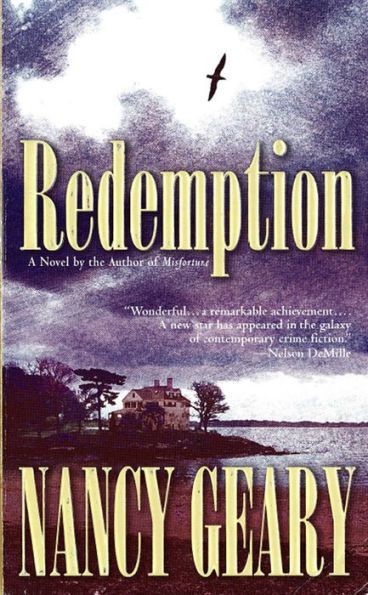
Redemption
By Nancy Geary
Warner Books
Copyright © 2003 Nancy Whitman GearyAll right reserved.
ISBN: 0446527548
Chapter One
"You're a saint." Frances Pratt hung up the telephone still hearing Sam Guff's amused chuckle. She absentmindedly twirled one of her brown curls around her index finger. Sun poured through her office windows onto the plush navy carpet and upholstered armchairs. She debated drawing the blinds but decided instead to enjoy the warmth. Summer was here. Finally.
Frances glanced at the cream invitation embossed with black script, the two envelopes, three pieces of tissue paper, and reply card that lay scattered in front of her on the large walnut desk.
Mr. and Mrs. William Waller Lawrence The Church of the Holy Spirit, Manchester-by-the-Sea
She turned over the larger of the two envelopes and examined the calligraphy: Miss Frances Taylor Pratt and Guest, 1382 Plainview Road, Orient, New York. Even her address seemed formal.
Leaning back in her leather chair, she ran her finger over the raised lettering. Manchester. She could envision her aunt and uncle's sprawling white clapboard house on Smith's Point, a small peninsula that jutted out into the harbor. The salty air peeled the paint on the dozens of black shutters, and moss grew in the acidic soil between the flagstones of the patio. Although her brief visits to the New England seaside town had become less frequent in recent years, in an odd way it felt like home-a place infused with welcome. The mere sight of the oversize brass door knocker in the shape of a lion's head gave her a sense of belonging. It was a feeling she missed.
Aunt Adelaide, her father's only sister, had moved to Manchester with her infant daughter, Penelope, when she married for the second time. They'd moved into Bill Lawrence's family home and stayed there ever since. "I've set down my roots," she used to say with a polite smile whenever anyone asked how she could have left her birthplace. "And trees don't do well in Manhattan." Twenty-nine years later, the rambling house, its rooms full of faded chintz mismatched furniture, was filled with her presence.
Summer "family reunions," announced as if the weekend promised hordes of distant relatives rather than the small brood of cousins that they were, had begun the year Frances turned nine. They'd offered the best of activities: camping on the private beach, eating Cheerios out of a waxed-paper-lined box in the early morning while still in her sleeping bag; scavenger hunts that sent her scrambling across the rocky shore in search of a piece of blue sea glass, a sea star, or a periwinkle shell; fishing expeditions in the canoe, dropping paper clip lines baited with raw bacon overboard in hopes of snagging a flounder; late-night games of charades in the paneled library of the Lawrence home with its sweet smell of bitter orange potpourri. Frances could still recall the taste of her aunt's angel food cake, the sound of the porch door as it slammed shut, the creak of the floorboards in the upstairs hall that always seemed louder at night when she snuck in past her curfew. These were her happiest childhood memories.
Theodora Pratt, the family matriarch and Frances's sole living grandparent, had become a permanent fixture in Manchester as well. She'd moved from Ann Arbor, Michigan, after her husband died to the guest cottage at the edge of the property. Frances remembered well the two frenzied days she'd spent listening to her grandmother bark directions as she'd helped to unpack her eclectic possessions. Teddy's collections of first editions and travel logs filled to overflowing the bookshelves in the sunken sitting room, and her Matelasse bedspreads brightened the two mildewed bedrooms. She remembered the sunny afternoon after they'd hung the last beveled mirror. They'd sat together in the screened-in porch, admiring the view of the harbor.
"I get my independence without any of the troubles of home maintenance," Teddy had remarked. "And it works for them. They get rent. Not much, but it'll help with the taxes." She'd raised her eyebrows and said nothing further. As Frances now reflected, she realized it was the only reference to money she'd ever heard made by any of her Manchester relatives.
It was hard to imagine that nearly five years had passed since that fall weekend. But hardly a Sunday came and went without Frances picking up the telephone to listen to her grandmother's stories, the words rattling in her two-pack-a-day throat. At eighty-two, Teddy drove to lunch at the Singing Beach Club, played mah-jongg Tuesday afternoons, volunteered at the checkout desk of the local library, and walked her three dogs every day. The sight of her with her silver-handled walking stick and her pack of canines-an Irish terrier, a dachshund, and a one-eyed pit bull she'd adopted from the North Shore Animal Rescue League after reading about its fighting injuries in a local paper-had to be a source of constant amusement to the residents on her route. And she still gossiped. It hadn't taken her long to know everything about everyone in Manchester-by-the-Sea.
She often spoke of raising her two children alone because their father had spent much of his career in the Far East and she had refused to go. "I know my conduct was viewed as scandalous. My loyalty was questioned because I wouldn't follow my husband to some tsetse fly-infested country with primitive sewers, but I wasn't about to have my children educated abroad. Generations before me worked bloody hard to get to this country, and I intended to remain. Dick could do what he liked. He always did anyway," she said, referring to her late husband. Frances remembered the note of pride in Teddy's voice as she relayed her decision. An independent woman was a relatively rare commodity "in my day and age," she liked to say.
Frances thought now of the last time she'd seen anyone from the paternal side of her family. She'd been sitting by her father's bed at New York University Medical Center when Adelaide entered the room unexpectedly, her hazel eyes and high cheekbones partially obscured by the oversize brim of a navy hat. Frances had been startled by her frailty, her tiny waist cinched by a leather belt and thin ankles covered in sheer black stockings. They'd embraced quickly, Adelaide gracing both her cheeks with the faintest of kisses. Then she'd removed her hat, approached her brother, and perched gently on the edge of his bed. Under the fluorescent hospital lights, the crow's-feet surrounding her eyes and the deep lines in her forehead reflected her fifty-three years.
Adelaide had taken Richard Pratt's limp hand in her bony fingers. "My dearest, dearest Richard, I'm so sorry this happened to you," she'd cooed with a particular emphasis on "you." Frances thought she saw her father's fingers move in response, a feeble gesture meant to reflect the affection he felt for his younger sister, but she hadn't been sure. "Tell me," Adelaide had continued without looking at Frances. "Tell me everything I need to know about what happened."
Frances hadn't known how to respond. An intercerebral hemorrhagic stroke on the left side of his brain, a ruptured blood vessel, extensive bleeding in the brain tissue ... The doctor's words had echoed in her mind, but she'd had difficulty repeating them aloud. Instead, she'd stared blankly ahead, wishing her aunt would read her thoughts so that she could avoid articulating the diagnosis that condemned her father.
"Never mind. What happened isn't important. What will happen now is all that matters. Please forgive me. We must look to the future," Adelaide had reassured her as she'd moved toward her and gently wiped tears from Frances's face with a slightly perfumed linen handkerchief. Frances hadn't even realized she'd been crying, yet she could still remember the faint smell of tuberose, the feel of the cloth on her face. The gesture had seemed maternal, a tenderness that was foreign to Frances. She hadn't wanted it to end.
Now Hope Alexandra Lawrence, the only child of Bill and Adelaide's marriage, was getting married.
The telephone interrupted Frances's reverie, and she reached to pick it up.
"Fanny, it's me," Sam said. "Give me the date of that wedding again. I want to be sure we get a ferry reservation."
Typical Sam, Frances thought. Always efficient. The ferry from Orient Point to New London, Connecticut, the simplest way to get to New England from the easternmost tip of Long Island, was packed during the summer months, and a coveted spot on any weekend between Memorial and Labor Days had to be secured well in advance.
"I'll deal with it. It's enough that you've agreed to come. Standing around in jacket and tie making small talk on a summer Saturday is not your idea of a great time."
"I'm honored that you want to take me," Sam said with his usual humility. "Really I am. I'm hardly the one you should have on your arm for such an occasion."
"What's that supposed to mean?"
"You should be escorted by some guy who wears Porter's lotion and suspenders, has two middle names, and is a fourth-generation graduate of Groton. I'm just a potato farmer." Sam paused. "But I'll try to brush up on my stock market lingo and pretend I have a portfolio." He lowered his voice and affected a lockjawed manner of speech. "Yukon Golds are my hot new commodity."
"Don't be absurd," Frances replied. "This is my cousin."
"That's what I'm afraid of. Your family."
Frances thought for a moment. She wished his words were true, that she had been part of the Lawrence household instead of just a visiting relative, so distant that she'd needed a guest pass at the Manchester Field and Hunt Club in order to use the swimming pool. As an adolescent, she'd spent many hours fantasizing that there had been a mistake, that she'd actually been Adelaide's daughter, or that her aunt would adopt her into the intact family. But fate had dealt her a different hand.
"Actually, it'll just be us. Dad can't go," Frances remarked, thinking of her father's ever worsening condition. Missing his niece's wedding wouldn't help his already fragile emotional state. "And Blair's baby is due the twenty-fifth. I doubt she'll be able to travel," she said, referring to her younger sister.
"What about your mother?"
"No," Frances responded too quickly. Her parents had been divorced for more than thirty years, but that wasn't the real reason her mother would stay away. She appreciated that Sam didn't inquire further. He knew her well enough to know that if she wanted to explain, she would without any prompting from him.
They were silent. Even so, Frances felt comfortable. They often spent time together without speaking. They could read, sit in front of the fire with their own thoughts, or work in her garden without a word passing between them, but she never felt isolated or alone. Sam managed to put her at ease with his ability to share in her privacy.
"How does vegetarian chili sound for dinner?"
"Is that my only choice?"
Sam laughed. "Aren't we getting picky? I'll see if I can come up with something else."
"Thanks. See you tonight."
"I love you," Sam added just before the line went dead.
Frances smiled to herself as she caught his words. Her romance with her widower neighbor had evolved after seven years of friendship, weekly Wednesday night bingo games, and many hours of gardening. Two misfits, perhaps, but they had a mutual adoration and a shared affection for her two dogs and a reclusive life. The small-town quietness of Orient on the North Fork of Long Island suited them both.
In the grocery store parking lot the previous fall, Sam had first told her he loved her. Why here? Why now? "I figured if I could make a shopping plaza feel special, if you could feel swept away even amid bags of toilet paper and laundry detergent and dog biscuits, you'd trust me to fill the other parts of your life with romance." Since that first time, Frances craved hearing him say the phrase, and he didn't disappoint. He never ended a conversation or turned off the light at night without washing her with those words.
She had assumed that the magnetism of his smile, his voice, and his touch would pass or that she'd discover a dark side, as she had with past relationships. But it hadn't happened. There were days when Sam seemed so kind that she asked herself whether he was a figment of her imagination, an idealized man whose sensitivity and insight she'd scripted in her mind. Wasn't romance a predatory dance, a mixture of hunting and mating, hurting and courting, until one creature emerged the stronger and the other was destroyed? It wasn't supposed to make you feel confident, was it? She wanted to relax, to feel safe in his embrace, to trust that nothing would change. But at moments her nerves flared. Was Sam really different?
Frances checked the "will attend" line on the reply card, sealed it in its prestamped envelope, and tucked the various components of the wedding invitation away in her desk drawer. Then she turned her attention to a legal pad covered in handwritten notes. The almost illegible scrawl formed the outline for her lecture to area law enforcement on how to respond to, and handle, domestic abuse cases. As president of the Long Island Coalition Against Domestic Violence, a job she had accepted shortly after leaving the Suffolk County District Attorney's Office, she regularly gave public awareness and educational seminars, and she could recite her key points by rote: how to take a thorough history from the victim, document physical injuries, obtain temporary restraining orders, and work through the morass of social services to determine what state-funded food, shelter, and other aid could be available. Occasionally, especially when the administrative responsibilities of her new job seemed overwhelming or she was forced to attend another fund-raising luncheon, she missed the adrenaline and excitement of constant court appearances, presentations before the grand jury, all the stages of investigations and prosecutions of criminal cases. But most of the time she was satisfied. Although her work consumed her week and a good portion of her weekends as well, the coalition and its mission were causes she believed in. That made the bureaucratic headaches and long hours worthwhile.
She made a note to herself in the margin: "Emphasize emotional abuse/psychological battery." Police officers, prosecutors, and even judges needed a black eye before they were willing to intervene in personal matters, to punish a husband or a boyfriend for losing his temper, but there was more to domestic violence than bruises or blood. It was her job to explain that.
Continues...
Excerpted from Redemption by Nancy Geary Copyright © 2003 by Nancy Whitman Geary
Excerpted by permission. All rights reserved. No part of this excerpt may be reproduced or reprinted without permission in writing from the publisher.