
Rising Tide: The Great Mississippi Flood of 1927 and How It Changed America
A New York Times Notable Book of the Year, winner of the Southern Book Critics Circle Award and the Lillian Smith Award.
An American epic of science, politics, race, honor, high society, and the Mississippi River, Rising Tide tells the riveting and nearly forgotten story of the Great Mississippi Flood of 1927. The river inundated the homes of almost one million people, helped elect Huey Long governor and made Herbert Hoover president, drove hundreds of thousands of African Americans north, and transformed American society and politics forever.
The flood brought with it a human storm: white and black collided, honor and money collided, regional and national powers collided. New Orleans’s elite used their power to divert the flood to those without political connections, power, or wealth, while causing Black sharecroppers to abandon their land to flee up north. The states were unprepared for this disaster and failed to support the Black community. The racial divides only widened when a white officer killed a Black man for refusing to return to work on levee repairs after a sleepless night of work.
In the powerful prose of Rising Tide, John M. Barry removes any remaining veil that there had been equality in the South. This flood not only left millions of people ruined, but further emphasized the racial inequality that have continued even to this day.
1102269971
An American epic of science, politics, race, honor, high society, and the Mississippi River, Rising Tide tells the riveting and nearly forgotten story of the Great Mississippi Flood of 1927. The river inundated the homes of almost one million people, helped elect Huey Long governor and made Herbert Hoover president, drove hundreds of thousands of African Americans north, and transformed American society and politics forever.
The flood brought with it a human storm: white and black collided, honor and money collided, regional and national powers collided. New Orleans’s elite used their power to divert the flood to those without political connections, power, or wealth, while causing Black sharecroppers to abandon their land to flee up north. The states were unprepared for this disaster and failed to support the Black community. The racial divides only widened when a white officer killed a Black man for refusing to return to work on levee repairs after a sleepless night of work.
In the powerful prose of Rising Tide, John M. Barry removes any remaining veil that there had been equality in the South. This flood not only left millions of people ruined, but further emphasized the racial inequality that have continued even to this day.
Rising Tide: The Great Mississippi Flood of 1927 and How It Changed America
A New York Times Notable Book of the Year, winner of the Southern Book Critics Circle Award and the Lillian Smith Award.
An American epic of science, politics, race, honor, high society, and the Mississippi River, Rising Tide tells the riveting and nearly forgotten story of the Great Mississippi Flood of 1927. The river inundated the homes of almost one million people, helped elect Huey Long governor and made Herbert Hoover president, drove hundreds of thousands of African Americans north, and transformed American society and politics forever.
The flood brought with it a human storm: white and black collided, honor and money collided, regional and national powers collided. New Orleans’s elite used their power to divert the flood to those without political connections, power, or wealth, while causing Black sharecroppers to abandon their land to flee up north. The states were unprepared for this disaster and failed to support the Black community. The racial divides only widened when a white officer killed a Black man for refusing to return to work on levee repairs after a sleepless night of work.
In the powerful prose of Rising Tide, John M. Barry removes any remaining veil that there had been equality in the South. This flood not only left millions of people ruined, but further emphasized the racial inequality that have continued even to this day.
An American epic of science, politics, race, honor, high society, and the Mississippi River, Rising Tide tells the riveting and nearly forgotten story of the Great Mississippi Flood of 1927. The river inundated the homes of almost one million people, helped elect Huey Long governor and made Herbert Hoover president, drove hundreds of thousands of African Americans north, and transformed American society and politics forever.
The flood brought with it a human storm: white and black collided, honor and money collided, regional and national powers collided. New Orleans’s elite used their power to divert the flood to those without political connections, power, or wealth, while causing Black sharecroppers to abandon their land to flee up north. The states were unprepared for this disaster and failed to support the Black community. The racial divides only widened when a white officer killed a Black man for refusing to return to work on levee repairs after a sleepless night of work.
In the powerful prose of Rising Tide, John M. Barry removes any remaining veil that there had been equality in the South. This flood not only left millions of people ruined, but further emphasized the racial inequality that have continued even to this day.
23.0
In Stock
5
1


Rising Tide: The Great Mississippi Flood of 1927 and How It Changed America
528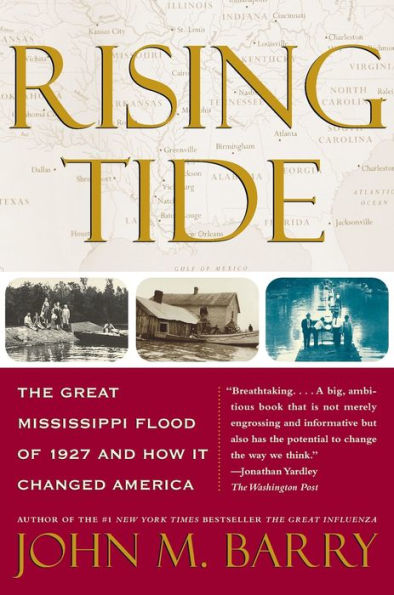
Rising Tide: The Great Mississippi Flood of 1927 and How It Changed America
528
23.0
In Stock

Product Details
| ISBN-13: | 9780684840024 |
|---|---|
| Publisher: | Simon & Schuster |
| Publication date: | 04/02/1998 |
| Pages: | 528 |
| Product dimensions: | 6.10(w) x 9.20(h) x 1.40(d) |
| Lexile: | 1120L (what's this?) |
About the Author
What People are Saying About This
From the B&N Reads Blog