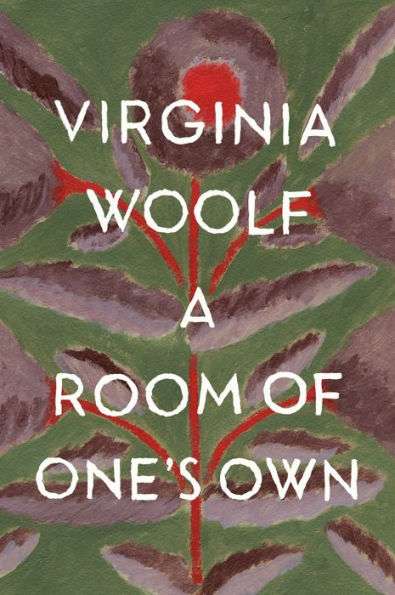
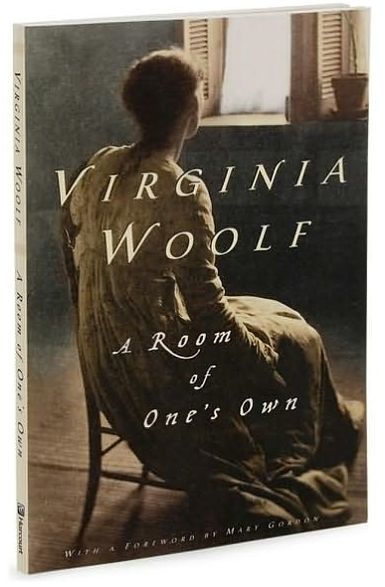
A Room of One's Own

( 32 )

Pick Up in Store

Reserve and pick up in 60 minutes at your local store

Paperback (Reissue)
$10.48
BN.com price
$13.00 List Price (Save 19%)
Marketplace (New and Used)
from
$0.99
$13.00 List Price (Save 92%)
Usually ships within 1-2 business days
All (154)  
Used (128)  
New (26)  
Close
Sort by
Page 1 of 16
Showing 1 – 10 of 154 (16 pages)
$0.99
(Save 92%)
Seller since 2007

Feedback rating:

(6611)

Condition:

New — never opened or used in original packaging.

Like New — packaging may have been opened. A "Like New" item is suitable to give as a gift.

Very Good — may have minor signs of wear on packaging but item works perfectly and has no damage.

Good — item is in good condition but packaging may have signs of shelf wear/aging or torn packaging. All specific defects should be noted in the Comments section associated with each item.

Acceptable — item is in working order but may show signs of wear such as scratches or torn packaging. All specific defects should be noted in the Comments section associated with each item.

Used — An item that has been opened and may show signs of wear. All specific defects should be noted in the Comments section associated with each item.

Refurbished — A used item that has been renewed or updated and verified to be in proper working condition. Not necessarily completed by the original manufacturer.

Good
Good 0156787334 Visible shelf wear--may have some notes/markings on pages.

Ships from: San Leandro, CA

Usually ships in 1-2 business days

  • Canadian
  • International
  • Standard, 48 States
  • Standard (AK, HI)
  • Express, 48 States
  • Express (AK, HI)
$0.99
(Save 92%)
Seller since 2011

Feedback rating:

(144)

Condition: Acceptable
1989 Paperback Fair The book is clean but may have markings or highlights througout.

Ships from: St Paul, MN

Usually ships in 1-2 business days

  • Canadian
  • International
  • Standard, 48 States
  • Standard (AK, HI)
  • Express, 48 States
  • Express (AK, HI)
$0.99
(Save 92%)
Seller since 2005

Feedback rating:

(18888)

Condition: Very Good
1989-12-27 Paperback Very Good Trade paperback (US). Glued binding. 132 p. Previous Owner's Inscription.

Ships from: Sparks, NV

Usually ships in 1-2 business days

  • Canadian
  • International
  • Standard, 48 States
  • Standard (AK, HI)
  • Express, 48 States
  • Express (AK, HI)
$1.89
(Save 85%)
Seller since 2009

Feedback rating:

(4412)

Condition: Acceptable
Has heavy highlighting. Some markings on outside page edges. Has some writing. Ships the next business day, with tracking and delivery confirmation sent to your email.

Ships from: Beaverton, OR

Usually ships in 1-2 business days

  • Standard, 48 States
  • Standard (AK, HI)
  • Express, 48 States
  • Express (AK, HI)
$1.89
(Save 85%)
Seller since 2009

Feedback rating:

(4412)

Condition: Acceptable
Has some underlining and writing. Some wear to the cover and pages. Ships the next business day, with tracking and delivery confirmation sent to your email.

Ships from: Beaverton, OR

Usually ships in 1-2 business days

  • Standard, 48 States
  • Standard (AK, HI)
  • Express, 48 States
  • Express (AK, HI)
$1.99
(Save 85%)
Seller since 2006

Feedback rating:

(9951)

Condition: Good
Standard used condition.

Ships from: Baltimore, MD

Usually ships in 1-2 business days

  • Canadian
  • International
  • Standard, 48 States
  • Standard (AK, HI)
  • Express, 48 States
  • Express (AK, HI)
$1.99
(Save 85%)
Seller since 2009

Feedback rating:

(22275)

Condition: Good
Giving great service since 2004: Buy from the Best! 4,000,000 items shipped to delighted customers. We have 1,000,000 unique items ready to ship! Find your Great Buy today!

Ships from: Lakewood, WA

Usually ships in 1-2 business days

  • Canadian
  • International
  • Standard, 48 States
  • Standard (AK, HI)
  • Express, 48 States
  • Express (AK, HI)
$1.99
(Save 85%)
Seller since 2009

Feedback rating:

(22275)

Condition: Good
Giving great service since 2004: Buy from the Best! 4,000,000 items shipped to delighted customers. We have 1,000,000 unique items ready to ship! Find your Great Buy today!

Ships from: Lakewood, WA

Usually ships in 1-2 business days

  • Canadian
  • International
  • Standard, 48 States
  • Standard (AK, HI)
  • Express, 48 States
  • Express (AK, HI)
$1.99
(Save 85%)
Seller since 2009

Feedback rating:

(2182)

Condition: Good
SOME HIGHLIGHTING AND PRICE STICKER

Ships from: Columbia, MO

Usually ships in 1-2 business days

  • Standard, 48 States
  • Standard (AK, HI)
  • Express, 48 States
  • Express (AK, HI)
$1.99
(Save 85%)
Seller since 2009

Feedback rating:

(22275)

Condition: Good
Giving great service since 2004: Buy from the Best! 4,000,000 items shipped to delighted customers. We have 1,000,000 unique items ready to ship! Find your Great Buy today!

Ships from: Lakewood, WA

Usually ships in 1-2 business days

  • Canadian
  • International
  • Standard, 48 States
  • Standard (AK, HI)
  • Express, 48 States
  • Express (AK, HI)
Page 1 of 16
Showing 1 – 10 of 154 (16 pages)
Close
Sort by
NOOK Book (eBook)
$9.49
BN.com price
$13.00 List Price (Save 27%)

Available on NOOK devices and apps

  • Nook Devices
  • NOOK
  • NOOK Color
  • NOOK Tablet
  • Tablet/Phone
  • NOOK for iPad
  • NOOK for iPhone
  • NOOK for Android
  • NOOK for Android (Tablet)
  • NOOK Kids for iPad
  • PC/Mac
  • NOOK Study
  • NOOK for PC
  • NOOK for Mac

Need a NOOK? Explore Now

All Available Formats + Editions

Marketplace From
BN.com
See more formats + editions

Overview

A ROOM OF ONE'S OWN BY VIRGINIA WOOLF (Bestseller Modern Literary Classics): SPECIAL NOOK EDITION

A Room of One's Own by Virginia Woolf, Author of Orlando, To The Lighthouse, The Waves, Mrs. Dalloway Ebook

PART OF THE COMPLETE WORKS OF VIRGINIA WOOLF [Illustrated]


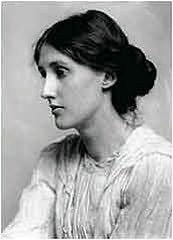
VIRGINIA WOOLF

Adeline Virginia Woolf was an English author, essayist, publisher, and writer of short stories, regarded as one of the foremost modernist literary figures of the twentieth century.

During the interwar period, Woolf was a significant figure in London literary society and a member of the Bloomsbury Group. Her most famous works include the novels Mrs Dalloway (1925), To the Lighthouse (1927) and Orlando (1928), and the book-length essay A Room of One's Own (1929), with its famous dictum, "A woman must have money and a room of her own if she is to write fiction."


A ROOM OF ONE'S OWN

A Room of One's Own is an extended essay by Virginia Woolf. First published on 24 October 1929, the essay was based on a series of lectures she delivered at Newnham College and Girton College, two women's colleges at Cambridge University in October 1928. While this extended essay in fact employs a fictional narrator and narrative to explore women both as writers of and characters in fiction, the manuscript for the delivery of the series of lectures, titled "Women and Fiction", and hence the essay, are considered non-fiction.

The essay is generally seen as a feminist text, and is noted in its argument for both a literal and figural space for women writers within a literary tradition dominated by patriarchy.

Copyright Note: This Ebook Should Only Be Purchased By Readers Not in US

A brilliant essay on the importance of financial and social independence to the creative process for women of genius.

Product Details

  • ISBN-13: 9780156787338
  • Publisher: Houghton Mifflin Harcourt
  • Publication date: 12/21/1989
  • Edition description: Reissue
  • Edition number: 1
  • Pages: 128
  • Sales rank: 52,015
  • Lexile: 1220L (what's this?)
  • Product dimensions: 5.44 (w) x 7.98 (h) x 0.34 (d)

Meet the Author

Virginia Woolf
Virginia Woolf
The early decades of the 20th century saw the rise of the “experimental” novel, and few writers had more success with their experiments than Virginia Woolf. Her innovative approach as a novelist, critic, and biographer made her an author who is even more widely read today than she was in her own time.

Biography

Virginia Woolf is now recognized as a major twentieth-century author, a great novelist and essayist and a key figure in literary history as a feminist and a modernist. Born in 1882, she was the daughter of the editor and critic Leslie Stephen, and suffered a traumatic adolescence after the deaths of her mother, in 1895, and her stepsister Stella, in 1897, leaving her subject to breakdowns for the rest of her life. Her father died in 1904 and two years later her favorite brother Thoby died suddenly of typhoid. With her sister, the painter Vanessa Bell, she was drawn into the company of writers and artists such as Lytton Strachey and Roger Fry, later known as the Bloomsbury Group. Among them she met Leonard Woolf, whom she married in 1912, and together they founded the Hogarth Press in 1917, which was to publish the work of T. S. Eliot, E. M. Forster and Katherine Mansfield as well as the earliest translations of Freud. Woolf lived an energetic life among friends and family, reviewing and writing, and dividing her time between London and the Sussex Downs. In 1941, fearing another attack of mental illness, she drowned herself.

Her first novel, The Voyage Out, appeared in 1915, and she then worked through the transitional Night and Day (1919) to the highly experimental and impressionistic Jacob's Room (1922). From then on her fiction became a series of brilliant and extraordinarily varied experiments, each one searching for a fresh way of presenting the relationship between individual lives and the forces of society and history. She was particularly concerned with women's experience, not only in her novels but also in her essays and her two books of feminist polemic, A Room of One's Own (1929) and Three Guineas (1938). Her major novels include Mrs. Dalloway (1925), the historical fantasy Orlando (1928), written for Vita Sackville-West, the extraordinarily poetic vision of The Waves (1931), the family saga of The Years (1937), and Between the Acts (1941).

Author biography courtesy of Penguin Group (USA).

    1. Also Known As:
      Adeline Virginia Stephen Woolf (full name)
    1. Date of Birth:
      January 25, 1882
    2. Place of Birth:
      London
    1. Date of Death:
      March 28, 1941
    2. Place of Death:
      Sussex, England

Read an Excerpt

CHAPTER ONE

BUT, YOU MAY say, we asked you to speak about women and fiction-what has that got to do with a room of one's own? I will try to explain. When you asked me to speak about women and fiction I sat down on the banks of a river and began to wonder what the words meant. They might mean simply a few remarks about Fanny Burney; a few more about Jane Austen; a tribute to the Brontës and a sketch of Haworth Parsonage under snow; some witticisms if possible about Miss Mitford; a respectful allusion to George Eliot; a reference to Mrs. Gaskell and one would have done. But at second sight the words seemed not so simple. The title women and fiction might mean, and you may have meant it to mean, women and what they are like; or it might mean women and the fiction that they write; or it might mean women and the fiction that is written about them; or it might mean that somehow all three are inextricably mixed together and you want me to consider them in that light. But when I began to consider the subject in this last way, which seemed the most interesting, I soon saw that it had one fatal drawback. I should never be able to come to a conclusion. I should never be able to fulfil what is, I understand, the first duty of a lecturer-to hand you after an hour's discourse a nugget of pure truth to wrap up between the pages of your notebooks and keep on the mantel-piece for ever. All I could do was to offer you an opinion upon one minor point-a woman must have money and a room of her own if she is to write fiction; and that, as you will see, leaves the great problem of the true nature of woman and the true nature of fiction unsolved. I have shirked the duty of coming to a conclusion upon these two questions-women and fiction remain, so far as I am concerned, unsolved problems. But in order to make some amends I am going to do what I can to show you how I arrived at this opinion about the room and the money. I am going to develop in your presence as fully and freely as I can the train of thought which led me to think this. Perhaps if I lay bare the ideas, the prejudices, that lie behind this statement you will find that they have some bearing upon women and some upon fiction. At any rate, when a subject is highly controversial-and any question about sex is that-one cannot hope to tell the truth. One can only show how one came to hold whatever opinion one does hold. One can only give one's audience the chance of drawing their own conclusions as they observe the limitations, the prejudices, the idiosyncrasies of the speaker. Fiction here is likely to contain more truth than fact. Therefore I propose, making use of all the liberties and licences of a novelist, to tell you the story of the two days that preceded my coming here-how, bowed down by the weight of the subject which you have laid upon my shoulders, I pondered it, and made it work in and out of my daily life. I need not say that what I am about to describe has no existence; Oxbridge is an invention; so is Fernham; "I" is only a convenient term for somebody who has no real being. Lies will flow from my lips, but there may perhaps be some truth mixed up with them; it is for you to seek out this truth and to decide whether any part of it is worth keeping. If not, you will of course throw the whole of it into the wastepaper basket and forget all about it.

Here then was I (call me Mary Beton, Mary Seton, Mary Carmichael or by any name you please-it is not a matter of any importance) sitting on the banks of a river a week or two ago in fine October weather, lost in thought. That collar I have spoken of, women and fiction, the need of coming to some conclusion on a subject that raises all sorts of prejudices and passions, bowed my head to the ground. To the right and left bushes of some sort, golden and crimson, glowed with the colour, even it seemed burnt with the heat, of fire. On the further bank the willows wept in perpetual lamentation, their hair about their shoulders. The river reflected whatever it chose of sky and bridge and burning tree, and when the undergraduate had oared his boat through the reflections they closed again, completely, as if he had never been. There one might have sat the clock round lost in thought. Thought-to call it by a prouder name than it deserved-had let its line down into the stream. It swayed, minute after minute, hither and thither among the reflections and the weeds, letting the water lift it and sink it, until-you know the little tug-the sudden conglomeration of an idea at the end of one's line: and then the cautious hauling of it in, and the careful laying of it out? Alas, laid on the grass how small, how insignificant this thought of mine looked; the sort of fish that a good fisherman puts back into the water so that it may grow fatter and be one day worth cooking and eating. I will not trouble you with that thought now, though if you look carefully you may find it for yourselves in the course of what I am going to say.

But however small it was, it had, nevertheless, the mysterious property of its kind-put back into the mind, it became at once very exciting, and important; and as it darted and sank, and flashed hither and thither, set up such a wash and tumult of ideas that it was impossible to sit still. It was thus that I found myself walking with extreme rapidity across a grass plot. Instantly a man's figure rose to intercept me. Nor did I at first understand that the gesticulations of a curious-looking object, in a cut-away coat and evening shirt, were aimed at me. His face expressed horror and indignation. Instinct rather than reason came to my help; he was a Beadle; I was a woman. This was the turf; there was the path. Only the Fellows and Scholars are allowed here; the gravel is the place for me. Such thoughts were the work of a moment. As I regained the path the arms of the Beadle sank, his face assumed its usual repose, and though turf is better walking than gravel, no very great harm was done. The only charge I could bring against the Fellows and Scholars of whatever the college might happen to be was that in protection of their turf, which has been rolled for 300 years in succession, they had sent my little fish into hiding.

What idea it had been that had sent me so audaciously trespassing I could not now remember. The spirit of peace descended like a cloud from heaven, for if the spirit of peace dwells anywhere, it is in the courts and quadrangles of Oxbridge on a fine October morning. Strolling through those colleges past those ancient halls the roughness of the present seemed smoothed away; the body seemed contained in a miraculous glass cabinet through which no sound could penetrate, and the mind, freed from any contact with facts (unless one trespassed on the turf again), was at liberty to settle down upon whatever meditation was in harmony with the moment. As chance would have it, some stray memory of some old essay about revisiting Oxbridge in the long vacation brought Charles Lamb to mind-Saint Charles, said Thackeray, putting a letter of Lamb's to his forehead. Indeed, among all the dead (I give you my thoughts as they came to me), Lamb is one of the most congenial; one to whom one would have liked to say, Tell me then how you wrote your essays? For his essays are superior even to Max Beerbohm's, I thought, with all their perfection, because of that wild flash of imagination, that lightning crack of genius in the middle of them which leaves them flawed and imperfect, but starred with poetry. Lamb then came to Oxbridge perhaps a hundred years ago. Certainly he wrote an essay-the name escapes me- about the manuscript of one of Milton's poems which he saw here. It was Lycidas perhaps, and Lamb wrote how it shocked him to think it possible that any word in Lycidas could have been different from what it is. To think of Milton changing the words in that poem seemed to him a sort of sacrilege. This led me to remember what I could of Lycidas and to amuse myself with guessing which word it could have been that Milton had altered, and why. It then occurred to me that the very manuscript itself which Lamb had looked at was only a few hundred yards away, so that one could follow Lamb's footsteps across the quadrangle to that famous library where the treasure is kept. Moreover, I recollected, as I put this plan into execution, it is in this famous library that the manuscript of Thackeray's Esmond is also preserved. The critics often say that Esmond is Thackeray's most perfect novel. But the affectation of the style, with its imitation of the eighteenth century, hampers one, so far as I can remember; unless indeed the eighteenth-century style was natural to Thackeray-a fact that one might prove by looking at the manuscript and seeing whether the alterations were for the benefit of the style or of the sense. But then one would have to decide what is style and what is meaning, a question which-but here I was actually at the door which leads into the library itself. I must have opened it, for instantly there issued, like a guardian angel barring the way with a flutter of black gown instead of white wings, a deprecating, silvery, kindly gentleman, who regretted in a low voice as he waved me back that ladies are only admitted to the library if accompanied by a Fellow of the College or furnished with a letter of introduction.

Copyright 1929 by Harcourt, Inc.
Copyright renewed 1957 by Leonard Woolf Annotated Edition copyright © 2005 by Harcourt, Inc.
Introduction copyright © 2005 by Susan Gubar

All rights reserved. No part of this publication may be reproduced or transmitted in any form or by any means, electronic or mechanical, including photocopy,
recording, or any information storage and retrieval system, without permission in writing from the publisher.

Requests for permission to make copies of any part of the work should be mailed to the following address: Permissions Department, Harcourt, Inc.,
6277 Sea Harbor Drive, Orlando, Florida 32887-6777.

Table of Contents

CONTENTS Preface: Virginia Woolf ix

Chronology xix

Introduction xxxv

A Room of One's Own 1

Notes to A Room of One's Own 113

Suggestions for Further Reading: Virginia Woolf 143

Suggestions for Further Reading: A Room of One's Own 147

First Chapter

CHAPTER ONE

BUT, YOU MAY say, we asked you to speak about women and fiction-what has that got to do with a room of one's own? I will try to explain. When you asked me to speak about women and fiction I sat down on the banks of a river and began to wonder what the words meant. They might mean simply a few remarks about Fanny Burney; a few more about Jane Austen; a tribute to the Brontës and a sketch of Haworth Parsonage under snow; some witticisms if possible about Miss Mitford; a respectful allusion to George Eliot; a reference to Mrs. Gaskell and one would have done. But at second sight the words seemed not so simple. The title women and fiction might mean, and you may have meant it to mean, women and what they are like; or it might mean women and the fiction that they write; or it might mean women and the fiction that is written about them; or it might mean that somehow all three are inextricably mixed together and you want me to consider them in that light. But when I began to consider the subject in this last way, which seemed the most interesting, I soon saw that it had one fatal drawback. I should never be able to come to a conclusion. I should never be able to fulfil what is, I understand, the first duty of a lecturer-to hand you after an hour's discourse a nugget of pure truth to wrap up between the pages of your notebooks and keep on the mantel-piece for ever. All I could do was to offer you an opinion upon one minor point-a woman must have money and a room of her own if she is to write fiction; and that, as you will see, leaves the great problem of the true nature of woman and the true nature of fiction unsolved. I have shirked the duty of coming to a conclusionupon these two questions-women and fiction remain, so far as I am concerned, unsolved problems. But in order to make some amends I am going to do what I can to show you how I arrived at this opinion about the room and the money. I am going to develop in your presence as fully and freely as I can the train of thought which led me to think this. Perhaps if I lay bare the ideas, the prejudices, that lie behind this statement you will find that they have some bearing upon women and some upon fiction. At any rate, when a subject is highly controversial-and any question about sex is that-one cannot hope to tell the truth. One can only show how one came to hold whatever opinion one does hold. One can only give one's audience the chance of drawing their own conclusions as they observe the limitations, the prejudices, the idiosyncrasies of the speaker. Fiction here is likely to contain more truth than fact. Therefore I propose, making use of all the liberties and licences of a novelist, to tell you the story of the two days that preceded my coming here-how, bowed down by the weight of the subject which you have laid upon my shoulders, I pondered it, and made it work in and out of my daily life. I need not say that what I am about to describe has no existence; Oxbridge is an invention; so is Fernham; "I" is only a convenient term for somebody who has no real being. Lies will flow from my lips, but there may perhaps be some truth mixed up with them; it is for you to seek out this truth and to decide whether any part of it is worth keeping. If not, you will of course throw the whole of it into the wastepaper basket and forget all about it.

Here then was I (call me Mary Beton, Mary Seton, Mary Carmichael or by any name you please-it is not a matter of any importance) sitting on the banks of a river a week or two ago in fine October weather, lost in thought. That collar I have spoken of, women and fiction, the need of coming to some conclusion on a subject that raises all sorts of prejudices and passions, bowed my head to the ground. To the right and left bushes of some sort, golden and crimson, glowed with the colour, even it seemed burnt with the heat, of fire. On the further bank the willows wept in perpetual lamentation, their hair about their shoulders. The river reflected whatever it chose of sky and bridge and burning tree, and when the undergraduate had oared his boat through the reflections they closed again, completely, as if he had never been. There one might have sat the clock round lost in thought. Thought-to call it by a prouder name than it deserved-had let its line down into the stream. It swayed, minute after minute, hither and thither among the reflections and the weeds, letting the water lift it and sink it, until-you know the little tug-the sudden conglomeration of an idea at the end of one's line: and then the cautious hauling of it in, and the careful laying of it out? Alas, laid on the grass how small, how insignificant this thought of mine looked; the sort of fish that a good fisherman puts back into the water so that it may grow fatter and be one day worth cooking and eating. I will not trouble you with that thought now, though if you look carefully you may find it for yourselves in the course of what I am going to say.

But however small it was, it had, nevertheless, the mysterious property of its kind-put back into the mind, it became at once very exciting, and important; and as it darted and sank, and flashed hither and thither, set up such a wash and tumult of ideas that it was impossible to sit still. It was thus that I found myself walking with extreme rapidity across a grass plot. Instantly a man's figure rose to intercept me. Nor did I at first understand that the gesticulations of a curious-looking object, in a cut-away coat and evening shirt, were aimed at me. His face expressed horror and indignation. Instinct rather than reason came to my help; he was a Beadle; I was a woman. This was the turf; there was the path. Only the Fellows and Scholars are allowed here; the gravel is the place for me. Such thoughts were the work of a moment. As I regained the path the arms of the Beadle sank, his face assumed its usual repose, and though turf is better walking than gravel, no very great harm was done. The only charge I could bring against the Fellows and Scholars of whatever the college might happen to be was that in protection of their turf, which has been rolled for 300 years in succession, they had sent my little fish into hiding.

What idea it had been that had sent me so audaciously trespassing I could not now remember. The spirit of peace descended like a cloud from heaven, for if the spirit of peace dwells anywhere, it is in the courts and quadrangles of Oxbridge on a fine October morning. Strolling through those colleges past those ancient halls the roughness of the present seemed smoothed away; the body seemed contained in a miraculous glass cabinet through which no sound could penetrate, and the mind, freed from any contact with facts (unless one trespassed on the turf again), was at liberty to settle down uupon whatever meditation was in harmony with the moment. As chance would have it, some stray memory of some old essay about revisiting Oxbridge in the long vacation brought Charles Lamb to mind-Saint Charles, said Thackeray, putting a letter of Lamb's to his forehead. Indeed, among all the dead (I give you my thoughts as they came to me), Lamb is one of the most congenial; one to whom one would have liked to say, Tell me then how you wrote your essays? For his essays are superior even to Max Beerbohm's, I thought, with all their perfection, because of that wild flash of imagination, that lightning crack of genius in the middle of them which leaves them flawed and imperfect, but starred with poetry. Lamb then came to Oxbridge perhaps a hundred years ago. Certainly he wrote an essay-the name escapes me- about the manuscript of one of Milton's poems which he saw here. It was Lycidas perhaps, and Lamb wrote how it shocked him to think it possible that any word in Lycidas could have been different from what it is. To think of Milton changing the words in that poem seemed to him a sort of sacrilege. This led me to remember what I could of Lycidas and to amuse myself with guessing which word it could have been that Milton had altered, and why. It then occurred to me that the very manuscript itself which Lamb had looked at was only a few hundred yards away, so that one could follow Lamb's footsteps across the quadrangle to that famous library where the treasure is kept. Moreover, I recollected, as I put this plan into execution, it is in this famous library that the manuscript of Thackeray's Esmond is also preserved. The critics often say that Esmond is Thackeray's most perfect novel. But the affectation of the style, with its imitation of the eighteenth century, hampers one, so far as I can remember; unless indeed the eighteenth-century style was natural to Thackeray-a fact that one might prove by looking at the manuscript and seeing whether the alterations were for the benefit of the style or of the sense. But then one would have to decide what is style and what is meaning, a question which-but here I was actually at the door which leads into the library itself. I must have opened it, for instantly there issued, like a guardian angel barring the way with a flutter of black gown instead of white wings, a deprecating, silvery, kindly gentleman, who regretted in a low voice as he waved me back that ladies are only admitted to the library if accompanied by a Fellow of the College or furnished with a letter of introduction.


Copyright 1929 by Harcourt, Inc.
Copyright renewed 1957 by Leonard Woolf
Annotated Edition copyright © 2005 by Harcourt, Inc.
Introduction copyright © 2005 by Susan Gubar

All rights reserved.
Customer Reviews
Average Rating 4
( 32 )

Rating Distribution

If you've bought this product, tell the world how you liked it.
Write a Review
See All Sort by: Showing 1 – 20 of 32 Customer Reviews
  • Posted April 19, 2009

    more from this reviewer

    I Also Recommend:

    A Great Commentary on Women in Literature

    A Room of One's Own is Virginia Woolf's statement about the place of women in society during her lifetime. Imagine being invited to speak at an extremely prestigious university and then told you needed an escort to enter the library.

    1 out of 1 people found this review helpful.

    Was this review helpful? Yes  No   Report this review
  • Anonymous

    Posted May 25, 2006

    The Reason Behind Woman Inferiority

    If you like an analytical book that is packed with ideas, then _A Room of One¿s Own_ by Virginia Woolf is the book for you. The style in this book is particularly unique. Incorporating words of her own with quotes of several famous authors of her day, Virginia Woolf proceeds to explain what a woman needs in order to write well and purely. These include having a stable income and a quiet room of one¿s own. ¿Why did men drink wine and women water? Why was one sex so prosperous and the other so poor? What effect has poverty on fiction? What conditions are necessary for the creation of works of art?¿ These are only some of the questions that she tries to answer. Women, she explains, have been made inferior by men, so that men can feel superior. She points out that if Shakespeare had a gifted sister, Judith, she would never be given a chance by men or society to develop and display her talent just because she was a woman. The reader is stricken by the book¿s truth, and reminded of the social differentiation that is still present in society today. Woolf¿s thoughts wander and jump, as she strolls in the park or gazes though her window, but they still flow efficiently, giving the reader the feeling the he is following her, and she is sharing her thoughts face to face. Eventually her ideas, stories, and quotes fall smoothly in place, as she makes her ultimate point. The book reads like an essay, combining the stories of several female artists, both recognized and unrecognized in society, concluding that women are not inferior by birth, but rather by the discriminations of society.

    1 out of 1 people found this review helpful.

    Was this review helpful? Yes  No   Report this review
  • Anonymous

    Posted May 20, 2005

    Amazing!

    This is an extraordinary treatise on women and fiction. Woolf examines the subject closely, as if through a magnifying glass, and from so many angles. This covers history, the relationship between men and women, the psychology of the genders, and so much more. While cool and critical on the surface, this seems to be seething with passion and fire underneath. The writing is exquisite, rich in imagery and symbolism. I read this in one day, but I would love to re-read this at a more leisurely pace sometime. I think that every woman who loves to read or who writes should read this!

    1 out of 1 people found this review helpful.

    Was this review helpful? Yes  No   Report this review
  • Anonymous

    Posted May 14, 2005

    A fresh appeal to feminism

    This book is absolutely fabulous. Wolfe provides a fresh outlook on feminism. Her distinct word choice and use of metaphors and similes make for thought provoking reading. Her views on feminism are far from female idolization as she points out that women are far from being perfect while at the same time illustrating the demorilizing and unfair limitations put on women by society and by men as a whole.

    1 out of 1 people found this review helpful.

    Was this review helpful? Yes  No   Report this review
  • Anonymous

    Posted June 25, 2005

    Concept still relevant today

    I found it amazing that this book seemed to have been written yesterday in a sense. It had some very thought provoking statements and I feel like I should read it on a daily basis just to affirm its lessons. It made me wish I had a trustfund coming my way so I could know the luxury of life on one's own by their own means and could take my time to write.

    1 out of 1 people found this review helpful.

    Was this review helpful? Yes  No   Report this review
  • Anonymous

    Posted May 5, 2010

    Not my thing

    I wanted to use this for a research paper thinking this would help a lot. It didn't. Sorry, not something I'd pick again. Wast of my money.

    0 out of 2 people found this review helpful.

    Was this review helpful? Yes  No   Report this review
  • Posted October 25, 2008

    more from this reviewer

    not real exciting but...

    I can concede that the theme of this essay is noble...but...the content is a bit boring and dry. I will say that Virginia Woolf had some poetic ideas! There are two main ideas that I particularly liked in this essay. The first being Shakespeare's Sister.

    Woolf points out that if Shakespeare would have had a sister who was born with the same genius that is Shakespeare, she would not have been remembered because her artistry would have been allowed no outlet.....because she was a female.

    The other point I took away from this essay ties in with Shakespeare's Sister. Women need "a room of one's own" and freedom from the worry of everyday living in order to write fiction. Woolf illustrates how these needs were not met throughout history for women. That is why there is no Shakespeare's Sister.

    This essay is not the most exciting book I've read lately. But taken for what it is, Virginia Woolf does make her point heard

    Was this review helpful? Yes  No   Report this review
  • Anonymous

    Posted July 30, 2004

    A thought-provoking look at women and fiction on several levels

    Brilliant woman!!! This is the first thing I have read by Woolf and I was throughly impressed. Woolf had this subject suggested to her--to write about women and fiction. What she does is explore the subject throughly: women characters in fiction, women who write fiction, and why not many women wrote much at all throughout history. She explores her ideas as to why men wrote women in so many different lights (from saintly to inferior to evil) and why they wrote so much about them at all. In doing so, she examines sexism throughout the ages and in her own time period. I would have given this five stars but her style of writing became a bit laborious at times to read. I wish I could give her 4 and a half! But like I said: this is my first venture into reading Virginia Woolf and it will most definately NOT be my last!!!

    Was this review helpful? Yes  No   Report this review
  • Anonymous

    Posted April 21, 2009

    No text was provided for this review.

  • Anonymous

    Posted December 30, 2010

    No text was provided for this review.

  • Anonymous

    Posted October 31, 2008

    No text was provided for this review.

  • Anonymous

    Posted August 31, 2009

    No text was provided for this review.

  • Anonymous

    Posted January 19, 2012

    No text was provided for this review.

  • Anonymous

    Posted December 28, 2008

    No text was provided for this review.

  • Anonymous

    Posted April 20, 2011

    No text was provided for this review.

  • Anonymous

    Posted February 15, 2011

    No text was provided for this review.

  • Anonymous

    Posted August 2, 2011

    No text was provided for this review.

  • Anonymous

    Posted December 23, 2009

    No text was provided for this review.

  • Anonymous

    Posted June 2, 2009

    No text was provided for this review.

  • Anonymous

    Posted January 1, 2010

    No text was provided for this review.

See All Sort by: Showing 1 – 20 of 32 Customer Reviews

If you find inappropriate content, please report it to Barnes & Noble
Why is this product inappropriate?
Comments (optional)
500 character limit