Read an Excerpt
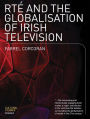
RTÉ and The Globalisation of Irish Television
By Farrel Corcoran Intellect Ltd
Copyright © 2004 Intellect Ltd.
All rights reserved.
ISBN: 978-1-84150-895-5
CHAPTER 1
RTÉ UNSETTLED
A combination of technological innovation and grand vision has characterised key moments in the development of mass communication since its inception. If we look at the history of the steady stream of communications technologies that have been introduced into Western societies over the last 150 years, we find some are developed successfully from prototype to invention and into the marketplace, while others are rejected by the market and become historical redundancies. Despite the brilliance of their prototypes, some technologies are constrained by social forces that coalesce to limit the threat of disruption to the status quo that can be caused by the new technologies. A working telegraph was demonstrated as early as 1816 but the British Navy refused to acknowledge the superiority of electromagnetic over semaphore technology in long-distance signalling, until changes in naval battle formation demanded a better than line-of-sight system. The difference between success and failure is frequently related to the presence or absence of utopian discourse that grabs a hold of the public imagination and influences whether and how the new technology is adapted for social use.
In the dismal year of 1947, many people in Ireland grew disenchanted with the Fianna Fail Party for not producing rapid improvements in living standards at the end of the Second World War and prepared to vote the party out after 16 years in office, at the General Election of February 1948. At the same time, Radio Eireann was going through a new phase of expansion and development. Plans were drawn up to launch a short-wave radio station, so that listeners in America, India and South Africa would be able to hear programmes from Ireland, what the Minister P. J. Little referred to as the best that is to be found in Ireland, "the everyday story of the new Ireland, spoken with its own voice." The station would have an output of 100 kilowatts, using a transmitter of the latest type available, just out of the laboratory stage, which would dwarf in power even Vatican Radio's powerful reach across the globe. Production too would be boosted, through the addition of Outside Broadcasting officers who would travel up and down the country, recording local singers, seanchais (storytellers) and local events. The goal of putting Ireland worthily before the world also entailed expanding the Radio Eireann Orchestra and establishing a second or salon orchestra "for the higher kinds of music."
Big technology, big vision. An early moment of globalisation. The short wave station failed to materialise but the two orchestras survived the change of Government and went on to become the National Symphony Orchestra and the RTÉ Concert Orchestra of today, that play such a large role in the musical life of contemporary Ireland, in concert halls of varying degrees of comfort across the country. P. J. Little's vision is belatedly fulfilled as the two orchestras now reach overseas audiences directly through tours and by technological mediation via satellite and the Internet.
In the middle of 1995, when the RTÉ Authority I was to chair for five years took office, new technologies were again coming onto the agenda of public debate. The concept of digital compression had just recently moved out of the electronic engineering laboratories into the boardrooms of large communications corporations. The British Government was moving quietly to ignore digital television's potential for providing a new high definition 1000+ line standard, which would give viewers an image crispness to match that developed by NASA for observing space explorations. It was licensing the technology to the established television companies in Britain so that they could expand the number of channels they controlled and lever themselves into stronger market positions by exploiting the potential of digital compression. If accurate public information on digital compression and its possibilities was hard to come by in 1995, there was no shortage of visionary rhetoric.
The Clinton-Gore Administration took an early lead in the Western world in creating a political project out of the emerging popularity of the Internet and the new opportunities it opened up for global communication. George Bush's attempt to define the post-Communist world in the early 1990s as moving towards a New International Order led by the US, retained a distinctly Old Order feel to it when his ad hoc alliance of Western and Arab forces locked horns with Iraq in the Gulf War to protect oil supplies to the West. But Clinton's notion of a Global Information Infrastructure, promoted vigorously at high-level international venues – G7, OECD, World Bank and IMF meetings – recaptured some of the Kennedy-era style of driving a political project with the force of a vision tied to new communication technologies.
Kennedy's New Frontier vision both fed off and reinforced the utopian imagination that infused discussion of television in the early 1960s, at a time when sales of television sets escalated dramatically in the US and foreign earnings from television programme syndication came to match domestic American revenues. Marshall McLuhan gave academic respectability to the Cold War rhetoric of global television which, diffused by American satellite technology, would sweep scattered populations worldwide into a single Enlightenment embrace: school children receiving space-based educational programmes in the classrooms of India, African farmers learning modern agricultural techniques that would defeat poverty, citizens of the Global Village who would espouse democratic values and strengthen the Free World against the perils of Communism. As a popular medium, television would shore up Third World unrest and win hearts and minds for the steady spread of US multinational corporations and military bases around the world. American New Frontier global television rhetoric integrated into a single utopian project the economic interests of the largest corporations and the government's foreign policy, in all its Cold War polarisation of Western freedom against Soviet totalitarianism. The dominant discourse of the time brought together into one seamless ideological whole the dream of enhanced global community and co-operation, with the imperial ambitions of the superpower struggle. It promised a better quality of life for all, at the same time as it locked in US hegemony. It offered the free exchange of ideas worldwide while also consolidating corporate goals. It was actually called the doctrine of Free Flow for many years by American diplomats, until a Third World revolt in UNESCO began to relabel it Cultural Imperialism.
MARKET LIBERALISATION
Thirty years later, the Clinton-Gore project offered a new discursive framework within which to think about the future, but it was based on an older ideological structure, adjusted for the fall of Communism. The idealised "global society" now about to emerge, with the worldwide spread of the Internet, would caringly, even passionately, address public purposes, but the means to pursue these would be private enterprise rather than state intervention. It would entail the global application of some key concepts: free trade, industrial development, modernisation, technological progress, and, above all, competition. The term "globalisation" began to gain currency. The very big corporate players were already in a frenzy of conglomeration, as media giants consolidated joint ventures, strategic alliances and cross-ownership deals: Time Warner (now merged with AOL), News Corporation, Viacom, Bertelsmann, TCI, CLT, Kirch and others. In the wake of developments in the Reagan-Thatcher era, the post-Cold War revival of the ideology of market liberalisation was on a roll, sweeping through policy-making and media spaces alike, accusing its critics on the left of being out of date and out of step with the times. Only "dinosaurs" opposed the inherent goodness of competition. Giant media corporations would now be the main players in the Global Information Infrastructure and individual states would settle into their new role as brokers of agreements, law takers rather than law makers, no longer devising policy but more often acting on Information Society issues originating in corporate headquarters, framed and articulated in the World Trade Organisation, the International Telecommunications Union, the World Intellectual Property Organisation and other global institutions. Unprecedented levels of political power were quietly slipping away from national control to a handful of supranational agencies devoid of democratic accountability. The Global Information Infrastructure was advancing on the basis of the decline of Soviet-style totalitarian social models but at the expense of public service social models, as deregulatory frameworks gave ever more autonomy to private capital in the communication sector.
The European Commission followed the American lead and took up the cause of the market liberalisation of information with ever more fervour in the 1990s, with Commissioner Martin Bangemann leading the ideological charge. The Information Society would enhance democratic principles, add huge new capacities to human intelligence and build a more equal and balanced society. The French Government had secured a little breathing space in its GATT battle with White House trade negotiator Mickey Cantor, ably advised by Hollywood's seasoned veteran lobbyist Jack Valenti, in gaining a temporary "cultural exception" for transnational audiovisual trade. This inserted a vital non-economic recognition into the meaning of communication in trade negotiations, mostly film and television, though American negotiators seemed genuinely surprised that Information Sector issues should have any higher claim on public policy than does clothing, or soap powder or food and drink. Non-discriminatory access to all domestic markets, regardless of its cultural impact or the destruction of domestic media industries, was to them the highest principle of international law.
But the French victory in 1993 was a temporary aberration in the drive by multinational corporations to restore competition to what liberal marketeers regarded as its "natural state" and to press back the power of the state to what they saw as the twin pillars of its proper minimal terrain: to guarantee law and order and to uphold the primacy of property rights. Pushed to its logical limits, this policy thrust would provide no space for public interest criteria, such as content diversity in radio, television or cinema, or the right of universal access to high quality, affordable information and entertainment. Cultural policies to enforce obligations of media pluralism within national territories, still a core value in Europe but not recognised in the US, would be recast as barriers to international trade in information services. Policies to limit concentration in media ownership, so that competition could emerge, were to be seen, paradoxically, as unacceptably interventionist distortions of trade. And public subsidies in Europe to protect universal service or diversity in media output, were increasingly being redefined in complaints to the Commission as a form of "state aid" that interfered with the "level playing field" of free trade and thus threatened proprietary freedoms within the cultural sector. Regulatory force was being applied on the media supply-side only, to protect the freedom to make profits by media companies, but it was not being applied to the demand-side, to protect citizens' rights to a universal service that offered a genuine plurality of content in a healthy public sphere. The accelerating trend towards the market liberalisation of information recognised no inherent relationship whatsoever between information conditions in society and democratic conditions. This relationship is as old as the earliest thinking in civic republicanism that originated in Greece. It emphasised that, freed from the rule of tyrants, self-government can be given a quality check by examining the social conditions that either encourage or exclude space for an enlightened citizenry, or in today's jargon, a healthy public sphere.
The Global Information Infrastructure of the Clinton-Gore years must therefore be seen as deeply ideological and two-edged in its thrust. True, it offered liberation for all, like Kennedy's New Frontier before it, via a wired, digital, interconnected world. But this promised liberation would take place against a backdrop of dramatically redistributing power from the public to the private sector, a movement which represented what many academic commentators saw as a concentration of public communication under proprietary governance on a scale not encountered since the passing of feudal society. There is a glaring paradox in this shift of power. It was being facilitated by Government action in a growing number of countries, enacting public policy which conferred enormous new powers of regulation on a handful of supranational agencies that have no democratic accountability mechanisms designed into their structures, in the way the United Nations does. We now turn to an examination of broadcasting in Ireland, to see how it functions against this international backdrop.
ROLE OF MEDIA
This book is about Irish broadcasting, mostly television, in the 1990s. When the Global Information Infrastructure vision was being outlined by American press agents at the G7 meeting in Brussels in 1995, Michael D. Higgins had just published a Green Paper on Broadcasting, to which I had contributed. It was intended to initiate a public debate by pointing up some of these global trends and their relevance for Ireland. There was little information on offer on how to tackle the issues that would emerge from digital convergence, but there was plenty on the vulnerability of public service broadcasting in a world where the ideology of deregulation and market liberalisation was sweeping all before it. Later that year, I was asked to take on the job of Chairman of the RTÉ Authority, the governing body that is entrusted with representing the public interest in the running of the national public service broadcasting system. Working within an organisation doesn't automatically provide a ladder for climbing to insightful vantage points, especially when local interests and anxieties interfere with realistic interpretation of contemporary trends in broadcasting. All vantage points produce partial views, of course, and the perspective of the Chairman is not the same as that of a programme producer or a news editorial manager. The point of view in my case is based on a combination of an insider's hands-on engagement with strategic issues at the core of the public broadcasting organisation, and an outsider's long-term professional interest in media as important objects of research and university teaching. This was inflected by thirty years of experience in Ireland and the US of academic involvement with the sociology of culture and the role of media in society.
During the five years between 1995 and 2000, the gap between theory and practice had to be bridged quickly on the RTÉ Authority. And it was a fascinating experience. I found myself directly engaged with some of the most profound changes that have ever taken place in Irish broadcasting. These changes included the establishment of the Irish-language television channel Teilifis na Gaeilge (now TG4); the arrival of the Canadian-based multinational television company CanWest in Ireland as a major force in the launch of TV3 (to be followed by Granada as co-owner); the opening up of the radio sector to increased competition in the form of private radio, led by the national station Radio Ireland (now Today FM); the launch by RTÉ of the classical music station Lyric FM; and the development of a national strategy for digital television.
Ireland's geographical position in the northwest European archipelago close to Britain, and its sharing of a common language with its more densely populated neighbour, are important historical factors in its very stressful and complicated relationship with England. They are also important factors in the relationship between broadcasters and audiences in Ireland. Broadcasting overspill into Ireland from transmitters in Northern Ireland and the west of England has been part of the Irish experience of radio and television from the very beginning. As new technologies of distribution arrived, cable, microwave, deflectors (legal and illegal) and satellite, British television channels reached ever deeper into Irish villages and valleys. More than 80 percent of the population today has access to British channels and this percentage is already increasing with the current deployment of the Sky and Freesat satellite systems.
(Continues...)
Excerpted from RTÉ and The Globalisation of Irish Television by Farrel Corcoran. Copyright © 2004 Intellect Ltd.. Excerpted by permission of Intellect Ltd.
All rights reserved. No part of this excerpt may be reproduced or reprinted without permission in writing from the publisher.
Excerpts are provided by Dial-A-Book Inc. solely for the personal use of visitors to this web site.