- Shopping Bag ( 0 items )
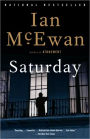
In his triumphant new novel, Ian McEwan, the bestselling author of Atonement, follows an ordinary man through a Saturday whose high promise gradually turns nightmarish. Henry Perowne–a neurosurgeon, urbane, privileged, deeply in love with his wife and grown-up children–plans to play a game of squash, visit his elderly mother, and cook dinner for his family. But after a minor traffic accident leads to an unsettling confrontation, Perowne must set aside his plans and summon a strength greater than he knew he had in order to preserve the life that is dear to him.
One
Some hours before dawn Henry Perowne, a neurosurgeon, wakes to find himself already in motion, pushing back the covers from a sitting position, and then rising to his feet. It’s not clear to him when exactly he became conscious, nor does it seem relevant. He’s never done such a thing before, but he isn’t alarmed or even faintly surprised, for the movement is easy, and pleasurable in his limbs, and his back and legs feel unusually strong. He stands there, naked by the bed – he always sleeps naked – feeling his full height, aware of his wife’s patient breathing and of the wintry bedroom air on his skin. That too is a pleasurable sensation. His bedside clock shows three forty. He has no idea what he’s doing out of bed: he has no need to relieve himself, nor is he disturbed by a dream or some element of the day before, or even by the state of the world. It’s as if, standing there in the darkness, he’s materialised out of nothing, fully formed, unencumbered. He doesn’t feel tired, despite the hour or his recent labours, nor is his conscience troubled by any recent case. In fact, he’s alert and empty-headed and inexplicably elated. With no decision made, no motivation at all, he begins to move towards the nearest of the three bedroom windows and experiences such ease and lightness in his tread that he suspects at once he’s dreaming or sleepwalking. If it is the case, he’ll be disappointed. Dreams don’t interest him; that this should be real is a richer possibility. And he’s entirely himself, he is certain of it, and he knows that sleep is behind him: to know the difference between it and waking, to know the boundaries, is the essence of sanity.
The bedroom is large and uncluttered. As he glides across it with almost comic facility, the prospect of the experience ending saddens him briefly, then the thought is gone. He is by the centre window, pulling back the tall folding wooden shutters with care so as not to wake Rosalind. In this he’s selfish as well as solicitous. He doesn’t wish to be asked what he’s about – what answer could he give, and why relinquish this moment in the attempt? He opens the second shutter, letting it concertina into the casement, and quietly raises the sash window. It is many feet taller than him, but it slides easily upwards, hoisted by its concealed lead counterweight. His skin tightens as the February air pours in around him, but he isn’t troubled by the cold. From the second floor he faces the night, the city in its icy white light, the skeletal trees in the square, and thirty feet below, the black arrowhead railings like a row of spears. There’s a degree or two of frost and the air is clear. The streetlamp glare hasn’t quite obliterated all the stars; above the Regency façade on the other side of the square hang remnants of constellations in the southern sky. That particular façade is a reconstruction, a pastiche – wartime Fitzrovia took some hits from the Luftwaffe – and right behind is the Post Office Tower, municipal and seedy by day, but at night, half-concealed and decently illuminated, a valiant memorial to more optimistic days.
And now, what days are these? Baffled and fearful, he mostly thinks when he takes time from his weekly round to consider. But he doesn’t feel that now. He leans forwards, pressing his weight onto his palms against the sill, exulting in the emptiness and clarity of the scene. His vision – always good – seems to have sharpened. He sees the paving stone mica glistening in the pedestrianised square, pigeon excrement hardened by distance and cold into something almost beautiful, like a scattering of snow. He likes the symmetry of black cast-iron posts and their even darker shadows, and the lattice of cobbled gutters. The overfull litter baskets suggest abundance rather than squalor; the vacant benches set around the circular gardens look benignly expectant of their daily traffic – cheerful lunchtime office crowds, the solemn, studious boys from the Indian hostel, lovers in quiet raptures or crisis, the crepuscular drug dealers, the ruined old lady with her wild, haunting calls. Go away! she’ll shout for hours at a time, and squawk harshly, sounding like some marsh bird or zoo creature.
Standing here, as immune to the cold as a marble statue, gazing towards Charlotte Street, towards a foreshortened jumble of façades, scaffolding and pitched roofs, Henry thinks the city is a success, a brilliant invention, a biological masterpiece – millions teeming around the accumulated and layered achievements of the centuries, as though around a coral reef, sleeping, working, entertaining themselves, harmonious for the most part, nearly everyone wanting it to work. And the Perownes’ own corner, a triumph of congruent proportion; the perfect square laid out by Robert Adam enclosing a perfect circle of garden – an eighteenth-century dream bathed and embraced by modernity, by street light from above, and from below by fibre-optic cables, and cool fresh water coursing down pipes, and sewage borne away in an instant of forgetting.
An habitual observer of his own moods, he wonders about this sustained, distorting euphoria. Perhaps down at the molecular level there’s been a chemical accident while he slept – something like a spilled tray of drinks, prompting dopamine-like receptors to initiate a kindly cascade of intracellular events; or it’s the prospect of a Saturday, or the paradoxical consequence of extreme tiredness. It’s true, he finished the week in a state of unusual depletion. He came home to an empty house, and lay in the bath with a book, content to be talking to no one. It was his literate, too literate daughter Daisy who sent the biography of Darwin which in turn has something to do with a Conrad novel she wants him to read and which he has yet to start – seafaring, however morally fraught, doesn’t much interest him. For some years now she’s been addressing what she believes is his astounding ignorance, guiding his literary education, scolding him for poor taste and insensitivity. She has a point – straight from school to medical school to the slavish hours of a junior doctor, then the total absorption of neurosurgery training spliced with committed fatherhood – for fifteen years he barely touched a non-medical book at all. On the other hand, he thinks he’s seen enough death, fear, courage and suffering to supply half a dozen literatures. Still, he submits to her reading lists – they’re his means of remaining in touch as she grows away from her family into unknowable womanhood in a suburb of Paris; tonight she’ll be home for the first time in six months – another cause for euphoria.
1. Saturday’s epigraph comes from Nobel Prize winner Saul Bellow, whose novel Herzog features an academic facing the shortcomings of his life. The novel was published in 1964; how might the history of the early Sixties have influenced Bellow’s perspective? Forty years later, how does Ian McEwan’s protagonist embody current events?
2. At the end of Saturday’s first paragraph, as Henry wakes too early, McEwan writes, “And he’s entirely himself, he is certain of it, and he knows that sleep is behind him: to know the difference between it and waking, to know the boundaries, is the essence of sanity.” To what else does Henry awaken as the novel progresses? In the book and in the world, who remains asleep (and unaware of their slumber)?
3. When Henry hears about the cargo plane’s safe landing, McEwan observes, “Schrödinger’s cat was alive after all.” How does Schrödinger’s thought-experiment, allowing two outcomes to co-exist during a period of uncertainty, apply to Henry’s daily life? How does it express the nature of human thought during times of anxiety?
4. Was the collision between Henry’s car and Baxter’s an accident? What visual cues (the type of car Henry associates with criminals, the “scarecrow” clothes that make him look like something other than a doctor) stoke the fire? What class conflicts are projected as the men argue? What determines who has more power in that situation?
5. Discuss the irony of the novel’s title. Henry intended to spend the day relaxing; does the modern world allow for any true respitefrom worry?
6. In your opinion, what accounts for the bliss between Henry and his wife? When he met her, did her vulnerability (through illness) feed their attraction, or was it merely a means for them to find one another? What accounts for Henry’s uneasy relationship with his father-in-law?
7. In researching Saturday, Ian McEwan spent months observing brain surgery. What parallels exist between a writer’s craft and a surgeon’s? What is the effect of McEwan’s decision to cast Henry in the specialty of neurosurgery (as opposed to thoracic or orthopedic surgery, for example)? How does Henry’s ease with medical terminology, but discomfort with the vocabulary of literature, influence your reading experience?
8. Jay Strauss moved to the U.K. in part because of his enthusiasm for socialized medicine. How would you describe the healthcare system presented in the novel?
9. Do you think Jay personifies most or few Americans? Is he more competitive than Henry?
10. As Henry watches his mother’s dementia worsen, he labels the physiological reasons for her decline. Does his familiarity with science ease or aggravate the sadness of losing her?
11. One of Henry’s last errands in the novel is to listen to attend a performance by Theo’s band. What does blues music, along with its American flavor, mean to Theo? Does Henry experience this art differently from the way he hears Daisy’s work?
12. Why was Baxter’s invasion of Henry’s house essential to this novel? In what way can this scene be explored as a metaphor for politics, war, even global economics? Why was it also necessary for Henry’s security system to be proven ineffective that night?
13. Using an anthology or website, read Matthew Arnold’s nineteenth-century masterwork "Dover Beach" in its entirety. What caused it to resonate with Baxter’s memories? Can you think of any contemporary poems in free verse that would have served Daisy’s purpose so well?
14. What saves Henry’s family from Baxter and his cohorts: Poetry? Pregnancy? Bravery? Intelligence? Luck? Divine intervention? Baxter’s illness? How would you have reacted in a similar situation?
15. As Henry returns to the hospital that night, he realizes this is where he feels most comfortable – even more so than when he’s in the world of alleged leisure. Earlier in the novel, McEwan describes how orderly Henry’s mother was; Henry wishes he had just once invited her to the operating theater. Is this sense of order and belonging innate to Henry’s profession, or is it something Henry has ascribed to it? In what locale do you personally feel you’re at the top of your game? Is this the same locale that puts you at ease?
16. Why is Henry willing to perform surgery on Baxter? What keeps Henry from craving the revenge Rosalind anticipated? Would you be able to drop the charges, as Henry hopes to do? How do you respond to McEwan’s questions: "Is this forgiveness? . . . Or is [Henry] the one seeking forgiveness?"
17. Can Henry’s surgery on Baxter be called revenge? Is his probing of Baxter’s brain a violation? Or, is Henry’s magnanimous act a victory of enlightened liberalism over Baxter’s primal power politics?
18. During Henry’s reunion with Daisy, they waver between words of affection and a rapid-fire ideological debate about Iraq. How would such a debate have unfolded in your household?
19. Four generations are presented in Saturday, including Daisy’s child. What does each generation bestow, or hope to bestow, upon the next? What spurred such an exceptional level of accomplishment among the members of the Perowne family?
20. Discuss the element of storytelling itself in Saturday. Do the stories disseminated within this novel – by the broadcasters, the protesters, the lawless, the keepers of family legacy – all describe the same reality? Who or what has the power to influence what we believe? What literary devices did Ian McEwan use to evoke realism in this novel?
21. Examining the works of Ian McEwan as a continuum, how does Saturday enrich the portrait of life he has been crafting throughout his career?
Ian McEwan's fiction never fails to make us think a little differently-about humanity, and storytelling, and the beliefs that comprise our myth and memory. In Saturday, he has created a storyline that brings to bear the full weight these facets in the contemporary world.
With intense precision, McEwan draws us into the life of London neurosurgeon Henry Perowne. Taking place over a single day, Saturday follows Henry as he copes with everyday quandaries: insomnia, aging, the quest for a moment of leisure in the midst of so many obligations. But this particular day ripples with unexpected fears. Before the sun is up, he sees fire glowing from an airplane as it lumbers above the Thames. Newscasters deliver conflicting accounts of the incident. Later, as Henry drives to a game of squash, anti-war protestors clog the streets. And then his car scrapes against another, a fender-bender that should have had only minor consequences. Yet, as much as Henry tries to enjoy an ordinary day, this is not meant to be a day of minor consequences. With every tender encounter-stolen moments with his wife, tea with his fragile mother, marvelous discussions with his grown children-he is looking over his shoulder. As he should be. For this is the day his fears will become realized, and he will have to choose the best means of defense.
This guide is designed to enhance your reading of Saturday. We hope the following questions and topics will enrich your experience of this provocative novel. For more about this book, including an excerpt, go to www.Saturday-book.com. For more information on the author, visit www.IanMcEwan.com. To explore other great titles for reading groups, visit us at www.NanATalese.com.
Discussion Questions from the Publisher
1. Saturday's epigraph comes from Nobel Prize winner Saul Bellow, whose novel Herzog features an academic facing the shortcomings of his life. The novel was published in 1964; how might the history of the early Sixties have influenced Bellow's perspective? Forty years later, how does Ian McEwan's protagonist embody current events?
2. At the end of the Saturday's first paragraph, as Henry wakes too early, McEwan writes, "And he's entirely himself, he is certain of it, and he knows that sleep is behind him: to know the difference between it and waking, to know the boundaries, is the essence of sanity." To what else does Henry awaken as the novel progresses? In the book and in the world, who remains asleep (and unaware of their slumber)?
3. When Henry hears about the cargo plane's safe landing, McEwan observes, "Schrödinger's cat was alive after all." How does Schrödinger's thought-experiment, allowing two outcomes to co-exist during a period of uncertainty, apply to Henry's daily life? How does it express the nature of human thought during times of anxiety?
4. Was the collision between Henry's car and Baxter's an accident? What visual cues (the type of car Henry associates with criminals, the "scarecrow" clothes that make him look like something other than a doctor) stoke the fire? What class conflicts are projected as the men argue? What determines who has more power in that situation?
5. Discuss the irony of the novel's title. Henry intended to spend the day relaxing; does the modern world allow for any true respite from worry?
6. In your opinion, what accounts for the bliss between Henry and his wife? When he met her, did her vulnerability (through illness) feed their attraction, or was it merely a means for them to find one another? What accounts for Henry's uneasy relationship with his father-in-law?
7. In researching Saturday, Ian McEwan spent months observing brain surgery. What parallels exist between a writer's craft and a surgeon's? What is the effect of McEwan's decision to cast Henry in the specialty of neurosurgery (as opposed to thoracic or orthopedic surgery, for example)? How does Henry's ease with medical terminology, but discomfort with the vocabulary of literature, influence your reading experience?
8. Jay Strauss moved to the U.K. in part because of his enthusiasm for socialized medicine. How would you describe the healthcare system presented in the novel?
9. Do you think Jay personifies most or few Americans? Is he more competitive than Henry?
10. As Henry watches his mother's dementia worsen, he labels the physiological reasons for her decline. Does his familiarity with science ease or aggravate the sadness of losing her?
11. One of Henry's last errands in the novel is to listen to attend a performance by Theo's band. What does blues music, along with its American flavor, mean to Theo? Does Henry experience this art differently from the way he hears Daisy's work?
12. Why was Baxter's invasion of Henry's house essential to this novel? In what way can this scene be explored as a metaphor for politics, war, even global economics? Why was it also necessary for Henry's security system to be proven ineffective that night?
13. Using an anthology or website, read Matthew Arnold's nineteenth-century masterwork "Dover Beach" in its entirety. What caused it to resonate with Baxter's memories? Can you think of any contemporary poems in free verse that would have served Daisy's purpose so well?
14. What saves Henry's family from Baxter and his cohorts: Poetry? Pregnancy? Bravery? Intelligence? Luck? Divine intervention? Baxter's illness? How would you have reacted in a similar situation?
15. As Henry returns to the hospital that night, he realizes this is where he feels most comfortable-even more so than when he's in the world of alleged leisure. Earlier in the novel, McEwan describes how orderly Henry's mother was; Henry wishes he had just once invited her to the operating theater. Is this sense of order and belonging innate to Henry's profession, or is it something Henry has ascribed to it? In what locale do you personally feel you're at the top of your game? Is this the same locale that puts you at ease?
16. Why is Henry willing to perform surgery on Baxter? What keeps Henry from craving the revenge Rosalind anticipated? Would you be able to drop the charges, as Henry hopes to do? How do you respond to McEwan's questions: "Is this forgiveness? . . . Or is [Henry] the one seeking forgiveness?"
17. Can Henry's surgery on Baxter be called revenge? Is his probing of Baxter's brain a violation? Or, is Henry's magnanimous act a victory of enlightened liberalism over Baxter's primal power politics?
18. During Henry's reunion with Daisy, they waver between words of affection and a rapid-fire ideological debate about Iraq. How would such a debate have unfolded in your household?
19. Four generations are presented in Saturday, including Daisy's child. What does each generation bestow, or hope to bestow, upon the next? What spurred such an exceptional level of accomplishment among the members of the Perowne family?
20. Discuss the element of storytelling itself in Saturday. Do the stories disseminated within this novel-by the broadcasters, the protesters, the lawless, the keepers of family legacy-all describe the same reality? Who or what has the power to influence what we believe? What literary devices did Ian McEwan use to evoke realism in this novel?
21. Examining the works of Ian McEwan as a continuum, how does Saturday enrich the portrait of life he has been crafting throughout his career?
About the Author
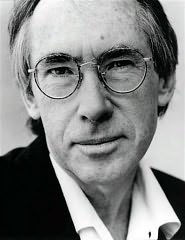
Ian McEwan was born in 1948 in Aldershot, England, and now lives in London. He studied at the University of Sussex, where he received a BA degree in English Literature in 1970. While completing his MA degree in English Literature at the University of East Anglia, he took a creative writing course taught by the novelists Malcolm Bradbury and Angus Wilson.
McEwan's works have earned him worldwide critical acclaim. He has been shortlisted for the Booker Prize for Fiction three times, winning the award for Amsterdam in 1998. His bestselling novel Atonementreceived the WH Smith Literary Award (2002), National Book Critics' Circle Fiction Award (2003), Los Angeles Times Prize for Fiction (2003), and the Santiago Prize for the European Novel (2004). He also won the Somerset Maugham Award in 1976 for his first collection of short stories First Love, Last Rites; the Whitbread Novel Award (1987) and Prix Fémina Etranger (1993) for The Child in Time; and Germany's Shakespeare Prize in 1999.
The critics love this book and this author. I am an avid reader and I am not ignorant of the world around me. So, honestly, I thought the author wanted to show off a lot of esoteric knowledge, vocabulary, etc. I have read Atonement by this author. It also was somewhat pretentious. Why do the critics love this author so much?
3 out of 3 people found this review helpful.
Was this review helpful? Yes NoThank you for your feedback. Report this reviewThank you, this review has been flagged.Anonymous
Posted August 13, 2006
I had to read this for a literature class, and having read a synopsis of the book, I was very excited. This excitment, however, turned to disapointment as the book dragged on forever. Not only does the author make the characters over anyalize things, but he also assumes that his audidence will understand extreemly difficult medical terms that he himself only learned while shadowing a neurological surgeon. This novel is also very confusing because it jumps around constantly between scenes, characters, and time periods.
3 out of 4 people found this review helpful.
Was this review helpful? Yes NoThank you for your feedback. Report this reviewThank you, this review has been flagged.spankyIA
Posted August 15, 2011
I love this man's writing- he manages to control the time dimension- he takes the random, wandering mind that changes over milliseconds and gives each thought voice, and then turns around and develops each character in intimate detail, and accomplishes both within a plot that happens over a 24 hr time span and peaks with equal power to any action, suspense novel ever written. I plan to read everything he has published.
1 out of 1 people found this review helpful.
Was this review helpful? Yes NoThank you for your feedback. Report this reviewThank you, this review has been flagged.JJ42
Posted April 10, 2010
I wanted to keep reading. Beautifully written.
1 out of 3 people found this review helpful.
Was this review helpful? Yes NoThank you for your feedback. Report this reviewThank you, this review has been flagged.Anonymous
Posted March 9, 2010
The rambling thoughts the main character runs thru on every page becomes mind numbing and I couldn't wait to just page thru the book to be finished. The plot was lost in all the word filled pages, so that I kept losing what was supposed to be happening at any particular time. It was just too "word-y". I was very disappointed in this book.
1 out of 4 people found this review helpful.
Was this review helpful? Yes NoThank you for your feedback. Report this reviewThank you, this review has been flagged.As stated by some reviewers, I started this book, but was unable to finish it. The first time I stopped was when Henry was attacked by Baxter and got away because he diagnosed the big man's health problem. Not believable. I picked it up again and started from that point, read through the squash match, and up to Harry's going to the fish market. Could not force myself to go on. Although I knew what I didn't like about the book, I felt like it was a failing within me. The critics liked it. My book club liked it. Were the problems I saw a lack of sophistication in me as a reader?
Then, I read some of the reviewers online. Imagine how happy I was to see that others agreed with me. First, the pacing is intolerable. For every action, instead of a reaction, the author gives us paragraphs of introspection. Most of it is back story, things the author needs to know about his character in order to depict him as real, but the reader does not need all of these details. Yet even with all of these details, Henry seems to be no more than two-dimensional. There seems to be no passion in the man, as if he's all thought, but no emotion. Even his attitude toward his family is distant and analytical.
Second, a good deal of the novel is an info dump. McEwan seems to have included everything he learned about brain surgery, medicine in general, and the medical system in Britain. Then there's fish soup, music, poetry, politics, al Qaeda, etc.
I am sorry that these things spoiled my enjoyment of this my first novel by McEwan. I'd hoped to enjoy it, especially since so many others seemed to have done so and McEwan's use of language is almost enough to drag one along. However, I was bored, by the characters, the interminable thought processes, the plot, and too much information that did not move the story forward. Perhaps this particular novel would have worked better as novella or short story.
1 out of 3 people found this review helpful.
Was this review helpful? Yes NoThank you for your feedback. Report this reviewThank you, this review has been flagged.Anonymous
Posted July 30, 2008
A good read as the author examines aspects of a man going through events of a Saturday. McEwan manages to acquaint the reader with a professional, his wife, children, his career, his examining both his and his mother's aging and mortality, and the macrocosm of the world and war. War is not the solution unless you and yours are tortured. Henry Perowne's personal torturing events call for desperate actions.
1 out of 1 people found this review helpful.
Was this review helpful? Yes NoThank you for your feedback. Report this reviewThank you, this review has been flagged.Anonymous
Posted May 17, 2008
This book baffled me. It was boring, and I knew it was boring, but at the same time I continued to read without being overwhelmed by the boredom. Most of the narrator's thoughts were fairly mundane and pointless- albeit eloquent- but something about them, perhaps the novelty of following a person's thoughts that closely, kept me reading. The characters were certainly well-developed, which helped immensely. One aspect of the novel I found jarring was the constant insertion of analysis on the Iraq war. It seemed very out of place, and kept yanking me out of the story. I understand the importance of the topic, but the narrator seemed to think about it to the point of obsession, and it made me feel as if his thoughts on the subject were more authorial interjection than a part of the story. In the end, I'm not sure if I'd say that I enjoyed this one, but it definitely intrigued me enough to keep me until the end.
1 out of 1 people found this review helpful.
Was this review helpful? Yes NoThank you for your feedback. Report this reviewThank you, this review has been flagged.Anonymous
Posted March 31, 2008
After reading Atonement, I felt that McEwan had done it--written a novel that could not be topped. I was wrong. Saturday, in its own way, is just as good if not better than Atonement merely in its ability to create tension out of thin air.
1 out of 1 people found this review helpful.
Was this review helpful? Yes NoThank you for your feedback. Report this reviewThank you, this review has been flagged.Anonymous
Posted January 24, 2007
I'm going to dismiss outright any charges that a bad review of this novel = someone who needs to get their kicks reading either chick lit or book versions of currently playing movie hits. This is easily one of the most boring, pretentious, slow moving, overly staring at your belly button novels I have ever attempted. I'm astounded at the good reviews. I never give up on books I've started but cannot tell you how tempted I am to do so. If it weren't for a good night out with the Book Club discussing this one there is no way I would waste a single moment more reading it.
1 out of 2 people found this review helpful.
Was this review helpful? Yes NoThank you for your feedback. Report this reviewThank you, this review has been flagged.Anonymous
Posted October 8, 2006
Couldn't get through it, although I tried. Hate doing anything halfway, but this book was a waste of 4 hours (over 3 weeks) that I will never get back. Long, drawn out grandiose text under the guise of intellectual fiction.
1 out of 2 people found this review helpful.
Was this review helpful? Yes NoThank you for your feedback. Report this reviewThank you, this review has been flagged.Anonymous
Posted July 7, 2006
I was excited to read this book but it turned out to be somewhat disappointing. It is very drawn out. The main character just thinks too much about things that are not all that exciting. There is also a lot of medical descriptions that I didn't understand as I am not a doctor. Overall not nearly as good as I thought it would be.
1 out of 2 people found this review helpful.
Was this review helpful? Yes NoThank you for your feedback. Report this reviewThank you, this review has been flagged.Anonymous
Posted June 14, 2006
This book sounded interesting to me, but I was disappointed when I actually read it. I suppose I expected things to be drawn out a little bit -- I mean, they would have to be to fill 289 pages with one day. But this book was too descriptive. I found my mind drifting off and when I got back to the book I realized that I had read several pages without even paying attention to what I was reading. And I don't think I missed much.
1 out of 2 people found this review helpful.
Was this review helpful? Yes NoThank you for your feedback. Report this reviewThank you, this review has been flagged.creativemode
Posted August 24, 2011
I bought this book because of good reviews but I couldn't make it past the half way mark. When i realized midway through that I still had no idea what the book was about or where it was going I decided to call it quits.
0 out of 1 people found this review helpful.
Was this review helpful? Yes NoThank you for your feedback. Report this reviewThank you, this review has been flagged.Anonymous
Posted January 28, 2008
I decided to read this book because it was on the '1001 books to read before you die' list, otherwise, a book about a single day in a man's life would not have interested me. However, I am glad that I read it. To me it shows how a single event can affect one's life and the lives of those he loves. I think it also shows how one's perceptions of things can change because of one event. McEwen is very descriptive, but, after all, it is a book about 1 single day in a man's life. I think it was definitely worth my time.
Was this review helpful? Yes NoThank you for your feedback. Report this reviewThank you, this review has been flagged.Anonymous
Posted May 9, 2007
I thought this book was amazing. In fact, I read most of it in one sitting, staying up way too late one night before finally turning off the light at about 3am. I thought the writing was taut and at the same time, quite lyrical and ultimately it was a very moving book. I actually liked it better than Atonement, which I read after this one.
Was this review helpful? Yes NoThank you for your feedback. Report this reviewThank you, this review has been flagged.Anonymous
Posted April 11, 2007
i liked the topics the book tells about but it is really too long for too few ideas. the main character, perowone is always thinking about... the world, his relatives, his problems... interesting and boring at the same time!
Was this review helpful? Yes NoThank you for your feedback. Report this reviewThank you, this review has been flagged.Anonymous
Posted March 14, 2007
It was a quick read. I kept waiting for it to get better, but it never did. Buy a different book!
0 out of 1 people found this review helpful.
Was this review helpful? Yes NoThank you for your feedback. Report this reviewThank you, this review has been flagged.Anonymous
Posted November 13, 2006
I feel somewhat disappointed after reading McEwan's novel. Not only did Henry seem to be conceited, but he had annoying issues that kept popping up throughout the novel, including putting his work before family, and his age issue. The novel itself started off slow and remained that way until the car accident, which I thought would escalate into something and didn't. The only truly enjoyable part was the confrontation at Henry's home with Baxter. However, I disliked both Baxter's 'change of heart' and Henry's deceit to get him upstairs. The novel took an even bigger turn for the worse when Henry performed perfect surgery on Baxter and wanted to drop the charges. I was extremely bothered by this, wanting instead for him to have 'accidentaly' botched the surgery.
Was this review helpful? Yes NoThank you for your feedback. Report this reviewThank you, this review has been flagged.Anonymous
Posted April 26, 2006
'Saturday' is about a day-off in the schedule of a busy neuro-surgeon. It begins with Dr. Henry Perowne waking up one Saturday morning and witnessing something un-expected. His day then gets even worse, as he becomes involved in a tiff with a person suffering from a neuro-degenerative disorder. Although this book could easily be mistaken to have a lot of political undertones, since it critiques the Iraq war, this novel is more than just that. It describes the emotional stresses that a highly qualified and intellectually evolved person undergoes when pushed to the limit. This book is probably the best thriller that I have read in a long time.
Was this review helpful? Yes NoThank you for your feedback. Report this reviewThank you, this review has been flagged.
Overview
In his triumphant new novel, Ian McEwan, the bestselling author of Atonement, follows an ordinary man through a Saturday whose high promise gradually turns nightmarish. Henry Perowne–a neurosurgeon, urbane, privileged, deeply in love with his wife and grown-up children–plans to play a game of squash, visit his elderly mother, and cook dinner for his family. But after a minor traffic accident leads to an unsettling confrontation, Perowne must set aside his plans and summon a strength greater than he knew he had in order to preserve the life that is dear to him.