
Jack is kidnapped by berserkers from his Saxon village in the year A.D. 793, an occurrence forewarned by his mentor the Bard. Captured by Viking chief Olaf One-Brow, Jack and his sister, Lucy, are swiftly taken to the court of Ivar the Boneless.
Ivar is married to a half-troll named Frith, an evil and unpredictable queen with a strange power over her husband’s court. Jack mistakenly casts a charm on her—and is banished to the kingdom of the trolls to find the magic that will undo the charm. Accompanied by Thorgill, a shield maiden who wants to be a berserker, and by the mysterious crow called Bold Heart, Jack sets out on a harrowing and exciting quest for the ages.
From National Book Award winner Nancy Farmer, this first book in the Sea of Trolls trilogy is epic fantasy at its best.
Jack is kidnapped by berserkers from his Saxon village in the year A.D. 793, an occurrence forewarned by his mentor the Bard. Captured by Viking chief Olaf One-Brow, Jack and his sister, Lucy, are swiftly taken to the court of Ivar the Boneless.
Ivar is married to a half-troll named Frith, an evil and unpredictable queen with a strange power over her husband’s court. Jack mistakenly casts a charm on her—and is banished to the kingdom of the trolls to find the magic that will undo the charm. Accompanied by Thorgill, a shield maiden who wants to be a berserker, and by the mysterious crow called Bold Heart, Jack sets out on a harrowing and exciting quest for the ages.
From National Book Award winner Nancy Farmer, this first book in the Sea of Trolls trilogy is epic fantasy at its best.



eBook
Available on Compatible NOOK devices, the free NOOK App and in My Digital Library.
Related collections and offers
Overview
Jack is kidnapped by berserkers from his Saxon village in the year A.D. 793, an occurrence forewarned by his mentor the Bard. Captured by Viking chief Olaf One-Brow, Jack and his sister, Lucy, are swiftly taken to the court of Ivar the Boneless.
Ivar is married to a half-troll named Frith, an evil and unpredictable queen with a strange power over her husband’s court. Jack mistakenly casts a charm on her—and is banished to the kingdom of the trolls to find the magic that will undo the charm. Accompanied by Thorgill, a shield maiden who wants to be a berserker, and by the mysterious crow called Bold Heart, Jack sets out on a harrowing and exciting quest for the ages.
From National Book Award winner Nancy Farmer, this first book in the Sea of Trolls trilogy is epic fantasy at its best.

Product Details
| ISBN-13: | 9781416914327 |
|---|---|
| Publisher: | S&S/Saga Press |
| Publication date: | 05/25/2005 |
| Series: | Sea of Trolls Trilogy Series , #1 |
| Sold by: | SIMON & SCHUSTER |
| Format: | eBook |
| Pages: | 480 |
| Lexile: | 670L (what's this?) |
| File size: | 7 MB |
| Age Range: | 10 - 13 Years |
About the Author
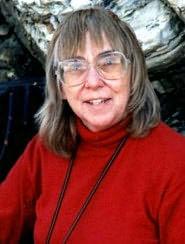
Hometown:
Menlo Park, CaliforniaDate of Birth:
July 9, 1941Place of Birth:
Phoenix, ArizonaEducation:
B.A., Reed College, 1963Read an Excerpt
Chapter Three: The Shadow Across The Water
"No...no..."
Jack sat up abruptly. The wind was howling outside. The house held the deep chill that seeped into it before dawn.
"No...I won't do it...it's evil..."
Jack threw back the covers and stumbled to the other end of the house. The Bard's bed was shaking. He saw the old man thrust up his hand as though warding something off. "Sir! Sir! Wake up! Everything's all right." He caught the Bard's hand.
"You won't bend me to your will! I defy you, foul troll!"
Something -- some terrible force -- flung the boy back. His head banged against the stone, and his ears rang as though a blacksmith were pounding on an anvil. He tasted blood.
"Oh, my stars, child! I didn't know it was you."
Jack tried to speak, choked on blood, and coughed instead.
"You're alive, thank Freya! Stay here. I'll build up the fire and make you a healing drink."
The ringing in Jack's ears died down, but he felt violently sick to his stomach. He heard the Bard move around, and presently, the hearth burst into light. In a very short time he was handed a cup of hot liquid. It hurt his mouth and he recoiled.
"You bit through your lip, child. It isn't as bad as it looks. The drink will make it better."
Jack managed to swallow, and the sickness went away. He found himself trembling. Perhaps he'd been trembling all along. He couldn't remember. "Is that -- is that how -- you destroy your enemies?" he stammered.
The Bard sat back. "One of the ways," he said.
"So that was...magic."
"Some call it so," said the Bard.
"Will you teach me how to do it?"
"By Thor's bushy beard! I almost killed you, and the first thing you want to know is how to do it."
"W-Well, sir, I am your a-apprentice."
"And a right cheeky one too. Most boys would have run home to their mothers after what you just experienced. Still, curiosity is a great thing. We two might just get along."
Jack felt a kind of warm sleepiness pass over him. The pain was still there, but it seemed unimportant. "What happened to you, sir?"
"That was a Nightmare, lad. Pray you never meet one."
"You mean, a bad dream?"
"I mean a Nightmare. It's far worse."
Jack wanted to ask more, but he was too comfortable. He yawned broadly, stretched out on the floor, and fell asleep.
When he awoke, he was lying outside on a bed of heather. He struggled to get up. "Rest a while, lad," said the Bard. He was sitting on a stool next to the door. His white beard and cloak shone against the weathered house. "Ah, sunlight," the old man said with a contented sigh. "It heals the terrors of the night."
"The Nightmare?" Jack said. His mouth hurt, and his speech was oddly slurred.
"Among other things," said the Bard. Jack felt his lip and found, to his horror, that it was as swollen as a mushroom after rain. "You wouldn't make a bad-looking troll at the moment," the old man remarked.
Jack remembered the words the Bard had cried out in his sleep. "Have you truly seen one, sir?"
"Oh, yes. Dozens. Most are quite pleasant, although they take getting used to. The ones you have to watch out for are the half-trolls. There's no describing how nasty they can be. Or deceitful. They're shape-shifters, and when they appear human, they're so beautiful that you can't think of a single sensible thing around them."
"Did one of them send the Nightmare?" said Jack.
"One of them rode it. Look, my boy, I was trying to protect you from certain things until you were older. But I may not have the time. Lately, I've felt a darkness over the sea. She's searching for me, you see. I can hide from her in the daytime. At night my guard is down, and she knows it."
"You could move in with the chief, sir. He could protect you," said Jack. He was beginning to get alarmed. This wasn't a saga or an amusing song. This was real.
The old man shook his head. "Your chief is a brave man, but he isn't up to handling trolls. She is hunting for me, and if she has found out where I am, her servants may already be on the way. I've been careless. I should have remembered that nowhere in the nine worlds is safe for me as long as she is abroad. I may even have to let her take me. Better that than let her destroy your village."
"But can't you flee?"
"Jotuns follow a trail like a hound. Her servants will come here first. If they don't find me, they'll kill all of you."
"Jotuns?" Jack said faintly.
"It's what the trolls call themselves. They can creep inside your mind and know what you're thinking. They know when and where you're going to strike before you do it. Only a very special kind of warrior can overcome them."
"We have to do something." Jack knew his voice sounded shrill, but he couldn't help it.
"We will," the Bard said firmly. "I'm on the alert now. I won't let her catch me off guard again. I should have been teaching you all these weeks, but the peacefulness of this place lulled me...."
The Bard fell silent, and Jack saw him looking out to sea. He looked too, but he saw only cloudless sky and gray-green waves bending toward shore. If there was darkness out there, he couldn't see it.
"You can go home for the next three days," said the Bard. "I'll be walking in the forest. Oh, and I wouldn't mention any of this to your family." He reached for his black staff. "We don't want to alarm them until it's necessary. Jotuns can follow a trail of fear as easily as foxes sniff out a henhouse."
"I spend half my time chasing those scurvy boys," said Father, slurping a bowl of Mother's rich cockle soup. Jack had provided the cockles from sea cliffs near the Bard's house. "They slide away like eels when there's real work to be done."
"Oh, aye. They're a useless lot," agreed Mother. She steadied Lucy's hands on her mug.
Jack didn't think the farm was suffering. The fences looked sturdy; the field was covered with oats and barley. Mustard, lavender, and coriander bloomed in the kitchen garden, and the apple trees were covered with tiny green fruit.
It was so beautiful, it made his throat ache. He'd never appreciated the little farm until now. And he saw his father in a new light. He realized that Giles Crookleg's complaints meant no more than the muttering of crows in a tree. It was a habit crows fell into when things weren't going their way. Father, too, grumbled by way of easing the disappointments in his life. What mattered was how Father went on in spite of his unhappiness, to create this beautiful place. Jack saw how lovingly the house was made, how carefully provisions were laid up so that Mother, Lucy, and himself could survive.
It could all be swept away in an instant. No one had any idea of the menace lurking over the sea.
"Jack's crying," said Lucy.
"I am not," Jack said indignantly. He turned his head away to hide the tears that had wandered down his cheek. He'd felt oddly shaken since the Bard had thrown him down. He seemed to cry more easily.
"Leave him alone, dearest," came Mother's soft voice. "His mouth is very sore."
"The Bard thrashed him," said Father.
"It was an accident," Jack said.
"Oh, aye. You may tell us that, but I know a thrashing when I see one."
Jack didn't say anything. If it pleased Father to think he'd been punished, why spoil things? And this, too, was new. Before, Jack would have argued passionately. Now he saw the lines of pain in his father's face, his hunched shoulders and scarred hands. The boy had a glimmer of another image, of his father as a child before the accident.
Jack felt like crying again. These new feelings were very odd and worrying.
Mother bent over Lucy's fair head. "You must finish your soup," she whispered.
"I don't like the bottom part. It's sandy," said Lucy.
"Washing cockles takes away the taste," said Mother, but she finished the dregs herself and gave Lucy an oatcake.
"Thrashing is good for boys," Giles Crookleg said. "Why, I was smacked six ways to Sunday by my father, and it made me the man I am today."
Then, because it was Sunday, Father told them a story about the holy saints. Father couldn't read, nor could anyone in the village except the Bard. To Giles Crookleg, writing was a kind of magic. When the Bard marked letters on a scrap of parchment, Father always crossed himself to avert a spell.
But he had memorized dozens of stories from the monks of the Holy Isle. Tonight's tale was of Saint Lawrence, martyred by pagans. "He was roasted over a slow fire," said Father to Lucy's horrified gasp. "They stuck garlic cloves between his toes and basted him all over like a chicken. When he was about to die and be taken into Heaven, Saint Lawrence said, 'I think I'm done. You may eat me when you will.' The pagans were so impressed, they fell on their knees and begged to become Christians."
Trolls eat people, thought Jack. They would come over the sea and stick garlic cloves between everyone's toes. He put his head down and thought about green hills and puffy clouds instead. He must not be afraid. Jotuns followed fear like a trail.
Later Lucy wanted to hear her own story of how she had lived in a palace.
"This will come to grief," said Mother. "She can't tell the difference between fact and fancy."
Father ignored her. Jack knew he looked forward to the tales as much as Lucy did. The boy understood -- how had he changed so much in a few weeks? -- that these, too, were a comfort to his father. Giles Crookleg might grumble like a crow, but he lost himself like a bird in the clouds of his own imaginings. He no longer had to set foot on the earth or know that he was doomed to creep upon it.
"Once upon a time," said Father, "the queen dropped a honey cake on the ground."
"My other mother," prompted Lucy.
Mother sniffed. She had long since stopped explaining that Lucy couldn't have two sets of parents.
"It put down roots and grew," said Father.
"Until it was as tall as the oak by the blacksmith's shed," Lucy said.
"Every branch was covered with honey cakes. Invisible servants flew through the air to fetch them."
"Invisible servants! I'd like that," said Mother.
"You had a little dog with a green collar with silver bells sewn on it. You could hear it running through the house."
"Castle," Lucy corrected.
"Yes, of course. Castle. And it could talk. It told you everything that went on in the kingdom, but alas, it was very naughty. The dog ran away, and the nurse ran after it."
"With me in her arms," said Lucy.
"Yes. She got lost in the woods. She sat down to weep and tear her hair."
"She laid me under a rosebush first," said Lucy.
"A bear came out of the woods and gobbled her up, but he didn't find you, dearest."
"And that was how I got lost," crowed Lucy, not at all concerned about the fate of the nurse.
Jack fell asleep listening to the north wind fussing with the thatch over his head.
Copyright © 2004 by Nancy Farmer
Dear Reader,
If I were to write an editor's letter about Nancy Farmer's new novel, The Sea of Trolls, I would draw your attention to the following:
- The book is funny,
- You care about the characters, young (all) and old (mostly -- and those you don't care for are wonderfully repellent),
- The seamless but intricate use of the grand themes from Norse mythology,
- The brilliance of the nature writing,
- The strength and complexity of the female characters,
- The tenderness and valor of the males,
- You will delight in the final two chapters, full of surprises, just when you though the story was over,
- The recipe for graffisk, a fish delicacy not for delicate stomachs, but sure to delight kids with a taste for the gross.
Not that Nancy Farmer needs me to speak for her or her memorable cast of questers, trolls, dragons, rogues, spiders, praise-singers, villainesses, and extremely large cars. As in her other books, she works miracles of suspense and depths of feeling, all in the service of a rich, encircling story. I'm not sure how she does it, but I surely am grateful!
Richard Jackson, editor
Reading Group Guide
THE SEA OF TROLLS
By Nancy Farmer
ABOUT THE BOOK
In A.D. 793, eleven-year-old Jack leaves his family farm to become an apprentice to the Bard, a druid from Ireland, who is assigned to his Saxon village. At first, he is unsure of his duties, and is puzzled when the Bard experiences a nightmare that Jack later learns foreshadows a rollicking and dangerous adventure-quest with the Northmen, led by Ivar the Boneless. Jack and his little sister, Lucy, are snatched by the berserkers and enslaved by Olaf One-Brow and his shipmate, Thorgil. Accompanied by a crow called Bold Heart, the two children encounter a sea of characters: humans and animals, trolls and half-trolls. There are surprises around every corner, and just when doom seems imminent, there is a bit of humor to lighten the suspense. Steeped in Norse mythology and Saxon history, The story brings Jack and Lucy full circle, but with a surprise ending.
PRE-READING ACTIVITY
Ask students to research the unique elements in Greek, Roman, and Norse mythology and share their findings in class. What are the significant differences? List the most common figures and distinctive characteristics of the Norse myths. Tell students to keep these in mind as they read The Sea of Trolls.
DISCUSSION
• Good vs. evil is a common theme in fantasy novels. Discuss the good and evil forces in The Sea of Trolls.
• Describe Jack's family. Contrast Jack's relationship with his mother to his relationship with his father. Lucy, Jack's younger sister, appears to be very spoiled. Why does Jack's father allow her to live in a fantasy world? How does her fantasy world protect her when she encounters Queen Frith?
• Giles Crookleg is very religious. How does he convey his religion to his children? Discuss how his religion is in conflict with his wife's practice of magic. Jack learns from his mother how to talk to bees and how to soothe frightened animals with song. What type of magic does he learn from the Bard? What does the Bard mean when he tells Jack "Real magic is dangerous"?
• The Bard, a druid from Ireland, is also known as Dragon Tongue. How does he acquire this name? What is the role of the Bard to the village people? Describe Jack's relationship with the Bard. Why does the Bard choose Jack to be his apprentice? Why doesn't Giles Crookleg want his son to go with the Bard? What is Jack's mother's opinion of the Bard? Discuss what Jack learns during his apprenticeship.
• The Bard advises Jack, "You should look intelligent even when you aren't." How does this advice serve Jack as he travels on his quest?
• Explain the Bard's nightmares. How do his nightmares foreshadow Jack's journey and encounter with the evil forces?
• How does the Bard protect the village people from the Jotuns? The Bard tells Jack, "Only a very special kind of warrior can overcome them." Describe the qualities of this kind of warrior. How does listening to the Bard's stories about the Jotuns help Jack see his father differently?
• Why does the Bard give Jack the rune of protection? How does the Bard's gift leave him vulnerable to the evil forces? At one point, Jack almost gives the rune to Lucy. Explain why he changes his mind. Why does Jack give the rune to Thorgil?
• The Bard tells Jack, "You see, lad, most people live like birds in a cage. It makes them feel safe. The world's a frightening place, full of glory and wonder and danger." Describe the "glory, wonder and danger" that Jack and Lucy face. What do they learn about the world by the end of the novel? How does the Bard's statement to Jack apply to the world we live in, and the way we live our lives?
• The Bard teaches Jack about fear, pain, power, magic, and anger. How does the Bard's warning of Ivar the Boneless and Queen Frith leave Jack "dizzy with fear"? At what point does Jack experience the most pain and anger? How does his magic make him feel powerful? What important lesson does he learn about power?
• Discuss the significance of Mimir's Well.
RESEARCH & ACTIVITIES
• Giles Crookleg can't read, but he has memorized stories from the monks of the Holy Isle. Write and illustrate a story that Giles might have told his children.
• When Olaf relates Thorgil's story, Jack thinks that it would make a good poem. Write the poem, and give it a happier ending to please Jack.
• Jack's mother fears that Lucy can't tell the difference between fact and fantasy. Research the Vikings. Write a factual and a fanciful story about the Vikings. Share the stories in class. Which type of story creates the most interest?
• There are good physical descriptions of the characters, both human and animal. Make an illustrated chart of the novel's characters.
• Identify the most humorous scenes in the book. In small groups, select a scene to perform as a one-act play. Create appropriate costumes.
• Four of the days of the week (Tuesday, Wednesday, Thursday, and Friday) are named for Scandinavian gods. Research these days of the week and find out which gods the names represent. Pick one of these days and write or retell the myth that explains the name.
• The birth of Norse mythology was pre-Christianity. Research the story of the Norse creation and write a short paper that draws a parallel between this story and the creation story taught in your religion.
ABOUT THE AUTHOR
Nancy Farmer has written three Newbery Honor Books: The Eye, the Ear, and the Arm; A Girl Named Disaster; and The House of the Scorpion, which also won the 2002 National Book Award. Her other books include her most recent novel The Sea of Trolls, Do You Know Me, The Warm Place, and three picture books for young children. She lives with her family in Menlo Park, California.
This reading group guide has been provided by Simon & Schuster for classroom, library, and reading group use. It may be reproduced in its entirety or excerpted for these purposes.
Prepared by Pat Scales, Director of Library Services, SC Governor¹s School for Arts and Humanities, Greenville.
Interviews
An Interview with Nancy Farmer
How did you decide on the topic for The Sea of Trolls?
NF: The idea for the book actually came from the nursery rhyme "Jack and Jill". I wrote part of the novel fifteen years ago, when I still lived in Africa. It was never finished. The original had a bad-tempered cat called Grendelyn who fell into Mimir's Well while trying to catch fish.
Both you and J. R. R. Tolkien have drawn inspiration from Norse mythology. What about Norse folklore makes it such a rich source text?
NF: I didn't realize, until I started studying it, how important it was to American culture. Think of movies like Sergeant York or High Noon. Think of To Kill a Mockingbird or One Flew Over the Cuckoo's Nest. These are all stories about solitary heroes who would rather die than give up their ideals or individualism. The heroes come straight out of Beowulf.
Have you always been interested in Norse mythology?
NF: No. As a child I was immersed in Greek mythology so deeply I would dream about the Greek gods. In comparison, the Norse religion seemed crude. It wasn't until I was an adult that I discovered what a rich, complicated culture the Norsemen had.
Schools today focus on ancient Greek mythology as an introduction to Western civilization. What do you think we can learn from ancient Norse mythology?
NF: I have nothing against studying the Greeks. They created logical reasoning. But some of our most important ideas come from elsewhere. The Celts gave us a love of nature and a feeling that we are part of it. The Norsemen gave us a sense of individuality, a love of freedom, and a respect for courage and loyalty.
What classic texts can you recommend to learn more about Norse mythology?
NF: Ingri and Edgar D'Aulaire's Norse Gods and Giants is a good place to start. Gods and Myths of Northern Europe by H. R. Ellis Davidson is more difficult, but worth it. Look up The Prose Edda or The Elder Edda in the library. Edda is Icelandic for "epic poem."
How long did you research the historical aspects of The Sea of Trolls?
NF: For the entire year and a half it took me to write it.
What made you decide to have the Bard take the form of a crow?
NF: I originally wanted to use a raven because it was the sacred bird of Odin, but a raven was much too heavy for a twelve-year-old to carry on his shoulder.
Jack comes from a Christian family, and throughout the book as he is becoming a bard, he seems to maintain a belief in the Christian god and the Isle of the Blessed. How does Jack reconcile his Christian upbringing with the fantastic things he's seen and done on his adventure?
NF: Jack lived at a time when the Celtic and Norse religions were giving way to Christianity. Christianity absorbed these other cultures and kept many of their ideas. Early saints talked to animals, fought dragons, and called up fog. Saint Patrick shape-shifted himself and his friends into a herd of deer, to escape danger. Christians renamed pagan holidays and still celebrate them. The fertility festival of the goddess Oestra was changed into Easter. Yule was changed into Christmas and so forth.
What similarities, if any, might you draw between The House of the Scorpion and The Sea of Trolls?
NF: Offhand, I can't think of any similarities.
Is the diagram of High Heaven that's illustrated at the front of the book based on folklore, or is it completely original?
NF: The tree Yggdrassil, with its branches reaching to the nine worlds, is from Norse mythology, and the drawing is derived from the D'Aulaires' book. Some parts of the Norse religion seem to echo Christianity, and it's difficult to tell whether they're a more recent addition.
What would you like young readers to learn from Jack?
NF: I'd rather they made up their own minds about Jack.
How did you discover the recipe for graffisk?
NF: Ah, graffisk! It's based on gravlax, a good old Swedish dish that means, literally, "grave salmon." The Icelanders used to pig out on hákarl, or rotten Greenland shark. My favorite in this category is oogruk (seal) flippers from my Eskimo cookbook. Wrap the oogruk flippers in blubber for two weeks until the fur falls off. Then cut into small pieces and eat.
Introduction
THE SEA OF TROLLS
By Nancy Farmer
ABOUT THE BOOK
In A.D. 793, eleven-year-old Jack leaves his family farm to become an apprentice to the Bard, a druid from Ireland, who is assigned to his Saxon village. At first, he is unsure of his duties, and is puzzled when the Bard experiences a nightmare that Jack later learns foreshadows a rollicking and dangerous adventure-quest with the Northmen, led by Ivar the Boneless. Jack and his little sister, Lucy, are snatched by the berserkers and enslaved by Olaf One-Brow and his shipmate, Thorgil. Accompanied by a crow called Bold Heart, the two children encounter a sea of characters: humans and animals, trolls and half-trolls. There are surprises around every corner, and just when doom seems imminent, there is a bit of humor to lighten the suspense. Steeped in Norse mythology and Saxon history, The story brings Jack and Lucy full circle, but with a surprise ending.
PRE-READING ACTIVITY
Ask students to research the unique elements in Greek, Roman, and Norse mythology and share their findings in class. What are the significant differences? List the most common figures and distinctive characteristics of the Norse myths. Tell students to keep these in mind as they read The Sea of Trolls.
DISCUSSION
• Good vs. evil is a common theme in fantasy novels. Discuss the good and evil forces in The Sea of Trolls.
• Describe Jack's family. Contrast Jack's relationship with his mother to his relationship with his father. Lucy, Jack's younger sister, appears to be very spoiled. Why does Jack's father allow her to live in a fantasy world? Howdoes her fantasy world protect her when she encounters Queen Frith?
• Giles Crookleg is very religious. How does he convey his religion to his children? Discuss how his religion is in conflict with his wife's practice of magic. Jack learns from his mother how to talk to bees and how to soothe frightened animals with song. What type of magic does he learn from the Bard? What does the Bard mean when he tells Jack "Real magic is dangerous"?
• The Bard, a druid from Ireland, is also known as Dragon Tongue. How does he acquire this name? What is the role of the Bard to the village people? Describe Jack's relationship with the Bard. Why does the Bard choose Jack to be his apprentice? Why doesn't Giles Crookleg want his son to go with the Bard? What is Jack's mother's opinion of the Bard? Discuss what Jack learns during his apprenticeship.
• The Bard advises Jack, "You should look intelligent even when you aren't." How does this advice serve Jack as he travels on his quest?
• Explain the Bard's nightmares. How do his nightmares foreshadow Jack's journey and encounter with the evil forces?
• How does the Bard protect the village people from the Jotuns? The Bard tells Jack, "Only a very special kind of warrior can overcome them." Describe the qualities of this kind of warrior. How does listening to the Bard's stories about the Jotuns help Jack see his father differently?
• Why does the Bard give Jack the rune of protection? How does the Bard's gift leave him vulnerable to the evil forces? At one point, Jack almost gives the rune to Lucy. Explain why he changes his mind. Why does Jack give the rune to Thorgil?
• The Bard tells Jack, "You see, lad, most people live like birds in a cage. It makes them feel safe. The world's a frightening place, full of glory and wonder and danger." Describe the "glory, wonder and danger" that Jack and Lucy face. What do they learn about the world by the end of the novel? How does the Bard's statement to Jack apply to the world we live in, and the way we live our lives?
• The Bard teaches Jack about fear, pain, power, magic, and anger. How does the Bard's warning of Ivar the Boneless and Queen Frith leave Jack "dizzy with fear"? At what point does Jack experience the most pain and anger? How does his magic make him feel powerful? What important lesson does he learn about power?
• Discuss the significance of Mimir's Well.
RESEARCH & ACTIVITIES
• Giles Crookleg can't read, but he has memorized stories from the monks of the Holy Isle. Write and illustrate a story that Giles might have told his children.
• When Olaf relates Thorgil's story, Jack thinks that it would make a good poem. Write the poem, and give it a happier ending to please Jack.
• Jack's mother fears that Lucy can't tell the difference between fact and fantasy. Research the Vikings. Write a factual and a fanciful story about the Vikings. Share the stories in class. Which type of story creates the most interest?
• There are good physical descriptions of the characters, both human and animal. Make an illustrated chart of the novel's characters.
• Identify the most humorous scenes in the book. In small groups, select a scene to perform as a one-act play. Create appropriate costumes.
• Four of the days of the week (Tuesday, Wednesday, Thursday, and Friday) are named for Scandinavian gods. Research these days of the week and find out which gods the names represent. Pick one of these days and write or retell the myth that explains the name.
• The birth of Norse mythology was pre-Christianity. Research the story of the Norse creation and write a short paper that draws a parallel between this story and the creation story taught in your religion.
ABOUT THE AUTHOR
Nancy Farmer has written three Newbery Honor Books: The Eye, the Ear, and the Arm; A Girl Named Disaster; and The House of the Scorpion, which also won the 2002 National Book Award. Her other books include her most recent novel The Sea of Trolls, Do You Know Me, The Warm Place, and three picture books for young children. She lives with her family in Menlo Park, California.
This reading group guide has been provided by Simon & Schuster for classroom, library, and reading group use. It may be reproduced in its entirety or excerpted for these purposes.
Prepared by Pat Scales, Director of Library Services, SC Governor¹s School for Arts and Humanities, Greenville.