
“Even people who don’t care a whit about business will be intrigued. . . . A side of the Oracle of Omaha that has rarely been seen.”—Time (Five Best Nonfiction Books of the Year)
A BEST BOOK OF THE YEAR: The Washington Post; People; Financial Times; Businessweek; Janet Maslin, The New York Times; Publishers Weekly
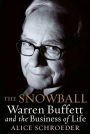
Warren Buffett is one of the most respected men in the world. But the legendary Omaha investor has never written a memoir or offered a glimpse into his intensely private life. Here, at last, he gives unprecedented access to his work, opinions, struggles, triumphs, follies, and wisdom.
This complete biography of the man known everywhere as “the Oracle of Omaha” was written by highly respected former financial analyst and business writer Alice Schroeder with the cooperation of Buffett himself, who gave her thousands of hours of his own time as well as complete access to his wife, children, friends, and business associates—and his files. The result is the fullest exploration of his philosophy of life we will ever have. Here are the principles and ideas that made Buffett astoundingly wealthy, enriched the lives (and bank accounts) of those who adopted them, and created the most fascinating American success story of our time.
“Even people who don’t care a whit about business will be intrigued. . . . A side of the Oracle of Omaha that has rarely been seen.”—Time (Five Best Nonfiction Books of the Year)
A BEST BOOK OF THE YEAR: The Washington Post; People; Financial Times; Businessweek; Janet Maslin, The New York Times; Publishers Weekly
Warren Buffett is one of the most respected men in the world. But the legendary Omaha investor has never written a memoir or offered a glimpse into his intensely private life. Here, at last, he gives unprecedented access to his work, opinions, struggles, triumphs, follies, and wisdom.
This complete biography of the man known everywhere as “the Oracle of Omaha” was written by highly respected former financial analyst and business writer Alice Schroeder with the cooperation of Buffett himself, who gave her thousands of hours of his own time as well as complete access to his wife, children, friends, and business associates—and his files. The result is the fullest exploration of his philosophy of life we will ever have. Here are the principles and ideas that made Buffett astoundingly wealthy, enriched the lives (and bank accounts) of those who adopted them, and created the most fascinating American success story of our time.



Hardcover
-
SHIP THIS ITEMIn stock. Ships in 6-10 days.PICK UP IN STORE
Your local store may have stock of this item.
Available within 2 business hours
Related collections and offers
Overview
“Even people who don’t care a whit about business will be intrigued. . . . A side of the Oracle of Omaha that has rarely been seen.”—Time (Five Best Nonfiction Books of the Year)
A BEST BOOK OF THE YEAR: The Washington Post; People; Financial Times; Businessweek; Janet Maslin, The New York Times; Publishers Weekly
Warren Buffett is one of the most respected men in the world. But the legendary Omaha investor has never written a memoir or offered a glimpse into his intensely private life. Here, at last, he gives unprecedented access to his work, opinions, struggles, triumphs, follies, and wisdom.
This complete biography of the man known everywhere as “the Oracle of Omaha” was written by highly respected former financial analyst and business writer Alice Schroeder with the cooperation of Buffett himself, who gave her thousands of hours of his own time as well as complete access to his wife, children, friends, and business associates—and his files. The result is the fullest exploration of his philosophy of life we will ever have. Here are the principles and ideas that made Buffett astoundingly wealthy, enriched the lives (and bank accounts) of those who adopted them, and created the most fascinating American success story of our time.

Product Details
| ISBN-13: | 9780553805093 |
|---|---|
| Publisher: | Random House Publishing Group |
| Publication date: | 09/29/2008 |
| Pages: | 976 |
| Product dimensions: | 6.00(w) x 9.30(h) x 2.10(d) |
About the Author

Read an Excerpt
Chapter One
The Less Flattering Version
Omaha, June 2003
Warren Buffett rocks back in his chair, long legs crossed at the knee behind his father Howard’s plain wooden desk. His expensive Zegna suit jacket bunches around his shoulders like an untailored version bought off the rack. The jacket stays on all day, every day, no matter how casually the other fifteen employees at Berkshire Hathaway headquarters are dressed. His predictable white shirt sits low on the neck, its undersize collar bulging away from his tie, looking left over from his days as a young businessman, as if he had forgotten to check his neck size for the last forty years.
His hands lace behind his head through strands of whitening hair. One particularly large and messy finger-combed chunk takes off over his skull like a ski jump, lofting upward at the knoll of his right ear. His shaggy right eyebrow wanders toward it above the tortoiseshell glasses. At various times this eyebrow gives him a skeptical, knowing, or beguiling look. Right now he wears a subtle smile, which lends the wayward eyebrow a captivating air. Nonetheless, his pale-blue eyes are focused and intent.
He sits surrounded by icons and mementos of fifty years. In the hallways outside his office, Nebraska Cornhuskers football photographs, his paycheck from an appearance on a soap opera, the offer letter (never accepted) to buy a hedge fund called Long-Term Capital Management, and Coca-Cola memorabilia everywhere. On the coffee table inside the office, a classic Coca-Cola bottle. A baseball glove encased in Lucite. Over the sofa, a certificate that he completed Dale Carnegie’s public-speaking course in January 1952. The Wells Fargo stagecoach, westbound atop a bookcase. A Pulitzer Prize, won in 1973 by the Sun Newspapers of Omaha, which his investment partnership owned. Scattered about the room are books and newspapers. Photographs of his family and friends cover the credenza and a side table, and sit under the hutch beside his desk in place of a computer. A large portrait of his father hangs above Buffett’s head on the wall behind his desk. It faces every visitor who enters the room.
Although a late-spring Omaha morning beckons outside the windows, the brown wooden shutters are closed to block the view. The television beaming toward his desk is tuned to CNBC. The sound is muted, but the crawl at the bottom of the screen feeds him news all day long. Over the years, to his pleasure, the news has often been about him.
Only a few people, however, actually know him well. I have been acquainted with him for six years, originally as a financial analyst covering Berkshire Hathaway stock. Over time our relationship has turned friendly, and now I will get to know him better still. We are sitting in Warren’s office because he is not going to write a book. The unruly eyebrows punctuate his words as he says repeatedly, “You’ll do a better job than I would, Alice. I’m glad you’re writing this book, not me.” Why he would say that is something that will eventually become clear. In the meantime, we start with the matter closest to his heart.
“Where did it come from, Warren? Caring so much about making money?”
His eyes go distant for a few seconds, thoughts traveling inward: flip flip flip through the mental files. Warren begins to tell his story: “Balzac said that behind every great fortune lies a crime. [1] That’s not true at Berkshire.”
He leaps out of his chair to bring home the thought, crossing the room in a couple of strides. Landing on a mustardy-gold brocade armchair, he leans forward, more like a teenager bragging about his first romance than a seventy-two-year-old financier. How to interpret the story, who else to interview, what to write: The book is up to me. He talks at length about human nature and memory’s frailty, then says, “Whenever my version is different from somebody else’s, Alice, use the less flattering version.”
Among the many lessons, some of the best come simply from observing him. Here is the first: Humility disarms.
In the end, there won’t be too many reasons to choose the less flattering version–but when I do, human nature, not memory’s frailty, is usually why. One of those occasions happened at Sun Valley in 1999.
Chapter Two
Sun Valley
Idaho, July 1999
Warren Buffett stepped out of his car and pulled his suitcase from the trunk. He walked through the chain-link gate onto the airport’s tarmac, where a gleaming white Gulfstream IV jet–the size of a regional commercial airliner and the largest private aircraft in the world in 1999–waited for him and his family. One of the pilots grabbed the suitcase from him to stow in the cargo hold. Every new pilot who flew with Buffett was shocked to see him carrying his own luggage from a car he drove himself. Now, as he climbed the boarding stairs, he said hello to the flight attendant–somebody new–and headed to a seat next to a window, which he would not glance out of at any time during the flight. His mood was buoyant; he had been anticipating this trip for weeks.
His son Peter and daughter-in-law Jennifer, his daughter Susan and her boyfriend, and two of his grandchildren all settled into their own café au lait leather club chairs set around the forty-five-foot-long cabin. They swiveled their seats away from the curved wall panels to give themselves more space as the flight attendant brought drinks from the galley, which was stocked with the family’s favorite snacks and beverages. A pile of magazines lay nearby on the sofa: Vanity Fair, the New Yorker, Fortune, Yachting, the Robb Report, the Atlantic Monthly, the Economist, Vogue, Yoga Journal. She brought Buffett an armload of newspapers instead, along with a basket of potato chips and a Cherry Coke that matched his red Nebraska sweater. He complimented her, chatted for a few minutes to ease her nervousness at flying for the first time with her boss, and told her that she could let the copilot know that they were ready to take off. Then he buried his head in a newspaper as the plane rolled down the runway and ascended to forty thousand feet. For the next two hours, six people hummed around him, watching videos, talking, and making phone calls, while the flight attendant set out linens and bud vases filled with orchids on the bird’s-eye maple dining tables before returning to the galley to prepare lunch. Buffett never moved. He sat reading, hidden behind his newspapers, as if he were alone in his study at home.
They were flying in a $30 million airborne palace called a “fractional” jet. As many as eight owners shared it, but it served as part of a fleet, so all the owners could fly at once if they wished. The pilots in the cockpit, the crew that maintained it, the schedulers who got it to the gate on six hours’ notice, and the flight attendant who served their lunch all worked for NetJets, which belonged to Warren Buffett’s company, Berkshire Hathaway.
Sometime later, the G-IV crossed the Snake River Plain and approached the Sawtooth Mountains, a vast Cretaceous upheaval of dark and ancient granite mounds baking in the summer sun. It sailed through the bright clear air into the Wood River Valley, descending to eight thousand feet, where it started to buck on the mountain wave of turbulence thrown into the sky by the brown foothills beneath. Buffett read on, unperturbed, as the plane rocked and his family jerked about in their seats. Brush dotted higher altitudes of a second ridge of hills and rows of pines began their march up the ridges between ravines on the leeward side. The family grinned with anticipation. As the aircraft descended through the narrowing slot between the rising mountain peaks ahead, the midday sun cast the plane’s lengthening shadow over the old mining town of Hailey, Idaho.
A few seconds later, the wheels touched down on the Friedman Memorial Airport runway. By the time the Buffetts had bounded down the stairs onto the tarmac, squinting in the July sunshine, two SUVs had driven through the gate and pulled up alongside the jet, driven by men and women from Hertz. They all wore the company’s gold-and-black shirts. Instead of Hertz, however, the logo said “Allen & Co.”
The grandchildren bounced on their heels as the pilots unloaded the luggage, tennis rackets, and Buffett’s red-and-white Coca-Cola golf bag into the SUVs. Then he and the others shook hands with the pilots, said good-bye to the flight attendant, and climbed into the SUVs. Bypassing Sun Valley Aviation– a pocket-size trailer at the runway’s southern end–they swung through the chain-link gate onto the road that led to the peaks beyond. About two minutes had elapsed since the plane’s wheels first touched the runway.
Right on schedule, eight minutes later, another jet followed theirs, headed to its own runway parking spot.
Throughout the golden afternoon, jet after jet cruised into Idaho from the south and east or swung around the peaks from the west and descended into Hailey: workhorse Cessna Citations; glamorous, close-quartered Learjets; speedy Hawkers; luxurious Falcons; but mostly the awe-inspiring G-IVs. As the afternoon waned, dozens of huge, gleaming white aircraft lined the runway like a shop window full of tycoons’ toys.
The Buffetts followed the trail blazed by earlier SUVs a few miles onward from the airport to the tiny town of Ketchum on the edge of the Sawtooth National Forest, near the turnoff to the Elkhorn Pass. A few miles later, they rounded Dollar Mountain, where a green oasis appeared, nestled among the brown slopes. Here amid the lacy pines and shimmering aspens lay Sun Valley, the mountains’ most fabled resort, where Ernest Hemingway began writing For Whom the Bell Tolls, where Olympic skiers and skaters had long made their second home.
The tide of families they were joining this Tuesday afternoon all had some connection to Allen & Co., a boutique investment bank that specialized in the media and communications industries. Allen & Co. had put together some of the biggest mergers in Hollywood, and for more than a decade had been hosting an annual series of discussions and seminars mingled with outdoor recreation at Sun Valley for its clients and friends. Herbert Allen, the firm’s CEO, invited only people he liked, or those with whom he was at least willing to do business.
Thus the conference was always filled with faces both famous and rich: Hollywood producers and stars like Candice Bergen, Tom Hanks, Ron Howard, and Sydney Pollack; entertainment moguls like Barry Diller, Rupert Murdoch, Robert Iger, and Michael Eisner; socially pedigreed journalists like Tom Brokaw, Diane Sawyer, and Charlie Rose; and technology titans like Bill Gates, Steve Jobs, and Andy Grove. A pack of reporters lay in wait for them every year outside the Sun Valley Lodge.
The reporters had traveled a day earlier to the Newark, New Jersey, airport or some similar embarkation point to board a commercial flight to Salt Lake City, then raced to Concourse E’s bullpen to sit amid a crush of people waiting for flights to places like Casper, Wyoming, and Sioux City, Iowa, until it was time to cram themselves into a prop plane for the one-hour bronco ride to Sun Valley. On arrival their plane was directed to the opposite end of the airport next to the tennis-court-size terminal, where they witnessed a crew of tanned young Allen & Co. employees dressed in pastel “SV99” polo shirts and white shorts welcoming the handful of Allen & Co. guests who were arriving early on commercial flights. These were instantly recognizable among the other passengers: men in Western boots and Paul Stuart shirts with jeans, women wearing goatskin-suede jackets and marble-size turquoise beads. The Allen staff had memorized the newcomers’ faces from photographs supplied in advance. They hugged people they had gotten to know in years past as if they were old friends, whisked away all the guests’ bags, and led their charges off to the SUVs lined up steps away in the parking lot.
The reporters went to the rental-car desk, then drove to the Lodge, by now acutely conscious of their lowly status. For the next few days, many areas of Sun Valley would be marked as “private,” blocked from prying eyes by closed doors, omnipresent security, hanging flower baskets, and large potted plants. The reporters would lurk around the fringes, excluded from the interesting things going on inside, noses pressed against the bushes. [1] Ever since Disney’s Michael Eisner and Capital Cities/ABC’s Tom Murphy had dreamed up a deal to merge their companies at Sun Valley ’95 (the way the conference was often referred to–as if it had engulfed the entire resort, which, in a way, it had), the press coverage had grown until it took on the artificially giddy atmosphere of a business version of Cannes. The mergers that splintered off from Sun Valley, however, were only occasional calves from an iceberg. Sun Valley was about more than making deals, though the deals garnered most of the press. Every year the rumors sizzled that this company or that was working on a deal at the mysterious conclave in the Idaho mountains. Thus, as the SUVs rolled one by one into the porte cochere, the reporters peered through the front windows to see who was inside. When someone newsworthy arrived, they chased their prey into the lodge, brandishing cameras and microphones.
The press quickly recognized Warren Buffett as he stepped out of his SUV. “The DNA of the conference had him built into it,” said his friend Don Keough, chairman of Allen & Co. [2] Most of the press people liked Buffett, who went out of his way not to be disliked by anyone. He also intrigued them. His public image was that of a simple man, and he seemed genuine. Yet he lived a complicated life. He owned five homes but occupied only two of them. Somehow he had wound up having, in effect, two wives. He spoke in homely aphorisms with a kindly twinkle in his eye and had a notably loyal group of friends, yet along the way he had earned a reputation as a tough, even icy dealmaker. He seemed to shun publicity yet managed to attract more of it than almost any other businessman on earth. [3] He jetted around the country in a G-IV, often attended celebrity events, and had many famous friends, yet said that he preferred Omaha, hamburgers, and thrift. He spoke of his success as being based on a few simple investing ideas and tap-dancing to work with enthusiasm every day, but if that was so, why had nobody else been able to replicate it?
Buffett, as always, gave the photographers a willing wave and a grandfatherly smile as he walked by. They captured him on film, then began peering at the next car.
The Buffetts drove around to their French-country-style condominium, one of the coveted Wildflower group next to the pool and tennis courts, where Herbert Allen housed his VIPs. Inside, the usual loot awaited them: a pile of Allen & Co. SV99 logo jackets, baseball caps, zip fleeces, polo shirts–every year a different color–and a zippered notebook. Despite his fortune of more than $30 billion–enough to buy a thousand of those G-IVs parked out at the airport–Buffett liked few things more than getting a free golf shirt from a friend. He took the time to look carefully through this year’s swag. Of even more interest to him, however, was the personal note that Herbert Allen sent to each guest–and the perfectly organized conference notebook that explained what Sun Valley had in store for him this year.
Timed to the second, organized to the hilt, crisp as Herbert Allen’s French cuffs, Buffett’s schedule was laid out hour by hour, day by day. The notebook spelled out the conference speakers and topics–until now a closely guarded secret–and the luncheons and dinners that he would attend. Unlike the other guests, Buffett knew much of this in advance, but he still wanted to see what the notebook had to say.
Herbert Allen, the so-called “Lord of Sun Valley” and the conference’s quiet choreographer, set the tone of casual luxury that pervaded the event. People always cited him for high principles, brilliance, good advice, and generosity. “You’d like to die with the respect of somebody like Herbert Allen,” a guest gushed. Afraid of being disinvited to the conference, those who voiced any criticism rarely went beyond vague hints that Herbert was “unusual,” restless, impatient, and possessed of an oversize personality. Standing in the shadow of his tall, wiry frame, one had to strain to keep up with the words that crackled forth like machine-gun fire. He barked questions, then cut off respondents mid-sentence, lest they waste a second of his time. He specialized in saying the unsayable. “Ultimately Wall Street will be eliminated,” he once told a reporter, although he ran a Wall Street bank. He referred to his competitors as “hot-dog vendors." [4]
Allen kept his firm small, and his bankers staked their own money on their deals. This unconventional approach made the firm a partner rather than a mere servant to its clients, who were the elite of Hollywood and the media world. Thus, when he played host, his guests felt privileged, rather than like captives pitched by salesmen at every turn. Allen & Co. arranged a detailed social agenda every year built around each guest’s personal network of relationships– which the firm understood–and the new people that Allen’s majordomos felt each should meet. Unspoken hierarchies dictated the distances of the guests’ condominiums from the Inn (where meetings were held), which meals the guests were invited to attend, and with whom they would be seated.
Buffett’s friend Tom Murphy referred to this kind of event as “elephantbumping.” “Anytime a bunch of big shots get together,” says Buffett, “you can get people to come, because it reassures them if they’re at an elephant-bumping that they’re an elephant too." [5]
Sun Valley was always very reassuring, because unlike most elephant bumps, one could not buy one’s way in. The result was a sort of faux democracy of the elite. Part of the thrill of coming was to see who was not invited, and, more thrilling still, who was disinvited. Yet within their stratum, people did develop genuine relationships. Allen & Co. fostered conviviality through lavish entertainment, beginning on the first evening, when the guests donned Western gear, climbed into old-fashioned horse-drawn wagons, and followed cowboys up a winding trail past a natural stone spire onto Trail Creek Cabin meadow. There, Herbert Allen or one of his two sons greeted the guests as the sun began to set. Cowboys entertained the children with rope tricks near a large white tent bedecked with urns of scarlet petunias and blue sage, while the Sun Valley old guard reunited and welcomed new guests as they stood side by side in line, plate in hand, for a buffet of steaks and salmon. The Buffetts usually ended the evening sitting with friends around the bonfire beneath the star-dappled western sky.
The frolicking continued on Wednesday afternoon with an optional and very mild white-water paddle down the Salmon River. On this trip relationships blossomed, for Allen & Co. orchestrated who sat where on the bus to the embarkation point as well as on the rafts. The river guides steered through the mountain valley in silence, lest they interrupt conversations and disturb budding alliances. Spotters hired from the local population and ambulances lined the route in case someone tumbled into the freezing water. The guests were handed warm towels as soon as they put down their paddles and stepped out of the rafts, then served plates of barbecue.
Those not rafting could be found fly-fishing, horseback riding, shooting trap and skeet, mountain biking, playing bridge, learning to knit, studying nature photography, playing Frisbee with the ubiquitous canine conference guests, ice-skating on the outdoor rink, playing tennis on perfect clay courts, lounging at the pool, or golfing on immaculate greens, where they rode in carts stuffed full of Allen & Co. sunscreen, snacks, and bug spray. [6] All the entertainment flowed quietly, seamlessly, whatever was needed appearing unasked, supplied by a seemingly inexhaustible staff of almost-invisible yet ever-present Allenites in SV99 polo shirts.
It was the babysitters, however, a hundred-some good-looking, mostly blond, deeply tanned teenagers in these same polo shirts and matching Allen & Co. backpacks, who were Herbert Allen’s secret weapon. As the parents and grandparents played, the sitters saw to it that each Joshua and Brittany was accompanied by his or her own playmate for whatever activity they chose–a tennis clinic, soccer, bicycling, kickball, a wagon ride, a horse show, ice-skating, relay races, rafting, fishing, an art project, or pizza and ice cream. Each babysitter was personally selected to ensure that every child always had such a wonderful time that they would beg to come back year after year–while at the same time delighting their parents with occasional glimpses of the very, very attractive young person who was allowing them to spend days of guilt-free time with other adults.
Buffett had always been one of the most appreciative of Allen’s beneficiaries. He loved Sun Valley as a family vacation, for left to his own devices at a mountain resort with his grandchildren, he would have been at a complete loss for what to do. He had no interest in outdoor activities other than golf. He never went skeet shooting or mountain biking, thought of water as “a prison of sorts,” and would rather go around handcuffed than ride on a raft. Instead, he slipped comfortably into the center of the elephant herd. He played a little golf and bridge, including a standing golf game with Jack Valenti, president of the Motion Picture Association of America, for a dollar bet, and a bridge game with Meredith Brokaw, and otherwise spent his time socializing with people like Playboy CEO Christie Hefner and computer hardware CEO Michael Dell.
Often, however, he disappeared for long periods into his condo overlooking the golf course, where he read and watched business news in the living room seated next to an enormous stone fireplace. [7] He barely noticed the view of pine-covered Baldy, the mountain outside his window, or the bank of blossoms like a Persian palace rug: pastel lupines and sapphire delphiniums towering over poppies and Indian paintbrush, crisp blue salvia and veronica nestled among the stonecrop and hens-and-chicks. “The scenery is there, I guess,” he said. He came for the warm atmosphere Herbert Allen had created. [8] He liked being with his closest friends: Kay Graham and her son Don; Bill and Melinda Gates; Mickie and Don Keough; Barry Diller and Diane von Furstenberg; Andy Grove and his wife, Eva.
But above all, for Buffett, Sun Valley was about reuniting with his whole family during one of the rare times most of the family spent together. “He likes us all being in the same house,” says his daughter, Susie Buffett Jr. She lived in Omaha; her younger brother, Howie, and his wife, Devon–missing this year–lived in Decatur, Illinois; while their younger sibling, Peter, and his wife, Jennifer, lived in Milwaukee.
Buffett’s wife of forty-seven years, Susan, who lived apart from him, had flown in to meet them from her home in San Francisco. And Astrid Menks, his companion for more than twenty years, remained at their home in Omaha.
On Friday night, Warren donned a Hawaiian shirt and escorted his wife to the traditional Pool Party on the tennis courts next to their condo. Most of the guests knew and liked Susie. Always the star of the Pool Party, she sang old-fashioned standards by the light of tiki torches in front of the illuminated Olympic pool.
This year, as the cocktails and camaraderie flowed, the babble of a barely comprehensible new language–B2B, B2C, banner ads, bandwidth, broadband– competed with the sounds of Al Oehrle’s band. All week long a vague sense of unease had drifted through the lunches and dinners and cocktails like a silent fog amid the handshakes, kisses, and hugs. A new group of recently minted technology executives, filled with an unusual swagger, introduced themselves to people who had never heard of them a year before. [9] Some displayed a hubris that was at odds with Sun Valley’s usual atmosphere, where a determined informality reigned and Herbert Allen enforced a sort of unwritten rule against pomposity, on penalty of banishment.
The cloud of arrogance hung heaviest over the presentations that were the conference’s centerpiece. Heads of companies, high government officials, and other people of note gave talks unlike those they delivered anywhere else, because hardly a word of what was said was ever whispered beyond the flower boxes hanging by the doors of the Sun Valley Inn. Reporters were banned, and the celebrity journalists and the media barons who owned the television networks and newspapers sat in the audience but honored a code of silence. Thus freed to perform only for their peers, the speakers said important and often true things that could never be articulated in front of the press because they were too blunt, too nuanced, too alarming, too easily satirized, or too likely to be misinterpreted. The workaday journalists lurked outside, hoping for crumbs that were rarely thrown.
This year the new moguls of the Internet had been strutting, showing off their soaring expectations, trumpeting their latest mergers and looking to raise cash from the money managers sitting in the audience. The money people, who stewarded other people’s pensions and savings, together commanded so much wealth that it could hardly be comprehended: more than a trillion dollars. [10] With a trillion dollars in 1999, you could pay the income tax of every single individual in the United States. You could give a brand-new Bentley automobile to every household in more than nine states. [11] You could buy every single piece of real estate in Chicago, New York City, and Los Angeles–combined. Some of the companies making presentations needed that money, and they wanted this audience to give it to them.
Early in the week, Tom Brokaw’s panel, called “The Internet and Our Lives,” had drum-majored a procession of presentations about how the Internet would reshape the communications business. Priceline’s Jay Walker took the audience through a dizzying vision of the Internet that compared the information superhighway to the advent of the railroad in 1869. One after another, executives laid out the glittering prospects for their companies, filling the room with the intoxicating vapor of a future unlimited by storage space and geography, so slick and visionary that while some were convinced that a whole new world was unfolding, others were reminded of snake-oil salesmen. The folks who ran technology companies saw themselves as Promethean geniuses bringing fire to lesser mortals. Other businesses that grubbed in the ashes to make the dull necessities of life–auto parts, lawn furniture–were now of interest mostly for how much technology they could buy. Some Internet stocks traded at infinite multiples of their nonexistent earnings, while “real companies” that made real things had declined in value. As technology stocks overtook the “old economy,” the Dow Jones Industrial Average [32] had burst through the once-distant 10,000-point barrier only four months before, doubling in less than three and a half years.
Many of the recently enriched congregated between speeches at a cordoned-off dining terrace by the Duck Pond, where a pair of captive swans paddled around a pool. There, any guest–but not a reporter–could edge through the masses of people in khaki pants and cashmere cable sweaters to ask a question of Bill Gates or Andy Grove. Meanwhile, the journalists chased after the Internet moguls as they moved between the Inn and their condos, amplifying the atmosphere of inflated self-importance that permeated Sun Valley this year.
Some of the new Internet czars spent Friday afternoon lobbying Herbert Allen to get them into celebrity photographer Annie Leibovitz’s Saturday afternoon shoot of the Media All-Star Team for Vanity Fair. They felt they had been invited to Sun Valley because they were the people of the moment, and they had trouble believing that Leibovitz had made her own choices about who to photograph. Why, for example, would she include Buffett? His role in media had come mostly secondhand–through board memberships, a large network of personal influence, and a history of media investments large and small. Besides, he was old media. They found it hard to believe that his face in a photograph still sold magazines.
These would-be all-stars felt slighted because they knew perfectly well that the balance in media had shifted toward the Internet. That was so even though Herbert Allen himself thought the “new paradigm” for valuing technology and media stocks–based on clicks and eyeballs and projections of far-off growth rather than a company’s ability to earn cold hard cash–was bunk. “New paradigm,” he sniffed. “It’s like new sex. There just isn’t any such thing." [12]
The next morning, Buffett, emblem of the old paradigm, rose early, for he would be the closing speaker of the year. Invariably, he turned down requests to speak at conferences sponsored by other companies, but when Herbert Allen asked him to speak at Sun Valley, he always said yes. [13] The Saturday morning closing talk was the keynote event of the conference, so instead of heading straight to the golf course or grabbing a fishing rod, almost everyone went to the breakfast buffet at the Sun Valley Inn, then settled into a seat. Today Buffett would be talking about the stock market.
In private, he had been critical of the gunslinging, promoter-driven market that had sent technology stocks galloping toward delirious heights all year. The stock of his company, Berkshire Hathaway, languished in their dust, and his rigid rule of not buying technology stocks seemed outmoded. But the criticism had no influence on how he invested, and to date, the only statement he had made in public was that he never made market predictions. So his decision to get up at the podium in Sun Valley and do just that was unprecedented. Perhaps it was the times. Buffett had a firm conviction and an overwhelming urge to preach. [14]
He had spent weeks preparing for this speech. He understood that the market was not just people trading stocks as though they were chips in a casino. The chips represented businesses. Buffett thought about the total value of the chips. What were they worth? Next he reviewed history, pulling from an exhaustive mental file. This was not the first time that world-changing new technologies had come along and shaken up the stock market. Business history was replete with new technologies–railroads, telegraph, telephone, automobiles, airplanes, television: all revolutionary ways to connect things faster–but how many had made investors rich? He was about to explain.
After the breakfast buffet, Clarke Keough walked to the podium. Buffett had known the Keough family for many years; they had been neighbors back in Omaha. It was through Clarke’s father, Don, that Buffett had made the connections that led him to Sun Valley. Don Keough, now chairman of Allen & Co. and former president of Coca-Cola, had met Herbert Allen when he bought Columbia Pictures from Allen & Co. for Coca-Cola in 1982. Keough and his boss, Coca-Cola’s CEO, Roberto Goizueta, had been so impressed by Herbert Allen’s unsalesmanlike approach to selling that they had convinced him to join their board.
Keough, a Sioux City cattleman’s son and former altar boy, had now technically retired from Coca-Cola but he still lived and breathed the Real Thing, so powerful he was sometimes called the company’s shadow chief executive. [15]
When the Keoughs were his neighbors in Omaha in the 1950s, Warren had asked Don how he was going to pay for his kids’ college and suggested that he invest $10,000 in Buffett’s partnership. But Don was putting six kids through parochial school on $200 a week as a Butter-Nut coffee salesman. “We didn’t have the money,” his son Clarke now told the audience. “This is part of my family’s past that we will never forget.”
Buffett joined Clarke at the podium, wearing his favorite Nebraska red sweater over a plaid shirt. He finished the story. [16]
“The Keoughs were wonderful neighbors,” he said. “It’s true that occasionally Don would mention that, unlike me, he had a job, but the relationship was terrific.
One time my wife, Susie, went over and did the proverbial Midwestern bit of asking to borrow a cup of sugar, and Don’s wife, Mickie, gave her a whole sack. When I heard about that, I decided to go over to the Keoughs’ that night myself. I said to Don, ‘Why don’t you give me twenty-five thousand dollars for the partnership to invest?’ And the Keough family stiffened a little bit at that point, and I was rejected.
“I came back sometime later and asked for the ten thousand dollars Clarke referred to and got a similar result. But I wasn’t proud. So I returned at a later time and asked for five thousand dollars. And at that point, I got rejected again.
“So one night, in the summer of 1962, I started heading over to the Keough house. I don’t know whether I would have dropped it to twenty-five hundred dollars or not, but by the time I got to the Keough household, the whole place was dark, silent. There wasn’t a thing to see. But I knew what was going on. I knew that Don and Mickie were hiding upstairs, so I didn’t leave.
“I rang that doorbell. I knocked. Nothing happened. But Don and Mickie were upstairs, and it was pitch-black.
“Too dark to read, and too early to go to sleep. And I remember that day as if it were yesterday. That was June twenty-first, 1962.
“Clarke, when were you born?”
“March twenty-first, 1963.”
“It’s little things like that that history turns on. So you should be glad they didn’t give me the ten thousand dollars.”
Having charmed the audience with this little piece of give and take, Buffett turned to the matter at hand. “Now, I’m going to attempt to multitask today. Herb told me to include a few slides. ‘Show you’re with it,’ he said. When Herb says something, it’s practically an order in the Buffett household.” Speeding past exactly what comprised “the Buffett household”–for Buffett thought of his household as being like any other family’s–he launched into a joke about Allen. The secretary to the President of the U.S. rushed into the Oval Office, apologizing for accidentally scheduling two meetings at once. The President had to choose between seeing the Pope and seeing Herbert Allen. Buffett paused for effect. “ ‘Send in the Pope,’ said the President. ‘At least I only have to kiss his ring.’
“To all you fellow ring-kissers, I would like to talk today about the stock market,” he said. “I will be talking about pricing stocks, but I will not be talking about predicting their course of action next month or next year. Valuing is not the same as predicting.
“In the short run, the market is a voting machine. In the long run, it’s a weighing machine.
“Weight counts eventually. But votes count in the short term. And it’s a very undemocratic way of voting. Unfortunately, they have no literacy tests in terms of voting qualifications, as you’ve all learned.”
Buffett clicked a button, which illuminated a PowerPoint slide on a huge screen to his right. [17] Bill Gates, sitting in the audience, caught his breath for a second, until the notoriously fumble-fingered Buffett managed to get the first slide up. [18]
DOW JONES
INDUSTRIAL AVERAGE
December 31, 1964 — 874.12
December 31, 1981 — 875.00
He walked over to the screen and started explaining.
“During these seventeen years, the size of the economy grew fivefold. The sales of the Fortune five hundred companies grew more than fivefold. [33] Yet, during these seventeen years, the stock market went exactly nowhere.”
He backed up a step or two. “What you’re doing when you invest is deferring consumption and laying money out now to get more money back at a later time. And there are really only two questions. One is how much you’re going to get back, and the other is when.
“Now, Aesop was not much of a finance major, because he said something like, ‘A bird in the hand is worth two in the bush.’ But he doesn’t say when.” Interest rates–the cost of borrowing–Buffett explained, are the price of “when.” They are to finance as gravity is to physics. As interest rates vary, the value of all financial assets–houses, stocks, bonds–changes, as if the price of birds had fluctuated. “And that’s why sometimes a bird in the hand is better than two birds in the bush and sometimes two in the bush are better than one in the hand.”
In his flat, breathy twang, the words coming so fast that they sometimes ran over one another, Buffett related Aesop to the great bull market of the 1990s, which he described as baloney. Profits had grown much less than in that previous period, but birds in the bush were expensive because interest rates were low.
Fewer people wanted cash–the bird in the hand–at such low rates. So investors were paying unheard-of prices for those birds in the bush. Casually, Buffett referred to this as the “greed factor.”
The audience, full of technology gurus who were changing the world while getting rich off the great bull market, sat silent. They were perched atop portfolios that were jam-packed with stocks trading at extravagant valuations. They felt terrific about that. It was a new paradigm, this dawning of the Internet age. Their attitude was that Buffett had no right to call them greedy. Warren–who’d hoarded his money for years and given very little away, who was so cheap his license plate said “Thrifty,” who spent most of his time thinking about how to make money, who had blown the technology boom and missed the boat–was spitting in their champagne.
Buffett continued. There were only three ways the stock market could keep rising at ten percent or more a year. One was if interest rates fell and remained below historic levels. The second was if the share of the economy that went to investors, as opposed to employees and government and other things, rose above its already historically high level. [19] Or, he said, the economy could start growing faster than normal. [20] He called it “wishful thinking” to use optimistic assumptions like these.
Some people, he said, were not thinking that the whole market would flourish. They just believed they could pick the winners from the rest. Swinging his arms like an orchestra conductor, he succeeded in putting up another slide while explaining that, although innovation might lift the world out of poverty, people who invest in innovation historically have not been glad afterward.
“This is half of a page which comes from a list seventy pages long of all the auto companies in the United States.” He waved the complete list in the air. “There were two thousand auto companies: the most important invention, probably, of the first half of the twentieth century. It had an enormous impact on people’s lives. If you had seen at the time of the first cars how this country would develop in connection with autos, you would have said, ‘This is the place I must be.’ But of the two thousand companies, as of a few years ago, only three car companies survived. [21] And, at one time or another, all three were selling for less than book value, which is the amount of money that had been put into the companies and left there. So autos had an enormous impact on America, but in the opposite direction on investors.”
He put down the list to shove his hand in his pocket. “Now, sometimes it’s much easier to figure out the losers. There was, I think, one obvious decision back then. And of course, the thing you should have been doing was shorting horses.” [34] Click. A slide about horses popped up.
U.S. HORSE POPULATION
1900 – 17 million
1998 – 5 million
“Frankly, I’m kind of disappointed that the Buffett family was not shorting horses throughout this entire period. There are always losers.”
Members of the audience chuckled, albeit faintly. Their companies might be losing money, but in their hearts beat a conviction that they were winners, supernovas blazing at the cusp of a momentous shift in the heavens. Undoubtedly their names would grace the pages of history books someday.
Click. Another slide appeared.
“Now the other great invention of the first half of the century was the airplane. In this period from 1919 to 1939, there were about two hundred companies. Imagine if you could have seen the future of the airline industry back there at Kitty Hawk. You would have seen a world undreamed of. But assume you had the insight, and you saw all of these people wishing to fly and to visit their relatives or run away from their relatives or whatever you do in an airplane, and you decided this was the place to be.
“As of a couple of years ago, there had been zero money made from the aggregate of all stock investments in the airline industry in history.
“So I submit to you: I really like to think that if I had been down there at Kitty Hawk, I would have been farsighted enough and public-spirited enough to have shot Orville down. I owed it to future capitalists.” [22]
Another light chuckle. Some were getting tired of these musty old examples. But out of respect, they let Buffett get on with it.
Now he was talking about their businesses. “It’s wonderful to promote new industries, because they are very promotable. It’s very hard to promote investment in a mundane product. It’s much easier to promote an esoteric product, even particularly one with losses, because there’s no quantitative guideline.” This was goring the audience directly, where it hurt. “But people will keep coming back to invest, you know. It reminds me a little of that story of the oil prospector who died and went to heaven. And St. Peter said, ‘Well, I checked you out, and you meet all of the qualifications. But there’s one problem.’ He said, ‘We have some tough zoning laws up here, and we keep all of the oil prospectors over in that pen. And as you can see, it is absolutely chock-full. There is no room for you.’
“And the prospector said, ‘Do you mind if I just say four words?’
“St. Peter said, ‘No harm in that.’
“So the prospector cupped his hands and yells out, ‘Oil discovered in hell!’
“And of course, the lock comes off the cage and all of the oil prospectors start heading right straight down.
“St. Peter said, ‘That’s a pretty slick trick. So,’ he says, ‘go on in, make yourself at home. All the room in the world.’
“The prospector paused for a minute, then said, ‘No, I think I’ll go along with the rest of the boys. There might be some truth to that rumor after all.’ [23]
“Well, that’s the way people feel with stocks. It’s very easy to believe that there’s some truth to that rumor after all.”
This got a mild laugh for a half second, which choked off as soon as the audience caught on to Buffett’s point, which was that, like the prospectors, they might be mindless enough to follow rumors and drill for oil in hell.
He closed by returning to the proverbial bird in the bush. There was no new paradigm, he said. Ultimately, the value of the stock market could only reflect the output of the economy.
He put up a slide to illustrate how, for several years, the market’s valuation had outstripped the economy’s growth by an enormous degree. This meant, Buffett said, that the next seventeen years might not look much better than that long stretch from 1964 to 1981 when the Dow had gone exactly nowhere– that is, unless the market plummeted. “If I had to pick the most probable return over that period,” he said, “it would probably be six percent.” [24] Yet a recent PaineWebber-Gallup poll had shown that investors expected stocks to return thirteen to twenty-two percent. [25]
He walked over to the screen. Waggling his bushy eyebrows, he gestured at the cartoon of a naked man and woman, taken from a legendary book on the stock market, Where Are the Customers’ Yachts? [26] “The man said to the woman, ‘There are certain things that cannot be adequately explained to a virgin either by words or pictures.’ ” The audience took his point, which was that people who bought Internet stocks were about to get screwed. They sat in stony silence. Nobody laughed. Nobody chuckled or snickered or guffawed.
Seeming not to notice, Buffett moved back to the podium and told the audience about the goody bag he had brought for them from Berkshire Hathaway. “I just bought a company that sells fractional jets, NetJets,” he said. “I thought about giving each of you a quarter share of a Gulfstream IV. But when I went to the airport, I realized that’d be a step down for most of you.” At that, they laughed. So, he continued, he was giving each of them a jeweler’s loupe instead, which he said they should use to look at one another’s wives’ rings–the third wives’ especially.
That hit its mark. The audience laughed and applauded. Then they stopped. A resentful undercurrent was washing through the room. Sermonizing on the stock market’s excesses at Sun Valley in 1999 was like preaching chastity in a house of ill repute. The speech might rivet the audience to its chairs, but that didn’t mean that they would go forth and abstain.
Yet some thought they were hearing something important. “This is great; it’s the basic tutorial on the stock market, all in one lesson,” thought Gates. [27] The money managers, many of whom were hunting for cheaper stocks, found it comforting and even cathartic.
Buffett waved a book in the air. “This book was the intellectual underpinning of the 1929 stock-market mania. Edgar Lawrence Smith’s Common Stocks as Long Term Investments proved that stocks always yielded more than bonds. Smith identified five reasons, but the most novel of these was the fact that companies retained some of their earnings, which they could reinvest at the same rate of return. That was the plowback–a novel idea in 1924! But as my mentor, Ben Graham, always used to say, ‘You can get in way more trouble with a good idea than a bad idea,’ because you forget that the good idea has limits. Lord Keynes, in his preface to this book, said, ‘There is a danger of expecting the results of the future to be predicted from the past.’ ” [28]
He had worked his way back around to the same subject: that one couldn’t extrapolate from the past few years of accelerating stock prices. “Now, is there anyone I haven’t insulted?” [29] He paused. The question was rhetorical; nobody raised a hand.
“Thank you,” he said, and ended.
“Praise by name, criticize by category” was Buffett’s rule. The speech was meant to be provocative, not off-putting–for he cared a great deal what they thought of him. He had named no culprits, and he assumed they would get over his jokes. His argument was so powerful, almost unassailable, that he thought even those who didn’t like its message must acknowledge its force. And whatever unease the audience felt was not expressed aloud. He answered questions until the session ended. People began to stand, awarding him an ovation. No matter how they saw it–a masterful exposition on how to think about investing or the last roar of an old lion–the speech was by any standard a tour de force.
Buffett had stayed on top for forty-four years in a business where five years of good performance was a meaningful accomplishment. Still, as the record lengthened, the question always loomed: When would he falter? Would he declare an end to his reign, or would some seismic shift dethrone him? Now, it seemed to some, the time had come. It may have taken an invention as significant as the personal computer, coupled with a technology as pervasive as the Internet, to topple him, but he’d apparently overlooked information that was freely available and rejected the reality of the approaching millennium. As they muttered a polite “wonderful speech, Warren,” the young lions prowled, restive. And so, even in the ladies’ room at the break, sarcastic remarks were heard from the Silicon Valley wives. [30]
It was not just that Buffett was wrong, as some felt, but that even if he were eventually proved right–as others suspected he would be–his dour prediction of the investing future contrasted so sharply with Buffett’s own legendary past. For in his early glory days, stocks were cheap, and Buffett had scooped them up in handfuls, almost alone in noticing the golden apples lying untouched on the path. As the years passed, barriers grew up that made it harder to invest, to get an edge, to figure out what others didn’t know. So who was Buffett to preach at them, now that it was their turn? Who was he to say that they shouldn’t make money while they could off this wonderful market?
Throughout the rest of the lazy afternoon, Herbert Allen’s guests played one last game of tennis or golf or headed to the Duck Pond Lawn for a leisurely chat. Buffett spent his afternoon with old friends, who congratulated him on his triumph of a speech. He believed he had done a convincing job of swaying the audience. He had not given a speech full of such commanding evidence simply to go on the record.
Buffett, who wanted to be liked, had registered the standing ovation, not the mutterings. But the less flattering version was how many were not convinced. They believed that Buffett was rationalizing having missed the technology boom, and they were startled to see him make such specific predictions, prophecies that surely would turn out to be wrong. Beyond his earshot, the rumbling went on: “Good ol’ Warren. He missed the boat. How could he miss the tech boat? He’s a friend of Bill Gates." [31]
A few miles away at the River Run Lodge later that evening, with the guests at the closing dinner again arranged according to some invisible plan, Herbert Allen finally spoke, thanking various people and reflecting on the week. Then Susie Buffett took the stage beside the windows that overlooked the pebbly Big Wood River and once again sang the old standards. Later the guests returned to the Sun Valley Lodge terrace, where Olympic skaters axeled and arabesqued in the Saturday night ice show.
By the time fireworks exploded across the sky at evening’s end, Sun Valley ’99 had been declared another glorious five-day extravaganza. Yet what most people would remember was not the rafting or the skaters; it was Buffett’s talk about the stock market–the first forecast he had made in exactly thirty years.
Notes
Chapter 1
1. This quote, or its variation, “Behind every great fortune there is a great crime,” is cited endlessly without a specific source: for example, in Mario Puzo’s The Godfather and in commentary on The Sopranos and on the Internet bubble. This pithier version condenses what Honoré de Balzac actually wrote in Father Goriot : “The secret of a great success for which you are at a loss to account is a crime that has never been found out, because it was properly executed.”
Chapter 2
1. Herbert Allen made an exception for Ken Auletta, the first and only time a writer was allowed to attend and write about Sun Valley. “What I Did at Summer Camp” appeared in the New Yorker, July 26, 1999.
2. Interview with Don Keough. Other guests commented on Buffett’s role at Sun Valley as well.
3. Except Donald Trump, of course.
4. Dyan Machan, “Herbert Allen and His Merry Dealsters,” Forbes, July 1, 1996.
5. Elephant herds are matriarchal, and the females eject the males from the herd as soon as they are old enough to become dominant and aggressive. Then the solitary males approach herds of females, trying to mate. However, this isn’t exactly the way human elephant-bumping works.
6. Allen & Co. does not release the numbers, but the conference was said to cost around $10 million, more than $36,000 per invited family. Whether $5 or $15 million, that pays for a lot of flyfishing and golf over the course of a long weekend. Much of the money pays for the conference’s exhaustive security and logistics.
7. Buffett likes to tell a joke about having worked his way up to this exalted state: starting from a trailer, then the lodge, then a lesser condo, and so forth.
8. Herbert Allen’s son Herbert Jr. is usually referred to as “Herb.” However, Buffett refers to Herbert Sr. as “Herb” as a mark of their friendship, as do a few other people.
9. This portrait of Sun Valley and the impact of the dotcom billionaires is drawn from interviews with a number of people, including investment managers with no ax to grind. Most asked not to be named.
10. Allen & Co. and author estimate. This is the total assets under management of money managers who attend the conference, added to the personal fortunes of the guests. It represents their total economic power, not their consumption of wealth. By comparison, the capitalized value of the U.S. stock market at the time was about ten trillion dollars.
11. $340,000 per car in Alaska, Delaware, Hawaii, Montana, New Hampshire, both Dakotas, Vermont, Wyoming, and throw in Washington, D.C., to boot (since the District of Columbia is not a state).
12. Interview with Herbert Allen.
13. Buffett had spoken twice before at the Allen conference, in 1992 and 1995.
14. Buffett and Munger preached plenty to their shareholders at Berkshire Hathaway annual meetings, but this preaching to the choir doesn’t count.
15. Al Pagel, “Coca-Cola Turns to the Midlands for Leadership,” Omaha World-Herald, March 14, 1982.
16. Buffett’s remarks have been condensed for readability and length.
17. PowerPoint is the Microsoft program most often used to make the slide presentations so ubiquitous in corporate America.
18. Interview with Bill Gates.
19. Corporate profits at the time were more than 6% of GDP, compared to a long-term average of 4.88%. They have since risen to over 9%, far above historic standards.
20. Over long periods the U.S. economy has grown at a real rate of 3% and a nominal rate (after inflation) of 5%. Other than a postwar boom or recovery from severe recession, this level is rarely exceeded.
21. American Motors, smallest of the “Big Four” automakers, sold out to Chrysler in 1987.
22. Buffett is speaking metaphorically here. He admits to investing in things with wings a time or two, and not with good results.
23. Buffett first used this story in his 1985 chairman’s letter, citing Ben Graham, who told the story at his tenth lecture in the series Current Problems in Security Analysis at the New York Institute of Finance. The transcripts of these lectures, given between September 1946 and February 1947, can be found at http://www.wiley.com//legacy/products/subject/finance/bgraham/ or in Benjamin Graham and Janet Lowe, The Rediscovered Benjamin Graham: Selected Writings of the Wall Street Legend. New York: Wiley, 1999.
24. A condensed and edited version of this speech was published as “Mr. Buffett on the Stock Market,” Fortune, November 22, 1999.
25. PaineWebber-Gallup poll, July 1999.
26. Fred Schwed Jr., Where Are the Customers’ Yachts? or, A Good Hard Look at Wall Street. New York, Simon & Schuster, 1940.
27. Interview with Bill Gates.
28. Keynes wrote: “It is dangerous . . . to apply to the future inductive arguments based on past experience, unless one can distinguish the broad reasons why past experience was what it was,” in a book review for Smith’s Common Stocks as Long-Term Investments in Nation and Athenaeum in 1925 that later became the preface for Keynes, The Collected Writings of John Maynard Keynes. Vol.12, Economic Articles and Correspondence; Investment and Editorial. Cambridge: Cambridge University Press, 1983.
29. The comedian Mort Sahl used to end his routine by asking, “Is there anyone I haven’t offended?”
30. According to a source who overheard them and would rather remain nameless.
31. Interview with Don Keough.
32. A widely quoted U.S. stock measure.
33. Fortune magazine ranks the largest 500 companies based on sales and refers to them as the “Fortune 500.” This group of companies can be used as a rough proxy for U.S.-based business.
34. A short-seller borrows a stock and sells it, betting it will go down. If so, the “short-seller” profits from buying the stock back cheaper. He loses if the price rises. Short-selling is normally risky: you are betting against the long-term trend of the market.
Reading Group Guide
“Life is like a snowball,” Warren Buffett once remarked. “The important thing is finding wet snow and a really long hill.” Now, in the new book about the “Oracle from Omaha,” which is the first of its kind to be both a life story and a biography of ideas, readers worldwide have an unprecedented opportunity to discover how America’s savviest investor amassed his legendary “snowball,” a fortune that spans not only multi-billion-dollar financial achievements but also includes a wealth of beloved friends, family, and business partners, and a lifetime of sparkling experiences.
Buffett has also amassed a wealth of respect, drawing thousands from around the globe who seek his wisdom and have hoped he might write a book one day. Though Buffett never wrote a memoir, the time seemed right to look back on the “really long hill” that propelled him to success. Discovering a suitable ally in insurance analyst and financial reporter Alice Schroeder, Buffett granted remarkable access to his files, his closest associates, and his most personal memories of his boyhood, marriage, and fatherhood. His cooperation with Schroeder would lead to more than five years of in-depth research and would produce a book that, in keeping with Buffett’s tradition of unrivaled results, is unlike any biography, business book, or family history you have ever read.
Unlike celebrities who hire ghostwriters to produce flattering tributes, Buffett told Schroeder that if she encountered conflicting versions of an event, she should emphasize the one that was least flattering to him. And by choosing Schroeder to tell his story, he put his epic story in the hands of an industry insider who would ask him tough questions about the hundreds of deals he has made. Along the way, she translated his business triumphs into a riveting series of deeply human narratives, telling us not only that the price of his Berkshire Hathaway stock eventually topped a record-setting $100,000 per share but also bringing to life the colorful cast of characters involved in making BRK one of the most surprising fiscal victories in business history. With equal candor, The Snowball reveals the emotional toll exacted by Buffett’s devotion to his work, and the emotional rewards he has reaped through philanthropic strategies that have sparked a radical new vision of the purpose of wealth in the world.
Whether you read it with your book group or your investment club, your lifelong friends or your board of directors, The Snowball will give you priceless lessons in life.
The questions and discussion topics that follow are intended to enhance your reading of Alice Schroeder’s The Snowball. We hope they will enrich your experience of this unparalleled American success story.
1. Discuss the quotation that gave this biography its title: “Life is like a snowball. The important thing is finding wet snow and a really long hill.” What makes Warren Buffett better than others at finding and recognizing “wet snow”? What gives him the patience and discipline to endure the long haul? Describe the “snowballs” you have accumulated, financial or otherwise. What can you do to help them grow and gain momentum?
2. Buffett often refers to having won the “ovarian lottery,” particularly because he was born in the United States in 1930 and was raised in a relatively stable household. Was his success due to circumstance as much as to innate talent or personal drive? How do his work habits compare to those of most people you know–not just in terms of how many hours he devotes to work, but also how he spends those hours?
3. Would you have been one of Warren Buffett’s initial investors? In what way did some of the qualities that caused him to be rejected (even blackballed from a country club) prove to be the very qualities that helped him create wealth?
4. Discuss Susan Buffett’s legacy of deep compassion and social justice. In what way did her personality complement and complete Warren’s? How did she contribute to his financial success? What changes did she seem to experience when she went from being Susan Thompson to Susan Buffett, then moved toward greater independence in California?
5. How did Warren and Susie Buffett’s childhoods prepare them for the fame and opportunity that lay ahead? How did it affect Warren to be raised against the backdrop of Howard’s career as a conservative politician? What emotional hurdles did Leila set? How was Susie able to help him overcome them?
6. Discuss the guiding principles that have driven Buffett’s investment decisions (the book’s index provides a helpful list, under “Warren Buffett/Investing Principles”). How many of these principles have subtly changed over the decades? What distinguishes his “cigar butt” strategy from the strategies of other value-seekers, or from the corporate raiders of the 1980s and early 1990s?
7. Why do Buffett’s strategies adapt so well to a variety of sectors, from newspapers to insurance companies, and even the rise of new technologies? How did your predictions about the high-tech bubble compare to Buffett’s warnings delivered at Sun Valley in 1999, described in chapter two?
8. Schroeder weaves business history and personal history to tell Buffett’s story. What does this teach us about the importance of the human element in investment decisions? How did tips from Dale Carnegie’s class prove to be just as important as financial savvy when Buffett began targeting companies to acquire?
9. What traits did Katharine Graham and Buffett’s other trusted friends share? What kinds of people is he drawn to?
10. Would you be content with a long-distance marriage like the one Warren and Susie had? What are the advantages of such an arrangement, particularly for spouses who have been married for a long time? What made Astrid a good match for Warren, especially at the time in his life when they met?
11. Discuss Warren and Susie’s parenting styles. How do their children compare to the children of other wealthy parents you have heard about? Did you agree with Warren’s observation that many wealthy parents who decry welfare programs actually create a form of welfare within their own families?
12. What did it cost Warren Buffett emotionally to amass his record-breaking fortune? How did he recoup some of those personal losses? How did you react to his observation in chapter 58, “Buffetted,” that “the trouble with love is that you can’t buy it”?
13. Why was Buffett able to maintain modest tastes, preferring a hamburger and French fries to haute cuisine and enjoying the same home, car, and clothes for years? What makes him eschew status symbols? What do you think the “purpose” of money is?
14. What does the story of Rose Blumkin, captured in chapter 44, indicate about succeeding in business in America? How did her business strategies mirror Buffett’s in many ways?
15. What drew Buffett to Salomon Brothers? What does this episode demonstrate about the way a reputation of integrity can be made and broken in corporate America? Does the culture of your workplace have more in common with Salomon or with Buffett’s office on Kiewit Plaza?
16. How familiar had you been with Berkshire Hathaway before reading The Snowball? Why have so few other corporate leaders had the courage to try unconventional approaches to growing a company, such as not splitting the stock price?
17. If you had been one of Warren and Susie’s children, would you have sold your shares in Berkshire Hathaway? If so, how would you have spent or invested the proceeds? What charities would you have supported during the periods of mandated philanthropy?
18. Were you surprised by the fact that Buffett approves of estate taxes? Do you agree with his rationale?
19. Discuss Buffett’s decision to give a substantial number of Berkshire Hathaway shares to the Bill and Melinda Gates Foundation, and the ways this decision inspired others, from all walks of life, to become philanthropists. What is the potential for the world if most philanthropists do as Buffett did, rather than building monuments to themselves?
20. How will you apply Buffett’s wisdom in the closing chapter, “Claim Checks,” to your own life?