"Practical and beneficial to teaching and learning in today's world ...the book provides good strategies for helping teachers facilitate meaningful academic discussions in the classroom setting."
Cynthia Passmore
"There is a great deal of relevant, practical information in this book for teachers to use to improve the quality of seminars."
Eric Kincaid
"A teacher can take this text and learn to facilitate a seminar. The examples are very useful and after some practice, I believe I too could manage a seminar discussion successfully."
Kimberly C. Smith
"I loved the case stories/examples of classroom seminars/discussions that illustrated the author's points...I was able to relate to many of the problems that some of the teachers faced in their seminars...The book will make a distinct contribution to the field."
Terry Roberts
"There are two reasons why this book is so important now. The first is the vitality of the subject: true classroom dialogue may be our only hope for helping our students become civil as well as thoughtful citizens. The second is that the authors practice what they preach. They assume from the first page that teachers themselves are thoughtful professionals, capable of making the subtle decisions discussed in these pages. The result is a book that should lie open on the desk of any teacher who is truly interested in teaching students to think."
Jennifer R. Mangrum
"As a teacher and teacher educator, I have led hundreds of student-centered discussions and in reading this book I discovered new ideas and strategies that will help me improve the quality of my own classroom discussions. I believe there are strategies in this book for all teachers, novice to expert."
Eric Westendorf
"A strong student-centered discussion is a teacher's dream - a classroom of students energized by intellectual exchange. That's why Hale and City's book is such a gift. This book is packed with strategies for facilitating great discussions. Whether you are new to student-centered discussions or an old-pro, their book will help you think strategically about how to take your classroom to the next level."
Jennifer Lerner
"I would recommend this book to anyone who wants to teach students to improve their listening, critical thinking, social, or college success skills."
Michael S. Hale has served as a teacher, principal, professional developer, professor, university administrator, and educational software executive. His passion for student inquiry has resulted in many years of experience with participant-centered discussions in a wide variety of settings. A National Paideia Faculty member, he has worked with many teachers and students to develop the knowledge and skills to engage in idea- and text-based conversations. He currently spends most of his days as Vice President for Curriculum Consulting with Vital Source Technologies in Raleigh, NC, where he works with educators to transform didactic materials into more interactive digital formats. His formal education includes a B.A. in Philosophy from Auburn University and a M.A. and Ph.D in Curriculum and Instruction from the University of North Carolina.
Elizabeth A. City has served as a teacher, principal, and instructional coach, primarily in North Carolina and Massachusetts. In addition to enjoying countless student-centered discussions in her own classroom, as a National Paideia Faculty member, she has worked with teachers and students across the country as they have learned to facilitate and participate in text-based conversations. Much of Liz’s current work centers on supporting principals and teachers in creating collaborative communities where rich dialogue and learning for both adults and children is the norm. She is a member of the Senior Faculty of Boston’s School Leadership Institute, where she teaches courses in using data, learning and teaching, and professional development to Boston Public School Principal Fellows. She is currently working on her doctorate at the Harvard Graduate School of Education.
Preface Acknowledgments About the Authors Part I: Getting Started: The "Science" of Leading Discussions
1. The Fundamentals of Facilitating Why Have Student Centered Discussions?
Essential Ingredients of a Student-Centered, Text-based Discussion, aka “Seminar”
The Architecture of a Discussion Frequently Asked Questions and Tips for Beginners Tips for Beginners References PART II: Becoming a Skillful Facilitator: The “Art and Magic” of Leading Discussions
2. Safety Recognizing Safety Issues Tone of the Discussion Atmosphere of Safety and Respect Creating a Culture of Inquiry The Danger of Sarcasm Feedback During Seminar A Climate of Respect
3. Authentic Participation Recognizing Authentic Participation Issues Attention-Seeking Participation Text-Focused Participation Reflective Activity Assessing Pauses in Conversation Facilitator is Not the Focus
4. Challenge Recognizing Challenge Issues Assessing Understanding Off-Topic Conversation Repetitive Ideas and Statements Idea-Hopping Challenging Ideas
5. Ownership Recognizing Ownership Issues Avoiding Anarchy Facilitator Releasing Control Student-Driven Discussions
6. The Seminar Decision-Making Model Steps of the Decision-Making Process Identifying the Issue Identifying Possible Causes Match to Primary Fulcrum Identifying and Applying Possible Strategies Determine Effectiveness of Strategy and Next Steps PART III: Improving Student-Centered Discussions
7. Strategies for Ongoing Improvement Across All the Fulcrums Reflection Seminar Mapping Teaching the Fulcrums to Students Fishbowl Seminar Folders Videotape Assessment Peer Planning Peer Coaching Case Study
8. Strategies for Improving Specific Fulcrums Safety Seminar Ground Rules Assigned Seats Yellow Card, Red Card Ejection Time-out Write Before You Talk Role Play Stop and Try Again Building Safety Outside Seminar Role Play Have Seminars More Frequently Ask The Students Authentic Participation Heads-Up Question Pair-Share Round Robin Inviting Quiet People to Speak Reflective Writing Follow-up Writing Positive Reinforcement Connections Question Again Pair Share/Write During Seminar Silence Map Connections Challenge Where in the Text?
Ask Follow-Up Questions Paraphrase and Probe Pair-Share/Write during Seminar Pre-Seminar Choosing a Different Type of Text Good Questions Ownership Relinquish the Reins Self-assessment Wait Time Favorite Text Phenomenon Eye Contact Don’t Be Afraid—Drive Turn-Taking Look Around the Circle Resource A – Training Guides Using the Fulcrums for Professional Development Working with Groups of Teachers New Facilitators Experienced Facilitators Working on Your Own/Working with Individual Teachers Individual Teachers Resource B – Reproducibles Index
Our reader reviews allow you to share your comments on titles you liked,
or didn't, with others. By submitting an online review, you are representing to
Barnes & Noble.com that all information contained in your review is original
and accurate in all respects, and that the submission of such content by you
and the posting of such content by Barnes & Noble.com does not and will not
violate the rights of any third party. Please follow the rules below to help
ensure that your review can be posted.
Reviews by Our Customers Under the Age of 13
We highly value and respect everyone's opinion concerning the titles we offer.
However, we cannot allow persons under the age of 13 to have accounts at BN.com or
to post customer reviews. Please see our Terms of Use for more details.
What to exclude from your review:
Please do not write about reviews, commentary, or information posted on the product page. If you see any errors in the
information on the product page, please send us an email.
Reviews should not contain any of the following:
- HTML tags, profanity, obscenities, vulgarities, or comments that defame anyone
- Time-sensitive information such as tour dates, signings, lectures, etc.
- Single-word reviews. Other people will read your review to discover why you liked or didn't like the title. Be descriptive.
- Comments focusing on the author or that may ruin the ending for others
- Phone numbers, addresses, URLs
- Pricing and availability information or alternative ordering information
- Advertisements or commercial solicitation
Reminder:
- By submitting a review, you grant to Barnes & Noble.com and its
sublicensees the royalty-free, perpetual, irrevocable right and license to use the
review in accordance with the Barnes & Noble.com Terms of Use.
- Barnes & Noble.com reserves the right not to post any review -- particularly
those that do not follow the terms and conditions of these Rules. Barnes & Noble.com
also reserves the right to remove any review at any time without notice.
- See Terms of Use for other conditions and disclaimers.
Search for Products You'd Like to Recommend
Create a Pen Name
Welcome, penname
You have successfully created your Pen Name. Start enjoying the benefits of the BN.com Community today.
If you find inappropriate content, please report it to Barnes & Noble
More About This Textbook
Overview
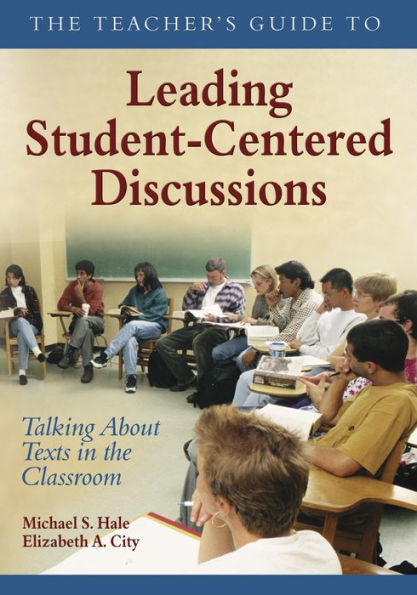
Engage and enlighten students by skillfully guiding them through thought-provoking classroom discussions using these straightforward strategies.
Editorial Reviews
Sylvia Jackson
"Practical and beneficial to teaching and learning in today's world ...the book provides good strategies for helping teachers facilitate meaningful academic discussions in the classroom setting."Cynthia Passmore
"There is a great deal of relevant, practical information in this book for teachers to use to improve the quality of seminars."Eric Kincaid
"A teacher can take this text and learn to facilitate a seminar. The examples are very useful and after some practice, I believe I too could manage a seminar discussion successfully."Kimberly C. Smith
"I loved the case stories/examples of classroom seminars/discussions that illustrated the author's points...I was able to relate to many of the problems that some of the teachers faced in their seminars...The book will make a distinct contribution to the field."Terry Roberts
"There are two reasons why this book is so important now. The first is the vitality of the subject: true classroom dialogue may be our only hope for helping our students become civil as well as thoughtful citizens. The second is that the authors practice what they preach. They assume from the first page that teachers themselves are thoughtful professionals, capable of making the subtle decisions discussed in these pages. The result is a book that should lie open on the desk of any teacher who is truly interested in teaching students to think."Jennifer R. Mangrum
"As a teacher and teacher educator, I have led hundreds of student-centered discussions and in reading this book I discovered new ideas and strategies that will help me improve the quality of my own classroom discussions. I believe there are strategies in this book for all teachers, novice to expert."Eric Westendorf
"A strong student-centered discussion is a teacher's dream - a classroom of students energized by intellectual exchange. That's why Hale and City's book is such a gift. This book is packed with strategies for facilitating great discussions. Whether you are new to student-centered discussions or an old-pro, their book will help you think strategically about how to take your classroom to the next level."Jennifer Lerner
"I would recommend this book to anyone who wants to teach students to improve their listening, critical thinking, social, or college success skills."Product Details
Related Subjects
Meet the Author
Michael S. Hale has served as a teacher, principal, professional developer, professor, university administrator, and educational software executive. His passion for student inquiry has resulted in many years of experience with participant-centered discussions in a wide variety of settings. A National Paideia Faculty member, he has worked with many teachers and students to develop the knowledge and skills to engage in idea- and text-based conversations. He currently spends most of his days as Vice President for Curriculum Consulting with Vital Source Technologies in Raleigh, NC, where he works with educators to transform didactic materials into more interactive digital formats. His formal education includes a B.A. in Philosophy from Auburn University and a M.A. and Ph.D in Curriculum and Instruction from the University of North Carolina.
Elizabeth A. City has served as a teacher, principal, and instructional coach, primarily in North Carolina and Massachusetts. In addition to enjoying countless student-centered discussions in her own classroom, as a National Paideia Faculty member, she has worked with teachers and students across the country as they have learned to facilitate and participate in text-based conversations. Much of Liz’s current work centers on supporting principals and teachers in creating collaborative communities where rich dialogue and learning for both adults and children is the norm. She is a member of the Senior Faculty of Boston’s School Leadership Institute, where she teaches courses in using data, learning and teaching, and professional development to Boston Public School Principal Fellows. She is currently working on her doctorate at the Harvard Graduate School of Education.
Table of Contents
Preface Acknowledgments About the Authors Part I: Getting Started: The "Science" of Leading Discussions
1. The Fundamentals of Facilitating Why Have Student Centered Discussions?
Essential Ingredients of a Student-Centered, Text-based Discussion, aka “Seminar”
The Architecture of a Discussion Frequently Asked Questions and Tips for Beginners Tips for Beginners References PART II: Becoming a Skillful Facilitator: The “Art and Magic” of Leading Discussions
2. Safety Recognizing Safety Issues Tone of the Discussion Atmosphere of Safety and Respect Creating a Culture of Inquiry The Danger of Sarcasm Feedback During Seminar A Climate of Respect
3. Authentic Participation Recognizing Authentic Participation Issues Attention-Seeking Participation Text-Focused Participation Reflective Activity Assessing Pauses in Conversation Facilitator is Not the Focus
4. Challenge Recognizing Challenge Issues Assessing Understanding Off-Topic Conversation Repetitive Ideas and Statements Idea-Hopping Challenging Ideas
5. Ownership Recognizing Ownership Issues Avoiding Anarchy Facilitator Releasing Control Student-Driven Discussions
6. The Seminar Decision-Making Model Steps of the Decision-Making Process Identifying the Issue Identifying Possible Causes Match to Primary Fulcrum Identifying and Applying Possible Strategies Determine Effectiveness of Strategy and Next Steps PART III: Improving Student-Centered Discussions
7. Strategies for Ongoing Improvement Across All the Fulcrums Reflection Seminar Mapping Teaching the Fulcrums to Students Fishbowl Seminar Folders Videotape Assessment Peer Planning Peer Coaching Case Study
8. Strategies for Improving Specific Fulcrums Safety Seminar Ground Rules Assigned Seats Yellow Card, Red Card Ejection Time-out Write Before You Talk Role Play Stop and Try Again Building Safety Outside Seminar Role Play Have Seminars More Frequently Ask The Students Authentic Participation Heads-Up Question Pair-Share Round Robin Inviting Quiet People to Speak Reflective Writing Follow-up Writing Positive Reinforcement Connections Question Again Pair Share/Write During Seminar Silence Map Connections Challenge Where in the Text?
Ask Follow-Up Questions Paraphrase and Probe Pair-Share/Write during Seminar Pre-Seminar Choosing a Different Type of Text Good Questions Ownership Relinquish the Reins Self-assessment Wait Time Favorite Text Phenomenon Eye Contact Don’t Be Afraid—Drive Turn-Taking Look Around the Circle Resource A – Training Guides Using the Fulcrums for Professional Development Working with Groups of Teachers New Facilitators Experienced Facilitators Working on Your Own/Working with Individual Teachers Individual Teachers Resource B – Reproducibles Index