Tess of the d'Urbervilles (Norton Critical Edition) / Edition 3

Paperback (Print)
Buy New
Buy New from BN.com
$17.39
(Save 4%)
Used and New from Other Sellers
from $1.99
Usually ships in 1-2 business days
(Save 89%)
Other sellers (Paperback)
  • All (22) from $1.99   
  • New (5) from $11.99   
  • Used (17) from $1.99   

Overview

This Third Edition of Tess of the D'Urbervilles introduces the highly praised 1983 Clarendon text edited by Juliet Grindle and Simon Gatrell.

The text is fully annotated and includes a separate table of contents for the novel to assist readers in locating specific episodes or passages.

Hardy's hand-drawn map of Wessex and the manuscript title page for the first edition of his novel are also included.

Hardy and the Novel includes seven poems by Hardy that provide greater insight into his ethos; selections from Michael Millgate's biography of Hardy that depict the relationship between episodes in Tess of the D'Urbervilles and events in the author's life; and excerpts from Grindle and Gatrell's introduction to the 1983 edition that discuss Hardy's revision process in both manuscripts and early printed editions of the novel.

Criticism features three contemporary reviews of the novel not printed in the earlier Norton editions, including the first feminist review of Tess of the D'Urbervilles.

Also new are "A Chat with Mr. Hardy," a hitherto unprinted post-publication interview with the author about his new novel, and five carefully selected critical interpretations.

Essays by Elliot B. Gose, Jr., Peter R. Morton, and Gillian Beer address Hardy's debt to Charles Darwin, perhaps the single most important influence on Hardy's thought and imagination; Raymond Williams's essay presents a Marxist perspective; and Adrian Poole discusses the significance of Hardy's wisdom concerning "the trouble men's words have with women and the trouble women have with men's words."

A Chronology, new to this edition, and a Selected Bibliography are included.

Read More Show Less

Editorial Reviews

Library Journal
This edition of the Hardy classic includes a complete authoritative text plus biographical and historical contexts, critical history, essays by five scholars, and a glossary. A fine scholarly edition for the academic crowd.
From Barnes & Noble
The tragic story of a woman wronged by two men and by the harsh, repressive society in which she lives. Hardy's most striking and tragic heroine, Tess is a woman of intense vitality and innate goodness, and the author's favorite character.
Read More Show Less

Product Details

  • ISBN-13: 9780393959031
  • Publisher: Norton, W. W. & Company, Inc.
  • Publication date: 12/28/1990
  • Series: Norton Critical Editions Series
  • Edition description: Third Edition
  • Edition number: 3
  • Pages: 512
  • Sales rank: 1,494
  • Product dimensions: 5.10 (w) x 8.40 (h) x 1.10 (d)

Meet the Author

Thomas Hardy

Thomas Hardy (1840–1928), enduring author of the twentieth century, wrote the classics Jude the Obscure, Tess of the d'Urbervilles, Far from the Madding Crowd, The Return of the Native, The Mayor of Casterbridge, and many other works.

Scott Elledge was Goldwin Smith Professor of English Emeritus at Cornell University. He was the author of E. B. White: A Biography and Wider than the Sky: Poems Selected for Young Readers. He was the editor of the Norton Critical Edition of Paradise Lost, Eighteenth-Century Critical Essays, and Milton’s "Lycidas": An Approach to Criticism.

Biography

Thomas Hardy was born on June 2, 1840, in the village of Higher Bockhampton, near Dorchester, a market town in the county of Dorset. Hardy would spend much of his life in his native region, transforming its rural landscapes into his fictional Wesses. Hardy's mother, Jemima, inspired him with a taste for literature, while his stonemason father, Thomas, shared with him a love of architecture and music (the two would later play the fiddle at local dances). As a boy Hardy read widely in the popular fiction of the day, including the novels of Scott, Dumas, Dickens, W. Harrison Ainsworth, and G.P.R. James, and in the poetry of Scott, Wordsworth, Byron, Shelley, Keats, and others. Strongly influenced in his youth by the Bible and the liturgy of the Anglican Church, Hardy later contemplated a career in the ministry; but his assimilation of the new theories of Darwinian evolutionism eventually made him an agnostic and a severe critic of the limitations of traditional religion.

Although Hardy was a gifted student at the local schools he attended as a boy for eight years, his lower-class social origins limited his further educational opportunities. At sixteen, he was apprenticed to architect James Hicks in Dorchester and began an architectural career primarily focused on the restoration of churches. In Dorchester Hardy was also befriended by Horace Moule, eight years Hardy's senior, who acted as an intellectual mentor and literary adviser throughout his youth and early adulthood. From 1862 to 1867 hardy worked in London for the distinguished architect Arthur Blomfeld, but he continued to study -- literature, art, philosophy, science, history, the classics -- and to write, first poetry and then fiction.

In the early 1870s Hardy's first two published novels, Desperate Remedies and Under the Greenwood Tree, appeared to little acclaim or sales. With his third novel, A Pair of Blue Eyes, he began the practice of serializing his fiction in magazines prior to book publication, a method that he would utilize throughout his career as a novelist. In 1874, the year of his marriage to Emma Gifford of St. Juliot, Cornwall, Hardy enjoyed his first significant commercial and critical success with the book publication of Far from the Madding Crowd after its serialization in the Cornhill Magazine. Hardy and his wife lived in several locations in London, Dorset, and Somerset before settling in South London for three years in 1878. During the late 1870s and early 1880s, Hardy published The Return of the Native, The Trumpet-Major, A Laodicean, and Two on a Tower while consolidating his pace as a leading contemporary English novelist. He would also eventually produce four volumes of short stories: Wessex Tales, A Group of Noble Dames, Life's Little Ironies, and A Changed Man.

In 1883, Hardy and his wife moved back to Dorchester, where Hardy wrote The Mayor of Casterbridge, set in a fictionalized version of Dorchester, and went on to design and construct a permanent home for himself, named Max Gate, completed in 1885. In the later 1880s and early 1890s Hardy wrote three of his greatest novels, The Woodlanders, Tess of the d'Urbevilles, and Jude the Obscure, all of them notable for their remarkable tragic power. The latter two were initially published as magazine serials in which Hardy removed potentially objectionable moral and religious content, only to restore it when the novels were published in book form; both novels nevertheless aroused public controversy for their criticisms of Victorian sexual and religious mores. In particular, the appearance of Jude the Obscure in 1895 precipitated harsh attacks on Hardy's alleged pessimism and immorality; the attacks contributed to his decision to abandon the writing of fiction after the appearance of his last-published novel, The Well-Beloved.

In the later 1890s Hardy returned to the writing of poetry that he had abandoned for fiction thirty years earlier. Wessex Poems appeared in 1898, followed by several volumes of poetry at regular intervals over the next three decades. Between 1904 and 1908 Hardy published a three-part epic verse drama, The Dynasts, based on the Napoleonic Wars of the early nineteenth century. Following the death of his first wife in 1912, Hardy married his literary secretary Florence Dugdale in 1914. Hardy received a variety of public honors in the last two decades of his life and continued to publish poems until his death at Max Gate on January 11, 1928. His ashes were interred in the Poets' Corner of Westminster Abbey in London and his heart in Stinsford outside Dorchester. Regarded as one of England's greatest authors of both fiction and poetry, Hardy has inspired such notable twentieth-century writers as Marcel Proust, John Cowper Powys, D. H. Lawrence, Theodore Dreiser, and John Fowles.

Author biography from the Barnes & Noble Classics edition of Far from the Madding Crowd.

Read More Show Less
    1. Date of Birth:
      June 2, 1840
    2. Place of Birth:
      Higher Brockhampon, Dorset, England
    1. Date of Death:
      January 11, 1928
    2. Place of Death:
      Max Gate, Dorchester, England
    1. Education:
      Served as apprentice to architect James Hicks

Read an Excerpt

ON an evening in the latter part of May a middle-aged man was walking homeward from Shaston to the village of Marlott, in the adjoining Vale of Blakemore or Blackmoor. The pair of legs that carried him were rickety, and there was a bias in his gait which inclined him somewhat to the left of a straight line. He occasionally gave a smart nod, as if in confirmation of some opinion, though he was not thinking of anything in particular. An empty egg-basket was slung upon his arm, the nap of his hat was ruffled, a patch being quite worn away at its brim where his thumb came in taking it off. Presently he was met by an elderly parson astride on a gray mare, who, as he rode, hummed a wandering tune.

'Good night t'ee,' said the man with the basket.

'Good night, Sir John,' said the parson.

The pedestrian, after another pace or two, halted, and turned round.

'Now, sir, begging your pardon; we met last market-day on this road about this time, and I zaid 'oGood night', and you made reply 'Good night, Sir John', as now.'

'I did,' said the parson.

'And once before that--near a month ago.'

'I may have.'

'Then what might your meaning be in calling me 'Sir John' these different times, when I be plain Jack Durbeyfield, the haggler?'

The parson rode a step or two nearer.

'It was only my whim,' he said; and, after a moment's hesitation: 'It was on account of a discovery I made some little time ago, whilst I was hunting up pedigrees for the new county history. I am Parson Tringham, the antiquary, of Stagfoot Lane. Don't you really know, Durbeyfield, that you are the lineal representative of the ancient and knightly family ofthe d'Urbervilles, who derive their descent from Sir Pagan d'Urberville, that renowned knight who came from Normandy with William the Conqueror, as appears by Battle Abbey Roll?'

'Never heard it before, sir?'

'Well it's true. Throw up your chin a moment, so that I may catch the profile of your face better. Yes, that's the d'Urberville nose and chin--a little debased. Your ancestor was one of the twelve knights who assisted the Lord of Estremavilla in Normandy in his conquest of Glamorganshire. Branches of your family held manors over all this part of England; their names appear in the Pipe Rolls in the time of King Stephen. In the reign of King John one of them was rich enough to give a manor to the Knights Hospitallers; and in Edward the Second's time your forefather Brian was summoned to Westminster to attend the great Council there. You declined a little in Oliver Cromwell's time, but to no serious extent, and in Charles the Second's reign you were made Knights of the Royal Oak for your loyalty. Aye, there have been generations of Sir Johns among you, and if knighthood were hereditary, like a baronetcy, as it practically was in old times, when men were knighted from father to son, you would be Sir John now.'

'Ye don't say so!'

'In short,' concluded the parson, decisively smacking his leg with his switch, 'there's hardly such another family in England.'

'Daze my eyes, and isn't there?' said Durbeyfield. 'And here have I been knocking about, year after year, from pillar to post, as if I was no more than the commonest feller in the parish . . . And how long hev this news about me been knowed, Pa'son Tringham?'

The clergyman explained that, as far as he was aware, it had quite died out of knowledge, and could hardly be said to be known at all. His own investigations had begun on a day in the preceding spring when, having been engaged in tracing the vicissitudes of the d'Urberville family, he had observed Durbeyfield's name on his waggon, and had thereupon been led to make inquiries about his father and grandfather till he had no doubt on the subject.

'At first I resolved not to disturb you with such a useless piece of information,' said he. 'However, our impulses are too strong for our judgment sometimes. I thought you might perhaps know something of it all the while.'

'Well, I have heard once or twice, 'tis true, that my family had seen better days afore they came to Blackmoor. But I took no notice o't, thinking it to mean that we had once kept two horses where we now keep only one. I've got a wold silver spoon, and a wold graven seal at home, too; but, Lord, what's a spoon and seal? . . . And to think that I and these noble d'Urbervilles were one flesh all the time. 'Twas said that my gr't-grandfer had secrets, and didn't care to talk of where he came from . . . And where do we raise our smoke, now, parson, if I may make so bold; I mean, where do we d'Urbervilles live?'

'You don't live anywhere. You are extinct--as a county family.'

'That's bad.'

'Yes--what the mendacious family chronicles call extinct in the male line--that is, gone down--gone under.'

'Then where do we lie?'
'At Kingsbere-sub-Greenhill: rows and rows of you in your vaults, with your effigies under Purbeck-marble canopies.'

'And where be our family mansions and estates?'

'You haven't any.'

'Oh? No lands neither?'

'None; though you once had 'em in abundance, as I said, for your family consisted of numerous branches. In this county there was a seat of yours at Kingsbere, and another at Sherton, and another at Millpond, and another at Lullstead, and another at Wellbridge.'

'And shall we ever come into our own again?'

'Ah--that I can't tell!'

'And what had I better do about it, sir?' asked Durbeyfield, after a pause.

'Oh--nothing, nothing; except chasten yourself with the thought of 'how are the mighty fallen'. It is a fact of some interest to the local historian and genealogist, nothing more. There are several families among the cottagers of this county of almost equal lustre. Good night.'

'But you'll turn back and have a quart of beer wi' me on the strength o't, Pa&rs'n Tringham? There's a very pretty brew in tap at The Pure Drop--though, to be sure, not so good as at Rolliver'.'

'No, thank you--not this evening, Durbeyfield. You've had enough already.' Concluding thus the parson rode on his way, with doubts as to his discretion in retailing this curious bit of lore.

When he was gone Durbeyfield walked a few steps in a profound reverie, and then sat down upon the grassy bank by the roadside, depositing his basket before him. In a few minutes a youth appeared in the distance, walking in the same direction as that which had been pursued by Durbeyfield. The latter, on seeing him, held up his hand, and the lad quickened his pace and came near.

'Boy, take up that basket! I want 'oee to go on an errand for me.'

The lath-like stripling frowned. 'Who be you, then, John Durbeyfield, to order me about and call me 'boy'? You know my name as well as I know yours!'

'Do you, do you? That's the secret--that's the secret! Now obey my orders, and take the message I'm going to charge 'ee wi' . . . Well, Fred, I don't mind telling you that the secret is that I'm one of a noble race--it has been just found out by me this present afternoon, P.M.' And as he made the announcement, Durbeyfield, declining from his sitting position, luxuriously stretched himself out upon the bank among the daisies.

The lad stood before Durbeyfield, and contemplated his length from crown to toe.
Read More Show Less

Table of Contents

About the Series
About This Volume
Pt. 1 Tess of the d'Urbervilles: The Complete Text
The Complete Text 19
Pt. 2 Tess of the d'Urbervilles: A Case Study in Contemporary Criticism
A Critical History of Tess of the d'Urbervilles 387
The New Historicism and Tess of the d'Urbervilles 405
Tess of the d'Urbervilles: Hardey's Anthropology of the Novel 422
Feminist and Gender Criticism and Tess of the d'Urbervilles 441
Tess and the Subject of Sexual Violence: Reading, Rape, Seduction 462
Deconstruction and Tess of the d'Urbervilles 484
Echoic Language, Uncertainty, and Freedom in Tess of the d'Urbervilles 506
Reader-Response Criticism and Tess of the d'Urbervilles 521
"Driven Well Home to the Reader's Heart": Tess's Implicated Audience 537
Cultural Criticism and Tess of the d'Urbervilles 552
The Same and the Different: Standards and Standardization in Thomas Hardy's Tess of the d'Urbervilles 571
Glossary of Critical and Theoretical Terms 591
About the Contributors 605
Read More Show Less

First Chapter

PHASE THE FIRST

THE MAIDEN

Chapter One

On an evening in the latter part of May a middle-aged man was walking homeward from Shaston to the village of Marlott, in the adjoining Vale of Blakemore or Blackmoor. The pair of legs that carried him were rickety, and there was a bias in his gait which inclined him somewhat to the left of a straight line. He occasionally gave a smart nod, as if in confirmation of some opinion, though he was not thinking of anything in particular. An empty egg-basket was slung upon his arm, the nap of his hat was ruffled, a patch being quite worn away at its brim where his thumb came in taking it off. Presently he was met by an elderly parson astride on a gray mare, who, as he rode, hummed a wandering tune.

"Good night t'ee," said the man with the basket.

"Good night, Sir John," said the parson.

The pedestrian, after another pace or two, halted, and turned round.

"Now, sir, begging your pardon; we met last market-day on this road about this time, and I zaid 'Good night,' and you made reply 'Good night, Sir John,' as now."

"I did," said the parson.

"And once before that -- near a month ago."

"I may have."

"Then what might your meaning be in calling me 'Sir John' these different times, when I be plain Jack Durbeyfield, the haggler?"

The parson rode a step or two nearer.

"It was only my whim," he said; and, after a moment's hesitation: "It was on account of a discovery I made some little time ago, whilst I was hunting up pedigrees for the new county history. I am Parson Tringham, the antiquary, of Stagfoot Lane. Don't you really know, Durbeyfield, that yourgyman explained that, as far as he was aware, it had quite died out of knowledge, and could hardly be said to be known at all. His own investigations had begun on a day in the preceding spring when, having been engaged in tracing the vicissitudes of the d'Urberville family, he had observed Durbeyfield's name on his waggon, and had thereupon been led to make inquiries about his father and grandfather till he had no doubt on the subject.

"At first I resolved not to disturb you with such a useless piece of information," said he. "However, our impulses are too strong for our judgment sometimes. I thought you might perhaps know something of it all the while."

"Well, I have heard once or twice, 'tis true, that my family had seen better days afore they came to Blackmoor. But I took no notice o't, thinking it to mean that we had once kept two horses where we now keep only one. I've got a wold silver spoon, and a wold graven seal at home, too; but, Lord, what's a spoon and seal?...And to think that I and these noble d'Urbervilles were one flesh all the time. 'Twas said that my gr't-grandfer had secrets, and didn't care to talk of where he came from...And where do we raise our smoke, now, parson, if I may make so bold; I mean, where do we d'Urbervilles live?"

"You don't live anywhere. You are extinct -- as a county family."

"That's bad."

"Yes -- what the mendacious family chronicles call extinct in the male line -- that is, gone down -- gone under."

"Then where do we lie?"

"At Kingsbere-sub-Greenhill: rows and rows of you in your vaults, with your effigies under Purbeck-marble canopies."

"And where be our family mansions and estates?"

"You haven't any."

"Oh? No lands neither?"

"None; th ough you once had 'em in abundance, as I said, for your family consisted of numerous branches. In this county there was a seat of yours at Kingsbere, and another at Sherton, and another at Millpond, and another at Lullstead, and another at Wellbridge."

"And shall we ever come into our own again?"

"Ah -- that I can't tell!"

"And what had I better do about it, sir?" asked Durbeyfield, after a pause.

"Oh -- nothing, nothing; except chasten yourself with the thought of 'how are the mighty fallen.' It is a fact of some interest to the local historian and genealogist, nothing more. There are several families among the cottagers of this county of almost equal lustre. Good night."

"But you'll turn back and have a quart of beer wi' me on the strength o't, Pa'son Tringham? There's a very pretty brew in tap at The Pure Drop -- though, to be sure, not so good as at Rolliver's."

"No, thank you -- not this evening, Durbeyfield. You've had enough already." Concluding thus the parson rode on his way, with doubts as to his discretion in retailing this curious bit of lore.

When he was gone Durbeyfield walked a few steps in a profound reverie, and then sat down upon the grassy bank by the roadside, depositing his basket before him. In a few minutes a youth appeared in the distance, walking in the same direction as that which had been pursued by Durbeyfield. The latter, on seeing him, held up his hand, and the lad quickened his pace and came near.

"Boy, take up that basket! I want 'ee to go on an errand for me."

The lath-like stripling frowned. "Who be you, then, John Durbeyfield, to order me about and call me 'boy'? You know my name as well as I know yours!"

"Do you, do you? That's the secret -- th at's the secret! Now obey my orders, and take the message I'm going to charge 'ee wi'....Well, Fred, I don't mind telling you that the secret is that I'm one of a noble race -- it has been just found out by me this present afternoon, P.M." And as he made the announcement, Durbeyfield, declining from his sitting position, luxuriously stretched himself out upon the bank among the daisies.

The lad stood before Durbeyfield, and contemplated his length from crown to toe.

"Sir John d'Urberville -- that's who I am," continued the prostrate man. "That is if knights were baronets -- which they be. 'Tis recorded in history all about me. Dost know of such a place, lad, as Kingsbere-sub-Greenhill?"

"Ees. I've been there to Greenhill Fair."

"Well, under the church of that city there lie -- "

"'Tisn't a city, the place I mean; leastwise 'twaddn' when I was there -- 'twas a little one-eyed, blinking sort o' place."

"Never you mind the place, boy, that's not the question before us. Under the church of that there parish lie my ancestors -- hundreds of 'em -- in coats of mail and jewels, in gr't lead coffins weighing tons and tons. There's not a man in the county o' South-Wessex that's got grander and nobler skillentons in his family than I."

"Oh?"

"Now take up that basket, and goo on to Marlott, and when you've come to The Pure Drop Inn, tell 'em to send a horse and carriage to me immed'ately, to carry me hwome. And in the bottom o' the carriage they be to put a noggin o' rum in a small bottle, and chalk it up to my account. And when you've done that goo on to my house with the basket, and tell my wife to put away that washing, because she needn't finish it, and wait till I come hwome, as I've news t o tell her."

As the lad stood in a dubious attitude, Durbeyfield put his hand in his pocket, and produced a shilling, one of the chronically few that he possessed.

"Here's for your labour, lad."

This made a difference in the young man's estimate of the position.

"Yes, Sir John. Thank 'ee. Anything else I can do for 'ee, Sir John?"

"Tell 'em at hwome that I should like for supper, -- well, lamb's fry if they can get it; and if they can't, black-pot; and if they can't get that, well, chitterlings will do."

"Yes, Sir John."

The boy took up the basket, and as he set out the notes of a brass band were heard from the direction of the village.

"What's that?" said Durbeyfield. "Not on account o' I?"

"'Tis the women's club-walking, Sir John. Why, your da'ter is one o' the members."

"To be sure -- I'd quite forgot it in my thoughts of greater things! Well, vamp on to Marlott, will ye, and order that carriage, and maybe I'll drive round and inspect the club."

The lad departed, and Durbeyfield lay waiting on the grass and daisies in the evening sun. Not a soul passed that way for a long while, and the faint notes of the band were the only human sounds audible within the rim of blue hills.

Copyright © 1998 by Simon & Schuster

Read More Show Less

Customer Reviews

Average Rating 4
( 299 )
Rating Distribution

5 Star

(116)

4 Star

(81)

3 Star

(47)

2 Star

(21)

1 Star

(34)

Your Rating:

Your Name: Create a Pen Name or

Barnes & Noble.com Review Rules

Our reader reviews allow you to share your comments on titles you liked, or didn't, with others. By submitting an online review, you are representing to Barnes & Noble.com that all information contained in your review is original and accurate in all respects, and that the submission of such content by you and the posting of such content by Barnes & Noble.com does not and will not violate the rights of any third party. Please follow the rules below to help ensure that your review can be posted.

Reviews by Our Customers Under the Age of 13

We highly value and respect everyone's opinion concerning the titles we offer. However, we cannot allow persons under the age of 13 to have accounts at BN.com or to post customer reviews. Please see our Terms of Use for more details.

What to exclude from your review:

Please do not write about reviews, commentary, or information posted on the product page. If you see any errors in the information on the product page, please send us an email.

Reviews should not contain any of the following:

  • - HTML tags, profanity, obscenities, vulgarities, or comments that defame anyone
  • - Time-sensitive information such as tour dates, signings, lectures, etc.
  • - Single-word reviews. Other people will read your review to discover why you liked or didn't like the title. Be descriptive.
  • - Comments focusing on the author or that may ruin the ending for others
  • - Phone numbers, addresses, URLs
  • - Pricing and availability information or alternative ordering information
  • - Advertisements or commercial solicitation

Reminder:

  • - By submitting a review, you grant to Barnes & Noble.com and its sublicensees the royalty-free, perpetual, irrevocable right and license to use the review in accordance with the Barnes & Noble.com Terms of Use.
  • - Barnes & Noble.com reserves the right not to post any review -- particularly those that do not follow the terms and conditions of these Rules. Barnes & Noble.com also reserves the right to remove any review at any time without notice.
  • - See Terms of Use for other conditions and disclaimers.
Search for Products You'd Like to Recommend

Recommend other products that relate to your review. Just search for them below and share!

Create a Pen Name

Your Pen Name is your unique identity on BN.com. It will appear on the reviews you write and other website activities. Your Pen Name cannot be edited, changed or deleted once submitted.

 
Your Pen Name can be any combination of alphanumeric characters (plus - and _), and must be at least two characters long.

Continue Anonymously
See All Sort by: Showing 1 – 20 of 300 Customer Reviews
  • Posted March 15, 2009

    more from this reviewer

    A Woman's Sacrifice: Herself

    An enchanting, yet tragic story, Tess of the D'Urbervilles, has definitely shown its true Realism colors. Demonstrating how a woman's gender and status will always make society belittle her, Tess was a young maiden representing purity, natural beauty, innocence, and virtue. She has shown us the acts of sacrifice for love and her own sex. This story is calling out to woman everywhere, and for all history.


    Tess was a woman who stood strong no matter how unlucky she had been presented as. For example, when her rich and cynical cousin Alec had seduced/raped her while she was sleeping she had still tried to go on with her life. This shows that Tess was innocent no matter what people thought about her and she only wanted to find happiness in her life. In addition, her child Sorrow had died because it was so unhealthy, but she did stay in remorse. Her baby's name also tells us that her relationship between her and Alec was built with sorrow and sadness and ended in that way.


    She was also a great woman of virtue. Like from the very beginning she had protected her father from the rude gossipers, even though she knew herself that he was like that. This shows that although her family had put shame upon her, she had still treated them with respect and kindness. Furthermore, before she was about to get hanged, she asked her only true love to marry her sister. This shows, that even though she loved him, she showed no jealousy but desired what was best for him.


    But most of all, Tess was a woman of sacrifice. For example, when she had stabbed Alec to death in order to gain forgiveness from Angel Clare. This shows that even death and immorality cannot withstand her overflowing romance and love for Angel. In addition, before she gets captured, she sleeps on the Stonehenge; in that time, the Stonehenge was an immoral icon. This shows that she was lying there as if she was a sacrifice to the Heathen gods and in the same way she was sacrificing her life as the police came to arrest her.


    This fictional character signifies all women that have sacrificed their lives all because of men's greed and pride. Women who have tried to make a difference in this world so that maybe someone could not bias them because of their gender. But Thomas Hardy recognizes them, and asks us to recognize them too. He also aks us as Eves to continue to fight for our rights and their rights even in the 21st century, and all the centuries to come until we have finally reached our goals of being Adam's equal in all society, and in all humanity.

    9 out of 12 people found this review helpful.

    Was this review helpful? Yes  No   Report this review
  • Posted June 15, 2009

    more from this reviewer

    Tragically Wonderful

    Tess is one of the more depressive novels I've read lately. My wife will attest to the fact that I have a strange affinity to depressing stories. With that in mind, let me say that I really enjoyed this book.

    The writing was at times a bit too much for me for the reason that I get annoyed at many 18th and 19th century novels...namely, that Hardy focuses far too much on minute descriptions and in-depth analysis of setting and location. Don't get me wrong, I love a vivid and lush environment and I much prefer a fleshed out character to a flat one. I just sometimes feel that all of the flowery descriptions slow down the story telling element too much. There were a few paragraphs/pages that I tried to skim through in order to get to the next relevant points of plot. Still, I don't know that I'd want to edit out the descriptive text since it does comment on the narrative itself in a metafictional sort of way.

    The main characters in this book are wonderfully composed. They are absolutely and completely frustrating but they are superbly crafted nonetheless. I wanted to smack each of the main characters on many occasions.

    Tess is far too willing to simply be acted upon and then to bemoan her fate. Alec is an absolute pig (although towards the end of our experience with him, it's debatable just how awful he truly is). And Angel is far too inconsistent to be liked at all...at first he seems almost lovable...then he deserves to be hated...then he seems slightly adequate...then he becomes repulsive again...he's just far too wishy-washy in his behavior and ideals to ever be fully redeemable.

    The story itself falls into the realm of realism taken to its extreme. The plot elements felt almost like the Bible story of Job...whatever could go wrong willgo wrong. And even though Tess was generally found to be almost whining about her circumstances rather than trying to make things better for herself, the story was still rather thought provoking since it makes you wonder just how you would handle horrific circumstances and what can truly be done about them. Is it better to try and solve the problem or better to just let fate and happenstance take its toll.

    Personally, I try to make the best out of any bad situation...perhaps that's why I like "depressing" stories...they make me realize my life could be worse and they help inspire me to always think of the best possible outcome.

    I'm sure this book won't be for everyone. Those who want a happy fairy-tale romp through a girl's life would do better to stay away. Those who are easily frustrated by fallen characters, will find themselves hating all of the primary roles in this book. The book isn't terribly lengthy (~300-400?) but some of the longer descriptive passages do crawl by at times.

    Still, I whole-heartedly recommend this book to those who are willing to look imperfection and awful situations square in the face and come away smiling. It's not a happy book. It's not a terribly fast past book (which can also be frustrating...I wanted to shout Just do it to Tess many times).

    But it is a wonderfully rich book and definitely worth getting into.

    7 out of 8 people found this review helpful.

    Was this review helpful? Yes  No   Report this review
  • Anonymous

    Posted August 17, 2008

    A beautiful novel

    I love this book. It is actually my favorite. Tess's story is tragic, as many others have pointed out. She's manipulated, used, abused, and eventually just breaks. The story is more or less a psychological study of this poor girl. I recommend this book to everyone who ever asks me. It's beautifully written and truly a wonderful book.

    5 out of 7 people found this review helpful.

    Was this review helpful? Yes  No   Report this review
  • Posted November 13, 2010

    more from this reviewer

    Tess of the d'Urbervilles

    Tess Durbeyfield is beset by guilt over the accidental death of one of her family's horses - a main source of family income. In an attempt to create a social connection and to gain financial assistance for her family, she entreats the d'Urbervilles to acknowledge an ancient familial connection. Unfortunately, Alec d'Urberville is taken with Tess and rapes her. Her life is haunted by his sexual assault from that point forward. Eventually, Tess begins to recuperate and finds employment elsewhere as a dairymaid. Her days as a dairymaid are happy and peaceful until she falls in love with Angel Clare. She agonizes over telling him of her tainted past, and when she confesses the truth on her wedding night, Angel is repulsed over her past and her deception of waiting to tell him. Tess is parted from her true love and never fully recovers, even when he returns to her.

    Tess of the d'Urbervilles is more than a sad story. It pays homage to the type of unhealthy family atmospheres that many children are raised in. The death of the horse is a direct result of her father's drunkenness and irresponsibility, though Tess never realizes this. When her parents hear of her misfortune, her mother reprimands her for not seeking marriage to the very man who raped her. The story also explores the mental effects that sexual assault can have on a person. Tess experiences extreme guilt, depression and feelings of unworthiness - common feelings for victims of sexual assault. In the end, as she is continually subjected to Alec d'Urberville, she experiences insanity which results in extreme actions.

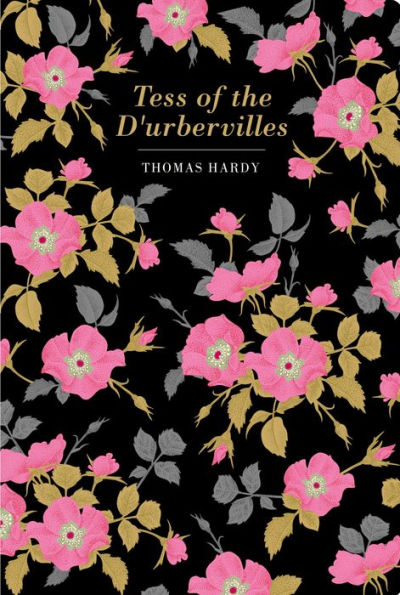
    This particular edition included an introduction and notes about the text which I found helpful. However, I thought the girl on the cover did not resemble the maiden of the book. The girl on the front is plain and unremarkable, whereas, Tess, according to the text, is remarkable.

    I can see why this book is considered a literary classic, but I can't say I enjoyed it. That being said, I think everyone should read this book once. Tess is a memorable character that one can not help being fascinated with.

    4 out of 6 people found this review helpful.

    Was this review helpful? Yes  No   Report this review
  • Posted January 9, 2009

    more from this reviewer

    A thought-provoking and somewhat-depressing novel

    I thoroughly enjoyed reading Tess of the d'Urbervilles because, as with most well-written novels, I was instantly endeared to the characters. You truly sympathize with the main character, Tess, and feel all the unfairness life heaps upon her. Hardy's characters come alive with passion and sorrow (and a little sarcasm) and he paints a clear picture of the duplicity of how one action so drastically affects two people. The opinions expressed on religion, morality and humanity give much food for thought. I felt at times the language ran on a little long, but I highly reccomend this book. <BR/><BR/>One word of warning though...it's not a happy-ending book, and I was pretty depressed the whole of the next day. That being said, I'm still glad I read it and am looking forward to seeing the mini-series.

    3 out of 3 people found this review helpful.

    Was this review helpful? Yes  No   Report this review
  • Anonymous

    Posted September 4, 2008

    A Good Read

    I really enjoyed this book and found that it had a lot of unexpected turns. At times I found it a little hard to relate to the main character but enjoyed it all the same. Unfortunately I am finding that the classics do not alway end 'happily ever after'!

    3 out of 4 people found this review helpful.

    Was this review helpful? Yes  No   Report this review
  • Anonymous

    Posted December 22, 2007

    A Review

    Thomas Hardy was way ahead of his time, and Tess is one of the most memorable characters in literature. One can't help but become emotionally involved and reminded of many of the problems with society that have changed little a century later.

    3 out of 3 people found this review helpful.

    Was this review helpful? Yes  No   Report this review
  • Anonymous

    Posted July 16, 2006

    Confusing at times but enjoyable

    I somewhat enjoyed this novel. However, at times I was confused about what was going on because of the descriptiveness of the writing. This novel seems to have a deeper meaning but it was kind of hard to pinpoint it. At times the writing is very bland and boring, but the dialogue is very enjoyable. It was extremely emotional and touching.

    3 out of 3 people found this review helpful.

    Was this review helpful? Yes  No   Report this review
  • Anonymous

    Posted April 22, 2012

    Wonky type

    There are whole paragraphs in this edition that seem not to have been transcribed well. Sentences don't make sense, punctuation is missing, weird symbols appear in random places. Sometimes a page will just end midway with no period. The next page moves on normally, but it makes me wonder what I'm missing. If this were a hard copy I would return it to the store. Not sure if that's possible with e-books.

    2 out of 3 people found this review helpful.

    Was this review helpful? Yes  No   Report this review
  • Anonymous

    Posted July 9, 2008

    A reviewer

    I have read Tess multiple times and looking forward to the next time, too. The enchanting scenes (when Angel carries Tess across the water) and emotionally shocking scenes (the ending, beginning with Angels return) draw you in. Yes, the novel is tragic but beautiful all the same.

    2 out of 3 people found this review helpful.

    Was this review helpful? Yes  No   Report this review
  • Anonymous

    Posted January 18, 2008

    beware

    This was a well written book, but if you are going to read it, be prepared because it is one of the most tragic books i have ever read. Don't expect a happy ending, it concludes, so you aren't left hanging, but like most books during this time period. It is depressing. For like a whole day after i read it, i felt very down. BUT if you can handle it, it is good. I don't regret reading it.

    2 out of 3 people found this review helpful.

    Was this review helpful? Yes  No   Report this review
  • Anonymous

    Posted October 9, 2007

    A reviewer

    I've read this book over and over again many times during the past 10 years and each time I read it, I come away with something that I missed the previous time. I feel that Thomas Hardy is a genius and Tess is his greatest character. This story of a young woman wronged by society still rings true in our day. No matter how much women are given equal rights, it's still a man's world. Take the time to read this book and I promise that it will become one of your favourites as well.

    2 out of 2 people found this review helpful.

    Was this review helpful? Yes  No   Report this review
  • Anonymous

    Posted February 4, 2001

    never read this book!

    This book was very terrible. there is nothing even close to appealing in this book. The dialect is absolutely impossible to understand. It is the most difficult book i've ever had to read and I would never read this book again. Please don't read it, you're doing yourself a favour, trust me!!

    2 out of 2 people found this review helpful.

    Was this review helpful? Yes  No   Report this review
  • Anonymous

    Posted December 15, 1999

    This book sucks

    This book is so hard to read. I have to read it for my high school English class and the dialect is crazy. It is so difficult! I mean, not to spoil it for anyone or anything, but I didn't even realize that she was raped. Really and truly, no idea. If you are going for a book that is not hard to understand and that is enjoyable, I'm sorry to say, but do not go for this book. Have a great life everyone! ~Krysti

    2 out of 2 people found this review helpful.

    Was this review helpful? Yes  No   Report this review
  • Anonymous

    Posted October 14, 2012

    Could not keep me interested Did not have thevpatience to Did not have the patience to get to the end of this one by h Did not have the patience to complete.

    Was interested in the story until it took forever to be told. Tess could not walk a few feet without an overkill of scenery description. Got tired of skimming through these areas.

    1 out of 1 people found this review helpful.

    Was this review helpful? Yes  No   Report this review
  • Anonymous

    Posted August 15, 2010

    I Also Recommend:

    It was a good read, just a very sad Book.

    I enjoyed this book, you can really get attached to Tess as a character a feel for her and what she is going though. I cried a lot reading this book and there were times where I had to take a break from it. Over all I liked the book. If you like Classics go for it!

    1 out of 1 people found this review helpful.

    Was this review helpful? Yes  No   Report this review
  • Anonymous

    Posted July 6, 2009

    Depressing!

    The writing style, characters, and plot were all excellent, but the ending was very depressing.

    1 out of 1 people found this review helpful.

    Was this review helpful? Yes  No   Report this review
  • Anonymous

    Posted November 4, 2007

    Fiction Novel Review

    Tess of the d¿Urbervilles by Thomas Hardy enthralls its readers with the life of Tess Durbeyfield and the trials she is faced with. Hardy captivates the reader by characterizing the characters so well that it elicits certain responses to certain characters like sympathizing with Tess, loving Angel, and hating Alec. Tess is portrayed as the naïve, beautiful country girl who is going to live a fairy tale life when a handsome prince will sweep her off her feet. Thus, capturing the hearts of the readers, and immediately setting us against Alec, the antagonist, without a shred of sympathy. Alec pesters Tess with his ¿love¿ and ruins her chances by robbing her of her innocence, forever scarring her. Tess is presented with one chance to right her life with Angel, the love of her life, and her, his. Their unconditional love for one another touches the reader, evoking feelings of hope and optimism for the couple, although their happiness is ephemeral when Alec yet again, dashes it. By this point, the reader is frustrated and seething with anger toward Alec who constantly ruins things. There finally comes a point when Tess and Angel are reunited and the reader breathes a sigh of relief, but Hardy takes an unexpected twist at the end, leaving the reader unsatisfied and discontent. It feels like Hardy has taken us on a great roller coaster, and we¿re climbing up a steep incline, only to slowly glide down a tiny hill, and at the very end, there¿s a sharp turn, jolting the reader. The overall book is fabulously unsatisfying.

    1 out of 1 people found this review helpful.

    Was this review helpful? Yes  No   Report this review
  • Anonymous

    Posted July 8, 2007

    A reviewer

    This book was complete and utter trash. Tess is quite possibly the dumbest character in all of literature and the most annoying. The beginning of the book is really good and then you get to about page 170ish.... Whatever, the ending made me laugh hysterically.

    1 out of 8 people found this review helpful.

    Was this review helpful? Yes  No   Report this review
  • Anonymous

    Posted May 31, 2005

    Extremely Boring

    This has got to be one of the most disappionting books that I have ever read. First of all the topic or focus of the book is very loose so the book is hard to follow and you can easily get side tracked. The over all writing style is the main problem of the book though. The writing style is more like a text book than an actual story so it almost seems like a chor to read it. However the over all idea is okay because Tess's charecter does have many emossional complexities and has to face many emossional challenges. It is interesting to see how her relationship with men can change when she lets her history or past get the best of her. The idea for this book was not bad but the whole writing style seemed very uninspired. I can see why this was Hardy's last book, people got sick of his boring writing style!

    1 out of 2 people found this review helpful.

    Was this review helpful? Yes  No   Report this review
See All Sort by: Showing 1 – 20 of 300 Customer Reviews

If you find inappropriate content, please report it to Barnes & Noble
Why is this product inappropriate?
Comments (optional)