
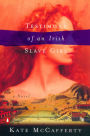


Paperback(Reprint)
-
SHIP THIS ITEMIn stock. Ships in 1-2 days.PICK UP IN STORE
Your local store may have stock of this item.
Available within 2 business hours
Related collections and offers
Overview

Product Details
| ISBN-13: | 9780142001837 |
|---|---|
| Publisher: | Penguin Publishing Group |
| Publication date: | 01/28/2003 |
| Edition description: | Reprint |
| Pages: | 240 |
| Product dimensions: | 5.12(w) x 7.72(h) x 0.55(d) |
| Age Range: | 18 Years |
About the Author
Read an Excerpt
When he has finished attending the select sick of Speightstown Gaol, Peter Coote retires to his office to wash his hands. The slave named Lucy holds a basin of tepid water as he rubs his long fingers with soap, then rinses them. He raises his wet hands as she bends to set the pan on the fieldstones of the floor. Water trickles down his fingers and over his pulse, soaking the thickness of rolled-back linen and lace cuffs, as he waits. The pan scrapes on the floor. The water feels unclean; she moves too slowly, but he tries never to show impatience before an African.
Behind Coote the shutters stand open for any breeze from the garden of fruit trees. His back is to the light coming through the window, so that as Lucy straightens she cannot see his features, only a dark shape of head and body with a thin aura of light around the head. She cannot mark him staring at her hands, pink on the palm, earth-brown and tough from labor on top, as she takes the blue-and-white towel from her shoulder and offers it. She waits in silence as he wipes his hands in the cloth. Then from the dark shape that is his face his thin but pleasant voice says, "Lucy, when we are done, fetch the white woman to me."
"Cot Quashey," Lucy says.
"I believe the only white female on the prisoners' roster is named Cot Daley," Peter corrects cheerfully. He rolls his clammy shirt cuffs down. Lucy tosses the towel over her shoulder once again and bends to lift the basin of soiled water, humming softly. "Before you leave," Coote instructs her, "close the jalousies. No damn use to wait for a breeze. Even the parrots desist their squawking in this heat. Listen . . ."
The slavewoman holds the basin motionlessly. With no reaction at all to his instruction, she stares at the wall to the left of his shoulder and continues to hum. Filtered sunlight limns the soft curve of her young cheek. He feels the usual twinge of irritation at a lack or slowness of response, but turns the feeling into evidence for his hypothesis. Coote is conducting a firsthand inquiry to advise his merchants' group in Bristol, concerning which of the lower races brought to bondage have the ability to focus, concentrate, think, obey, multiply, perform brute rote activity, etc.-and to what degree. Would it not be sound business to know which type of servant to purchase for which sort of work? Near fatal mistakes have been made in the past. He waves toward the window.
Lucy perches the pan on her hip and rolls the wooden slats almost closed with her free hand. When she has left the room, he goes to the escritoire and notes his observations of her "docile slowness" in the margins of the Apothecary's Journal. Then he takes down another ledger which contains the treatments given the sick at Speightstown Gaol and tallies the expenses for the medicaments dispensed this morning. Finished, he puts the ledgers back upon their shelf and pours himself tea before setting out the materials for the upcoming testimony. A batch of parchment. A small pot of squid ink. A wooden box of quills. A tray of white sand.
As he organizes himself he hears the water from the basin being hurled onto the hard-packed clay of the yard. It makes an oval slop, the sound of the shape of its shadow. The sudden action in the sleepy garden disturbs the dozing parrots. They craw and rustle for a moment. The sound their wings make flapping is the sound of something much larger than Peter Coote knows parrot wings to be.
When he is ready he steeples his hands, which emerge from their cuffs of flower-patterned Irish lace, on the thin sheaf of paper. His elbows lean lightly on the arms of a fruitwood chair. When the slave and the prisoner come to the door he says, "Lucy, you may take the tea things." To the other he says gravely, "You may sit down." He has removed a small velvet-backed chair from its place facing the escritoire because he knows the Irishwoman's back is at a stage of suppuration, despite his washes of comfrey and alum. Silk velvet stains easily-he has placed a low backless stool in its place. The prisoner slumps upon it now.
Lucy gathers his tea things onto a tray. Without a word she moves into the shadow of the fieldstone hall. Peter Coote watches her go, marveling at why her buttocks, beneath the rough-spun indigo-dyed petticoat, seem to swell immediately below her waist, perhaps six inches above the position of his own or those of the white woman seated now before him. He has noted this formation in African men as well as women, and postulates that it denotes, or perhaps leads to, a deformation of sensuality.
"Now," he says to the white woman. "You are wise to come forward under the circumstances. The flogging is over and done with, but the exile is yet ahead . . . as it says here, 'in the Caribbe islands, according to the Governor's pleasure.'" He looks up at the woman. He sees nothing; nothing memorable. An aged face and slight body, clad in a gray Osnabruck petticoat bedraggled at the hem. A rough wool shawl draped across the festering shoulders. Skinned-back hair under an unbleached cap makes her cheekbones jut like a red Indian's. The eyebrows are a faded cinnamon, eyelashes so blond they're almost albino. A few snaggled teeth, large pale eyes. To this nothingness he finishes, "And you will want to incur the Governor's pleasure when it comes to selecting your future home. A civilized place like Jamaica, perhaps, where a woman like yourself can earn a living from small barters . . ."
Peter Coote smoothes the lace of his cuffs back from his wrists. He uncaps the jar of ink, positioning it to the upper right of the stack of parchment, and intones, "So then, biddy. Kindly begin your testimony concerning the plot which our Governor has foiled. In which the Irish and the Africans together on this island"-he is writing his own words-"planned to rise up against the masters which God gave you in this life." From the hallway through the open door comes a slight rattle of silver against china. "Lucy! Go away from there," he calls sternly. Bare feet recede down the corridor until their slap diminishes entirely.
"I care not which rock I end my days on," the woman before Peter Coote says suddenly. "But I will tell my story, for my own purposes."
Coote chuckles dryly. "You are hardly in a position to further your own . . . purposes," he remarks after a pause.
The haggard prisoner before him insists, "I am indeed."
"Well what then?" asks Coote, choosing the path to amusement over that to annoyance.
"I will tell the Governor, Colonel Stede-or you as his man-I will give you testimony on one condition."
"And that, pray tell?"
"That it be full testimony. That you record everything I say, not simply what you seek."
"That is the trade?"
"If I'm to sing I must be given your word."
"But . . . what if I don't want to give it?" smiles Coote, lifting his powdered eyebrows toward her quizzically.
"I am ill, sir, who knows that better than yourself? I may have a hard time in the remembering of details," replies the woman curtly.
Everyone knows the transparent craftiness of the Irish. Coote refuses, now, to let his future fall into her hands. The task he's taken on is to serve the Governor by obtaining revelations from the captives who were involved in the latest plot.
"All right. Let us begin," he shrugs, dunking and wiping his quill, "at the beginning. Tell your full name and how came you here, unto this island."
—from Testimony of an Irish Slave Girl by Kate McCafferty, Copyright © February 2002, Viking Press, a member of Penguin Putnam, Inc., used by permission.
Reading Group Guide
INTRODUCTION
Kate McCafferty's searing first novel explores a little-known episode of seventeenth-century history when colonial England forced thousands of Irish to labor in the sugarcane fields of Barbados. McCafferty delves into this rich historical terrain through the eyes and voice and memory of Cot Daley, kidnapped by the English when she was ten and shipped to the West Indies. Cot's testimony to Peter Coote, the ambitious apothecary sent to discover why Irish servants joined forces with African slaves to rebel against their English masters, takes the form of a rambling narrative, filled with digressions and self-reflections. Still defiant even though she has just been flogged, Cot insists on telling the facts of the uprising her way, and her way turns out to be not so much an unraveling of the plot to rebel as a moving and wide-ranging personal history.
The difference between what Peter Coote wants to hear and what Cot Daley wants to say lies at the very heart of the novel. Coote wants to know how and why the rebellion occurred and why Cot joined it. But Cot wants to express the evolution of her emotional life during the many years she has spent on the island. Peter wants facts he can deliver to his own masters to use for their purposes, but Cot wants him to know not just facts but how it feels to be a slave, to have one's child taken away, to suffer the brutality and indignity of being treated like an animal. Thus, Coote gets more than he bargains for, as Cot's story stretches out far beyond his comfort level into areas of human experience he'd rather not hear about. Coote is a doctor and at moments his natural human empathy emerges, allowing him to feel connected to Cot on a deeper level than interrogator to witness. After all, he too feels pressure from above, as those of higher military and aristocratic rank treat him with barely concealed contempt and order him to do their bidding, much in the same way as he issues orders to his servant Lucy and to Cot herself. Like Cot, Coote is also familiar with sadness and disappointment. His dreams of owning land in the colonies, of having a wife and family, of bringing honor to the British Empire and to himself have thus far been unfulfilled. At one point, a senator's wife even says to him, "His Excellency says you're up and coming. Cot, is it? Peter Cot?" (p. 109). This momentary confusion of names reveals an underlying similarity between Cot and Coote that has significant consequences for how we read the novel. For it is really a novel about connection, about who we identify with, who we see as being like us and who we cast out as different.
Initially, Cot identifies with her masters. She longs for the captain of the ship that brings her to Barbados to keep her. Once on the island, she falls in love with her first master, Henry Plackler, dreaming that he might take her away with him. Cot even betrays her fellow slaves and servants when she warns Plackler of their plot against him. She learns to hate herself, because others despise her, but she says "the one thing I never thought to hate was my master or my mistress. For those who harmed me were also the only ones who could redeem me from worse harm" (p. 94). But for this betrayal she feels a lasting remorse, and when she marries the African slave Quashey and begins to see all that the Africans and Irish have in common, she shifts her allegiance from the oppressors to the oppressed. Peter Coote, who hears her story, who indeed transcribes it for us, is not yet able to make such a leap. But Testimony of an Irish Slave Girl offers us a rich testament to why such a leap is so important.
ABOUT KATE MCCAFFERTY
Kate McCafferty was born in the United States and received her Ph.D. in English. Since then she has taught English in colleges all over the world. She has published essays, poems, and short fiction pieces in a number of publications.Testimony of an Irish Slave Girl is her first novel.
A CONVERSATION WITH KATE MCCAFFERTY
What prompted you to write Testimony of an Irish Slave Girl? Do you feel a personal connection to the historical events on which the novel is based?
When I was in Graduate School a professor mentioned the special breeding of Irish and African slaves in Barbados, to produce the favored concubine of British officers in the North American colonies. That was the first of maybe fifty linked prompts that accumulated as I did research. I feel a very strong personal connection to not only Irish historical events, but also those that are related to gender treatment, class and race issues, etc.
What kind of research did you do for the novel? What discoveries most surprised you?
I researched histories of slaves in the Sugar Islands and the repercussions of British rule in West Ireland from 1580-1690 in particular. But I also found ships' logs, studied the geography of the island, found snippets of sales of slaves, read burial practices and plantation birth/death records, etc. I learned a lot about the economies of sugar and the rise of the merchant class in England in terms of its conflict with deeply engrained class values left over from a feudal era. The research was just fascinating.
How do you think England's oppression of the Irish in the seventeenth century is related to current troubles between the two nations?
The current troubles in the six counties have a great deal to do with class rather than religion, which is commonly blamed. In addition, the same inability to value the Irish as full human beings is not, unfortunately, a thing of the past: only after the Good Friday Agreement did nationalist, native (as opposed to the scions of plantation) Irish get to represent their own communities in Parliament, for example.
The novel makes many references to Eden, to the garden paradise that Barbados seems both to echo and invert. Why did you want to link the Biblical story of the Fall to your story?
It wasn't deliberate. But now that you've brought it out, I think two things. First of all, I guess I believe that no matter how lovely a geographical setting, we must make our own heavens from manmade hells. My favorite work of Shakespeare is The Tempest—and that was the setting of a questionable Caribbean paradise. Its native Adams and Eves had already fled by the seventeenth century, and Cot Daley and Peter Coote had to bite different apples than the Arawaks...
Cot speaks of Quashey's Jihad, or Holy War, for freedom, words which might make contemporary American readers uneasy. Could you expand upon your sense of the true meaning of Jihad?
I was teaching in the Middle East and polled colleagues and students about what the Koran was really saying (all this long before 9/11, of course). The interpretations I got were pretty uniform, namely that there are two jihads. The little one is in the external world, if needed, and is as much by words or pen as by the sword. But "the big jihad," everyone agreed, is internal and has to do with trying to live a decent, peaceful, and compassionate life.
In your Acknowledgments you mention Mary Reynolds' matter-of-fact acceptance of Testimony of an Irish Slave Girl's relevance. Were you initially uncertain about this? What do you now see as the novel's chief significance for our time?
There's been a recent trend against histories in the genre of novel. I think it's a kind of postmodern stance, as if looking at history, in the age of the Pentium 4, isn't going to help us now. But it was my intention to point at certain experiences and patterns of power that have gone on, and are still going on, and are often smoke screened by issues like race. People use each other for profit, sometimes unto death, and we will never know "brotherhood" until we deal with that universal.
What other novels dealing with the slave trade would you recommend to readers?
Who could miss Beloved, by Toni Morrison? What a wonderful gift to humanity! And Frantz Fanon's The Wretched of the Earth. But also those works not dealing with U.S. slavery: I read something when I was in Saudi Arabia by a woman who had been enslaved and used as a servant. And also those that deal with slavery after the slave trade, like Aimee Cesaire's Lost Bodies.
DISCUSSION QUESTIONS